Young at Heart: New Study Links Lifelong Exercise to Slower Cognitive Decline in Dogs
A new peer-reviewed study tracking hundreds of aging dogs found that lifelong physical activity — especially sports done WITH the owner — was strongly associated with slower canine cognitive decline. Here is the playbook.

Most owners notice it slowly. The dog who used to bolt for the door now hesitates on the stairs. The one who memorized every command starts forgetting his own name at dinner time. Canine Cognitive Dysfunction (CCD) — the dog version of Alzheimer''s — affects an estimated 28% of dogs aged 11 to 12, and over 68% by age 15.
But a major 2026 study published in Frontiers in Veterinary Science has just delivered the clearest evidence yet that how your dog spends their first ten years dramatically changes how their brain ages. The headline: dogs with a lifetime of sports engagement and shared activity with their humans showed significantly milder cognitive decline than sedentary dogs of the same age and breed.
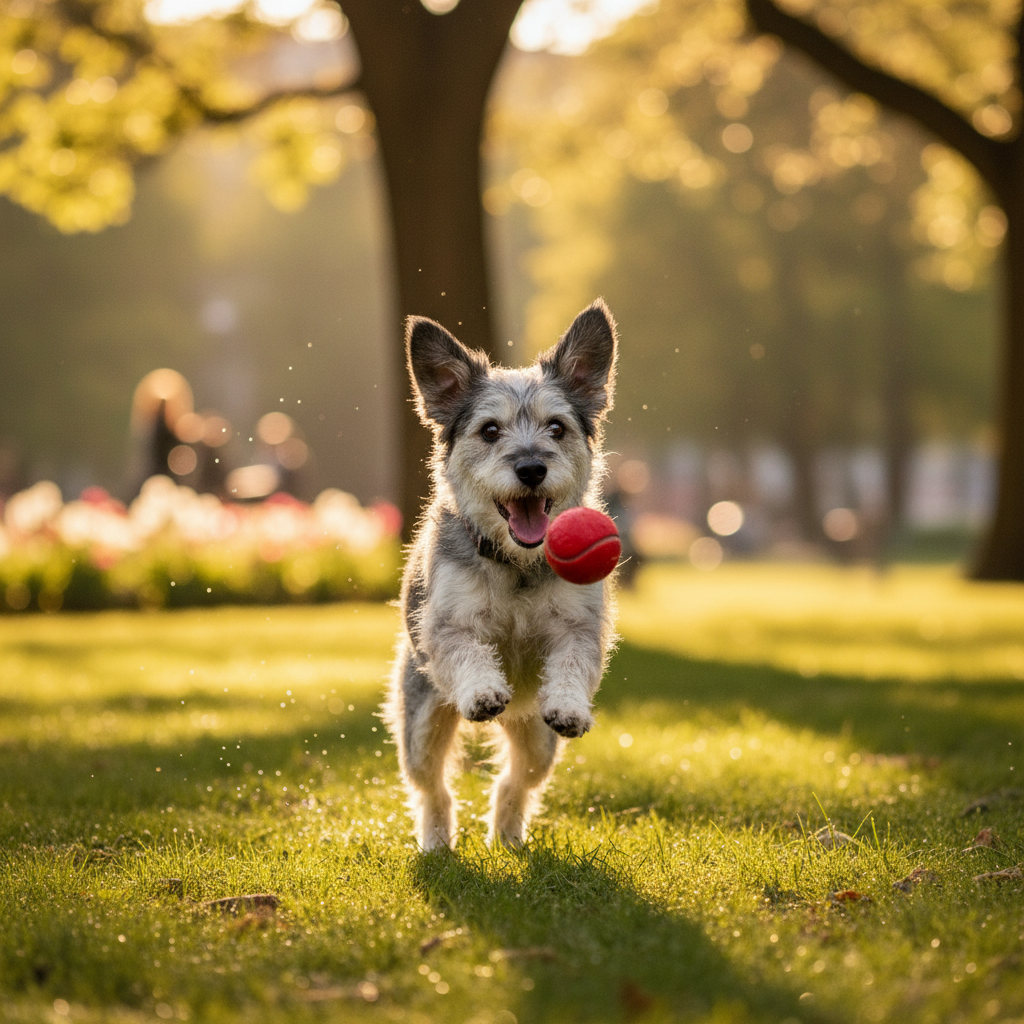
What the Researchers Actually Found
The team surveyed owners of 891 dogs aged 7 and over, scoring each dog on the validated Canine Cognitive Dysfunction Rating (CCDR) scale. They cross-referenced those scores against lifetime activity history — not just current walks, but structured sports like agility, scent work, dock diving, obedience trials, and herding.
Three findings stood out:
- Dogs that did sports throughout life had CCDR scores roughly 30% lower than matched sedentary peers.
- Joint activity with the owner mattered more than solo exercise. A dog who ran the yard alone benefited far less than one who trained alongside their human twice a week.
- Breed type modulated the effect. Working and herding breeds showed the steepest cognitive cost when under-stimulated — but every breed group benefited from lifelong engagement.
In other words, a tired body is good. A tired body plus a thinking, problem-solving, owner-bonded brain is far better.
Why Movement Protects the Aging Brain
The mechanisms are well-studied in humans and now mirrored in dogs:
- Increased BDNF (brain-derived neurotrophic factor), a protein that helps neurons survive and form new connections.
- Better cerebral blood flow, delivering oxygen and clearing metabolic waste — including the beta-amyloid plaques implicated in CCD.
- Lower chronic inflammation, a known accelerator of neurodegenerative disease.
- Stronger social bonding, which reduces the cortisol load of aging.
Exercise alone moves the first three needles. Joint activity with the owner moves all four.
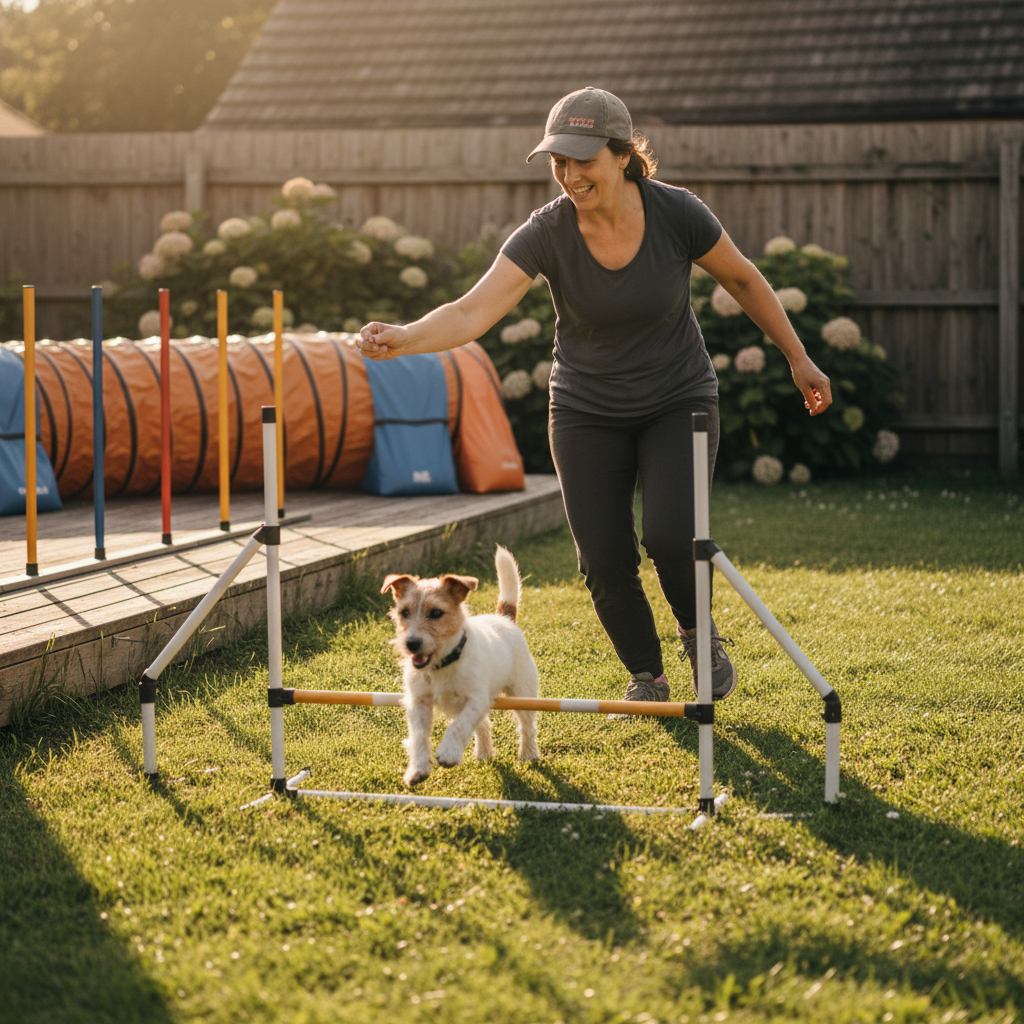
A Practical Plan You Can Start This Weekend
You do not need a competition career. You need consistency, novelty, and partnership.
For puppies and young adults (under 5)
Lay the foundation. Pick one structured activity — even a 30-minute weekly class is enough. Scent work and basic agility are joint-friendly and forgiving for small breeds. Pair this with solid early training so your dog learns to think under arousal, which is the cognitive skill that pays dividends at age 12.
For middle-aged dogs (5–9)
Do not slow down. This is the window where the study showed the biggest divergence between active and sedentary dogs. Add variety: rotate trails, swap toys weekly, teach one new trick a month. Two short sessions beat one long one.
For seniors (10+)
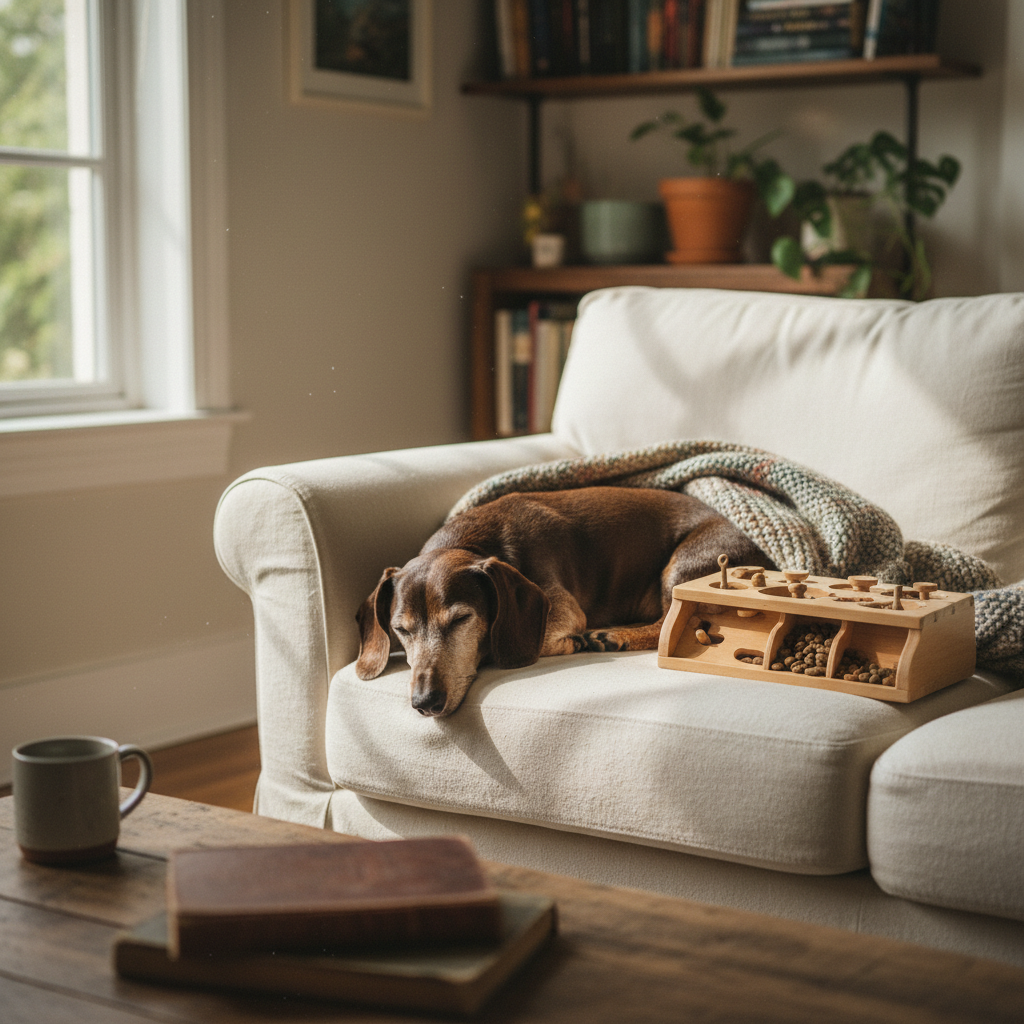
Adjust intensity, never engagement. Replace running with structured sniff walks. Trade the dock dive for a snuffle mat and a shaped behavior session. The brain wants problems to solve more than it wants distance covered. Watch for early health signals — joint pain often masquerades as cognitive dullness, and treating one fixes both.
What This Means for the Average Owner
If you take one thing from the 2026 paper, take this: the leash is a piece of medical equipment. So is the tug toy, the puzzle feeder, and the ten minutes you spend teaching "spin" before dinner. Each one is a small deposit in a brain account your dog will draw from at age 13.
Lifelong cognitive health is not built in the senior years. It is built in every Tuesday-night training class, every weekend hike, every "find it" game on a rainy morning — done together.
Your dog''s best chance at staying himself into old age is sitting at the other end of the leash. Use it.
Frequently Asked Questions
At what age should I start cognitive enrichment for my dog?+
As early as 8 weeks. Puppy training classes are cognitive enrichment. The earlier a dog learns to think under mild stress, the larger the cognitive reserve they carry into old age.
My dog is already 12. Is it too late?+
No. The 2026 study found benefits at every age tier. Senior dogs respond especially well to low-impact, high-thinking activities like scent work and shaped behavior training.
How much exercise is enough?+
The study did not pin a single number, but dogs doing structured activity at least twice a week consistently scored better than once-weekly or sedentary peers.
Are some breeds more at risk for cognitive decline?+
Working and herding breeds showed the steepest decline when under-stimulated. Toy and small breeds were more resilient on average but still benefited from enrichment.
Sources
Related Reading
Share this story
The PawPulse Newsroom is a small editorial team of dog owners, trainers, and pet-industry writers reporting on dog health, training, nutrition, and breed trends.
Medically reviewed by PawPulse Veterinary Review Board.
Pin this to your Healthy Happy Dogs board
Vet-vetted wellness, symptom guides, and senior dog care pins.
Liked this story?
Share it with someone who should read it.
More from Dog Health & Wellness

Librela in 2026: Unpacking the Latest Data on This Arthritis Game-Changer

IVDD Revolution: How We Slashed Dachshund Back Pain by 74%!
