Unlocking Calm: New RVC Research Paves the Way for Happy Home-Alone Puppies
Groundbreaking 2026 research from the Royal Veterinary College and Dogs Trust's Generation Pup study offers fresh insights into puppy separation-related behaviors. Discover how early life factors, owner interactions, and gradual training can help your puppy thrive when left alone.

Unlocking Calm: New RVC Research Paves the Way for Happy Home-Alone Puppies
For many new puppy parents in 2026, the joy of bringing a furry friend home often comes with the practical challenge of balancing modern life – hybrid work schedules, family commitments, and the inevitable need to leave your puppy alone. The good news? Groundbreaking new research from the Royal Veterinary College (RVC) and Dogs Trust's 'Generation Pup' study is shedding crucial light on how to help our puppies not just cope, but truly flourish, when they're home alone.
This isn't just about managing occasional barks; it's about fostering emotional resilience and preventing what veterinarians and behaviorists term 'separation-related behaviours' (SRBs). These can range from destructive chewing and incessant vocalization to house-soiling and even self-harm, all stemming from distress at being separated from their human companions. The 'Generation Pup' project, a monumental longitudinal study tracking thousands of puppies from eight weeks of age, is providing unprecedented data on the early-life and household risk factors that contribute to these challenging behaviors.
Quick Summary
Recent findings from the RVC and Dogs Trust 'Generation Pup' study highlight two critical areas for puppy owners aiming to prevent separation-related behaviors: the importance of calm human arrivals and departures, and understanding early-life risk factors. This research offers practical, evidence-based strategies for 2026 puppy parents to proactively build a positive home-alone routine, integrating concepts like gradual alone time, safe confinement, enrichment, and attentive monitoring.
The Heart of the Matter: Understanding Puppy Separation Stress
Historically, 'separation anxiety' has been a broad term for any distress experienced by dogs when left alone. However, recent scientific understanding, including the RVC's work, emphasizes 'separation-related behaviours' to encompass the spectrum of responses, from mild unease to profound panic. This distinction helps us pinpoint the specific challenges and tailor our interventions.
The 'Generation Pup' study, as detailed in the Cambridge Core Animal Welfare article "Canine separation-related behaviour at six months of age: Dog, owner and early-life risk factors identified using the ‘Generation Pup’ longitudinal study,” is a game-changer. It allows researchers to move beyond retrospective studies and observe canine development and owner practices in real-time, identifying crucial correlations.
Calm Departures, Calm Arrivals: A Game-Changer Revealed
One of the most compelling pieces of advice to emerge from the RVC's latest findings is elegantly simple yet profoundly impactful: owners who are advised to behave calmly during arrivals and departures helped puppies adjust to being left alone. This challenges the long-held, but often anecdotal, belief that ignoring a puppy completely upon return or making a big fuss when leaving might 'toughen them up' or prevent attachment issues.
Instead, the research suggests that maintaining a low-key, consistent demeanor around these transitions is key. Think of it from your puppy's perspective: if your departure is a dramatic event with lots of emotional goodbyes, it signals that something big and potentially scary is happening. Similarly, if your return is met with an explosion of excited greetings, it reinforces the idea that your absence was a major deviation from the norm, making subsequent departures harder.
Practical Step 1: Master the Art of the Calm Transition
- Pre-Departure Cues: A few minutes before you actually leave, begin to prepare. This isn't about ignoring your puppy, but about reducing the fanfare. Gather your keys, grab your bag, and put on your shoes without engaging in prolonged eye contact or overly enthusiastic baby talk. Give your puppy a favorite chew or a puzzle toy stuffed with treats before you leave, creating a positive association with your impending departure.
- The Departure Itself: A simple, quiet 'I'll be back' or 'See you later' if you must speak. No extended goodbyes or lingering hugs. Just walk out. The goal is to make your exit feel as unremarkable as possible.
- The Return: The moment you walk back in, resist the urge to immediately engage in excited greetings. Give your puppy a minute or two to settle from their initial exuberance. Once they're calmly sitting or standing, then you can offer a quiet, affectionate greeting. This teaches them that your return is a given, not a cause for frantic celebration, and helps de-escalate the emotional charge around your absence.
Unpacking Early-Life and Household Risk Factors
The 'Generation Pup' research didn't stop at arrivals and departures. It also delved into the myriad of factors that can predispose a puppy to separation-related behaviours. Identifying these early-life and household risk factors is invaluable for proactive prevention.
While specific risk factors can be complex and multi-faceted, common themes often include:
- Early Socialization and Exposure: Puppies with limited positive exposure to various new experiences, people, and environments during their critical socialization period (roughly 3-16 weeks) may develop a more anxious temperament overall, making them more susceptible to SRBs.
- Genetics: Like humans, some dog breeds or even individual puppies within a litter may have a genetic predisposition to anxiety.
- Previous Experiences: Puppies from backgrounds with instability, early weaning, or significant changes in ownership may be more vulnerable.
- Owner Interactions and Training Methods: Inconsistent training, overly harsh methods, or inadvertently reinforcing anxious behaviors can contribute.
- Household Environment: A chaotic home, lack of routine, or insufficient mental and physical exercise can all play a role.
Understanding these factors isn't about blame; it's about empowerment. It allows owners to be more intentional in their puppy-raising practices and provides early warning signs that might necessitate intervention.
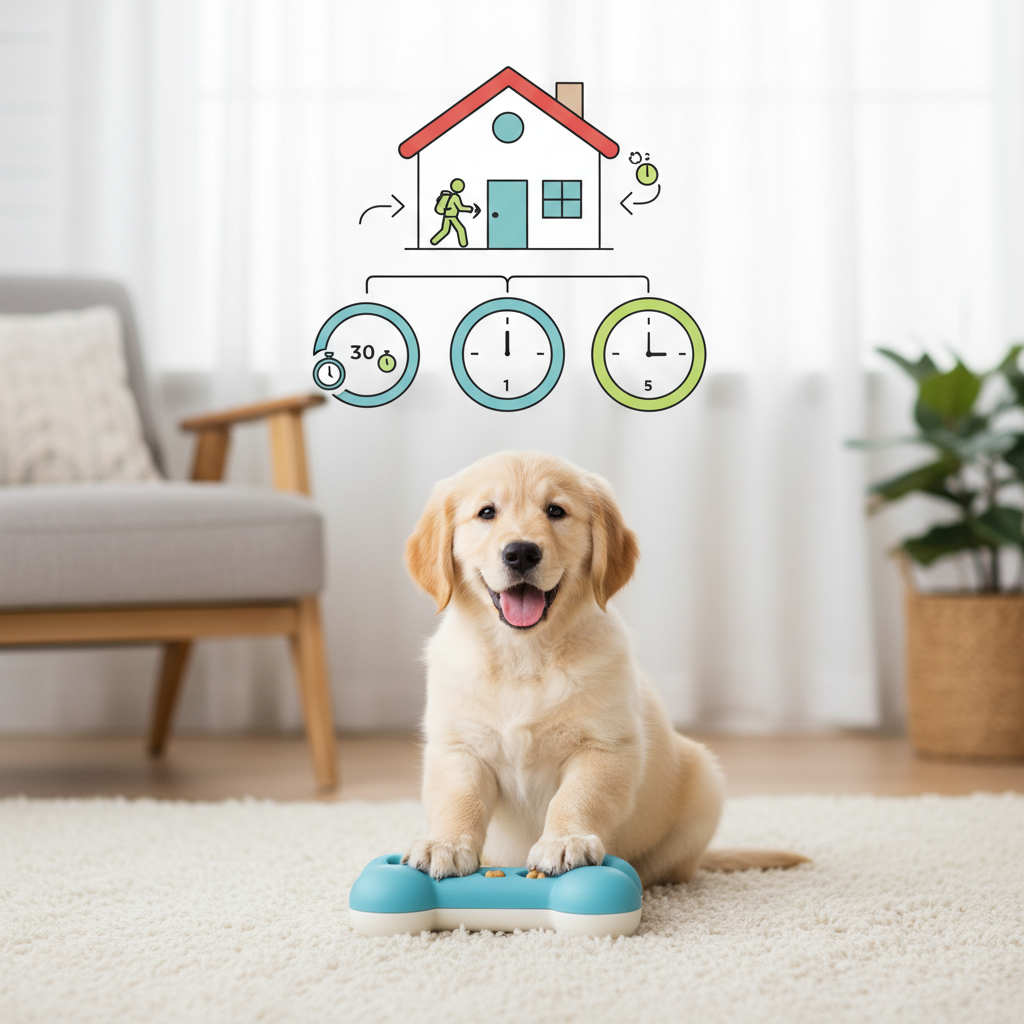 The micro-absence method builds your puppy's confidence in short, calm steps.
Building Resilience: The Gradual Approach to Home-Alone Training
Preventing puppy separation stress is akin to building a strong foundation for a house – it requires careful planning, gradual steps, and consistent effort. The RVC's findings reinforce the importance of a structured approach to alone-time practice, especially relevant for 2026 owners navigating hybrid work schedules.
Practical Step 2: The Micro-Absence Method
Start small, really small. The goal is for your puppy to experience your absence without ever feeling distressed. This means keeping the duration of your departures below their anxiety threshold.
- Preparation is Key: Ensure your puppy has relieved themselves, had some exercise, and has access to a safe, comfortable space (a crate, a playpen, or a designated puppy-proofed room). Provide an engaging, long-lasting chew toy or a food puzzle.
- Short Bursts: Begin by leaving the room for just a few seconds. Walk into the kitchen, close the door, and immediately return. No fanfare. If your puppy remains calm, gradually increase the duration. A minute, then two, then five. The aim is to return before they show any signs of distress.
- Varying Departures: Don't always leave through the same door or at the same time. This prevents your puppy from associating specific actions with your departure.
- Practice Different Scenarios: Step outside for a moment. Go to the mailbox. Sit in your car in the driveway. Incrementally increase the 'real-world' feel of your absences.
If at any point your puppy shows signs of distress (whining, barking, pacing, scratching at the door), you've gone too far, too fast. Shorten the next practice session and build up more slowly. The idea is to create a positive association: "Mom/Dad always comes back, and I have cool stuff to do while they're gone!"
The Role of Safe Confinement and Enrichment
Choosing the right safe space for your puppy when you're away is paramount. Many owners opt for crate training, and when done positively, it can be a fantastic tool for creating a den-like sanctuary. Others prefer a secure playpen or a puppy-proofed room with a baby gate.
Practical Step 3: Optimizing Safe Confinement
- Positive Association: The chosen space should always be linked with positive experiences – meals, favorite toys, comfy bedding. Never use it for punishment.
- Crate Training Done Right: If using a crate, ensure it’s appropriately sized (large enough to stand, turn around, and lie down comfortably, but not so large they can toilet in one corner and sleep in another). Introduce it gradually, feeding meals inside and offering high-value treats.
- Confinement While You're Home: Practice short periods of confinement while you are still in the house. This helps your puppy understand that being in their safe space doesn't automatically mean you're leaving.
- The Power of Enrichment: A bored puppy is a destructive puppy, and boredom can quickly escalate to distress. Provide appropriate enrichment before you leave. Puzzle toys, KONGs stuffed with frozen treats, safe chew toys, and snuffle mats can help keep your puppy mentally stimulated and engaged during your absence. These become positive distractions that help pass the time.
- Timing of Enrichment: Offer these engaging toys a few minutes before you depart, allowing your puppy to associate their safe space and departure with a rewarding activity.
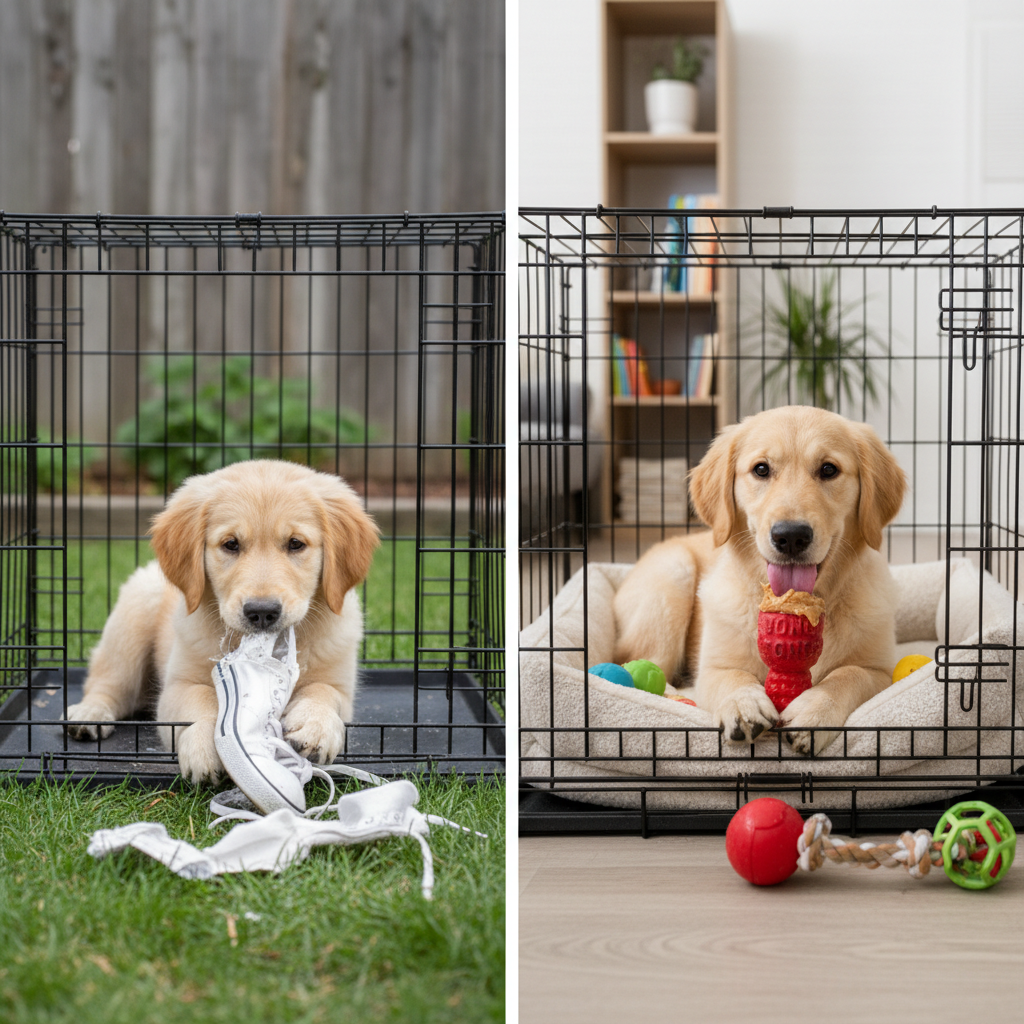 Enrichment can be a powerful tool to turn alone time into a positive experience.
Hybrid Work, Daycare, and the Modern Puppy Parent
The 2026 landscape for puppy ownership presents unique challenges and opportunities. Hybrid work schedules, while offering flexibility, can sometimes create inconsistency in a puppy's routine. One day they have constant company, the next they're alone for hours. This variability can be confusing and lead to increased anxiety.
Practical Step 4: Consistency Amidst Change
- Structured Alone Time on Hybrid Days: Even when working from home, incorporate short periods where your puppy is in their safe space, alone, while you're still present in the house, working quietly in another room. This mimics your actual departure days and builds their ability to settle independently.
- Consider Doggy Daycare (Carefully): Daycare can be a fantastic outlet for socialization and exercise. However, it's not a substitute for teaching your puppy to be calm at home. Some puppies thrive in daycare; others become overstimulated or anxious. Choose a reputable daycare that focuses on welfare and positive interactions, and use it as a supplement, not a primary solution for separation-related behaviors.
- Routine, Routine, Routine: While flexibility is good for humans, puppies thrive on predictability. Try to maintain a consistent feeding, potty, exercise, and alone-time schedule as much as possible, even with varying workdays.
Monitoring and When to Seek Professional Help
Observation is your superpower as a puppy parent. Pay close attention to your puppy's cues, both when you're present and (if you're using a camera) when you're away.
Signs of Puppy Separation Stress (SRBs):
- Excessive barking, howling, or whining
- Destructive chewing (especially around exits or personal items)
- Pacing or panting excessively
- House-soiling (after being reliably house-trained before)
- Excessive drooling
- Self-harm (licking, chewing paws, creating hot spots)
- Attempting to escape (damaging crate, doorframes, windows)
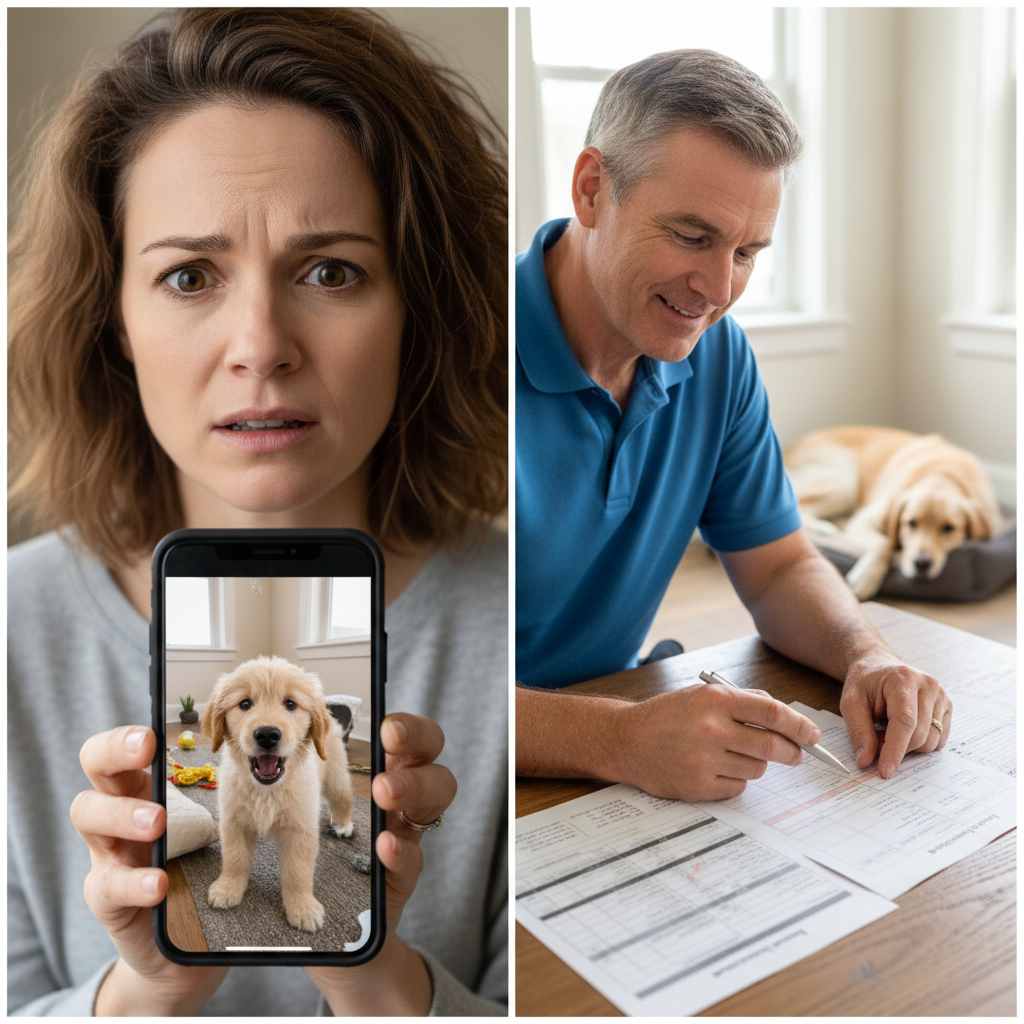 Monitoring your puppy's behavior provides crucial insights; don't hesitate to seek professional help if distress persists.
Using a pet camera can provide invaluable insights into what your puppy does when left alone. Often, owners are surprised to see the extent of their puppy's distress, which might not be evident from a quick dash through the door upon return.
When to Call a Qualified Professional:
If, despite your best efforts with calm transitions, gradual alone-time practice, and enrichment, your puppy continues to show significant signs of distress when left alone, it's crucial to seek professional help. Early intervention is key.
- Qualified Dog Trainer: Look for a trainer certified in positive reinforcement methods and with experience in separation-related behaviors. They can guide you through tailored training plans.
- Veterinary Behaviorist: For more severe cases, or if your veterinarian suspects an underlying medical condition, a board-certified veterinary behaviorist is the highest level of expertise. They can provide a comprehensive diagnosis and treatment plan, which may include behavioral modification, environmental management, and in some cases, medication.
It's important to remember that separation-related behaviours are not a sign of a 'bad' puppy or 'bad' owner. They are a manifestation of distress and an underlying emotional state. Addressing them with empathy, patience, and evidence-based strategies from research like the RVC's 'Generation Pup' study is the most effective path forward.
Key Takeaways
- Calm Prowless: New RVC research advises owners to maintain calm, low-key behavior during arrivals and departures to help puppies adjust to being left alone.
- Early Intervention Matters: Understanding early-life and household risk factors identified by the 'Generation Pup' study can help prevent the development of separation-related behaviours.
- Gradual Alone Time: Implement micro-absences, starting with very short durations and slowly increasing, always returning before signs of distress appear.
- Safe Space & Enrichment: Provide a positive, comfortable confinement area (crate, playpen) and engaging, long-lasting enrichment (puzzle toys, chews) when you depart.
- Consistency is Key: Routines help puppies feel secure, even amidst hybrid work schedules. Structured alone time, even when you're home, builds independence.
- Monitor and Seek Help: Use pet cameras to observe your puppy's behavior. If distress persists, consult a qualified positive reinforcement trainer or a veterinary behaviorist.
FAQ
Q: What is a 'separation-related behaviour' and how is it different from 'separation anxiety'?
A: 'Separation-related behaviour' (SRB) is a broader, more scientifically precise term describing a range of distress signals (e.g., barking, destruction, house-soiling) a dog displays when separated from its attachment figure. 'Separation anxiety' is a specific, severe form of SRB, often involving panic, and may require veterinary behaviorist intervention.
Q: How long can I leave my 8-week-old puppy alone?
A: Very, very short periods. An 8-week-old puppy typically can only hold their bladder for 1-2 hours and requires extensive socialization and supervision. For building alone time, start with micro-absences of just seconds or a few minutes, gradually increasing as they show comfort. Never leave a young puppy alone for extended periods.
Q: Should I punish my puppy for destructive chewing or house-soiling when I leave them alone?
A: Absolutely not. These are stress responses, not acts of defiance. Punishing a puppy for these behaviors will only increase their stress and fear, potentially worsening the SRBs. Instead, focus on prevention, management (safe confinement, enrichment), and gradual alone-time practice.
Q: My puppy whines for a few minutes after I leave, then settles. Is this normal?
A: A very brief period of whining (1-2 minutes) followed by settling might be a sign of mild protest, which many puppies exhibit. However, if the whining is intense, prolonged, or accompanied by other signs of distress (pacing, panting, destructive behavior), it indicates genuine separation-related distress and should be addressed.
Q: Can doggy daycare fix my puppy's separation-related behaviors?
A: Daycare can provide exercise and socialization, which are important for overall puppy well-being. However, it doesn't directly teach a puppy to be calm when in their own home, alone. While it can tire them out, it's not a substitute for systematic alone-time training tailored to your puppy's individual needs. It's often best used as a supplement.
Q: When should I introduce a crate for alone time?
A: The earlier, the better, ideally from the moment you bring your puppy home. However, it's crucial to introduce the crate positively, making it a comfortable, safe den, rather than a place of punishment. Never force your puppy into a crate or use it for extended periods without proper acclimatization.
Q: What if my puppy is already showing signs of severe separation-related behaviors?
A: If your puppy is exhibiting severe distress (intense vocalization, self-harm, constant attempts to escape), it's imperative to consult with a qualified professional immediately. Start with your veterinarian to rule out medical causes, then seek help from a certified professional dog trainer specializing in SRBs or a board-certified veterinary behaviorist. These cases rarely resolve on their own and require expert guidance.
Frequently Asked Questions
What is a 'separation-related behaviour' and how is it different from 'separation anxiety'?+
'Separation-related behaviour' (SRB) is a broader, more scientifically precise term describing a range of distress signals (e.g., barking, destruction, house-soiling) a dog displays when separated from its attachment figure. 'Separation anxiety' is a specific, severe form of SRB, often involving panic, and may require veterinary behaviorist intervention.
How long can I leave my 8-week-old puppy alone?+
Very, very short periods. An 8-week-old puppy typically can only hold their bladder for 1-2 hours and requires extensive socialization and supervision. For building alone time, start with micro-absences of just seconds or a few minutes, gradually increasing as they show comfort. Never leave a young puppy alone for extended periods.
Should I punish my puppy for destructive chewing or house-soiling when I leave them alone?+
Absolutely not. These are stress responses, not acts of defiance. Punishing a puppy for these behaviors will only increase their stress and fear, potentially worsening the SRBs. Instead, focus on prevention, management (safe confinement, enrichment), and gradual alone-time practice.
My puppy whines for a few minutes after I leave, then settles. Is this normal?+
A very brief period of whining (1-2 minutes) followed by settling might be a sign of mild protest, which many puppies exhibit. However, if the whining is intense, prolonged, or accompanied by other signs of distress (pacing, panting, destructive behavior), it indicates genuine separation-related distress and should be addressed.
Can doggy daycare fix my puppy's separation-related behaviors?+
Daycare can provide exercise and socialization, which are important for overall puppy well-being. However, it doesn't directly teach a puppy to be calm when *in their own home, alone*. While it can tire them out, it's not a substitute for systematic alone-time training tailored to your puppy's individual needs. It's often best used as a supplement.
When should I introduce a crate for alone time?+
The earlier, the better, ideally from the moment you bring your puppy home. However, it's crucial to introduce the crate positively, making it a comfortable, safe den, rather than a place of punishment. Never force your puppy into a crate or use it for extended periods without proper acclimatization.
What if my puppy is already showing signs of severe separation-related behaviors?+
If your puppy is exhibiting severe distress (intense vocalization, self-harm, constant attempts to escape), it's imperative to consult with a qualified professional immediately. Start with your veterinarian to rule out medical causes, then seek help from a certified professional dog trainer specializing in SRBs or a board-certified veterinary behaviorist. These cases rarely resolve on their own and require expert guidance.
Sources
Related Reading
Share this story
The PawPulse Newsroom is a small editorial team of dog owners, trainers, and pet-industry writers reporting on dog health, training, nutrition, and breed trends.
Pin this to your Puppy Training 101 board
Force-free training, socialisation, and house-training cheat sheets.
Liked this story?
Share it with someone who should read it.
More from Puppy Training & Behavior

The 2026 Puppy Training Revolution: Why Consent is Key to a Happier, Smarter Schnauzer

The Border Collie Brain Ladder: A Cognitive Revolution for Calm, Happy Dogs
