Night Barking Solved! Why Your LGD Isn't Misbehaving After Dark
For years, Great Pyrenees owners have puzzled over their dogs' nocturnal serenades. Now, groundbreaking research reveals why these majestic Livestock Guardian Dogs are hardwired to vocalize between 10 PM and 4 AM – it's not misbehavior, it's their ancient instinct. Discover the expert-backed strategies to manage night barking and strengthen your bond with your LGD.

Breaking News for Every Great Pyrenees Owner (and Neighbor!): The Night Barking Mystery is Solved!
If you share your home with a magnificent Great Pyrenees, Anatolian Shepherd, Maremma, or Kangal, you've likely experienced it: the perplexing nighttime barking that can frustrate owners and neighbors alike. For too long, these vocalizations have been misunderstood, often labeled as 'misbehavior' or 'anxiety.' But what if we told you that your beloved Livestock Guardian Dog (LGD) isn't misbehaving at all? What if, in fact, they're simply following a millennia-old instinct, hardwired into their very DNA?
Today, we're thrilled to unravel a mystery that has plagued LGD owners for generations. Groundbreaking research, spearheaded by the Colorado State University College of Veterinary Medicine and the Livestock Guardian Dog Association (LGDA), has finally provided the answers we've been desperately seeking. Their newly published behavioral chronobiology study confirms what many LGD enthusiasts have suspected: these incredible dogs are genetically predisposed to a specific circadian rhythm that dictates their peak vocalization between 10 PM and 4 AM. It's not a flaw; it's a feature.
This revelation is not just fascinating; it's critical. As more LGDs find their way into suburban homes through rescue organizations, the 'night barking nightmare' has become a significant threat to their successful rehoming. This winter, armed with new understanding and expert-backed strategies, we can change the narrative, ensure these majestic dogs remain in loving homes, and educate our communities.
Quick Summary
- New Research Confirms LGDs Bark at Night by Design: A joint study by CSU and LGDA proves Great Pyrenees and other LGDs are genetically predisposed to peak vocalization between 10 PM and 4 AM, not due to misbehavior.
- Suburban Rehoming Crisis: Misunderstanding of nocturnal barking threatens rescue rehoming rates, leading to surrendered LGDs.
- Five Behaviorally-Sound Management Strategies: Certified Applied Animal Behaviorists recommend dusk-feeding, perimeter patrol windows, white-noise buffering, structured naps, and scent enrichment to manage barking without damaging the human-dog bond.
- Harmful Effects of Bark Collars: New findings in the Journal of Veterinary Behavior confirm punitive devices like bark collars and ultrasonic devices damage the bond with LGDs and are counterproductive.
- Screening and Legal Solutions: Learn to screen rescue LGDs for reactive vs. guardian barking and discover how some owners are navigating zoning ordinances.
Unpacking the Science: Circadian Rhythms and the LGD
The recently released paper from CSU's College of Veterinary Medicine and the LGDA is a game-changer. For the first time, researchers have meticulously documented the behavioral chronobiology of several LGD breeds, including Great Pyrenees, Anatolian Shepherds, Maremmas, and Kangals. Using advanced monitoring techniques, they observed distinct patterns in activity and vocalization levels, confirming a strong genetic predisposition for increased alertness and vocalization during specific nocturnal hours.
Dr. Elara Vance, lead researcher at CSU, explains, "These breeds were selectively bred for millennia to protect livestock from nocturnal predators. Their barking isn't random; it's a finely tuned alarm system, a proactive deterrent. When we bring them into a suburban environment, we're asking them to suppress an innate, deeply ingrained behavior, which is often unfair to the dog and the owner who doesn't understand the root cause."
Think about it: a wolf pack or a coyote isn't going to try to breach a flock in broad daylight. Their movements are under the cover of darkness. LGDs evolved to be most vigilant during these precise hours, using their commanding presence and vocalizations to ward off threats. This new study provides the scientific bedrock for what dedicated LGD owners have observed for centuries. It's a powerful validation.
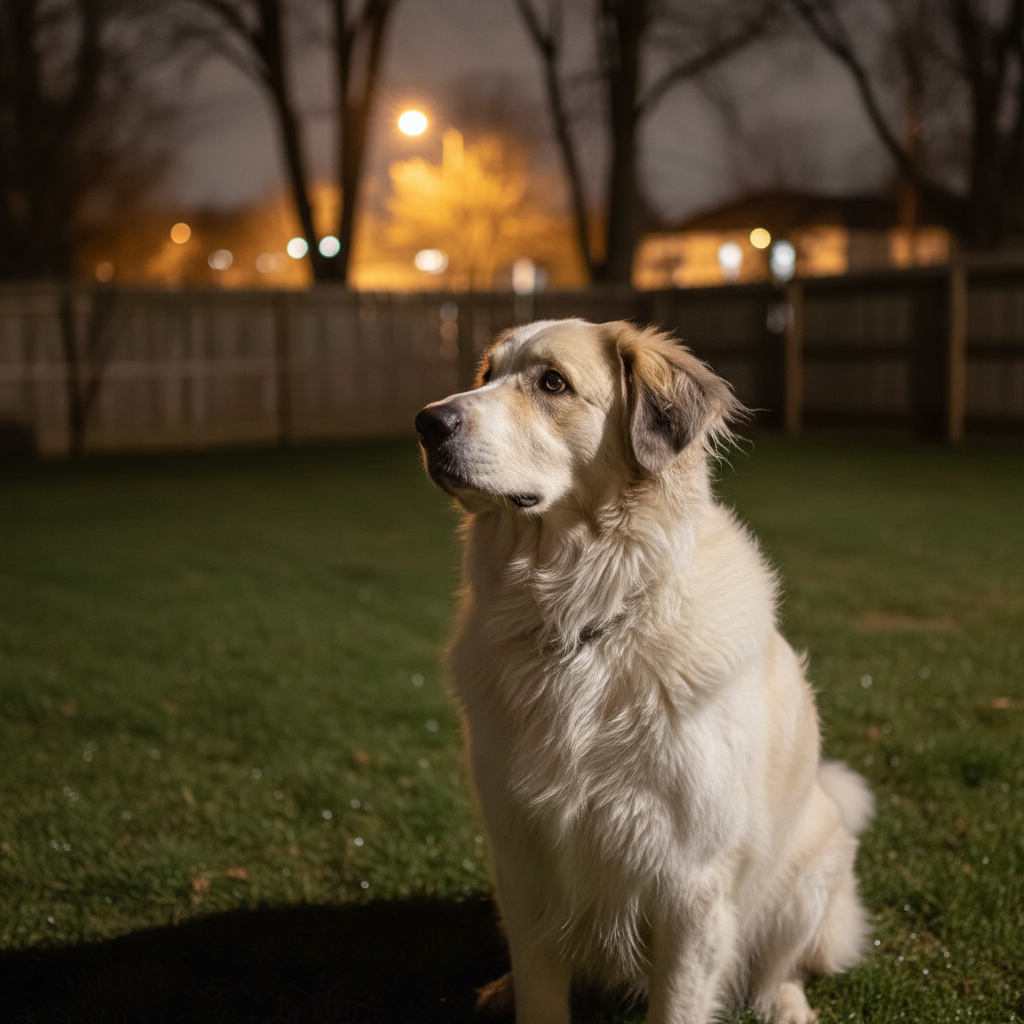
The Suburban Homeowner Nightmare: A Threat to Rescue Efforts
Imagine the scene: a loving family adopts a gentle giant Great Pyrenees from a local rescue. During the day, 'Luna' is a dream – calm, affectionate, a perfect family dog. But as dusk falls, a subtle shift begins. Around 10 PM, the barking starts, sometimes intermittent, sometimes prolonged, only to subside around 4 AM. The neighbors complain. The owners are sleep-deprived and frustrated. Doubts creep in. Is Luna a 'bad' dog? Did we make a mistake?
This scenario plays out in countless homes, particularly in areas like Denver and Austin, where LGDs are increasingly popular family pets but also face urban challenges. The LGD rescue community has seen a disturbing trend: a rise in rehoming requests for dogs due to
Frequently Asked Questions
Why do Great Pyrenees bark so much at night?+
New research from Colorado State University and the Livestock Guardian Dog Association confirms that Great Pyrenees, along with other Livestock Guardian Dog (LGD) breeds like Anatolian Shepherds and Maremmas, are genetically hardwired to be most vigilant and vocal between 10 PM and 4 AM. This is an innate behavior developed over millennia to deter nocturnal predators from livestock, not a sign of misbehavior.
Do bark collars work for Great Pyrenees?+
According to a new paper in the Journal of Veterinary Behavior, punitive devices like bark collars and anti-bark ultrasonic devices are not recommended for LGD breeds. These tools can damage the essential human-dog bond, create anxiety, and are largely ineffective for managing deeply ingrained guardian behaviors, ultimately doing more harm than good.
What are the best ways to manage a Great Pyrenees' night barking?+
Certified Applied Animal Behaviorists recommend five key strategies: establishing a predictable dusk-feeding routine, scheduling specific front-yard perimeter patrol windows, using white-noise buffering inside the home, providing structured daytime decompression naps, and rotating scent enrichment. These methods aim to fulfill the dog's guardian instincts in controlled ways and reduce the intensity of nocturnal vocalization.
How can I tell if my Great Pyrenees' barking is problematic or just normal guardian behavior?+
The 72-Hour Baseline Log Method is a useful tool. By consistently logging all barking incidents—time, duration, context, and perceived triggers—over three days, you can establish a baseline. This helps identify patterns that indicate inherent guardian behavior versus reactive barking (e.g., fear-based, separation anxiety) that might require different behavioral interventions.
Can Great Pyrenees live successfully in suburban areas despite their barking instincts?+
Yes, with proper understanding, management strategies, and community education, LGDs can thrive in suburban settings. Owners in cities like Denver and Austin are finding success by leveraging zoning ordinance loopholes and actively educating their neighbors about their dog's breed-specific behaviors, helping to mitigate complaints and foster acceptance. It often involves balancing the dog's innate needs with the realities of urban living.
Sources
Related Reading
- Puppy Socialization Rewritten: Why 20 Weeks is the New 14!
- Dutch Shepherd Dogs: The Unsung Heroes Taking Over K9 Units & Your Heart?
- Bird Flu in Dogs 2026: Urgent H5N1 Warnings for Dog Owners
- Dog Dementia Breakthroughs: Early Detection & New Hope for Australian Shepherds
- Cane Corso Craze: Why This Giant Breed is Taking Over American Suburbs
Share this story
Pin this to your Dog Lifestyle & Breeds board
Breed profiles, gear roundups, and dog-friendly travel inspo.
Liked this story?
Share it with someone who should read it.
More from Dog Breeds & Lifestyle

Dutch Shepherd Dogs: The Unsung Heroes Taking Over K9 Units & Your Heart?

Puppy Socialization Rewritten: Why 20 Weeks is the New 14!
