Hot Kibble, Hidden Chemistry: What a 2026 Study Reveals
A peer-reviewed April 2026 study of 41 pet foods, summarized by Improve International, found that higher extrusion and cooking temperatures sharply increased acrylamide, HMF, and AGEs in dog food. Here’s what it means, how formats compare, and practical steps for safer feeding—without alarmism.

Category: dog-nutrition
Hot Kibble, Hidden Chemistry: What a 2026 Study Reveals
There’s big, breaking news in dog nutrition—and it isn’t about grain-free or probiotics. A peer-reviewed study published April 2026, summarized publicly by Improve International, tested 41 commercial pet foods and found a clear pattern: as cooking and extrusion temperatures increased, so did levels of three heat-driven compounds—acrylamide, hydroxymethylfurfural (HMF), and advanced glycation end-products (AGEs, also called Maillard reaction products).
This isn’t a cause for panic. It is a timely nudge to understand how processing changes food chemistry—and how to make sensible, brand-agnostic choices for your dog.
Quick Summary
- A 2026 peer-reviewed study of 41 pet foods reported higher acrylamide, HMF, and AGEs with higher extrusion/cooking temperatures.
- These compounds are well-studied in human and rodent nutrition science as by-products of browning reactions at high heat.
- Extruded kibble typically reaches the highest peak temperatures; baked, air-dried, freeze-dried, gently cooked, and raw have different heat histories.
- Labels rarely disclose processing temperatures. Look for clear processing terms, ask brands targeted questions, and avoid over-browned treats.
- If changing diets, transition slowly and focus on overall balance, digestibility, and your individual dog’s needs.
Why this story matters now
Kibble remains the most common way we feed dogs. Extrusion—the dominant manufacturing process—uses brief but intense bursts of heat plus mechanical shear to puff and shape starch-rich dough. The 2026 study is newsworthy because it links those higher temperatures with higher levels of heat-derived compounds that nutrition scientists have tracked in human foods for years. That doesn’t make every bag of kibble “bad,” but it does challenge us (and the industry) to consider processing as part of pet-food quality—not just ingredients and nutrient totals.
A beginner-friendly background: browning, the Maillard reaction, and what forms
If you’ve ever seared a steak or toasted bread, you’ve met the Maillard reaction. When reducing sugars meet amino acids under heat, they create complex flavors, aromas, and the golden-brown color we love. Along the way, they can form:
- Advanced glycation end-products (AGEs): a broad family of compounds formed when sugars bind to proteins and fats. Dietary AGEs are partly absorbed and can accumulate in tissues.
- Acrylamide: formed primarily from the amino acid asparagine and sugars during high-heat cooking of carbohydrate-rich foods (think chips and toast). Classified as “probably carcinogenic to humans” (IARC Group 2A) and a known neurotoxin at high doses in animal models.
- Hydroxymethylfurfural (HMF): forms when sugars dehydrate under heat or acidity (e.g., in baked goods, syrups). It can convert to reactive metabolites in the body; toxicology is still being clarified.
In human nutrition, regulators and researchers have tracked these compounds for two decades. Pet food is essentially food chemistry too—different species, but many of the same reactions.
What the new 2026 study actually measured and found
Here’s the topline based on the published paper (April 2026) and the public summary by Improve International:
- Sample: 41 commercial pet foods spanning multiple processing styles. While the full paper contains the lab specifics, the cross-section allowed comparison across different heat exposures.
- Analytes: acrylamide, HMF, and a panel or proxy markers for AGEs (Maillard reaction products).
- Key finding: higher cooking and extrusion temperatures correlated with markedly higher concentrations of acrylamide, HMF, and AGEs. This was most pronounced in products subjected to the highest peak temperatures and shear—typical of traditional high-pressure extrusion used for kibble.
- Secondary observations: products produced with lower peak temperatures and/or higher moisture (e.g., some baked, air-dried, gently cooked) tended to show comparatively lower values, though results varied by recipe (sugar/starch content, amino acid profile, moisture, time).
What this adds: Earlier pet-food discussions have focused on nutrient completeness, ingredient sourcing, or the microbiome. This study zeroes in on processing intensity. It’s less about “fresh vs kibble” philosophy and more about measurable, heat-derived chemistry.
How extrusion and high heat drive these chemicals
Extrusion is efficient, safe, and consistent—but it’s also a perfect storm for Maillard chemistry:
- Temperature: Extruders can hit very high peak temperatures in seconds to minutes.
- Shear and pressure: Mechanical energy adds heat, speeds reactions, and gelatinizes starch.
- Low water activity at the die: Drier conditions favor Maillard reactions and acrylamide formation.
- Recipe factors: More reducing sugars, free asparagine, and certain amino acid patterns increase precursors; potato and cereal inputs are relevant.
- Post-extrusion toasting/drying: Additional heat steps deepen browning.
Contrast that with lower-temperature, longer-time methods (air-drying), or minimal-heat methods (freeze-drying), where browning is limited.
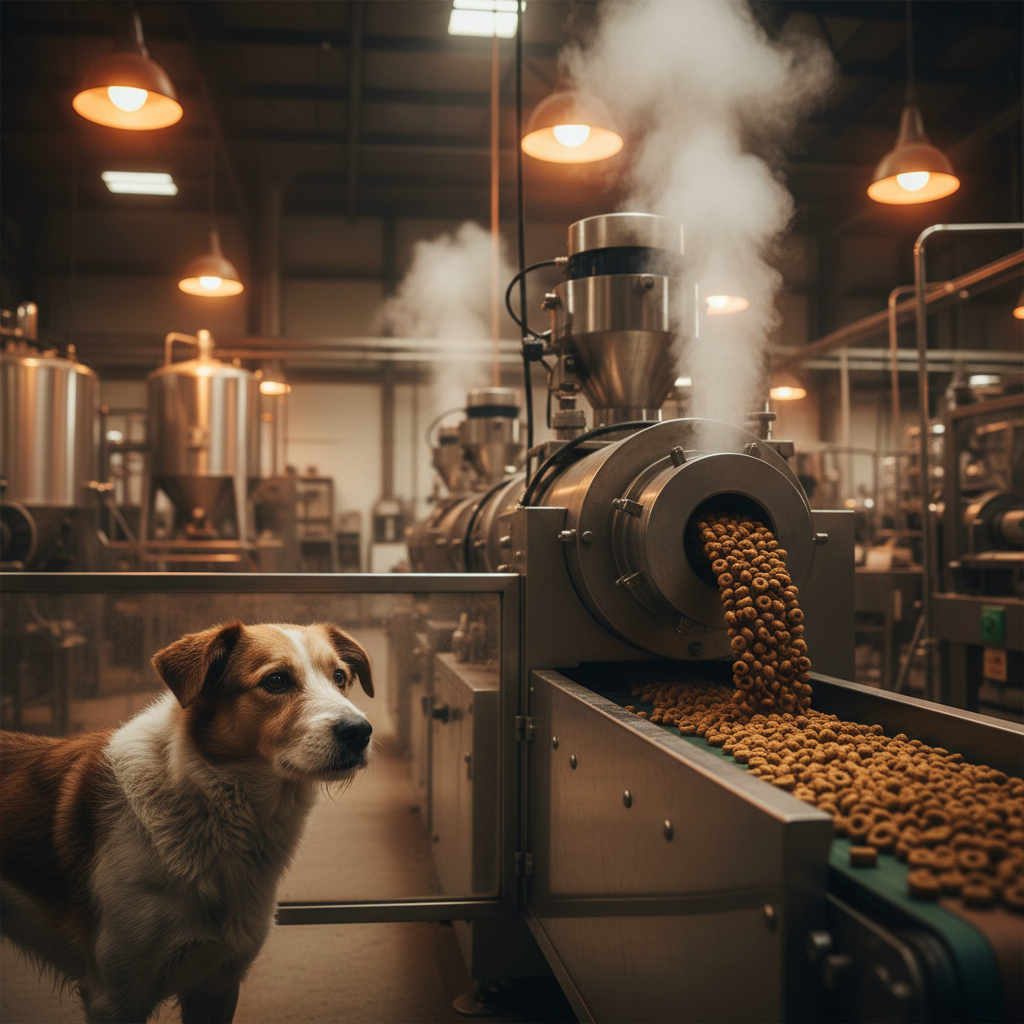 High-heat extrusion can spike Maillard reaction products.
Acrylamide 101 (from human and rodent data)
- Source: Predominantly forms in carbohydrate-rich foods heated above roughly 120°C.
- Toxicology: At high doses in rodents, acrylamide has shown neurotoxicity and is associated with tumor formation; agencies classify it as a probable human carcinogen. In occupational settings, acrylamide exposure is a well-known nerve toxicant.
- Diet relevance: In people, crisps, fries, coffee, and baked goods contribute most exposure. Regulatory bodies focus on mitigation (“as low as reasonably achievable”), not zero.
- Dogs: Direct, long-term pet-specific exposure thresholds haven’t been established. Species metabolize acrylamide differently, and pet-food matrices are unique—one reason the 2026 findings are a prompt for more pet-specific research rather than alarm.
HMF 101
- Source: Forms when sugars dehydrate under heat (caramelization) or acidic conditions; common in baked items and syrups.
- Toxicology: HMF can be converted in the body to 5-sulfoxymethylfurfural, a reactive metabolite in rodent models. The overall risk at dietary levels for humans is still being evaluated, but HMF is widely used as a processing marker: more HMF usually means more heat exposure.
AGEs 101
- Source: Maillard reaction cascade products. Cooking that is very dry, very hot, and prolonged can boost AGEs in foods.
- Biology: In mammals, some dietary AGEs get absorbed, circulate, and bind to receptors like RAGE (receptor for advanced glycation end products), which can amplify inflammatory signaling and oxidative stress in research models. Human studies associate higher AGE diets with markers of inflammation and insulin resistance, though causality and dose-response remain active research areas.
- Dogs: There’s limited, mixed evidence on how dietary AGEs influence canine biomarkers. That’s precisely why objective measurements in pet foods, as in the 2026 study, are important stepping stones.
How food formats compare on heat exposure
No format is inherently “good” or “bad.” Processing choices trade off safety, shelf stability, palatability, nutrition, and cost. But heat history does differ:
-
Traditional extruded kibble
- Heat profile: Very high peak temperatures, high shear, brief residence; post-extrusion drying/toasting.
- Pros: Shelf-stable, widely available, cost-effective, consistent.
- Considerations: Highest potential for acrylamide/HMF/AGE formation among common formats, particularly in carbohydrate-rich formulas or deeply browned pieces.
-
Baked kibble (oven-baked)
- Heat profile: Lower peak temperature than extrusion but longer time; more like crackers.
- Pros: Gentler shear, potential for less acrylamide than high-temp extrusion depending on recipe/time.
- Considerations: Prolonged dry heat can still drive Maillard reactions; very dark color can signal heavy browning.
-
Air-dried
- Heat profile: Lower temperatures over longer periods with moving air; product never “puffs.”
- Pros: Typically fewer intense browning reactions; retains aroma.
- Considerations: Time at warm temperatures still promotes some reactions; quality control against microbial growth is key.
-
Freeze-dried
- Heat profile: Frozen first, then water is removed under vacuum (sublimation) with minimal heating.
- Pros: Minimal Maillard chemistry; ingredients stay close to raw structure.
- Considerations: Must be handled to avoid moisture uptake; rehydration recommended; pathogens present in starting materials are not eliminated by heat, so sourcing and hygiene matter.
-
Gently cooked/fresh (often sous vide or kettle cooked)
- Heat profile: Moderate temperatures with moisture (e.g., 70–95°C) for safety; shorter browning window.
- Pros: Moist heat and lower peaks tend to limit Maillard products compared with high-heat, dry methods.
- Considerations: Requires cold chain; shorter shelf life or freezing; cost.
-
Raw (commercial HPP or unprocessed)
- Heat profile: No cooking heat. Some brands use high-pressure processing (HPP), which inactivates microbes without heat.
- Pros: Minimal to no heat-derived Maillard products.
- Considerations: Microbial safety is the main discussion; handle like raw meat. Not suitable for all households.
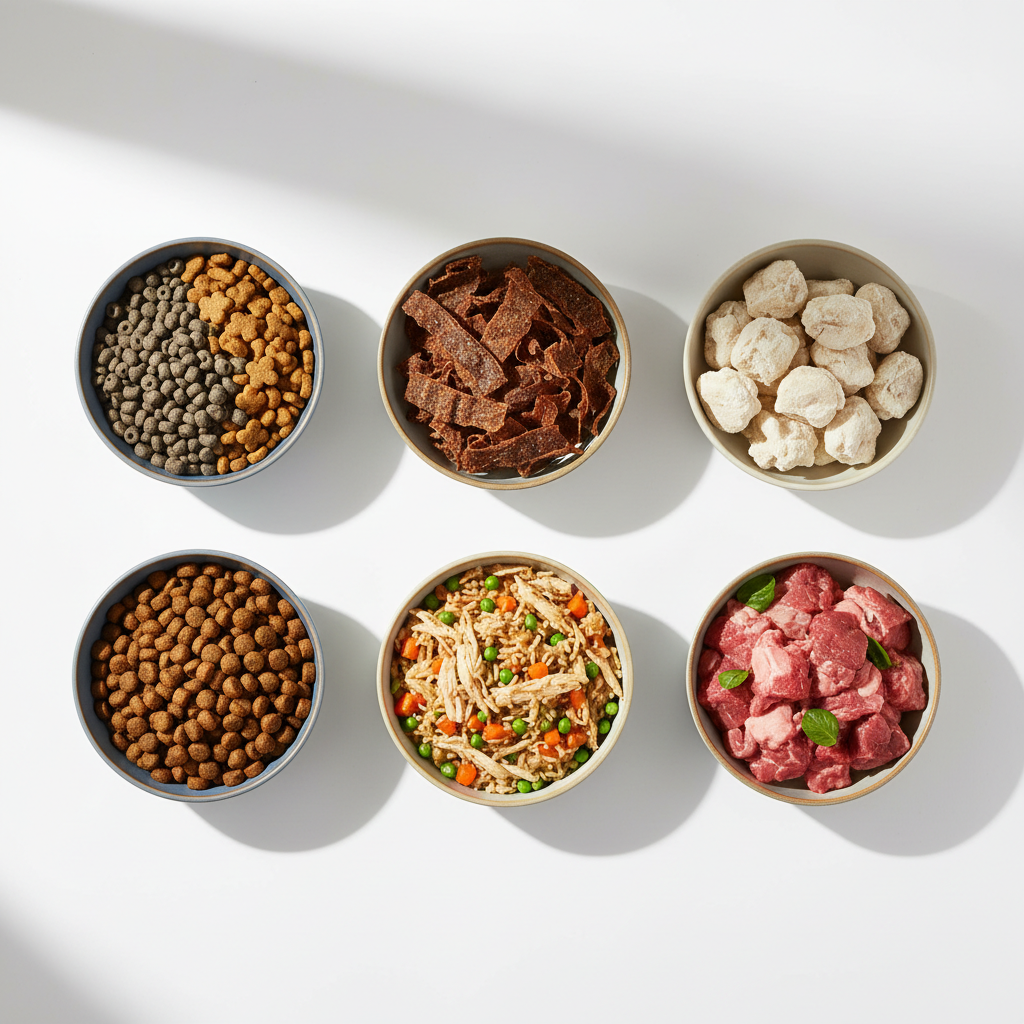 Different processing methods mean different heat histories.
What to look for on a pet-food label (and what’s missing)
Pet-food labels rarely list temperatures or processing curves. Still, you can learn a lot:
-
Processing term clarity
- Look for phrases like “extruded,” “oven-baked,” “air-dried,” “freeze-dried,” “cold-pressed,” or “gently cooked.” These are not always legally standardized terms, but reputable brands explain them consistently across packaging and websites.
-
Color and appearance
- While color is not a perfect proxy, very dark, heavily toasted kibbles and biscuits suggest deeper browning. Pale-to-golden tones may indicate less intense heat, all else equal.
-
Ingredient list
- Carbohydrate sources high in reducing sugars (certain syrups, molasses) and precursors (potato, wheat) can promote acrylamide formation when heated intensely. That does not make them “bad ingredients,” but it does make temperature control more important.
-
Treats
- Crunchy, dark, sweet treats can carry disproportionately high browning products per gram. Reserve as occasional extras rather than everyday staples.
-
Ask the brand
- What processing method do you use?
- What peak temperatures and approximate residence times are typical?
- Do you monitor acrylamide/HMF/AGE markers or employ mitigation steps (e.g., moisture management, recipe tweaks)?
- Do you use post-extrusion coatings or toasting that deepen browning?
-
What’s missing (and why it matters)
- Neither FEDIAF (Europe) nor AAFCO (US/Canada) currently require labels to disclose process temperatures or list acrylamide/HMF/AGE content. This is normal; even human foods don’t list these routinely. But the 2026 data make a solid case for voluntary transparency and research into mitigation.
AAFCO and FEDIAF context: what these bodies do—and don’t do—today
-
AAFCO (US/Canada)
- Sets model regulations and nutrient profiles for “complete and balanced” claims; states adopt and enforce.
- Focus is on nutrient adequacy, naming rules, and safety/identity—not on tracking Maillard by-products.
- Brands may demonstrate adequacy via formulation or feeding trials. Either pathway does not quantify acrylamide/HMF/AGEs.
-
FEDIAF (Europe)
- Provides nutritional guidelines and good practice for European pet-food makers.
- Like AAFCO, emphasis is on nutrient profiles, safety, and labelling—not process-chemistry endpoints.
-
Human food benchmark
- In the EU, there are benchmark levels and mitigation guidance for acrylamide in certain human foods (bread, fries, coffee). Even there, the policy is mitigation, not zero tolerance. Pet food lacks analogous benchmarks—for now.
Bottom line: AAFCO and FEDIAF ensure diets meet minimum/maximum nutrients and basic safety and labelling standards. They do not, at present, regulate acrylamide, HMF, or AGEs in pet foods.
Practical, brand-agnostic guidance for dog owners
You don’t have to overhaul everything overnight. Instead, stack small, sensible wins:
-
Choose processing thoughtfully
- If you rely on dry food, consider options that use lower peak temperatures where available (some baked or air-dried), or mix formats.
-
Diversify the bowl
- Rotating among reputable formats (e.g., kibble plus a fresh topper, or alternating with air-/freeze-dried) can dilute exposure to any one set of process-derived compounds while broadening nutrients and palatability.
-
Favor moisture and freshness
- Adding warm water to kibble reduces the urge to toast pieces and can improve aroma without extra browning. Fresh toppers (steamed veg, moisture-rich complete-and-balanced fresh foods) can help with hydration and satiety.
-
Mind the treats
- Save dark, crunchy biscuits for special moments. Consider single-ingredient dried meats or lower-browned options for daily training.
-
Ask better questions
- Brands that can discuss process controls, temperature targets, and mitigation strategies are signaling maturity and transparency.
-
Keep perspective
- Nutritional adequacy, digestibility, and your dog’s specific needs (age, health, activity) carry more day-to-day impact than any single compound. Use the 2026 findings to refine—not fear—your choices.
Red flags vs. reassurance
-
Red flags
- Extremely dark, over-toasted kibbles or biscuits as everyday fare
- Vague or changing claims about processing (“slow-cooked,” “old-world baked”) without technical details
- Heavy reliance on sugary binders or sweet coatings that brown readily
- Unwillingness to answer basic questions about heat steps or quality-control testing
-
Reassurance signs
- Clear disclosure of processing method and rationale
- Evidence of quality systems (lot testing, supplier controls, hazard analysis)
- Consistent stool quality and coat/condition on the food
- Willingness to provide digestibility data or feeding-trial results
Safe ways to transition diets (if you choose to)
Switching formats (say, extruded kibble to baked or air-dried, or adding a fresh topper) is common—and safe when done gradually.
-
Week 1 (days 1–3)
- 75% old food, 25% new. Observe stool and appetite.
-
Week 2 (days 4–6)
- 50% old, 50% new. Keep protein sources similar if your dog is sensitive.
-
Week 3 (days 7–10)
- 25% old, 75% new. Adjust calories—air-/freeze-dried can be calorie-dense.
-
Hydration and fiber
- Add a splash of warm water or low-sodium broth to dry foods. A spoon of plain pumpkin can smooth the transition for some dogs.
-
Pause if needed
- If stool softens, hold at the current ratio a few days before moving forward. For persistent GI concerns or if your dog has a medical condition, consult your veterinarian for individualized advice.
Expert insights and the real-world impact
Veterinary nutrition experts generally agree on two points that the 2026 study reinforces:
- Processing matters—not just nutrients on paper. How a diet is made can alter compounds that interact with the body.
- Risk is about exposure over time, dose, and the individual. Occasional browned treats are different from an every-meal, highly browned diet for years.
For most healthy dogs, the practical implication isn’t to abandon kibble outright; it’s to prefer thoughtfully processed options, diversify formats when feasible, and keep the overall diet balanced and enjoyable.
What the industry can do next (and what to watch for)
- Transparency: Voluntary disclosure of processing methods and peak temperature ranges.
- Mitigation: Recipe tweaks (controlling reducing sugars/asparagine), moisture and time adjustments, and enzyme pre-treatments that are already used in human food.
- Measurement: Routine acrylamide/HMF/AGE marker testing as internal quality metrics.
- Innovation: Lower-heat extrusion technologies, vacuum-assisted drying, and precision control that preserve safety without over-browning.
- Research: Pet-specific exposure and biomarker studies—what levels actually matter physiologically for dogs over years?
As a dog owner, watch for more brands publishing process details and third-party testing. That’s a healthy sign of progress, not something to fear.
Frequently asked questions
Q: Does this mean kibble is unsafe?
A: Not blanket “unsafe.” The study links higher-temperature processing with higher levels of certain heat-derived compounds. Kibble varies widely. Prioritize products that avoid heavy toasting, ask brands about process controls, and consider mixing formats to diversify.
Q: Are acrylamide, HMF, and AGEs proven to harm dogs at typical dietary levels?
A: We don’t have definitive, long-term, dog-specific dose–response data. Human and rodent studies suggest reasons for caution and mitigation. The smart path is pragmatic: reduce unnecessary browning where possible while keeping diets complete, balanced, and enjoyable.
Q: Is baked kibble automatically better than extruded?
A: Not automatically. Baked uses lower peak temperatures but longer time; recipe and color matter. Some extruded products use mitigation strategies. Compare methods, ask for details, and let your dog’s digestion and overall condition be part of the decision.
Q: Should I switch to raw to avoid these compounds?
A: Raw avoids heat-derived Maillard products but brings its own considerations, particularly microbial safety. If you explore raw, choose reputable brands with strong safety systems and handle products as you would raw meat at home. Many owners prefer middle-ground options like gently cooked, freeze-dried, or air-dried.
Q: How can I reduce my dog’s exposure without changing foods?
A: Use lighter-colored kibble batches when possible, don’t toast kibble in the oven, limit dark crunchy treats, and add moisture or fresh toppers to diversify the bowl.
Key takeaways
- A 2026 peer-reviewed study linked higher processing temperatures to higher acrylamide, HMF, and AGEs in tested pet foods.
- Extruded kibble tends to have the highest peak heat; baked, air-dried, freeze-dried, and gently cooked usually have lower Maillard by-products.
- Labels don’t list temperatures—so ask brands about process controls and avoid heavily browned everyday foods and treats.
- Transition diet changes slowly, prioritize nutritional adequacy and digestibility, and keep perspective: balance and variety matter.
References and further reading
While the April 2026 paper provides the pet-food-specific data point, broader context comes from established human and toxicology literature on acrylamide, HMF, and AGEs, and from regulatory frameworks at AAFCO and FEDIAF. For consumer-friendly overviews, see the external resources linked below.
Frequently Asked Questions
Does the 2026 study mean I should stop feeding kibble?+
Not necessarily. The study links higher processing temperatures with higher levels of certain heat-derived compounds, especially in traditional extrusion. You can choose less heavily browned options, mix in lower-heat formats, and prioritize overall diet quality while watching your dog’s digestion and condition.
Are AGEs, acrylamide, and HMF measured on pet-food labels?+
No. Current AAFCO and FEDIAF labelling rules don’t require disclosing processing temperatures or Maillard by-products. Some brands may share process details or internal testing upon request.
What’s one simple step to reduce exposure without changing brands?+
Skip toasting or baking kibble at home and limit very dark, crunchy treats. Adding moisture or a fresh topper can diversify the bowl without extra browning.
Is raw the only way to avoid Maillard reaction products?+
Raw avoids heat-derived browning, but it introduces handling and microbial considerations. Many owners choose middle-ground options like gently cooked, freeze-dried, or air-dried to limit high-heat exposure while maintaining convenience.
How long should I take to switch foods or formats?+
Plan 7–10 days. Start with 25% new food and increase gradually while watching stool, appetite, and energy. Adjust calories—air-/freeze-dried foods can be more energy dense.
Share this story
The PawPulse Newsroom is a small editorial team of dog owners, trainers, and pet-industry writers reporting on dog health, training, nutrition, and breed trends.
Medically reviewed by PawPulse Veterinary Review Board.
Pin this to your Dog Food & Nutrition board
Feeding charts, fresh-food recipes, and brand comparisons.
Liked this story?
Share it with someone who should read it.
More from Dog Nutrition

Aussie Puppy Socialization: The 2026 Breakthrough Saving Lives!

Shiba Inu Itch Solved! New Protocol Heals Allergies in 78% of Shibas
