Lenivia Approved in the UK: Zoetis' Once-Every-Three-Months Injection Just Changed Canine Arthritis Care
On 28 May 2026 the UK approved Lenivia® (izenivetmab) — the first long-acting anti-NGF monoclonal antibody for canine osteoarthritis. One injection. Three months of relief. Here's what owners and vets should actually do with that.

On 28 May 2026, Zoetis UK quietly changed how British vets will treat one of the most common — and most under-managed — diseases in dogs. The UK Veterinary Medicines Directorate (VMD) granted marketing authorisation for Lenivia® (izenivetmab injection), the first long-acting anti–nerve growth factor (anti-NGF) monoclonal antibody for canine osteoarthritis approved in Great Britain. One subcutaneous injection. Up to three months of pain relief. No daily tablets, no chasing a wriggling dog around the kitchen with a pill pocket.
For owners of senior Labradors, arthritic Border Collies, and stiff-legged Cocker Spaniels, that headline matters. But the story behind Lenivia matters more — because canine osteoarthritis (OA) is far more common, and far more invisible, than most pet owners realise. According to peer-reviewed research cited in Zoetis' own announcement, nearly 40% of dogs of any age or size may be affected by OA pain, and a 2024 Scientific Reports study found radiographic OA even in young, apparently healthy dogs.
This isn't a "senior dog" problem any more. It's a most dogs problem.
What exactly did the UK approve on 28 May 2026?
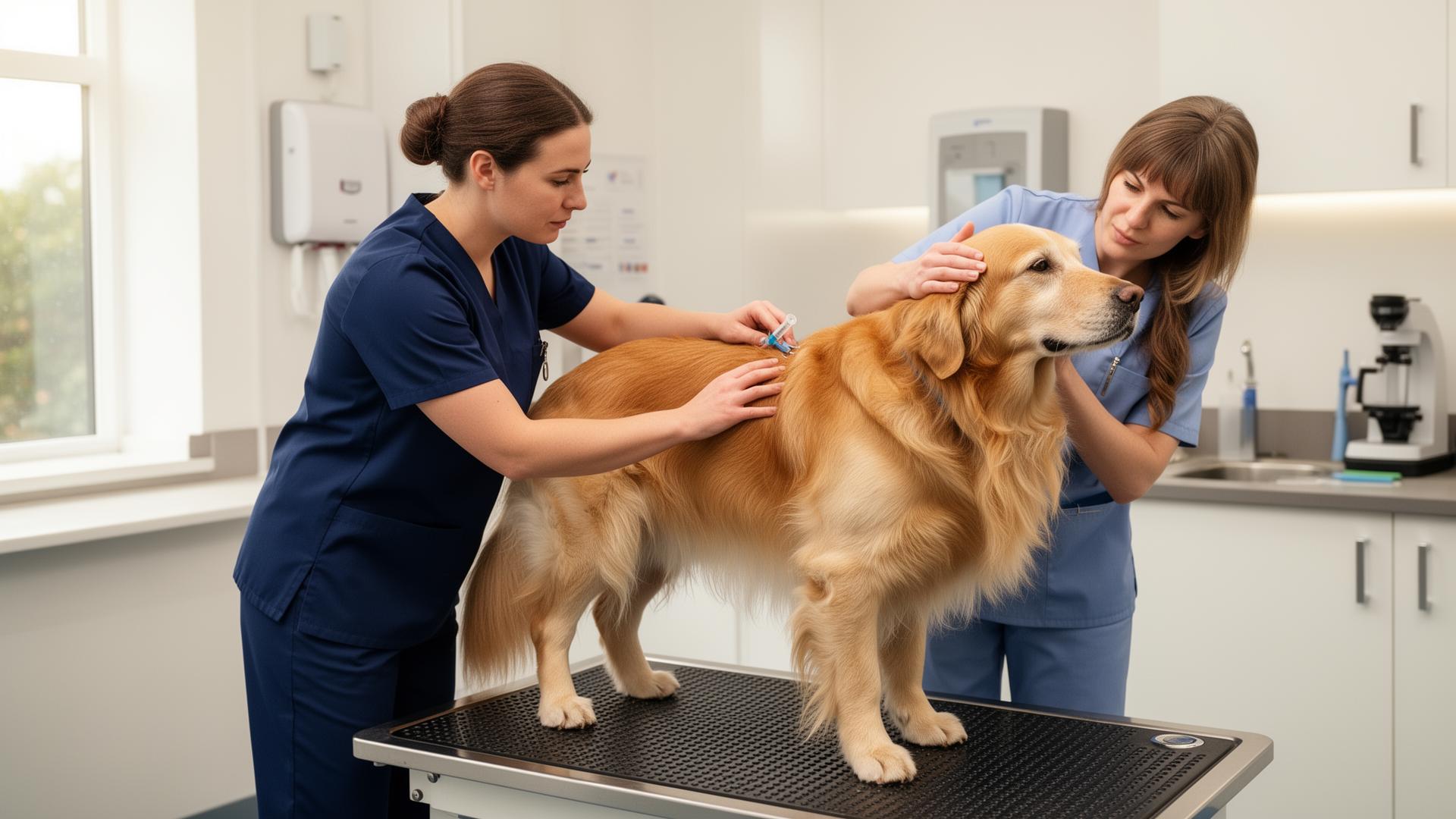
The VMD authorised Lenivia for "the alleviation of pain associated with osteoarthritis in dogs." It comes in five strengths — 0.5 mg, 1.0 mg, 1.5 mg, 2.0 mg, and 3.0 mg solutions for injection — so a vet can dose precisely to your dog's body weight rather than rounding up or down. It is given subcutaneously, once every three months, by a veterinary professional.
The active substance, izenivetmab, is a caninised monoclonal antibody. In plain English: it is a lab-engineered protein, very similar in shape to a dog's own immune antibodies, designed to grab on to a specific pain-signalling molecule and stop it from doing its job. The molecule it grabs is nerve growth factor (NGF).
NGF was originally discovered as a protein that helps nerves grow during development. But scientists later realised something more interesting: in inflamed, arthritic joints, NGF levels surge — and that surge dramatically amplifies pain signals travelling to the spinal cord and brain. Block NGF, and the joint pain dial turns down without touching the kidneys, the stomach lining, or the liver the way long-term non-steroidal anti-inflammatory drugs (NSAIDs) sometimes do.
This isn't a brand-new idea. Lenivia is the next-generation, longer-acting sibling of Librela® (bedinvetmab), the once-monthly anti-NGF injection Zoetis already markets in the UK. The clinical leap forward isn't really what it does — it's how long it does it for. A single Lenivia injection is designed to last as long as three Librela injections.
Why osteoarthritis is the "silent disease" of British dogs
Owners often describe early canine OA in surprisingly cheerful terms: "He's just slowing down." "She's mellowed in her old age." "He's not as bouncy as he used to be." The Royal Veterinary College's own osteoarthritis guidance makes the point bluntly: dogs almost never complain about chronic pain the way humans do. They adapt. They redistribute weight. They sleep more. They stop jumping on the sofa. And by the time the limp is obvious, the joint cartilage has often already taken serious damage.
That matters for two reasons.
First, the disease is progressive. Cartilage doesn't grow back. Once the surface of a hip or elbow joint roughens, the bones underneath start remodelling — forming the bony spurs vets see on X-rays — and the inflammation feeds itself in a loop.
Second, untreated chronic pain isn't just an "ouch" problem. The 2019 Veterinary Journal paper from the Pain in Animals Workshop (PAW) — cited in the Lenivia announcement — described how chronic pain in dogs negatively affects movement, sleep, behaviour, and social relationships. Owners often only realise quite how much pain their dog was in after treatment starts. The classic before-and-after is a dog who suddenly wants to play again at age twelve.
Lenivia's value proposition is essentially this: make it easier to keep that pain dial turned down, for longer, with less owner effort, so dogs spend less of their lives quietly hurting.
How does Lenivia actually work in the body?
Here's a simplified walkthrough.
- Your vet weighs your dog and selects the appropriate Lenivia vial strength (0.5–3.0 mg, based on body weight).
- They give a single subcutaneous injection — most often into the loose skin between the shoulder blades, the same spot many vaccines go.
- Izenivetmab enters the bloodstream and circulates. Because it is a large protein engineered to look "self" to the dog's immune system, the body clears it slowly.
- Wherever NGF is being released — particularly around inflamed joints — izenivetmab binds to it and prevents it from docking onto its receptor (TrkA) on pain-sensing nerves.
- With the NGF–TrkA signal interrupted, the volume of pain signals reaching the brain drops, and the dog moves more comfortably.
- Over roughly three months, the antibody is gradually metabolised and cleared. The next injection re-establishes the block.
Crucially, monoclonal antibodies like izenivetmab are not metabolised by the liver and excreted by the kidneys the way most small-molecule drugs are. That's a big reason vets are interested in anti-NGF therapy for older dogs whose kidney or liver function may already be compromised — populations where chronic NSAID use is a genuine clinical worry.
That said, anti-NGF biologics are not a free lunch (more on safety below).

Lenivia vs. Librela vs. NSAIDs: what's actually different?
The UK already has a respectable OA pain toolkit, and Lenivia doesn't replace it — it adds a new top shelf. Here's the practical comparison most vets will be making this summer:
- NSAIDs (e.g. meloxicam, carprofen, robenacoxib, firocoxib). Daily oral or injectable. Fast-acting, well-studied, cheap. Risks centre on the gut (vomiting, diarrhoea, ulcers), kidneys, and liver, especially in older dogs or those on other medications. Generally require periodic blood work.
- Librela (bedinvetmab). Anti-NGF monoclonal antibody. Once-monthly subcutaneous injection at the vet's. Avoids GI/kidney/liver metabolism. Now widely used in the UK for OA.
- Lenivia (izenivetmab). Anti-NGF monoclonal antibody. Once every three months. Same mechanism family as Librela, engineered for longer half-life. Same vet-administered, in-clinic model.
- Adjuncts: omega-3 EPA/DHA, physiotherapy, hydrotherapy, weight control, controlled exercise, joint diets, and disease-modifying osteoarthritis drugs (DMOADs) like pentosan polysulfate.
For owners, the headline upgrade with Lenivia is frequency. Twelve vet visits a year for Librela becomes four. For a Beagle who turns into a circus act every time the carrier comes out, that is not a trivial quality-of-life improvement — for the dog or the owner.
For vets, the case is a little more nuanced. A longer-acting injection means longer-acting effects, full stop. If a dog reacts unexpectedly, the antibody is still in the system for weeks. That's why Lenivia, like Librela, is firmly a vet-administered, prescription-only product — and why patient selection matters.
What about safety and the FDA "boxed warning" controversy?
If you have been reading veterinary news in 2024–2026, you will have noticed that anti-NGF therapies have not had an entirely uncontroversial rollout. In the United States, the FDA has tracked post-marketing adverse event reports for Librela, including reports of neurological signs and rapidly progressive joint deterioration in some dogs — leading to an updated label and ongoing pharmacovigilance discussion. Major outlets including the Associated Press covered the concerns in 2024.
A few important points of context:
- Correlation vs. causation is genuinely hard to untangle. Dogs receiving Librela or Lenivia are, almost by definition, dogs who are already arthritic, often older, and often have other health conditions. Disentangling drug effect from baseline disease progression takes large datasets and time.
- Regulators in the EU, UK, Canada, and USA continue to authorise these drugs. The European Commission granted Lenivia EU marketing authorisation in November 2025; Health Canada approved it in October 2025; and now the VMD has approved it in Great Britain in May 2026. That regulatory consensus matters.
- The Lenivia GB product information ("SPC") — the official datasheet — is the authoritative source on contraindications, warnings, and adverse events. Your vet will work from this. If you want to read it yourself, ask the prescribing practice for a copy or look it up via the VMD product database.
The practical takeaway for owners is not "avoid anti-NGF drugs," nor "demand them." It is: have a real conversation with your vet about your specific dog. Age, comorbidities, current medications, lifestyle, and how severe the OA actually is should all feed the decision. A young, otherwise healthy dog with mild OA who responds well to weight loss, physio, and an NSAID course may simply not need a biologic yet.
A realistic at-home OA management plan for 2026
Even the best pain injection works better inside a broader plan. Whether your dog ends up on Lenivia, Librela, NSAIDs, or none of the above, the following stays true.
1. Get the diagnosis nailed down. "Slowing down" is not a diagnosis. Stiffness in the morning, reluctance to jump into the boot of the car, trouble with stairs, lagging on walks, or new grumpiness around being touched all warrant a vet exam. Many UK practices now offer dedicated mobility clinics with orthopaedic exams, gait analysis, and X-rays under sedation.
2. Control weight ruthlessly. Every extra kilogram on an arthritic dog is extra load on every painful joint, every single step. A landmark long-running Labrador study showed lean body condition can extend healthy lifespan by years. If your vet says your dog is overweight, take it seriously — it is the single highest-impact change most owners can make.
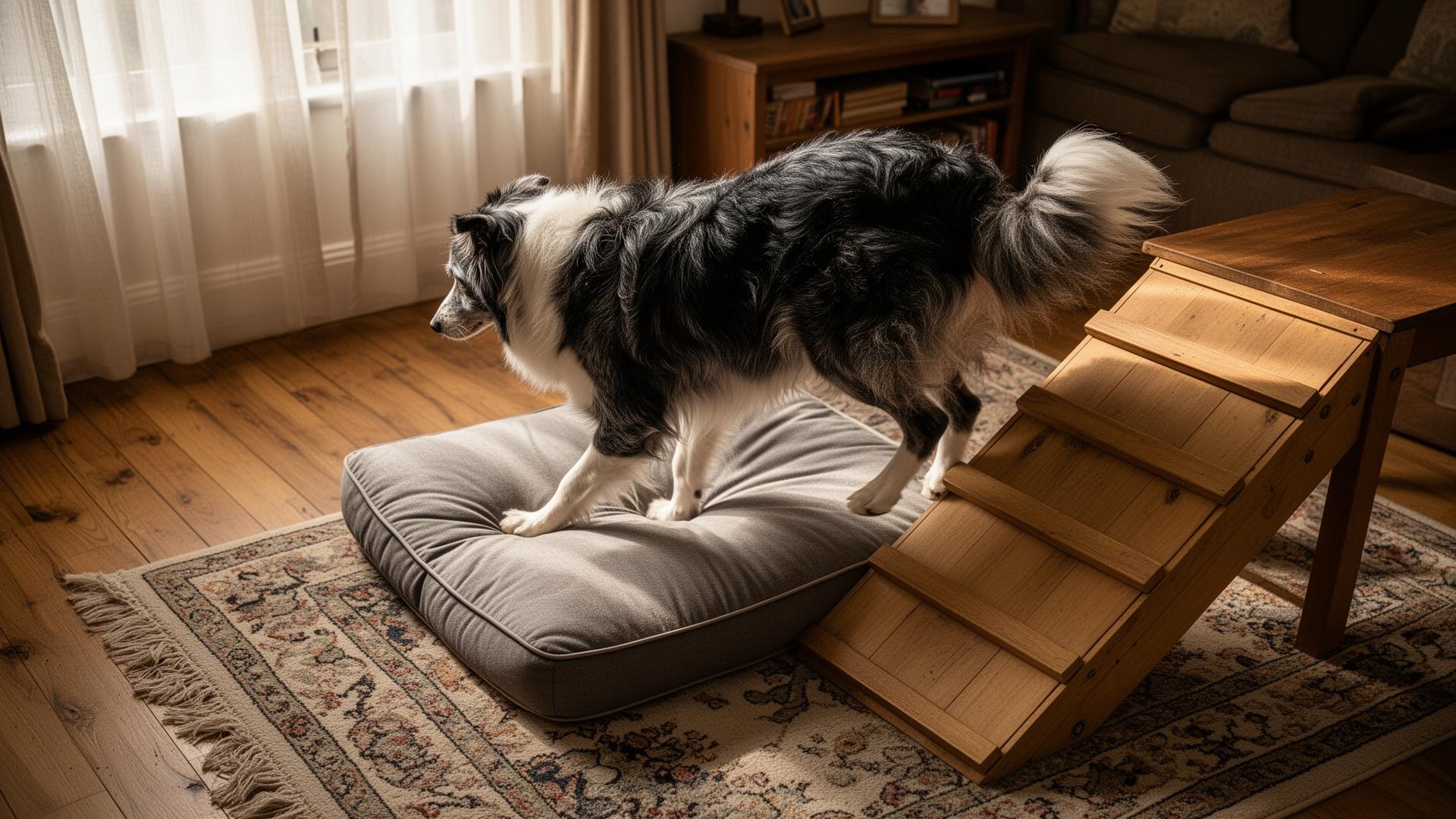
3. Re-engineer the home environment. Non-slip rugs over slippery floors. A low orthopaedic bed they don't have to climb into. A ramp to the sofa, the car, or the bed. Raised food bowls if neck and shoulder OA is in the mix. Short, more frequent walks instead of one long weekend hike. These changes sound minor; collectively, they are transformative.
4. Move them — gently and consistently. Movement nourishes cartilage and maintains the muscle that stabilises arthritic joints. Hydrotherapy, especially underwater treadmill work supervised by a qualified canine hydrotherapist, is the gold-standard low-impact option in the UK. Many insurance policies now cover a course of sessions with a vet referral.
5. Layer treatments thoughtfully. Modern OA management is a stack: weight + environment + exercise + analgesia + adjuncts. Lenivia might be one layer of analgesia, with omega-3s, a joint diet, and physio sitting alongside.
6. Track changes objectively. Owner perception drifts. Use a validated tool — the Canine Brief Pain Inventory (CBPI) is a free, simple owner questionnaire originally developed at the University of Pennsylvania. Score your dog before any new treatment starts, then every few weeks. Bring the scores to your vet visits. This single habit makes treatment decisions dramatically less guess-driven.
How much will Lenivia cost UK owners?
At the time of writing, Zoetis has not published a UK list price for Lenivia, and individual practice pricing will vary. A reasonable expectation — based on Librela pricing in the UK and the longer dosing interval — is that the per-injection cost will be higher than a Librela dose, but the annualised cost may be broadly similar or modestly lower, because four injections a year replace twelve.
There are also "soft" savings: fewer vet trips, less time off work for owners, and (in many cases) less need for routine blood monitoring that long-term NSAID use can require. None of that will show up on a single invoice, but it matters in the total picture.
Pet insurance treatment of biologics in the UK is improving but inconsistent. If your dog has OA and you are shopping for or renewing a policy in 2026, specifically ask: "Are anti-NGF monoclonal antibody injections such as Librela and Lenivia covered, and is there any per-treatment or annual cap?" Get the answer in writing.
Five questions to ask your vet about Lenivia
Print these, screenshot them, or save them to your phone. They map directly onto the decisions you and your vet will be making.
- Based on my dog's exam, X-rays, and CBPI score, where would you place the severity of their osteoarthritis — mild, moderate, or severe?
- Given my dog's age, kidney/liver function, and any other medications, is Lenivia a better fit than continuing NSAIDs or starting Librela?
- What signs of an adverse reaction should I watch for in the first two weeks after the first injection, and at what point should I phone the practice?
- What is your follow-up plan — when do you want to re-examine, and how will we decide whether to re-dose at the three-month mark?
- What non-drug changes (weight loss target, hydrotherapy referral, home modifications) do you most want me to focus on alongside Lenivia?
A vet who welcomes those questions is a vet who is going to manage your dog's OA well.

The bigger picture: biologics are quietly reshaping dog medicine
Step back from Lenivia for a moment, and a broader pattern comes into focus. Over the past few years, the most interesting drug approvals in canine medicine have not been new chemicals — they have been biologics: caninised monoclonal antibodies aimed at very specific molecular targets. Anti-NGF for osteoarthritis pain. Anti-IL-31 (Cytopoint) for itch. Long-acting parasiticides. New oncology antibodies in late-stage trials. The same revolution that reshaped human medicine in the 2010s is now rolling, more quietly, through veterinary clinics.
For dogs, this means something genuinely good: more targeted treatments, longer dosing intervals, fewer daily tablets, and — in many cases — better long-term safety profiles for chronic conditions in older patients. It also means owners will increasingly be asked to make more sophisticated decisions about cost, evidence, and expectations. Trusted independent sources — your vet first, then organisations like the Royal Veterinary College and peer-reviewed journals — are going to matter more, not less.
Lenivia's UK approval is a single data point in that larger arc. But for a stiff Spaniel in Surrey, a creaky Collie in Cumbria, or a chocolate Lab whose tail thumps a little slower than it used to, it is a data point that could mean afternoons in the park again. And that, in the end, is what canine pain management is really about.
Editorial note: This article is journalism, not veterinary advice. Always discuss any new medication — including Lenivia — with your own veterinary surgeon, who knows your dog's full history. The product is prescription-only and must be administered by a veterinary professional in accordance with the approved GB product information.
Frequently Asked Questions
What is Lenivia (izenivetmab)?+
Lenivia is a long-acting monoclonal antibody injection approved in Great Britain on 28 May 2026 for alleviating pain associated with osteoarthritis in dogs. It is given by a vet subcutaneously once every three months and works by binding nerve growth factor (NGF) to interrupt pain signalling.
How is Lenivia different from Librela?+
Both are anti-NGF monoclonal antibody injections made by Zoetis. Librela (bedinvetmab) is given monthly, while Lenivia (izenivetmab) is engineered to last up to three months per injection. The mechanism of action is in the same family, but the dosing interval — four injections a year instead of twelve — is the main practical difference.
Is Lenivia safe for senior dogs with kidney or liver issues?+
Monoclonal antibodies are not metabolised by the liver and kidneys the way small-molecule NSAIDs are, which is one reason vets are interested in anti-NGF therapy for older dogs. However, all anti-NGF drugs have a real safety profile that includes possible adverse events, so the decision must be individualised. Discuss your dog's full health history with your vet.
How much does Lenivia cost in the UK?+
Zoetis has not published a UK list price at launch, and practice pricing will vary. Per-injection cost is likely to be higher than a Librela dose, but because Lenivia replaces three monthly Librela injections with one quarterly injection, the annual cost may be broadly comparable. Ask your practice for a written quote, and check whether your pet insurance covers anti-NGF biologics.
Can I just stop my dog's NSAIDs once they start Lenivia?+
Never change or stop a prescribed medication without veterinary guidance. Your vet will plan any transition, including any necessary washout period between NSAIDs and Lenivia, and may keep adjunct treatments such as joint diets, physiotherapy, or omega-3 supplements in place.
Sources
Related Reading
Share this story
The PawPulse Newsroom is a small editorial team of dog owners, trainers, and pet-industry writers reporting on dog health, training, nutrition, and breed trends.
Medically reviewed by PawPulse Veterinary Review Board.
Pin this to your Healthy Happy Dogs board
Vet-vetted wellness, symptom guides, and senior dog care pins.
Liked this story?
Share it with someone who should read it.
More from Dog Health & Wellness

IVDD Revolution: How We Slashed Dachshund Back Pain by 74%!

Cavalier MVD Breakthrough: 3 Tools That Add Years to Their Lives
