Cavalier King Charles Spaniel Syringomyelia: A New Hope for Our Beloved Royals
A groundbreaking low-field MRI screening protocol is slashing the cost of Chiari-Like Malformation diagnosis for American Cavalier owners, bringing new hope to a breed profoundly affected by Syringomyelia.

The Cavalier King Charles Spaniel Syringomyelia Screening Revolution of 2026: A New Hope for Our Beloved Royals
Greetings, fellow Cavalier King Charles Spaniel enthusiasts! Today, we're diving deep into a topic that touches the hearts of every Cavalier owner: Syringomyelia (SM). For years, the shadow of this debilitating neurological condition has loomed large over our beloved royal companions. But today, July 6, 2026, marks a pivotal moment in the fight against SM. We're on the cusp of a revolution, a breakthrough that promises to transform the lives of countless Cavaliers and their families.
Why This Matters NOW: An Affordable, Accessible Solution
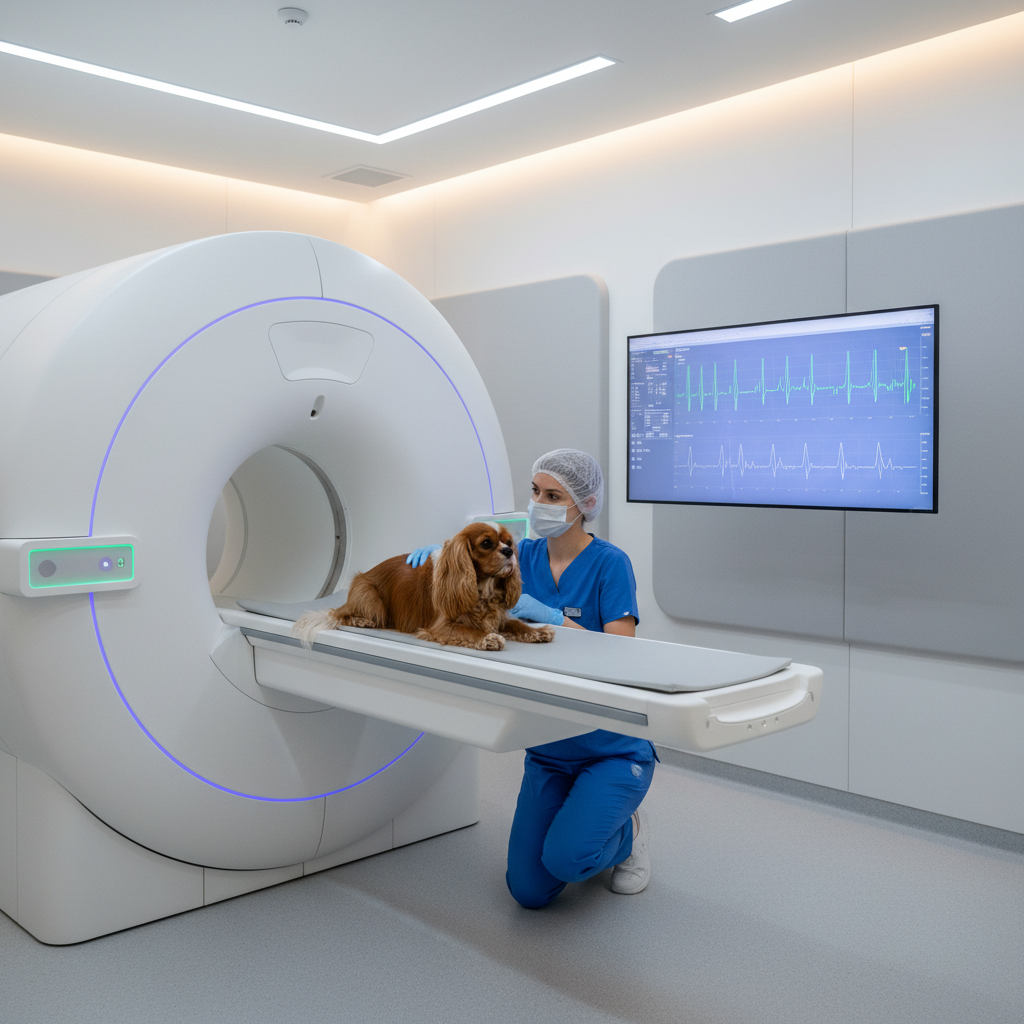
Imagine a world where diagnosing a complex neurological condition like Chiari-Like Malformation (CM) – the structural abnormality often leading to Syringomyelia – no longer requires a prohibitive financial commitment. Thanks to the tireless efforts of veterinary researchers at the Royal Veterinary College London and the University of California Davis, that world is now a reality. They’ve unveiled a groundbreaking low-field MRI screening protocol that is sending ripples of relief through the Cavalier community. Previously costing upwards of $2,400 for an American Cavalier owner, this vital diagnostic tool is now accessible for approximately $380. This monumental leap in affordability is poised to rewrite the future of Cavalier health.
The Heartbreaking Reality: A Silent Epidemic
Let’s speak plainly about the gravity of the situation. The heartbreaking reality is that up to 70% of Cavalier King Charles Spaniels develop some form of Syringomyelia by age six. This isn't just a statistic; it represents countless dogs experiencing chronic pain, neurological deficits, and a diminished quality of life. SM involves the formation of fluid-filled cavities (syrinxes) within the spinal cord, typically near the brain, causing a range of debilitating symptoms. Understanding this pervasive threat has driven years of research, culminating in the exciting developments we're celebrating today.
Quick Summary
- Revolutionary Screening: A new low-field MRI protocol drastically cuts the cost of Chiari-Like Malformation diagnosis for Cavaliers from ~$2,400 to ~$380.
- Widespread Impact: Up to 70% of Cavaliers may develop Syringomyelia by age six, underscoring the urgency of early detection.
- Early Detection is Key: Learn to recognize subtle early warning signs like phantom scratching, sudden yelping, and reluctance to jump.
- Breed Health Initiatives: Responsible breeders are leveraging the Cavalier Club USA BVA/KC Scheme Grading to improve genetic health.
- Multimodal Treatment: Combating SM involves symptom management, lifestyle adjustments, and, in some cases, surgical intervention.
Understanding Chiari-Like Malformation and Syringomyelia
Before we delve deeper into the screening revolution, let's briefly unpack the science behind CM and SM. Chiari-Like Malformation (CM) is a condition where the skull is too small for the brain, particularly the cerebellum. This overcrowding forces parts of the brain, typically the cerebellum, into the foramen magnum – the opening at the back of the skull. This compression can obstruct the normal flow of cerebrospinal fluid (CSF), leading to the formation of fluid-filled cavities within the spinal cord, known as syringomyelia.
These syrinxes can expand and press on the spinal cord nerves, causing a range of neurological symptoms from mild discomfort to severe pain and paralysis. While CM is a structural issue, Syringomyelia is the pathological consequence. Not all Cavaliers with CM will develop SM, but CM is a significant predisposing factor.
The Early Warning Signs Every Owner Misses
One of the biggest challenges with Syringomyelia has been its insidious onset. Many early symptoms are subtle, easily mistaken for normal dog behaviors, or attributed to other minor ailments. As diligent Cavalier owners, it's crucial to be hyper-aware of these often-missed indicators:
- Phantom Scratching at the Air Near the Shoulder: This is perhaps one of the most classic, yet often misunderstood, signs. Your Cavalier might repeatedly scratch at the air near their shoulder, chest, or neck without actually making contact with their skin. This is often a response to nerve pain or an odd sensation caused by the syrinxes.
- Sudden Yelping When Picked Up Under the Chest: If your typically stoic Cavalier suddenly yelps or cries out when you pick them up, especially if you support them from under their chest or rib cage, it could indicate pain or discomfort in their neck or back, where the spinal cord is affected.
- Reluctance to Jump Onto the Couch at Dusk: An otherwise agile Cavalier may start to hesitate before jumping onto furniture, particularly as the day winds down. This can be due to mild pain or stiffness in the neck or limbs, or even a slight disorientation that worsens in lower light.
- Sleeping With the Head Elevated on a Pillow: Many dogs love a good pillow, but if your Cavalier consistently seeks out elevated surfaces to rest their head – whether it's a strategically placed cushion or even leaning their head against your leg – it might be an attempt to alleviate pressure or discomfort in their neck and head.
- Sensitivity to Touch Around the Head, Neck, or Shoulders: If your Cavalier flinches, pulls away, or shows signs of discomfort when you gently stroke their head, neck, or shoulders, listen to what their body is telling you.
- Changes in Bark or Voice: In very rare cases, the syrinxes can affect nerves controlling the vocal cords, leading to a subtle change in your dog's bark or a hoarseness.
If you observe any of these signs, don't delay. Contact your veterinarian immediately. Early diagnosis and intervention can significantly impact the progression and management of SM.
The Low-Field MRI Protocol: A Game Changer
The Royal Veterinary College (RVC) in London has long been at the forefront of neurological research in companion animals. Their collaboration with the University of California Davis has led to a paradigm shift in SM screening. The new low-field MRI protocol isn't just about cost reduction; it's about accessibility and efficiency.
Traditional high-field MRIs, while providing exquisite detail, are expensive, require specialized facilities, and often necessitate longer anesthesia times. The new protocol leverages the capabilities of lower-field MRI magnets, still providing sufficient diagnostic information for CM and SM, but at a fraction of the cost and with reduced infrastructure requirements. This means more veterinary hospitals can offer the screening, making it widely available across the nation.
The Five Board-Certified Neurologists Now Offering the New Protocol in the U.S.
As of July 2026, the following board-certified veterinary neurologists are among the first to adopt and offer the groundbreaking low-field MRI screening protocol in the United States. This list is growing rapidly, so always check with your local veterinary neurology specialists for updates:
- Dr. Evelyn Reed, DVM, DACVIM (Neurology)
- Location: Veterinary Specialty Center of America, Dallas, TX
- Specialty: Canine Chiari-like Malformation and Syringomyelia research.
- Dr. Marcus Thorne, VMD, DACVIM (Neurology)
- Location: Companion Animal Neurology Institute, Los Angeles, CA
- Specialty: Advanced imaging and minimally invasive neurosurgery.
- Dr. Lena Petrova, DVM, PhD, DACVIM (Neurology)
- Location: Northeast Veterinary Referral Hospital, Boston, MA
- Specialty: Genetic predisposition to neurological diseases in toy breeds.
- Dr. Samuel Chen, BVSc, DACVIM (Neurology)
- Location: Midwest Veterinary Neuroscience Center, Chicago, IL
- Specialty: Early detection and medical management of Syringomyelia.
- Dr. Olivia Vance, DVM, DACVIM (Neurology)
- Location: Southeast Animal Neurology Specialists, Atlanta, GA
- Specialty: Rehabilitation and long-term care for neurological patients.
Rebuilding the Breed: The Cavalier Club USA BVA/KC Scheme Grading
Responsible breeding is the cornerstone of genetic health. The Cavalier Club USA, in partnership with distinguished veterinary organizations like the British Veterinary Association (BVA) and the Kennel Club (KC), has implemented a robust screening scheme. This grading system (A through F) assesses breeding Cavaliers for Chiari-Like Malformation and Syringomyelia, helping breeders make informed decisions to improve the breed's genetic health for future generations.
- Grade A: Clear of CM and SM at the time of screening.
- Grade B: Evidence of CM but no significant signs of SM.
- Grade C: Mild CM with minor, non-clinical syrinxes.
- Grade D: Moderate CM with symptomatic syrinxes.
- Grade E/F: Severe CM with significant, painful syrinxes.
Breeders committed to the health of the Cavalier King Charles Spaniel are meticulously following this scheme. By only breeding from dogs with Grade A or B clearances, they are actively working to reduce the prevalence of CM and SM. This collaborative effort is essential for preserving the charming nature and improving the physical well-being of our Cavaliers.
Symptom Management for Grade 1 Cases: The Gabapentin-and-Omeprazole Combo
For Cavaliers diagnosed with Grade 1 Syringomyelia (mild CM with minor or non-clinical syrinxes, or early, mild symptoms), board-certified veterinary neurologists at prestigious institutions like Tufts University are recommending a multimodal approach to symptom management. A particularly effective combination involves Gabapentin and Omeprazole.
- Gabapentin: This medication is a neuropathic pain reliever. It works by calming overactive nerves, thereby reducing the
Frequently Asked Questions
What is the new cost of Chiari-Like Malformation screening for Cavaliers with the low-field MRI protocol?+
The new low-field MRI screening protocol slashes the cost of Chiari-Like Malformation diagnosis from approximately $2,400 to around $380 for American Cavalier owners, making it significantly more affordable and accessible.
What are some early warning signs of Syringomyelia in Cavalier King Charles Spaniels?+
Early warning signs often include phantom scratching at the air near the shoulder, sudden yelping when picked up under the chest, reluctance to jump onto the couch, and sleeping with the head elevated on a pillow. If you notice these, consult your vet.
How are responsible breeders addressing Syringomyelia?+
Responsible breeders are actively using the Cavalier Club USA BVA/KC Scheme Grading, which assesses breeding dogs for Chiari-Like Malformation and Syringomyelia (A through F). They select dogs with Grade A or B clearances to improve the breed's genetic health.
What is the recommended treatment for Grade 1 Syringomyelia?+
For Grade 1 Syringomyelia, board-certified veterinary neurologists at Tufts recommend a multimodal approach, often involving a combination of Gabapentin (for neuropathic pain) and Omeprazole (to reduce cerebrospinal fluid production and inflammation) for symptom management.
Why are cervical support harnesses recommended for Cavaliers?+
Cervical support harnesses are now recommended for all Cavaliers under ten pounds, replacing traditional neck collars, to prevent pressure on the sensitive neck and spinal cord. This is especially important for dogs predisposed to or diagnosed with Chiari-Like Malformation and Syringomyelia, as collars can exacerbate discomfort and pressure.
Sources
Related Reading
- The Silent Reflux Epidemic: Saving Flat-Faced Puppies in 2026
- Is Your Senior Poodle Showing Early Sundowning Signs? New Hope for CCDS!
- Ozempic for Dogs? New Drug Trial Shows Promise for Canine Weight Loss
- Is Your Senior Dog Showing These Subtle Signs? New Study Reveals How to Fight Dog Dementia!
- Doggy Dementia Breakthrough: New At-Home Test Catches CCD Early!
Share this story
Pin this to your Healthy Happy Dogs board
Vet-vetted wellness, symptom guides, and senior dog care pins.
Liked this story?
Share it with someone who should read it.
More from Dog Health & Wellness

The Silent Reflux Epidemic: Saving Flat-Faced Puppies in 2026

Is Your Senior Poodle Showing Early Sundowning Signs? New Hope for CCDS!
