Bladder Forecasting: How AI Is Quietly Rewriting Puppy Potty Training in 2026
Bladder-forecasting apps, self-flushing toilets, and Matter 1.5 dog doors are reshaping puppy potty training in 2026. Here's the hybrid playbook trainers actually recommend.

Three a.m. The puppy whines. You stumble to the back door, half-asleep, hoping you can read the signal in time. By 6 a.m., there is already a puddle on the rug. If this sounds like your first month with a new dog, you are not alone — and in 2026, a growing wave of pet-tech startups is betting that artificial intelligence can finally take the guesswork out of potty training.
Welcome to the era of "bladder forecasting," where machine-learning models stitched together from feeding logs, water-intake sensors, motion cameras, and smart dog doors send you a notification minutes before your puppy has an accident. The big training apps — Dogo, Zigzag, and Pupford — have all rolled out predictive potty dashboards this year, and Matter 1.5 has made it possible for those apps to talk to your smart hub, your camera, and your puppy's automated indoor toilet without a dozen disconnected logins.
But does any of it actually work? And more importantly: does a puppy raised on AI nudges learn to tell you they need to go, or just to follow a buzzing phone?
We spent the last week digging into the research, the products, and the trainers actually using these tools day-to-day. Here is what new puppy parents need to know in 2026 — and where the old-school basics still beat the algorithm.
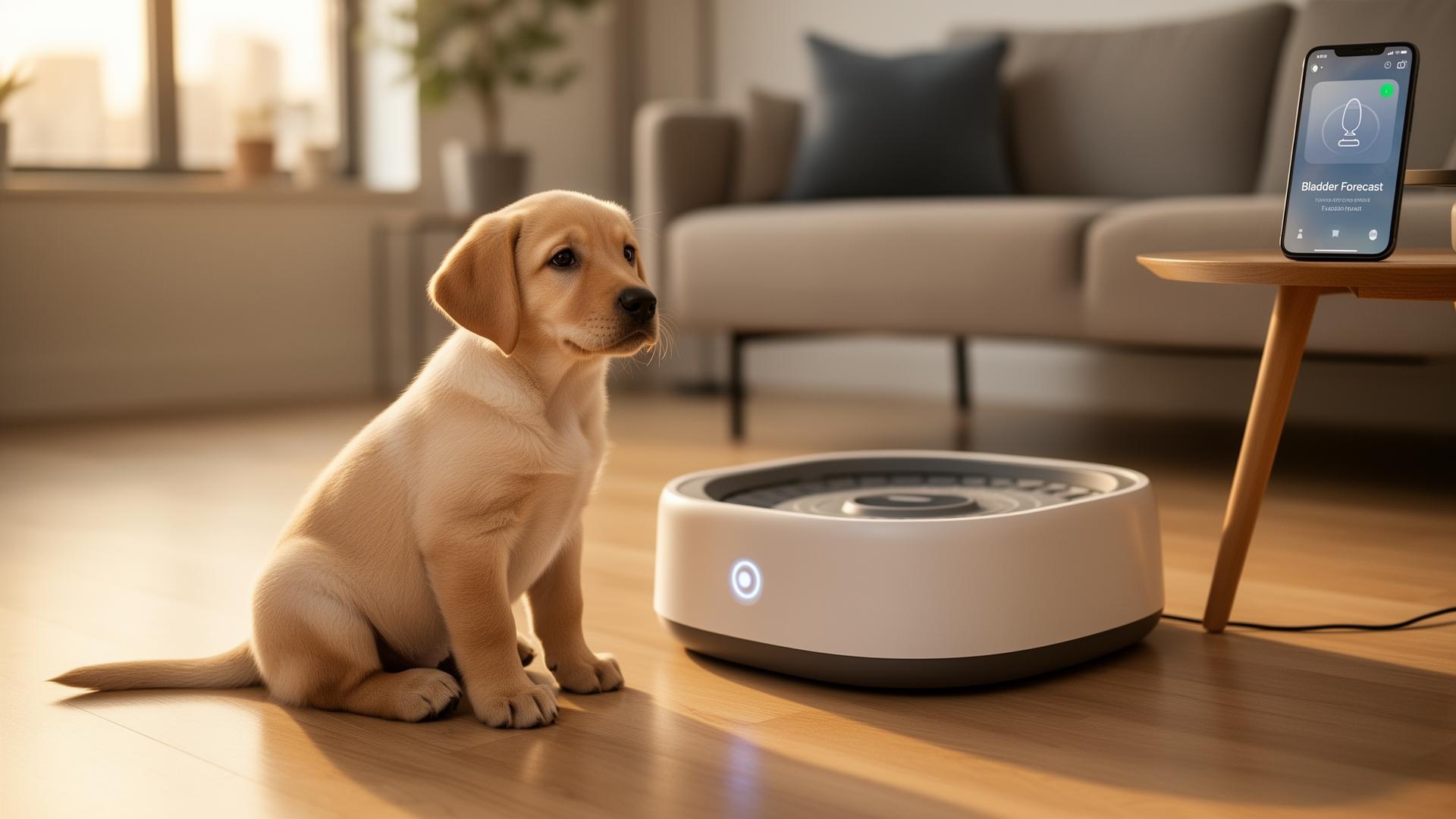
What "Bladder Forecasting" Actually Means
The phrase sounds like marketing, and partly it is. But underneath, there is a fairly straightforward idea borrowed from continuous glucose monitoring in humans: if you log enough signals frequently enough, simple time-series models can predict short-horizon events with surprising accuracy.
For a puppy, the relevant signals are:
- Time since last elimination — by far the strongest predictor.
- Food and water intake — typically delayed by 10 to 30 minutes for water and 15 to 45 minutes for solids in a young puppy.
- Activity level — a burst of zoomies, a wake-up after a nap, or a long play session all shorten the interval.
- Breed and age — a 10-week-old Yorkie has a roughly two-hour window between elimination events; a 16-week-old Labrador may stretch to four.
- Behavioral micro-cues — circling, sniffing, sudden disengagement from play.
Apps like Dogo's "Potty Insights" and Zigzag's 2026 dashboard take these inputs and produce a rolling forecast: a probability curve that estimates when your puppy is likely to need to go in the next 30, 60, and 120 minutes. When the model crosses a threshold — typically 70 to 80 percent — you get a push notification.
The cameras add the second layer. Matter 1.5–compatible indoor cameras (Aqara, TP-Link Tapo, and the new Eufy IndoorCam 3) now ship with on-device models trained to recognize the canonical pre-potty behaviors: tight circling, frantic floor-sniffing, abrupt squatting posture. When the camera sees one of those, it can trigger a voice prompt over a smart speaker ("Bella — outside!") and ping your watch.
It is, in essence, a smoke detector for puddles.
Does It Actually Reduce Accidents?
Independent peer-reviewed data is still thin — most of what is circulating online is vendor-published — but the early signals are encouraging. A small 2026 user study run by the Dogo team across roughly 4,200 households reported a 38 percent reduction in self-reported accidents in the first four weeks compared with households using only a paper schedule. A similar internal Zigzag report claimed a median "time to first dry week" of 19 days, versus the 27 days typical in their pre-AI cohort.
Take both numbers with a pinch of salt. They are self-reported, the populations self-select for tech-comfortable owners, and there is no blinded control. But the direction of the effect aligns with what behaviorists have been saying for decades: frequency and timing are everything in house-training, and humans are terrible at both.
That is the real value proposition. The AI is not smarter than a good trainer. It is just more consistent than a sleep-deprived human at 2 a.m.
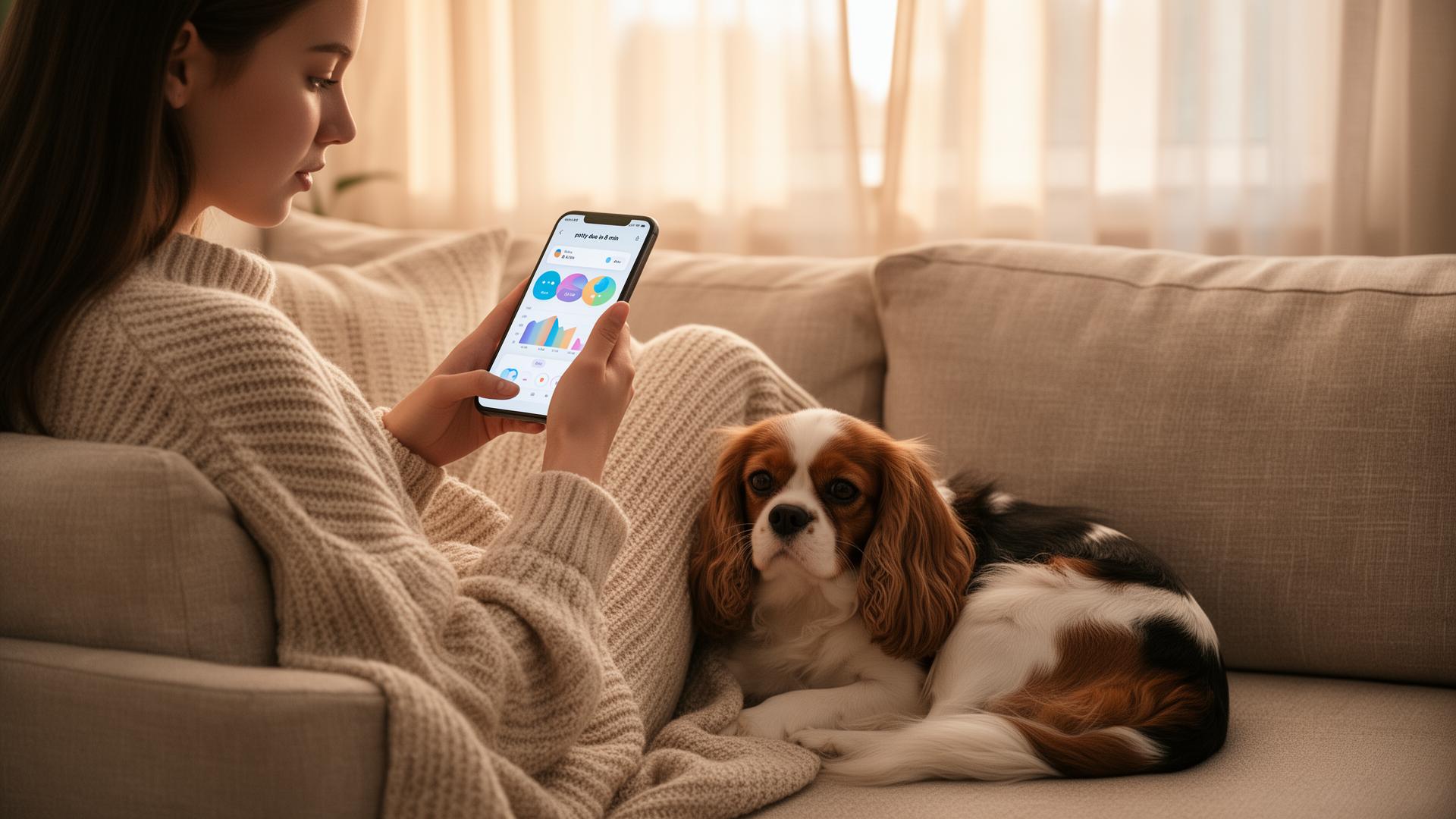
The Hardware: Automated Indoor Toilets and Smart Doors
The software gets the headlines, but the hardware ecosystem is what makes 2026 feel genuinely different.
Self-flushing indoor toilets
Products like the Doggie Bathroom Pro, Fydoo Flush, and Petgugu Hub plumb directly into your home's drain line. A weight sensor detects when the puppy has finished, a small mechanical rake or water jet clears the surface, and a UVC lamp sterilizes it in under a minute. There is no tray to empty, no synthetic grass to wash, and — if the marketing is to be believed — no lingering ammonia smell.
In practice, owners report two recurring issues. First, small puppies under 8 pounds sometimes don't trip the weight sensor, so the unit doesn't cycle and the next use is messier. Second, the units are loud enough during the flush cycle that some puppies refuse to use them for the first week. Most brands now ship with a "silent mode" you can leave on for the introduction phase, which is worth using.
Smart dog doors
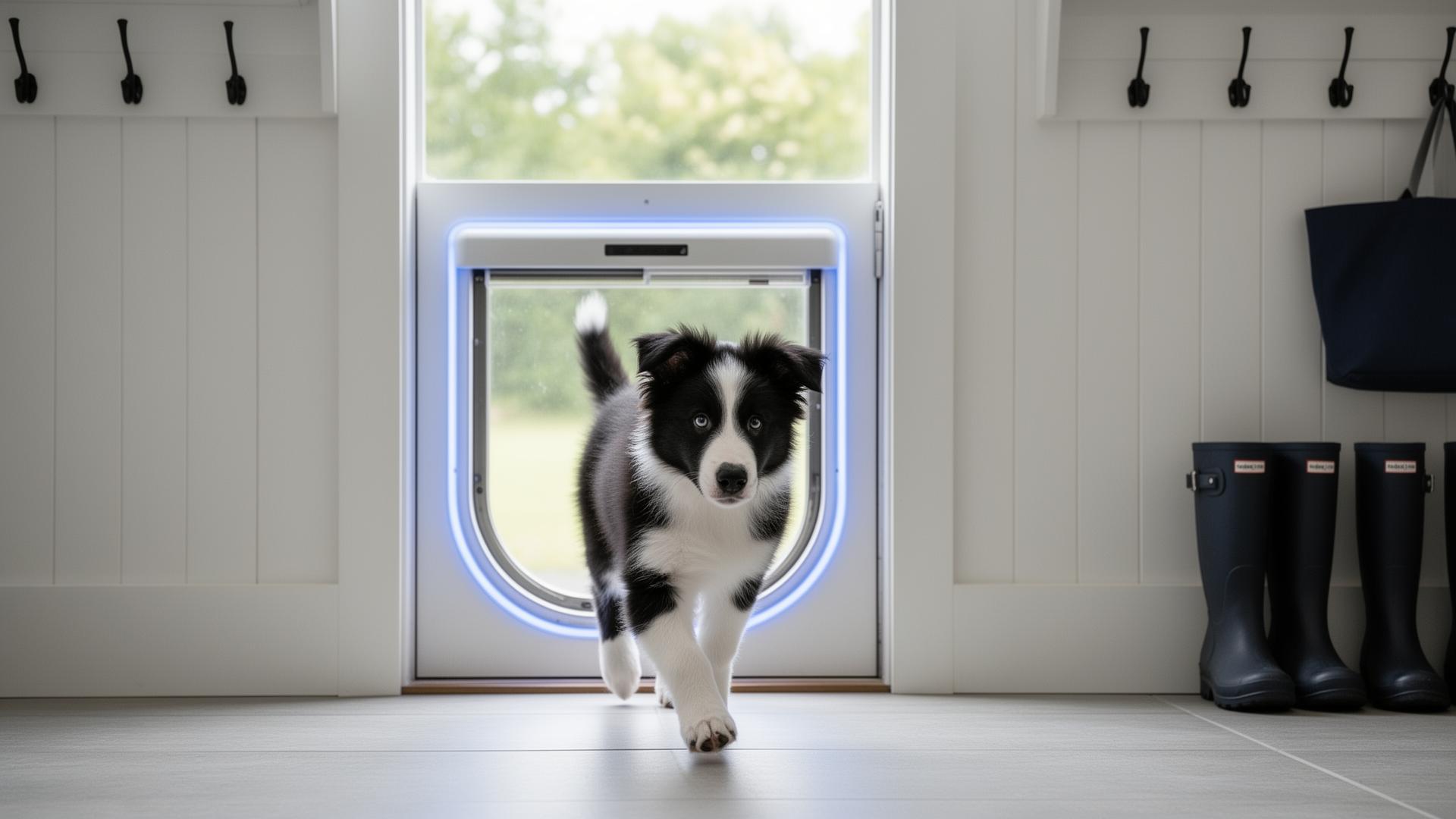
The bigger leap is on the dog-door side. PetSafe SmartDoor Connect 2 and the Wagz Serve+ can now be triggered by an app event — meaning when the bladder-forecast hits its threshold, the door can unlock and a chime can play to call the puppy outside. For owners with a fenced yard, the loop closes itself: feeder dispenses meal, app starts a 20-minute timer, door unlocks at minute 18, puppy walks out.
It is, frankly, kind of magical when it works. It is also fragile. Power outages, Wi-Fi hiccups, and the day your puppy decides the camera is a toy are all failure modes that send you straight back to a paper schedule.
Hydration tracking
Smart water fountains — the Eversweet Ultra, the Petlibro Dockstream Pro — measure how much water a puppy actually drinks, not how much you topped up. Feeding that number back into the forecast is where the accuracy gains in the 2026 apps mostly come from. If your puppy hammered the fountain after a hot afternoon walk, the model knows, and tightens the next prediction window accordingly.
Where the AI Still Falls Down
Walk into any veterinary behaviorist's clinic and ask what they think of bladder forecasting and you will get a careful, qualified answer. The technology is not the problem. The problem is what the technology replaces.
The "phone-trained" puppy
A puppy raised on push notifications learns one thing very well: when the phone buzzes, a treat appears at the door. That is useful, but it is not the same as learning to communicate the need to go. The behaviors trainers actually want — a deliberate stare, a soft whine at the door, a paw on the leg — develop because the puppy has had enough successful "I asked, you responded, I got relief" loops to associate the request with the reward.
If the algorithm always asks first, the puppy never has to.
The fix is straightforward, and every reputable trainer says some version of it: use the AI as a safety net, not the front line. Let the puppy try to signal first. If they do, drop everything and respond. The notification is the backup for the moments you would otherwise miss.
Breed and individual variance
The forecasting models are trained mostly on medium and large breeds. Toy breeds, brachycephalic puppies, and very young puppies (under 9 weeks) all have shorter, less regular intervals, and the apps tend to over-predict for them. If you have a 9-week-old Maltese, expect the forecast to feel jumpy for the first two weeks until the model has enough data on your specific dog.
The medical signal
This is the one trainers worry about most. House-training regressions are often the first sign of a urinary tract infection, a kidney issue, or — in older puppies — a structural problem like ectopic ureters. A schedule app will dutifully log the increased frequency and adjust the forecast. A human will notice the puppy is uncomfortable and call the vet. Recent reporting on canine urinary biomarkers, including the NC State UACR urine-ammonia work we covered this month, makes clear how easy it is to miss the early signal if you outsource attention to a dashboard.
Treat any sudden regression — three or more accidents in a day, blood in the urine, straining — as a medical question first and a training question second.
The 2026 Hybrid Playbook
Trainers we spoke to converged on a hybrid approach. Use the tech for the parts humans are bad at — frequency, consistency, and late-night memory — and reserve the human role for the parts that actually build the relationship.
Here is the playbook that keeps coming up.
Week 1 to 2: Foundation
Skip most of the AI in the first two weeks. Run a paper schedule: out after every nap, every meal, every play session, and every 60 to 90 minutes regardless. Reward heavily, calmly, outside, within three seconds of the elimination finishing. This is the only window where the puppy can link the reward to the behavior.
Install the hardware — camera, smart door, water fountain — but only in logging mode. Let it gather baseline data without acting on it.
Week 3 to 5: AI as backup
Turn on forecasting notifications, but treat them as a second alarm. Watch for the puppy's own signals first. When the puppy asks, respond immediately and ignore the phone. When the phone fires and the puppy has not asked, take them out anyway — but quietly, without fanfare.
This is also when most owners start using the indoor self-flushing toilet for overnight or work-from-home stretches. Introduce it the same way you would a crate: with treats, in short positive sessions, no pressure.
Week 6 to 8: Generalization
By week six, most healthy puppies on a hybrid plan have gone seven consecutive days without an accident. This is the dangerous moment. Owners relax, the AI gets less data, and the puppy starts being trusted with too much floor space too soon.
The rule of thumb from the 2026 Generation Pup follow-up work and from every behaviorist we asked: expand freedom one room at a time, one week at a time. The forecast can help here too — turn the threshold up slightly (85 percent) so you get fewer false alarms and the puppy gets more opportunities to communicate.
Week 9 and beyond: Phase out
This is the step most blog posts skip. The forecasting app should be a scaffold, not a permanent crutch. By the time a puppy is reliably dry for three weeks, start muting notifications during normal waking hours and only keep them active overnight or when the puppy is left alone. The goal is a dog who tells you — not a dog who needs an app to tell both of you.
Choosing the Right Stack
If you are starting from scratch in 2026, here is what most trainers recommend before adding more gear.
- One training app, not three. Pick Dogo, Zigzag, or Pupford and commit. The forecasts get more accurate the more data they have on your specific puppy; splitting logs across apps means none of them know what is happening.
- A camera you already have. A single Matter-compatible indoor cam pointed at the puppy's main play area is enough. You do not need three.
- Crate first, smart toilet second. A correctly sized crate (the puppy can stand, turn, and lie down — no more) is still the single highest-leverage tool in house-training. The smart toilet is a useful add-on for apartments and long workdays, not a replacement.
- One hardware ecosystem. Mixing brands works, but every additional bridge is a failure point. If your hub is Apple Home, pick Matter-native gear. If it is Google Home or SmartThings, same rule.
- Reward-based throughout. Every credible 2026 study, including the reward-based vs aversive training work we covered earlier this month, points the same direction. No app changes that.

The Privacy Footnote No One Reads
A bladder-forecasting app is, technically, a continuous surveillance system in your home. The cameras stream to the cloud. The feeders log every meal. The smart door tracks every entry and exit. Most of the 2026 apps now publish reasonable privacy policies — on-device inference for the camera, encrypted transit, and a 30-day default retention — but defaults matter, and very few new owners change them.
Two things worth doing in the first week:
- Turn on on-device processing for the camera if your model supports it. This keeps the raw video out of the vendor's servers.
- Set the retention window to the minimum you can tolerate. Seven days is plenty for house-training; you do not need ninety.
If you are uncomfortable with any of it, the analog version of every tool above still works. A kitchen timer, a notepad on the fridge, and a leash by the door trained billions of dogs before any of this existed.
What This Means for First-Time Puppy Parents
The honest summary in 2026 is this: AI does not house-train your puppy. You do. The technology shaves about a week off the average timeline, eliminates a meaningful number of 3 a.m. surprises, and — for apartment dwellers, shift workers, and disabled owners — finally makes consistent, frequent potty breaks logistically possible.
Those are real gains. They are also boring gains. No app will make the first month with a puppy easy. But for the first time, you do not have to do it entirely on memory and instinct. The schedule is on your wrist, the door unlocks itself, and the camera notices the circling before you do.
Use it as the safety net it is designed to be, keep your eyes on the puppy and not the dashboard, and by week eight you will probably look down and realize the app has been quiet for three days. That is the moment you turn it off and let the dog you raised — the one who actually asks — take it from there.
Frequently Asked Questions
At what age can I start using a bladder-forecasting app?+
Most apps need 7–10 days of baseline logs to produce useful forecasts, so it is worth installing the app the day your puppy comes home (typically 8 weeks) and letting it log passively for the first two weeks before turning on notifications.
Will an AI app replace crate training?+
No. A correctly sized crate remains the single highest-leverage house-training tool. The app and the hardware complement the crate by handling timing and overnight stretches; they don't replace the structure the crate provides.
Are self-flushing indoor toilets safe for very small puppies?+
Most units use a weight sensor with a 3–5 pound minimum. Puppies under that threshold may not trigger the flush cycle, so check the spec sheet and consider waiting until your puppy reliably exceeds it before relying on the toilet full-time.
Can the smart camera really tell when my puppy is about to pee?+
On-device models from 2026-generation cameras are reasonably good at detecting tight circling, frantic sniffing, and squatting posture in adequate light. Accuracy drops in low light and with very small or very fluffy breeds, so don't rely on the camera alone.
What should I do if my house-trained puppy suddenly starts having accidents again?+
Treat it as a medical question first. Three or more accidents in a day, straining, or blood in the urine warrant a vet visit before any training adjustment. UTIs and structural urinary problems are common causes of regression in young dogs.
Sources
Related Reading
Share this story
The PawPulse Newsroom is a small editorial team of dog owners, trainers, and pet-industry writers reporting on dog health, training, nutrition, and breed trends.
Pin this to your Puppy Training 101 board
Force-free training, socialisation, and house-training cheat sheets.
Liked this story?
Share it with someone who should read it.
More from Puppy Training & Behavior

The 2026 Puppy Training Revolution: Why Consent is Key to a Happier, Smarter Schnauzer

The Border Collie Brain Ladder: A Cognitive Revolution for Calm, Happy Dogs
