Reward-Based vs Aversive Puppy Training: What the New 2026 Study Really Says
A landmark 2026 study in Frontiers in Veterinary Science finds that the way we train our dogs reflects how we view animals — and the science increasingly favors reward-based methods. Here’s what every new puppy parent should know.

Quick Summary: A February 2026 study published in Frontiers in Veterinary Science surveyed professional dog trainers and found that ethical beliefs about animals strongly predict training-method choice. Reward-based, force-free training continues to be backed by the strongest evidence for welfare and long-term behavior outcomes — especially for puppies in their critical socialization window.
If you brought home a puppy this spring, you’ve probably already been buried in conflicting advice: clickers, prong collars, "alpha" rolls, e-collars, lure-and-reward, balanced training. A new peer-reviewed study published in February 2026 helps cut through the noise — and it has clear, practical takeaways for anyone raising a puppy in 2026.
What the new 2026 study actually found
Researchers led by Dr. Peter Sandøe (University of Copenhagen) and colleagues surveyed professional dog trainers in the United States and Europe. Two findings stand out:
- Trainers’ ethical views about animals are the strongest predictor of which methods they use. Trainers who view animals as having interests comparable to humans overwhelmingly choose reward-based, force-free approaches. Trainers who place human convenience above animal interests are more likely to use aversive tools (prong collars, e-collars, leash corrections).
- The evidence base for reward-based training keeps getting stronger. The study summarizes a growing body of research showing aversive methods are associated with higher stress hormone levels, more pessimistic cognitive bias, and increased risk of fear-based aggression — particularly in puppies under 6 months.
In other words: the "debate" between balanced and force-free training is increasingly one-sided once you weigh the welfare science.
Why this matters for puppies specifically
Puppies are not small adult dogs. Between roughly 3 and 14 weeks, they’re in a critical socialization window where every experience is being filed away as "safe" or "scary." A single harsh correction during this period can have outsized, long-lasting effects.
That’s why veterinary behaviorists at the AVSAB (American Veterinary Society of Animal Behavior) have, since 2021, formally recommended reward-based methods as the first-line approach for all puppies. The new 2026 data reinforces that position.
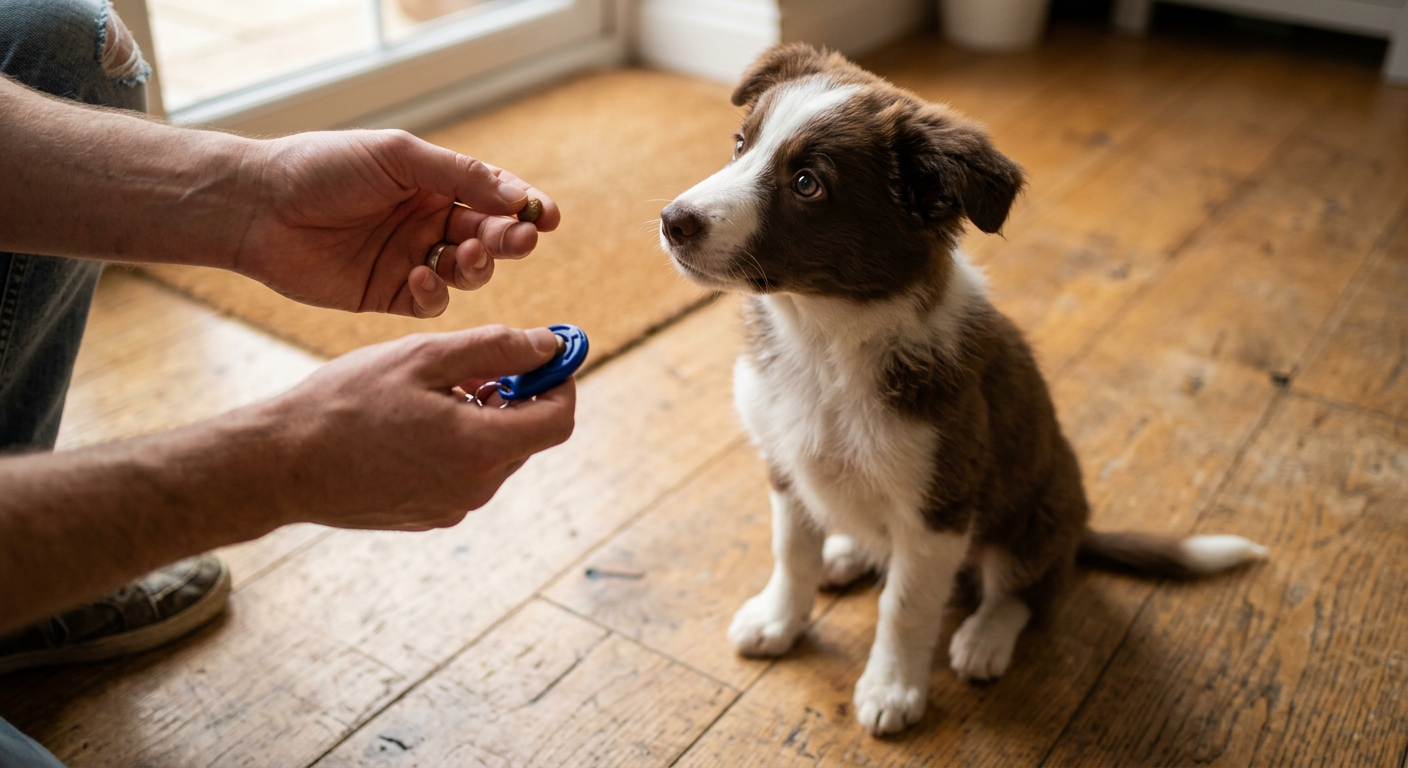
A clicker plus a pea-sized treat is one of the most evidence-backed teaching tools for young puppies — clear, consistent, and low-stress.
What "reward-based" actually means (it’s not just bribing)
A common misconception: reward-based = "spoiling" your puppy with endless cookies. In practice, modern positive reinforcement training has four pillars:
1. Mark and reward
Use a clear marker (a clicker, or a verbal "yes!") the instant your puppy does the behavior you want, then deliver a small reward within 1–2 seconds. The marker tells the dog exactly what earned the treat.
2. Manage the environment
You can’t train what you can’t prevent. Baby gates, x-pens, leashes indoors, and chew-safe rooms stop your puppy from rehearsing the behaviors you don’t want (counter-surfing, chewing shoes, bolting out the door).
3. Teach an alternative
Don’t just say "no." Teach what to do instead. Jumping on guests? Reward four paws on the floor or a sit. Mouthing hands? Redirect to a chew toy and reward.
4. Fade the food
Treats are a teaching tool, not a forever crutch. Once the behavior is reliable, you switch to variable reinforcement — sometimes a treat, sometimes praise, sometimes a game of tug. This actually makes behaviors more durable, not less.
Why aversive tools fall short — even when they "work"
E-collars, prong collars, and harsh leash corrections often do suppress unwanted behavior in the short term. That’s why they look effective on YouTube. But the 2026 study and prior research consistently show three problems:
- Suppression isn’t learning. The dog learns to stop doing something, not what to do instead. The underlying emotion (fear, frustration, over-arousal) stays.
- Fallout effects. Aversive training is associated with increased aggression toward strangers, family members, and other dogs.
- Damaged relationship. Dogs trained primarily with punishment show more avoidance behaviors toward their owners on standardized tests.
For a puppy whose entire worldview is still forming, the cost is especially high.
A 6-week reward-based starter plan
Here’s a simple, evidence-based progression you can start the day your puppy comes home:
Weeks 1–2: Foundations
- Name response, hand targeting, "find it" scatter feeds, crate love-it games.
- Reward calm behavior — especially when you didn’t ask for it.
Weeks 3–4: Core cues
- Sit, down, stay (1–3 seconds), recall in a hallway, loose-leash steps in your living room.
- Begin handling games (paws, ears, mouth) — pair every touch with a treat.
Weeks 5–6: Real world
- Short, low-pressure outings: a quiet park bench, a friend’s yard, a pet-friendly hardware store.
- Recall in a fenced area, settle on a mat at a quiet café patio.
- Enroll in a certified positive-reinforcement puppy class (look for CCPDT, KPA, or PPG credentials).
If you want a deeper structural breakdown, our Puppy Training hub has step-by-step guides for each of these milestones.
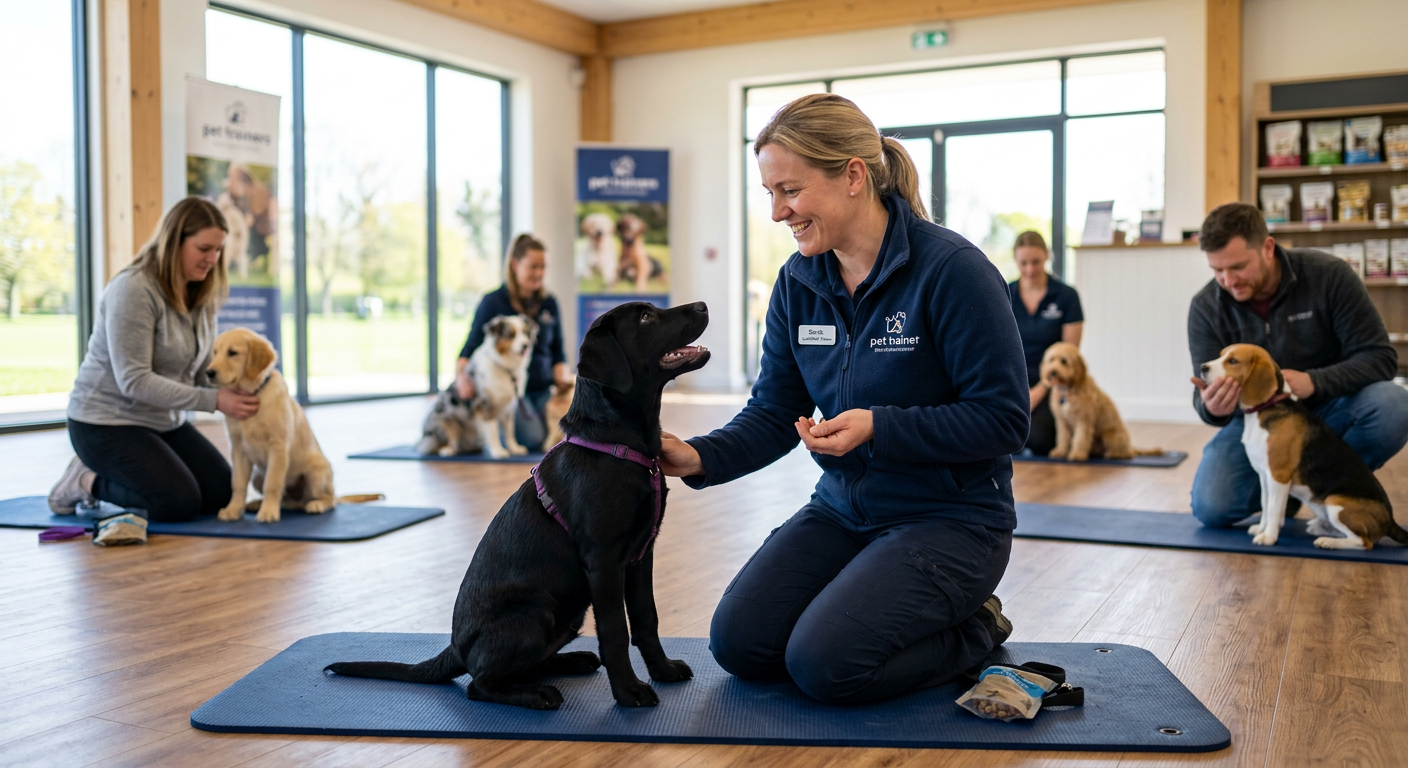
A well-run puppy class isn’t just about cues — it’s structured socialization with neutral dogs, novel surfaces, and friendly humans.
What about small breeds? They get trained differently in practice
Small dogs are often under-trained because owners can simply pick them up to manage problems. The 2026 study didn’t break results down by size, but small-breed behavior consultants consistently report that toy and small breeds benefit just as much (often more) from formal reward-based training — especially around resource guarding, leash reactivity, and the "small dog syndrome" stereotype.
If you have a small breed, pair this article with our guide on why small dogs shouldn’t jump off the couch — managing physical safety is part of the same big picture as managing behavior.
Lifelong learning isn’t just nice — it protects the brain
A separate 2026 study covered in our recent exercise and canine cognitive decline feature found that lifelong mental and physical engagement slows cognitive decline in older dogs. Reward-based training is mental enrichment. Every short training session you do with your puppy isn’t just teaching a cue — it’s building neural pathways your dog will rely on at age 12.
When to call a professional
Get expert help early if you see:
- Growling, snapping, or biting that breaks skin
- Intense fear of people, dogs, or sounds that doesn’t fade with gentle exposure
- Resource guarding of food, toys, or sleeping spots
- House-training that isn’t progressing after 8 weeks of consistent management
Look for a veterinary behaviorist (DACVB) or a certified force-free trainer. Your veterinarian — see our Dog Health & Wellness section for choosing a vet — can refer you. Avoid anyone who promises "guaranteed results" using shock, prong, or "dominance" methods; the 2026 evidence base does not support them.
The bottom line
The 2026 Frontiers in Veterinary Science study didn’t reveal anything that force-free trainers haven’t been saying for a decade — but it’s the clearest published confirmation yet that how you train your dog is an ethical choice as much as a practical one, and that the science continues to favor reward-based, low-stress methods.
For your puppy, the takeaway is simple: be generous with food, clear with cues, kind with corrections (managed environments, not punishment), and patient with the timeline. The dog you’ll have at age two is being shaped right now.
Frequently Asked Questions
Is reward-based training just bribing my dog?+
No. A bribe shows the food before the behavior; a reward is delivered after. Modern reward-based training also fades food to variable reinforcement, where treats become unpredictable and behaviors become more durable.
Are e-collars ever appropriate for puppies?+
The major veterinary behavior bodies (AVSAB, ESVCE, BVA) recommend against aversive tools for puppies. The 2026 evidence base reinforces that reward-based methods produce equal or better results without the welfare and behavioral risks.
How long should puppy training sessions be?+
Short and frequent. Aim for 2–5 minute sessions, 3–6 times a day. Puppies under 16 weeks have very short attention spans, and short successful reps beat long frustrating ones.
What if my puppy isn’t food-motivated?+
Most ‘not food-motivated’ puppies are either over-fed, over-aroused, or being offered the wrong reward. Try training before meals, use higher-value rewards (chicken, cheese), or use play and praise as the reinforcer.
When should I start training my new puppy?+
The day you bring them home. Foundation skills like name response, crate love, and handling games can begin at 8 weeks. Formal puppy classes typically start at 8–10 weeks after the first vaccine.
Sources
Related Reading
Share this story
Pin this to your Puppy Training 101 board
Force-free training, socialisation, and house-training cheat sheets.
Liked this story?
Share it with someone who should read it.
More from Puppy Training & Behavior

Senior Dog Suddenly Tilting Head? Understanding Canine Vestibular Disease

The 2026 Puppy Revolution: Why Consent Training Changes Everything for Bernese Mountain Dogs
