Why Some Dog Breeds Learn Faster With Practice: The 2026 UBC Reversal Learning Study
A 2026 UBC study tracked 105 dogs across five breed clades on a repeated learning task. Reversal learning improved overall — but not equally across breeds. Here's what owners should take from it.

A new 2026 University of British Columbia study in Animal Cognition tested 105 dogs from five major breed clades on the same learning task — twice, a month apart. The headline: when dogs got a second crack at the puzzle, only three of the five breed groups showed a statistically significant improvement. For owners trying to figure out why some training drills "click" the second time around (and others don't), the findings are unusually concrete.
Quick Summary
- The task: a four-phase nose-touch learning game (Acquisition → Discrimination → Reversal → Extinction), repeated 30–35 days later.
- Biggest gain: Reversal learning — switching from "touch the right hand" to "touch the left hand" — improved overall on the second test.
- Who improved: UK Rural breeds (e.g., terriers, collies), German Shepherds, and European Mastiffs.
- Who didn't (statistically): Asian Spitz / ancient breeds and Retrievers.
- What didn't change: initial discrimination accuracy, perseverance, and frustration-like behaviour stayed roughly the same across visits.
Why this study matters for everyday training
Every dog owner knows the feeling: you teach a cue on Monday, and by Friday it looks like your dog has never seen it before. Or the opposite — your puppy nails it on day two as if she'd been planning the move all week. Animal-cognition researchers have been chipping away at why for years, and a big piece of the puzzle is breed clade — broad genetic groupings of breeds that share ancestry and historical jobs.
The new paper, "Changes in cognitive performance following repeated exposure to a hand-touch learning task across breed clades of domestic dogs" (Azadian & Protopopova, Animal Cognition, January 2026), is a follow-up to the team's 2024 cross-sectional study. This time they brought the same dogs back roughly a month later and ran the identical task — letting them measure not just who's good, but who gets better with practice.
The task, in plain English
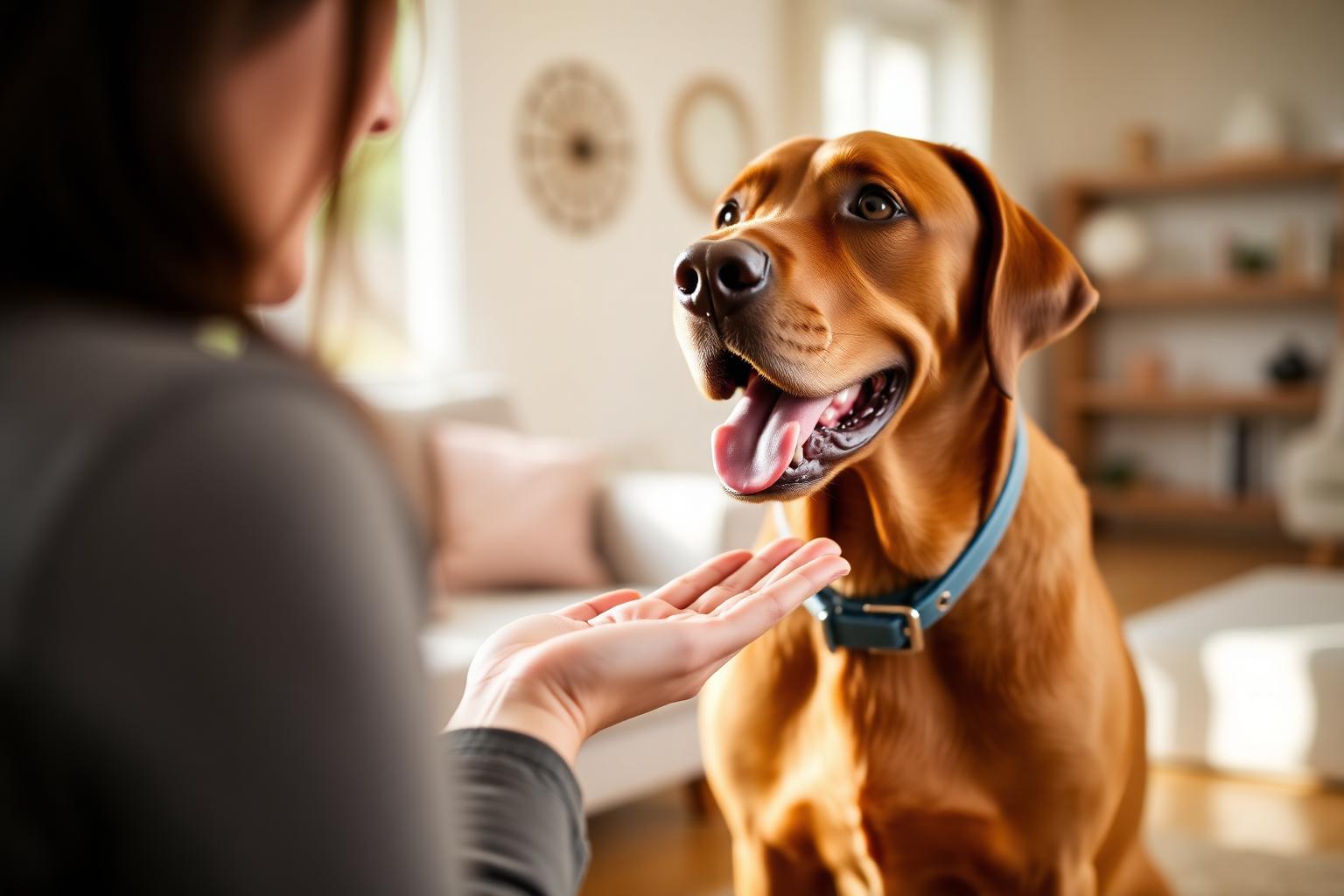
The dogs played a video-coached game over Zoom with their owners (yes, a virtual experiment — pandemic-era methods that turned out to be brilliant for cognition research). It had four phases:
- Acquisition. Dog learns to nose-touch the owner's open palm for a treat. One hand at a time.
- Discrimination learning (DL). Both hands now go out together. Only touches on the dominant hand earn a treat. Criterion: 8/10 correct.
- Reversal learning (RL). Now only the non-dominant hand pays out. The rule has flipped. Six fixed sessions.
- Extinction (EXT). Neither hand pays out. How long does the dog keep trying?
If you've ever taught a puppy "sit" and then tried to teach "down" using the same hand-near-the-nose lure, you've run a tiny version of this experiment. The reversal phase is the interesting one — it measures cognitive flexibility, the skill of unlearning a habit when the rules change.
What the five breed clades actually are
"Clade" is a phylogenetics word — it means a group sharing a common ancestor. Researchers use clades instead of individual breeds because there are too many breeds to study fairly. The five used here:
- UK Rural — terriers, collies, sheepdogs (n=21).
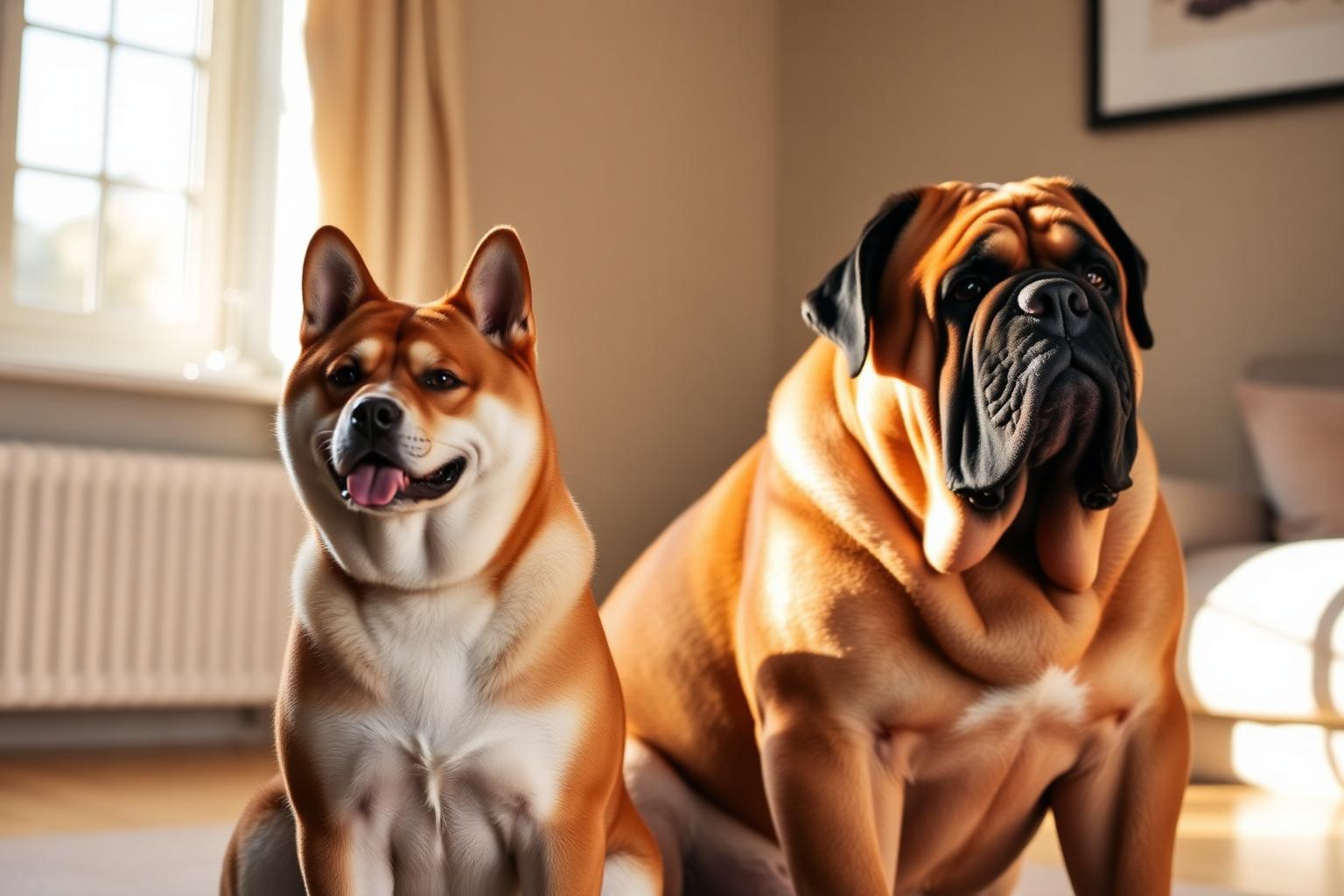
- Asian Spitz / Ancient — Shiba Inu, Akita, Chow Chow, Basenji-type ancestry (n=19).
- Retriever — Labradors, Goldens, and relatives (n=22).
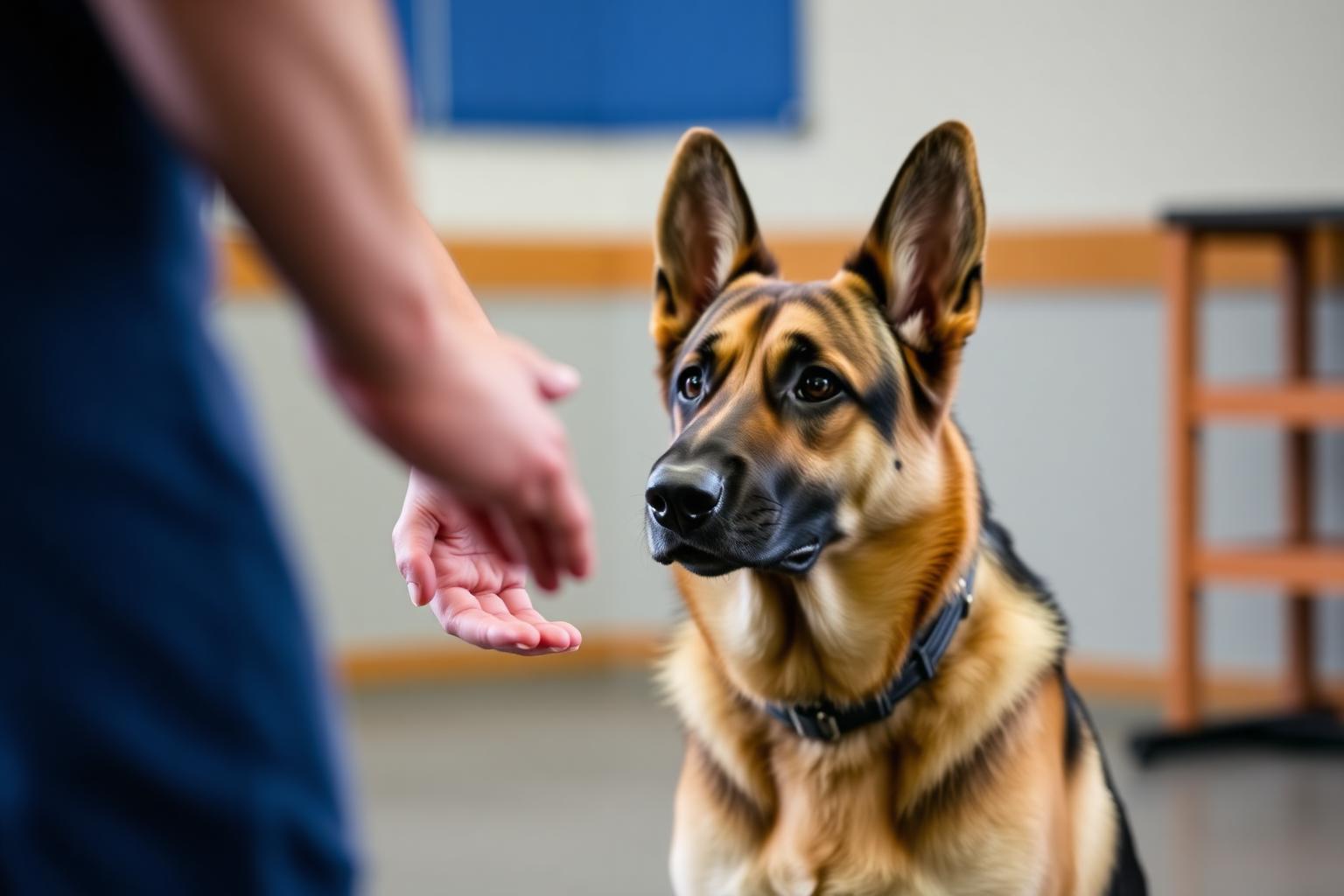
- New World — represented entirely by German Shepherds (n=20).
- European Mastiff — Bullmastiffs, Boxers, Rottweiler-type ancestry (n=23).
Headline finding: reversal learning improves — but not for everyone
The strongest signal in the data was on the reversal phase. Across the whole sample, dogs found it significantly easier on Test 2 than on Test 1 (t = 4.10, p < 0.001). They needed fewer trials to flip from the old "right hand" rule to the new "left hand" rule.
But when the team broke the data down by clade, the picture changed:
- UK Rural, New World (German Shepherds), and European Mastiff: all three showed statistically significant improvements between visits.
- Retrievers and Asian Spitz: their average scores moved in the right direction but didn't reach statistical significance — likely because individual dogs varied so much within those groups.
That's a useful nuance for owners. It does not mean Goldens or Shibas can't learn rule changes; it means the group response is messier. A given Lab might improve dramatically; the dog next door might not budge — and the average gets washed out.
What didn't change between visits
Three other measures stayed essentially flat:
- Discrimination accuracy. Dogs were no better at the initial "right hand pays, left hand doesn't" rule the second time around. Whatever they figured out the first time didn't carry forward as a sharper baseline.
- Perseverance during extinction. Dogs kept trying the now-unrewarded behaviour for about the same length of time on both visits. Their tolerance for frustration didn't shift much.
- Frustration-like behaviour (whining, jumping, pawing the owner). One exception: Retrievers showed a real drop in emotionality on Test 2 — they were calmer the second time even though their accuracy didn't change.
That last point matters. A dog can look like it's getting better at a task because it's less frantic, even when its actual problem-solving hasn't moved. Behaviour and cognition are not the same thing.
How to use this in your own training
None of this changes the fundamentals: reward-based methods still win on every welfare and outcome metric. What it does suggest is how to structure practice when you're teaching a flexible skill — like recall around distractions, leave-it generalisation, or any cue that has to override an existing habit.
1. Treat reversal-style cues as a multi-session project
If you're "fixing" a behaviour — say, your dog has learned to lunge at the doorbell and you want a calm sit instead — expect the second and third practice block to land better than the first. The 2026 data suggests dogs genuinely consolidate flexibility skills between sessions, even with no extra training in between. Sleep and time off the task appear to do real work.
2. Don't read frustration as failure
Whining, pawing, and jumping during a tricky drill aren't necessarily signs you're going too fast. They were stable across visits in this study and didn't predict who improved. If your dog vocalises during reversal-type training, lower the criterion temporarily, but don't abandon the exercise.
3. Adjust expectations by breed history, not breed stereotype
The findings line up loosely with what working-line breeders have said for decades: dogs bred for jobs that require frequent rule-switching (herding, protection, multi-task working) often handle reversals better than dogs bred for a single, repeated task (retrieving the bird, guarding the door). For tips on how this plays out in toy and small breeds — which weren't in this study — see our 2026 review of Chihuahua behaviour and health and the small-breed cognition notes in our CT study writeup.
4. Build cognitive flexibility early
The puppyhood window matters. Our breakdown of the 3–16 week socialisation window covers when the brain is most plastic for novel rule-learning, and our piece on puppy separation anxiety explains why early frustration tolerance matters even more than tricks.
What this study is not
A few caveats worth keeping in mind:
- Sample size per clade is modest (19–23 dogs). Group-level results are real, but predicting your individual dog from clade averages is unreliable.
- Toy and brachycephalic breeds were not represented. If you have a Chihuahua, Frenchie, or Pomeranian, the results don't directly apply.
- It's a single, narrow task. Real-world cues — recall, loose-leash walking, settle on a mat — involve far more sensory and emotional load than a Zoom-coached nose touch.
- "No significant change" ≠ "no learning." The Asian Spitz and Retriever clades may have improved in ways the statistical test couldn't see at this sample size.
Bigger picture: brain ageing and breed
This study fits into a broader 2026 wave of canine cognition work. Earlier this year we covered why large-breed brains seem to age more slowly than their bodies, and the same labs are now starting to track how learning ability shifts across the lifespan. The reversal-learning improvement seen here was strongest in adult dogs (mean age 4.2 years), so it's likely a window that closes — gradually — with age. Practice your dog's flexibility skills while the wiring is most willing.
Bottom line
If you've been frustrated that your training "didn't stick" the first time, the 2026 UBC data is quietly reassuring. For most dogs, a one-month gap and a second pass through a tricky drill produces real improvement on cognitive flexibility — even with no extra coaching in between. The size of that gain depends partly on what your dog was bred to do, and partly on the individual dog in front of you. Plan for a second session. Lower the criterion. Reward generously. And don't read whining as failure.
Frequently Asked Questions
What is reversal learning in dogs?+
It's the cognitive skill of unlearning a previously rewarded rule when the rule changes — for example, switching from 'touch my right hand for a treat' to 'touch my left hand for a treat.' It's a core measure of cognitive flexibility.
Does this mean Labradors are less trainable than German Shepherds?+
No. Retrievers showed strong baseline performance and got calmer on the second visit; their average accuracy improvement just didn't reach statistical significance, partly because individual Retrievers varied widely. Trainability is not one number.
How long should I wait between practice sessions for a tricky cue?+
The study used a 30–35 day gap, which was long enough to see real improvement on flexibility tasks. For day-to-day training, even overnight breaks help — sleep consolidates motor and rule-based learning.
Were small or toy breeds included?+
No. The five clades studied were UK Rural, Asian Spitz, Retriever, New World (German Shepherds), and European Mastiff. Toy and brachycephalic breeds weren't represented.
Where can I read the original paper?+
Azadian & Protopopova (2026), 'Changes in cognitive performance following repeated exposure to a hand-touch learning task across breed clades of domestic dogs (Canis familiaris),' Animal Cognition 29:20. It's open access on Springer.
Sources
Related Reading
Share this story
Pin this to your Puppy Training 101 board
Force-free training, socialisation, and house-training cheat sheets.
Liked this story?
Share it with someone who should read it.
More from Puppy Training & Behavior

Senior Dog Suddenly Tilting Head? Understanding Canine Vestibular Disease

The 2026 Puppy Revolution: Why Consent Training Changes Everything for Bernese Mountain Dogs
