Why Large-Breed Dog Brains Age Slower Than Their Bodies: The 2026 IGF-1 Study
A new 2026 University of Arizona study is investigating how the growth hormone IGF-1 may protect large-breed dogs' brains from canine cognitive dysfunction — even as their bodies age faster.

Why Big Dogs Age Differently
It's one of the oldest puzzles in veterinary science: a Great Dane is "senior" by age 6, while a Chihuahua is barely middle-aged at the same point. Body size and lifespan track closely in dogs — the bigger the breed, the shorter the average life expectancy. But a 2026 research initiative from the University of Arizona College of Veterinary Medicine has uncovered a striking exception: large-breed brains appear to age more slowly than their bodies do.
Behavioral studies of senior dogs show that giant breeds often retain learning ability and problem-solving skills longer than expected for their accelerated physical aging. That mismatch is the central question driving the new IGF-1 research — and the answer could reshape how we prevent dementia in dogs of every size.
 Large breeds age physically faster than small dogs — but their brains may be more resilient than we thought.
What Is IGF-1, and Why Does It Matter?
Insulin-like growth factor 1 (IGF-1) is a hormone produced primarily in the liver in response to growth hormone. In dogs, IGF-1 is the single biggest driver of body size — small breeds carry gene variants that suppress IGF-1, while giant breeds run high. That's why a Saint Bernard puppy outweighs an adult Yorkshire Terrier within months.
But IGF-1 doesn't just build bone and muscle. According to the Portuguese Water Dog Foundation research summary, IGF-1 also regulates neuron survival, synaptic plasticity, and clearance of beta-amyloid — the same protein that accumulates in human Alzheimer's brains and in dogs with canine cognitive dysfunction.
The 2026 hypothesis
The Arizona team hypothesizes that the elevated IGF-1 levels keeping large breeds large may also be protecting their aging brains. If true, that flips a long-standing assumption: high IGF-1 has been linked to shorter lifespan and higher cancer risk in dogs, but it may simultaneously be a brain shield. Untangling that trade-off is one of the most important questions in canine geriatrics today.
What Is Canine Cognitive Dysfunction?
Canine cognitive dysfunction syndrome (CCDS) affects an estimated 14–35% of dogs over age 8, and prevalence climbs sharply past age 11. The signs map onto the classic DISHAA framework veterinarians use:
- Disorientation — getting "stuck" in corners, forgetting familiar routes
- Interaction changes — less interest in greeting family or other pets
- Sleep–wake cycle disruption — pacing or vocalizing at night
- House-soiling — accidents in previously trained dogs
- Activity changes — restlessness, repetitive behaviors, or apathy
- Anxiety — new fears, separation distress, generalized worry
If you're already noticing early signs in your senior dog, our deep-dive on how exercise slows canine cognitive decline covers practical, evidence-based daily routines that complement the IGF-1 research direction.
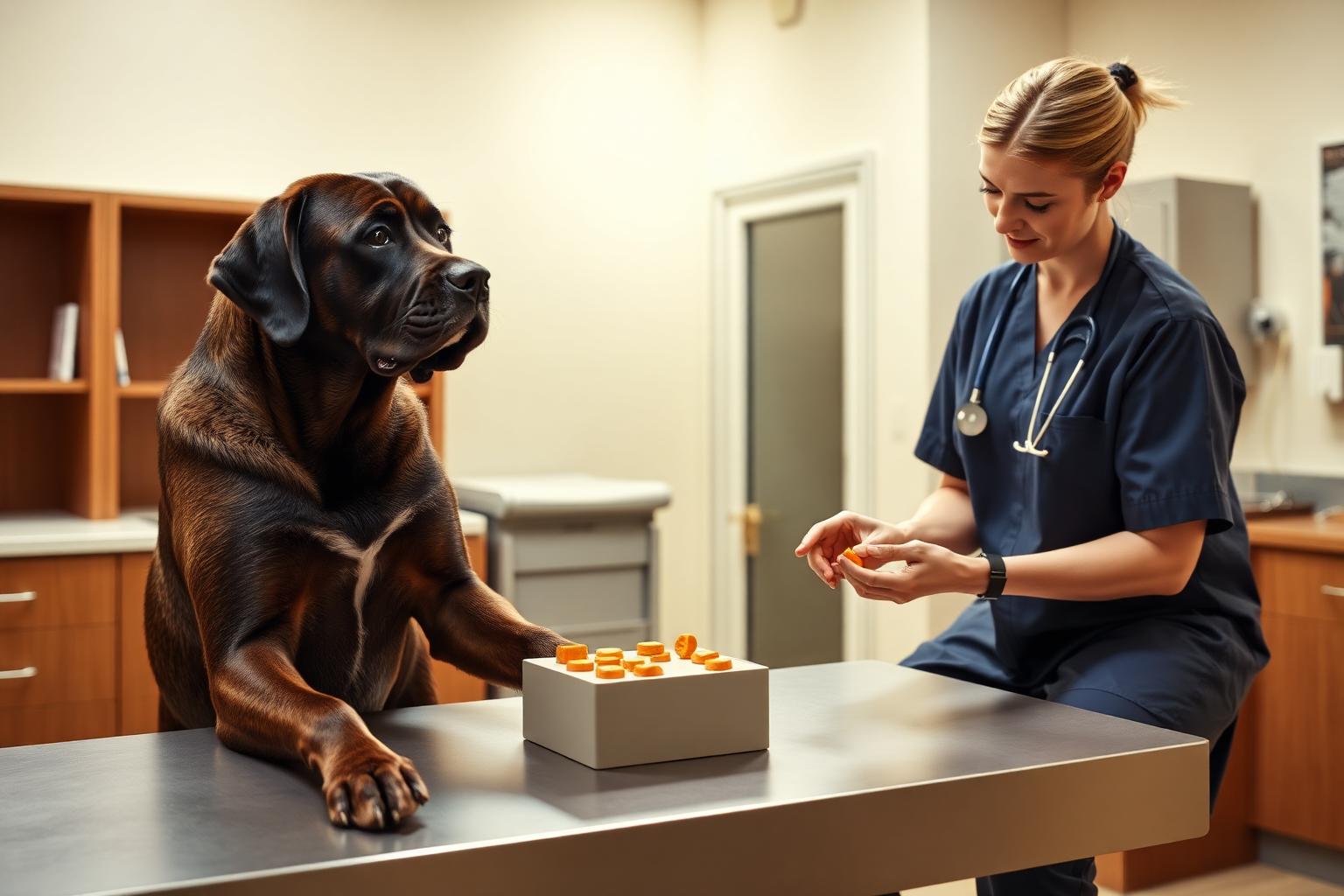 Cognitive assessments in clinic — like puzzle-based learning tasks — help vets catch CCD before owners notice obvious symptoms.
What Owners of Large-Breed Dogs Should Do Now
The Arizona study won't deliver final results for several years, but the existing science already supports a clear playbook for protecting your large-breed senior's brain.
1. Start cognitive screening early
For giant breeds (Great Danes, Saint Bernards, Mastiffs, Newfoundlands), schedule cognitive screening starting at age 5. For large breeds (Labs, Goldens, German Shepherds), start at age 7. The AKC Canine Health Foundation's 2026 Aging program emphasizes that early detection is currently the single biggest lever owners control.
2. Protect lean muscle mass
Sarcopenia (age-related muscle loss) is closely linked to lower IGF-1 signaling and faster cognitive decline in mammals. Maintain daily low-impact exercise, and don't let your senior become sedentary just because joints are stiff. Pair movement with appropriate joint care — our guide to preventing jumping injuries has principles that apply to seniors of every size.
3. Feed for the brain, not just the body
Diets enriched with medium-chain triglycerides (MCTs), omega-3 DHA, antioxidants, and B-vitamins have published evidence for slowing CCD progression. Talk to your veterinarian about prescription cognitive diets if your dog is showing early DISHAA signs.
4. Keep the brain working
Enrichment isn't a luxury for senior large dogs — it's preventive medicine. Rotating puzzle feeders, scent games, and short novel walks all stimulate neuroplasticity. The same reward-based principles we cover in our 2026 reward-based training study post work beautifully on senior brains, too.
 Daily enrichment — puzzle feeders, scent work, novel short walks — is one of the few proven ways to slow cognitive decline at home.
The Bigger Picture: A New Era of Canine Longevity Research
The IGF-1 study is part of a broader 2026 wave of canine aging research that includes Morris Animal Foundation's newly funded 2026 canine health portfolio and the ongoing Dog Aging Project, which is publishing TRIAD rapamycin trial results this year. Together, these efforts are starting to deliver something the field has lacked for decades: actionable, breed-aware geroscience.
For now, the practical message is hopeful. Your large-breed senior's brain is more resilient than its body. With early screening, lean muscle, brain-targeted nutrition, and daily enrichment, you can stack the odds in your dog's favor — even before the IGF-1 research delivers its final answers.
Related Reading on Paw Pulse
- How daily exercise slows canine cognitive decline
- Chihuahua health risks: what the 2026 RVC study reveals (the small-breed counterpoint)
- Toxic copper in dog food: the 2026 JVMA study explained
- More from the Dog Health & Wellness category
Frequently Asked Questions
At what age should I start watching for dementia in a large-breed dog?+
Begin cognitive screening at age 5 for giant breeds (Great Dane, Mastiff, Newfoundland) and age 7 for large breeds (Lab, Golden, German Shepherd). Use the DISHAA framework as a monthly mental checklist.
Is IGF-1 good or bad for my dog?+
It's both, depending on context. High IGF-1 is linked to shorter lifespan and higher cancer risk, but emerging research suggests it may also protect aging brain tissue. The 2026 Arizona study aims to clarify this trade-off.
Can I get my dog's IGF-1 measured?+
Yes — IGF-1 can be measured via a routine blood test, but interpretation is breed- and age-dependent. There's no current clinical recommendation to treat dogs based on IGF-1 levels alone. Discuss it with your vet.
Are there supplements that help canine cognitive dysfunction?+
Evidence supports omega-3 DHA, MCT oil, antioxidants (vitamin E, selenium), and SAMe in some dogs. Always run supplements by your veterinarian, especially for seniors on other medications.
What's the single most powerful at-home intervention?+
Daily enrichment combined with maintained physical activity. Puzzle feeders, scent games, and short novel walks consistently outperform passive interventions in slowing cognitive decline.
Sources
- University of Arizona College of Veterinary Medicine — IGF-1 & Cognitive Aging Study (2026)
- PWD Foundation — Protective Role for IGF-1 in Canine Cognitive Dysfunction
- AKC Canine Health Foundation — 2026 Aging Research Program
- Morris Animal Foundation — 2026 Canine Health Studies
- Dog Aging Project — 2025–2026 Updates
Related Reading
Share this story
Pin this to your Healthy Happy Dogs board
Vet-vetted wellness, symptom guides, and senior dog care pins.
Liked this story?
Share it with someone who should read it.
More from Dog Health & Wellness

Doggy Dementia Breakthrough: New At-Home Test Catches CCD Early!

H5N1 Bird Flu: What Dog Owners *Must* Know Now
