Chihuahuas in 2026: What the New RVC Study Reveals About Their Top Health Risks
The largest-ever Chihuahua health study just dropped. Dental disease, obesity, and retained baby teeth lead the list — here's what owners should do this week.

Quick Summary: A landmark 2026 Royal Veterinary College study of more than 20,000 Chihuahuas — the largest of its kind ever conducted — confirms that the world's most popular tiny dog is also one of its most medically vulnerable. Dental disease, obesity, and retained baby teeth top the list. Here's what the data really says, and what owners can do this week to add healthy years to a Chihuahua's life.
The Chihuahua is having a moment. Registrations are climbing in the US, UK, and across Europe, fueled by social media, apartment living, and a wave of celebrity owners. But behind the cute filters, vets are sounding the alarm. A new analysis from the Royal Veterinary College's VetCompass programme — drawing on real-world records from first-opinion clinics — found that the world's smallest pedigree dog is disproportionately affected by a cluster of preventable conditions.
If you own, foster, or are thinking about adopting a Chihuahua in 2026, this guide translates the new evidence into a practical care plan you can start today.
What the 2026 RVC Chihuahua Study Actually Found
The RVC study analyzed anonymized clinical records from tens of thousands of Chihuahuas seen at UK veterinary practices. The headline numbers are sobering:
- Dental disease was the single most commonly recorded health problem, affecting roughly 1 in 5 Chihuahuas in any given year.
- Obesity was diagnosed in a significant share of adult Chihuahuas — and vets believe the true number is higher because borderline cases are often missed in tiny dogs.
- Retained deciduous (baby) teeth were recorded far more often than in medium and large breeds, frequently triggering bite problems and accelerating gum disease.
- Patellar luxation (a slipping kneecap) and heart murmurs in older dogs also showed up at higher rates than the canine average.
None of this means a Chihuahua is destined to be sick. It means the risks cluster differently than they do for a Labrador or a Border Collie — and the care plan needs to match.
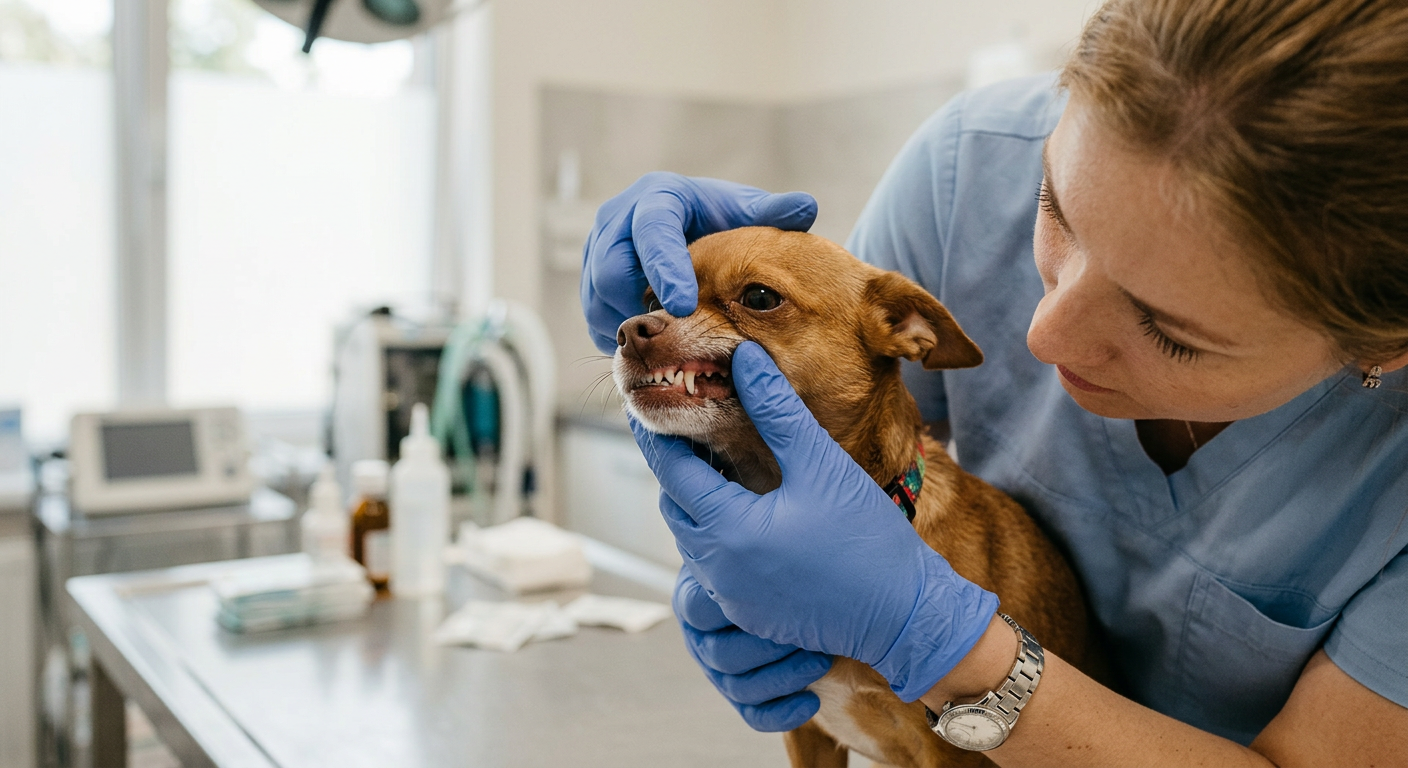 Dental disease is the #1 recorded health problem in Chihuahuas. Routine oral exams catch it years earlier than waiting for bad breath.
Why Tiny Mouths Are Such a Big Problem
Toy breeds inherited the same 42 adult teeth as a Saint Bernard — crammed into a jaw a fraction of the size. The result is crowding, rotation, and trapped plaque that hardens into tartar at remarkable speed.
A separate, large-scale study from the Waltham Petcare Science Institute confirmed what the RVC data echoes: as adult body weight goes down, periodontal disease risk goes up. Extra-small breeds like Chihuahuas, Yorkshire Terriers, and Toy Poodles develop gum disease earlier, more severely, and more often than any other size group.
Untreated periodontal disease isn't "just bad breath." Bacteria from inflamed gums enter the bloodstream and have been linked to:
- Chronic kidney changes
- Worsening of pre-existing heart valve disease
- Liver inflammation
- Painful tooth root abscesses that change behavior (snapping, hiding, refusing food)
This is also why we cover tooth and gum health so often in our Dog Health & Wellness hub — it's the highest-leverage thing most small-dog owners can change.
The 2026 Owner Dental Routine
Build the habit in this order. Each step layers on top of the last:
- Daily lift-and-look. Once a day, gently lift your Chihuahua's lip and look at the gum line for redness, brown buildup, or swelling. 30 seconds.
- Brushing 4–7 times a week. Use a finger brush and a dog-specific enzymatic toothpaste — never human paste (xylitol and fluoride are toxic). Two minutes.
- VOHC-accepted dental chews sized for toy breeds, not generic "small" chews designed for 25-pound dogs.
- Annual professional dental exam from age 1, with full anesthetic cleaning and dental X-rays as your vet recommends — usually every 12–24 months for Chihuahuas.
Skip the wishful thinking about "dental water additives" replacing brushing. The evidence is weak, and the Waltham team is explicit: mechanical disruption of plaque is what works.
Retained Baby Teeth: A Toy-Breed Specialty
In most dogs, deciduous teeth fall out cleanly between 4 and 7 months. In Chihuahuas, they often don't. The RVC study flagged retained baby teeth as a hallmark Chihuahua problem.
When a baby tooth refuses to leave, the adult tooth erupts beside it — creating a double row, food traps, and abnormal bite pressure. Left in place past 7 months, retained deciduous teeth almost always need surgical removal under anesthesia.
What to do: Around your puppy's 6-month checkup, ask your vet specifically to chart retained deciduous teeth. If extractions are needed, doing them at the same time as the spay/neuter procedure spares your dog a second anesthetic event. Our puppy training guide on socialization and handling will also help your Chihuahua tolerate at-home mouth checks for life.
Obesity in a 5-Pound Dog
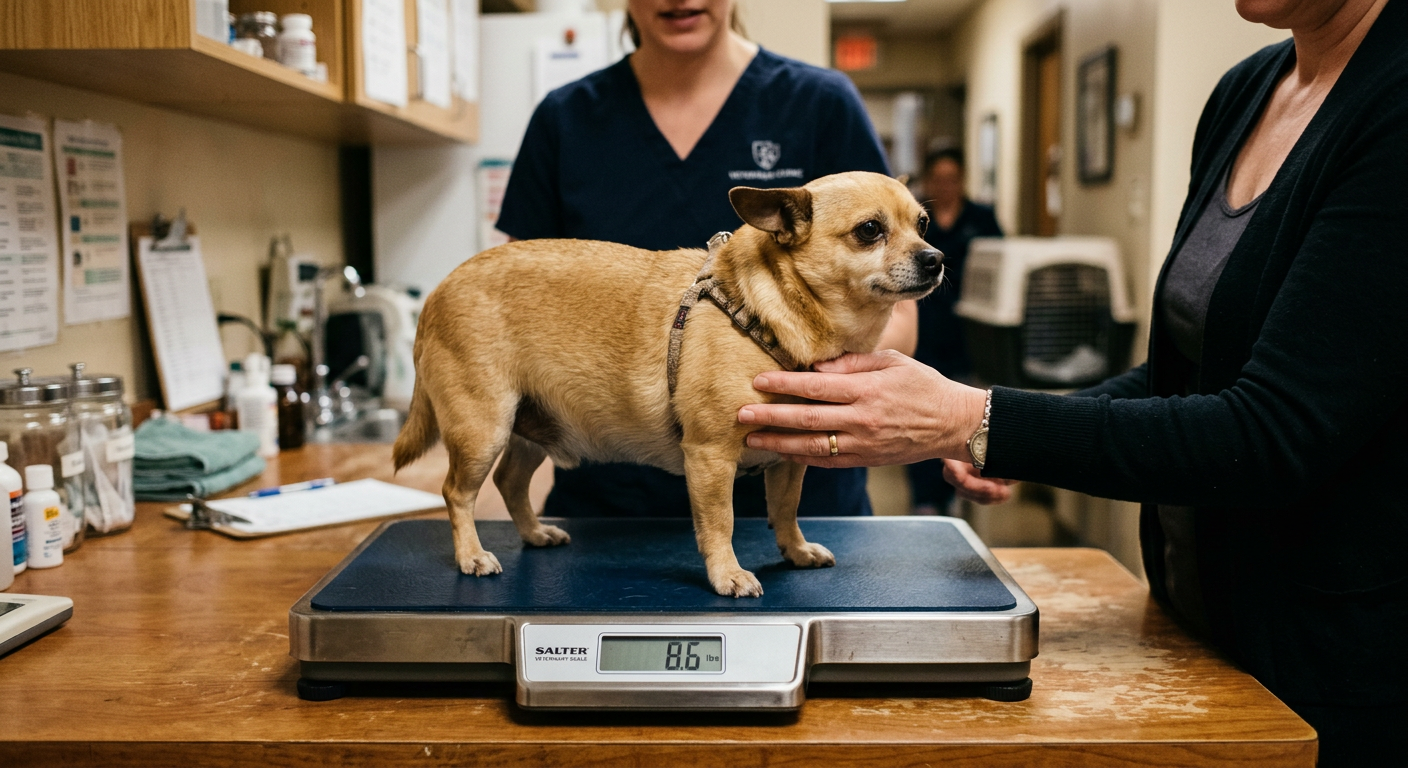 A 1-pound gain on a Chihuahua is the human equivalent of an adult gaining 15–25 pounds. Tiny dogs need tiny portion math.
Owners routinely underestimate Chihuahua weight gain because the absolute numbers look small. But on a 2.5 kg (5.5 lb) dog, an extra 500 grams is roughly a 20% increase in body weight. The same proportional gain in a 70 kg adult human would be about 14 kg.
The 2026 RVC paper highlighted obesity as one of the breed's most common — and most preventable — diagnoses. Excess weight in Chihuahuas accelerates:
- Patellar luxation symptoms and joint wear
- Tracheal collapse and breathing distress
- Insulin resistance and dental inflammation
- Reluctance to exercise, creating a worsening loop
A Realistic Feeding Plan
- Weigh, don't scoop. Use a kitchen scale once a week to measure kibble in grams. Cups are wildly inaccurate at toy-breed portion sizes.
- Treats ≤ 10% of daily calories. For most adult Chihuahuas that's only 20–30 kcal of treats per day — roughly two small training rewards.
- Two meals, not free-feeding. Free-feeding masks reduced appetite, which is often the first sign of dental pain or illness in small dogs.
- Body Condition Score every month. You should feel ribs easily under a thin fat layer and see a clear waist from above.
If you're new to portioning a tiny dog, the framework we used in our recent reward-based puppy training write-up maps neatly onto treat budgeting — break rewards into pea-sized pieces so training doesn't undo your diet.
Joints, Knees, and Why Jumping Off the Couch Matters
Patellar luxation — the kneecap slipping out of its groove — is one of the most common orthopedic diagnoses in toy breeds. The American College of Veterinary Surgeons notes it's frequently bilateral and often congenital in Chihuahuas, Pomeranians, and Yorkies.
Repeated impact from jumping off sofas, beds, and laps doesn't cause patellar luxation, but it absolutely accelerates joint wear in dogs already predisposed. We covered the full safety case (and ramp/step recommendations) in our deep dive on why small dogs shouldn't jump off the couch — pair that guide with this one for a complete musculoskeletal plan.
Quick Joint-Protection Wins
- Add a low-rise pet ramp or two-step beside your sofa and bed.
- Keep nails trimmed short — long nails change toe alignment and gait.
- Don't encourage two-legged "begging" stances for treats or photos.
- Ask your vet to score patellas (Grade 0–4) at every annual exam from age 1.
Heart, Trachea, and the Senior Years
Chihuahuas are a long-lived breed — 12 to 16 years is common, with plenty of individuals reaching 18+. That longevity comes with two senior-focused watch-outs:
- Myxomatous mitral valve disease (MMVD). A heart murmur in a Chihuahua over 8 should always be investigated. Modern medications, started at the right stage, meaningfully extend quality time.
- Tracheal collapse. A persistent honking cough — especially when excited or pulling on a collar — is the classic sign. Switching to a Y-shaped harness is the cheapest, most effective intervention you can make today.
Lifelong, gentle activity continues to pay dividends into old age — something we explored in Young at Heart: How Lifelong Exercise Slows Cognitive Decline in Dogs. The same principle applies to Chihuahua hearts and joints: daily, low-impact movement beats weekend warrior bursts.
A 2026 Chihuahua Health Calendar
Print this and stick it on the fridge.
Weekly
- Weigh on a kitchen scale
- Body Condition Score check
- Lift-and-look gum check (ideally daily)
Monthly
- Nail trim
- Ear and harness-fit check
Annually (from age 1)
- Full vet exam with patella grading and heart auscultation
- Dental scoring; cleaning under anesthesia as recommended
- Vaccine and parasite review
- Bloodwork baseline from age 7
Red-flag vet visit, same week
- Honking cough, fainting, or blue-tinged gums
- Sudden refusal to eat hard food
- Hopping/skipping on a back leg
- A 10%+ unintended weight change in either direction
What This Study Doesn't Mean
The RVC team has been careful to say the data is descriptive, not a verdict. Plenty of Chihuahuas live long, healthy, low-drama lives. The point isn't to discourage ownership — it's to align breeding, buying, and day-to-day care with what the evidence actually shows.
If you're choosing a Chihuahua puppy in 2026, prioritize breeders who:
- Health-test parents for patellas, hearts, and eyes
- Provide written records of deciduous tooth eruption and loss
- Don't market "teacup" sizes (a marketing term, not a recognized standard, and strongly correlated with hypoglycemia and fragility)
For more breed-specific guides like this one, browse our Small Dog Breeds library.
Veterinary Disclaimer
This article summarizes peer-reviewed research and consensus veterinary guidance for general educational purposes. It is not a substitute for individual veterinary advice. Always consult your own veterinarian before changing diet, exercise, or medication for your dog — especially seniors and dogs with existing heart, dental, or orthopedic disease.
Frequently Asked Questions
How often should I brush my Chihuahua's teeth?+
Aim for 4–7 times a week with a dog-specific enzymatic toothpaste and a finger brush or toy-breed brush. Daily is ideal — Chihuahua mouths build plaque exceptionally fast because of dental crowding.
What is a healthy weight for an adult Chihuahua?+
Most adult Chihuahuas sit between 1.8 and 2.7 kg (4–6 lb) at a healthy Body Condition Score of 4–5/9. Your vet will confirm a target weight based on frame size, not just numbers.
At what age should retained baby teeth be removed?+
If a deciduous tooth is still in place at 6–7 months, most vets recommend extraction — typically combined with the spay/neuter procedure to avoid a second anesthetic event.
Are Chihuahuas really more prone to dental disease than other small breeds?+
Yes. Both the 2026 RVC study and the Waltham periodontal disease study found that the smallest breeds — including Chihuahuas, Yorkshire Terriers, and Toy Poodles — develop gum disease earlier and more severely than larger dogs.
Should I use a harness or collar on my Chihuahua?+
A well-fitted Y-shaped harness is strongly preferred. Collar pressure on a tiny trachea is a known trigger for tracheal collapse symptoms, especially in dogs that pull or get excited on walks.
Sources
Related Reading
Share this story
Pin this to your Dog Lifestyle & Breeds board
Breed profiles, gear roundups, and dog-friendly travel inspo.
Liked this story?
Share it with someone who should read it.
More from Dog Breeds & Lifestyle

Bird Flu in Dogs 2026: Urgent H5N1 Warnings for Dog Owners

Dog Dementia Breakthroughs: Early Detection & New Hope for Australian Shepherds
