Why Spinal Canal Size Predicts Disc Disease Severity in Small Dogs: The 2026 CT Study
Researchers measured spinal canal volume in three small breeds prone to slipped discs and found that narrower canals dramatically raise the risk of paralysis when a disc herniates.

If you live with a Dachshund, Bichon Frisé, or French Bulldog, you already know these breeds are over-represented in slipped-disc cases. A new 2026 study from the University of Agricultural Sciences and Veterinary Medicine in Cluj-Napoca, published in Frontiers in Veterinary Science, used 3D CT scans to measure something most owners (and many vets) have never seen quantified: the actual volume of the bony spinal canal — and how much room the spinal cord has to spare when a disc gives way.
The headline finding is striking. Dogs whose vertebrae offered less than roughly 1,700 mm³ of canal space per segment were dramatically more likely to arrive at the clinic paralyzed instead of just sore.
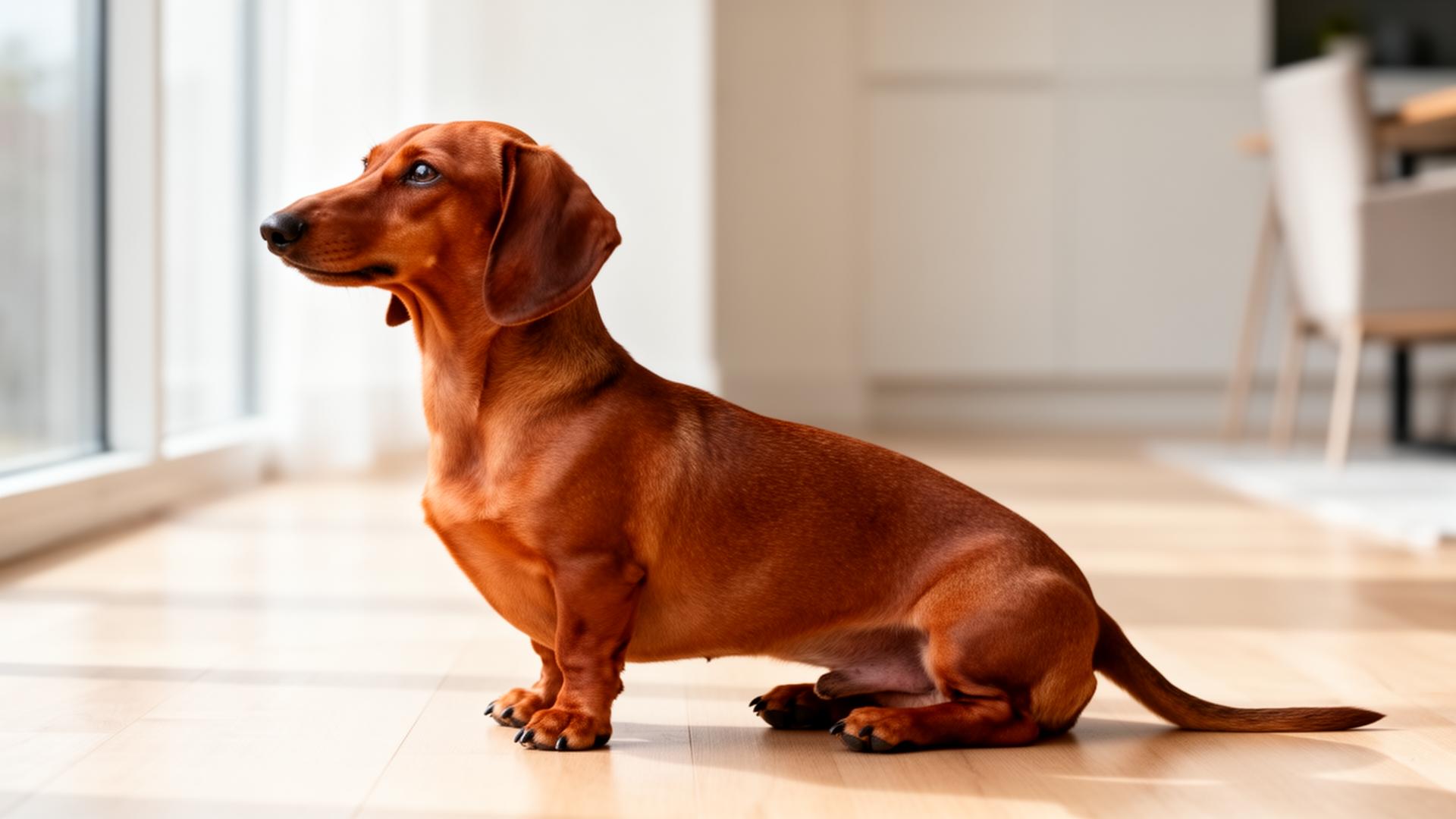 Dachshunds account for up to 45–62% of all canine disc-herniation cases in clinical surveys.
What the researchers actually did
The team retrospectively pulled CT scans from 21 dogs — 7 Bichon Frisés, 7 Dachshunds, and 7 French Bulldogs — all confirmed with thoracolumbar intervertebral disc herniation (IVDH) between 2022 and 2024. Using 3D Slicer, an open-source medical imaging tool, they segmented the bony spinal canal from C1 to L7 and calculated total canal volume in cubic millimeters.
Each dog was also graded on a three-tier neurological scale at presentation: mild (back pain only), moderate (weak but still feels deep pain), or severe (paralyzed and/or loss of deep pain sensation — the worst-case scenario).
The breed comparison: who has the most "reserve space"?
Despite being the chunkiest of the three, French Bulldogs had a significantly larger mean spinal canal volume than either Dachshunds or Bichon Frisés (p < 0.05 for both). That matters because canal size is essentially the cushion the spinal cord has when a disc bulges upward into it.
- French Bulldog: broadest canal, but often complicated by congenital vertebral malformations like hemivertebrae.
- Dachshund: narrow, long canal — least "reserve space" relative to body length.
- Bichon Frisé: intermediate small-breed morphology, similar capacity to Dachshunds.
The shared genetic culprit is the FGF4 retrogene insertion on canine chromosome 12, which causes chondrodystrophic dwarfism and accelerates disc degeneration. It's the same genetic story behind early-life disc disease in many small dog breeds.
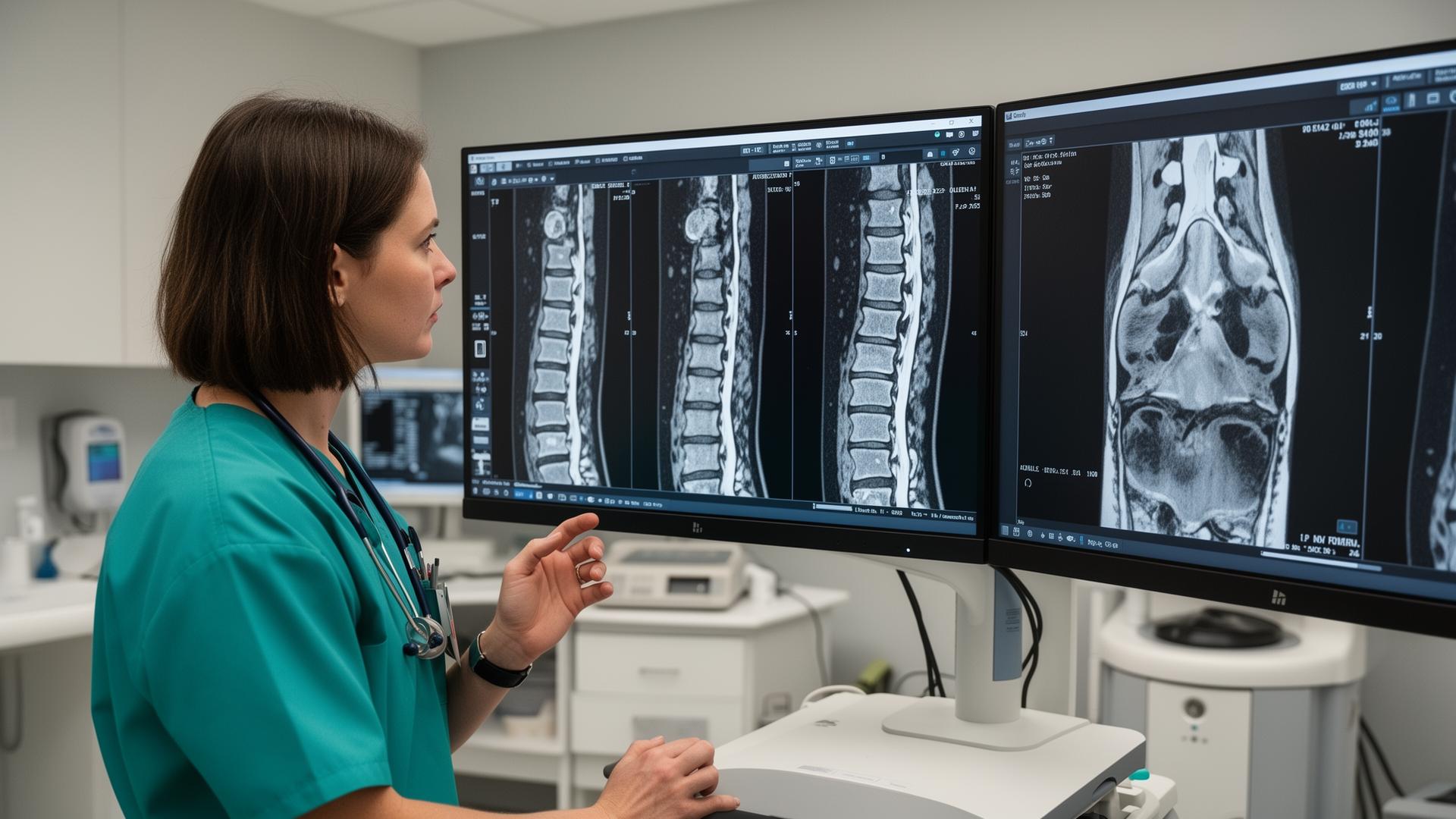 3D CT segmentation lets vets quantify how much room the spinal cord has — not just where the disc has slipped.
The 1,700 mm³ threshold
The clearest clinical signal in the data was a strong inverse correlation between canal volume and severity (Spearman ρ ≈ −0.72, p = 0.0014). Dogs whose canal volume averaged below ~1,700 mm³ per vertebral segment were markedly more likely to present in the severe category — paraplegic or with absent deep pain sensation.
Most herniations clustered at the thoracolumbar junction (T12–L2), exactly where the rigid thoracic spine meets the mobile lumbar spine. It's the mechanical pinch point of the canine back, and the segment with the least reserve space to absorb a disc extrusion.
Why this matters for owners
This isn't just an academic morphometry paper. It hints at something genuinely useful: a CT scan taken before a crisis could one day flag dogs whose canal anatomy gives them very little margin for error. That's information you'd want when deciding whether to:
- Encourage low-impact exercise (swimming, structured walks) over jumping off couches.
- Use ramps for furniture and car access — especially for Dachshunds and Bichons.
- Push earlier for an MRI when back pain shows up, rather than waiting and watching.
- Discuss prophylactic considerations with a board-certified veterinary neurologist.
It also fits a broader pattern in 2026 research showing that structured lifelong activity protects aging dogs and that small breeds carry hidden anatomical risks their owners often don't see until something goes wrong.
 French Bulldogs have larger canals than Bichons, but vertebral malformations can cancel out that advantage.
Signs of a slipped disc you should never ignore
The neurological grades used in the study mirror what your vet will ask about. Watch for:
- Sudden reluctance to jump, climb stairs, or be picked up.
- A hunched back, trembling, or yelping when touched along the spine.
- Wobbly hind legs, scuffing toes, or knuckling over.
- Dragging the back legs or inability to stand — this is an emergency.
Loss of deep pain sensation in the back legs is the single most important prognostic sign. The earlier surgery happens after that point, the better the odds of walking again.
What the study can't tell us yet
With only 21 dogs (7 per breed), this is a proof-of-concept rather than a clinical screening tool. Larger, multi-center datasets are needed before "spinal canal volume" appears on a routine pre-purchase exam. The authors also note that they didn't measure the spinal cord itself — only the bony cavity around it — so the cord-to-canal ratio is still the next frontier.
Still, the principle is clear: not all small dogs have the same room for error. Two Dachshunds of identical weight can have meaningfully different canal volumes, and that difference may decide who walks out of the clinic and who needs surgery.
For more on the genetics and care of these breeds, see our guides on designer poodle crosses and the 2026 Snoretox-1 trial for flat-faced dogs.
Frequently Asked Questions
Which small breeds are most at risk for slipped discs?+
Dachshunds top the list (15–20% lifetime prevalence), followed by French Bulldogs, Bichon Frisés, and Maltese — all chondrodystrophic breeds carrying the FGF4 retrogene mutation.
What is a normal spinal canal volume in a small dog?+
There is no single 'normal' yet, but the 2026 Cluj-Napoca study found a critical threshold of around 1,700 mm³ per vertebral segment, below which severe neurologic deficits became markedly more likely.
Can a CT scan predict whether my dog will get IVDD?+
Not on its own. But this study suggests volumetric CT could one day help flag dogs with very narrow canals, who would benefit most from preventive measures like ramps and weight control.
What are the first signs of a slipped disc in a Dachshund?+
Reluctance to jump, a hunched back, yelping when touched, wobbly hind legs, or dragging the back feet. Loss of deep pain sensation is an emergency — go to a vet immediately.
Does this study mean French Bulldogs are safer than Dachshunds?+
Not exactly. Frenchies have more canal room on average, but they often have hemivertebrae and other malformations that cancel out the advantage. Both breeds need careful spinal management.
Sources
Related Reading
Share this story
Pin this to your Dog Lifestyle & Breeds board
Breed profiles, gear roundups, and dog-friendly travel inspo.
Liked this story?
Share it with someone who should read it.
More from Dog Breeds & Lifestyle

Bird Flu in Dogs 2026: Urgent H5N1 Warnings for Dog Owners

Dog Dementia Breakthroughs: Early Detection & New Hope for Australian Shepherds
