Toxic Copper in Dog Food? What the 2026 JAVMA Studies Mean for Your Dog
A new wave of 2026 JAVMA research warns that millions of U.S. dogs may be quietly accumulating toxic copper from everyday kibble. Here's what owners should actually do.

If you have ever stood in the pet-food aisle squinting at the guaranteed analysis panel, you are not alone. Most owners scan for protein, fat, and maybe grain content — almost no one checks the copper number. But a wave of new 2026 research is changing that conversation fast.
Veterinary liver specialist Dr. Sharon A. Center of Cornell University has published three peer-reviewed studies in JAVMA arguing that the current copper levels in many U.S. commercial dog foods are too high, and that millions of dogs are slowly storing the metal in their livers — often with no obvious symptoms until disease is advanced.
What the 2026 Studies Actually Found
The research builds on more than a decade of biopsy data from dogs presenting with elevated liver enzymes. Three findings stand out:
- Copper levels in canine livers have climbed steadily since the late 1990s, tracking changes in pet-food formulation rules.
- Copper-associated hepatopathy is no longer a "Bedlington Terrier" problem. Labradors, Dobermans, Dalmatians, West Highland White Terriers, and a growing list of mixed-breed dogs are now showing the condition.
- At least 12 million U.S. dogs may be carrying clinically meaningful copper accumulation, often without any visible signs.
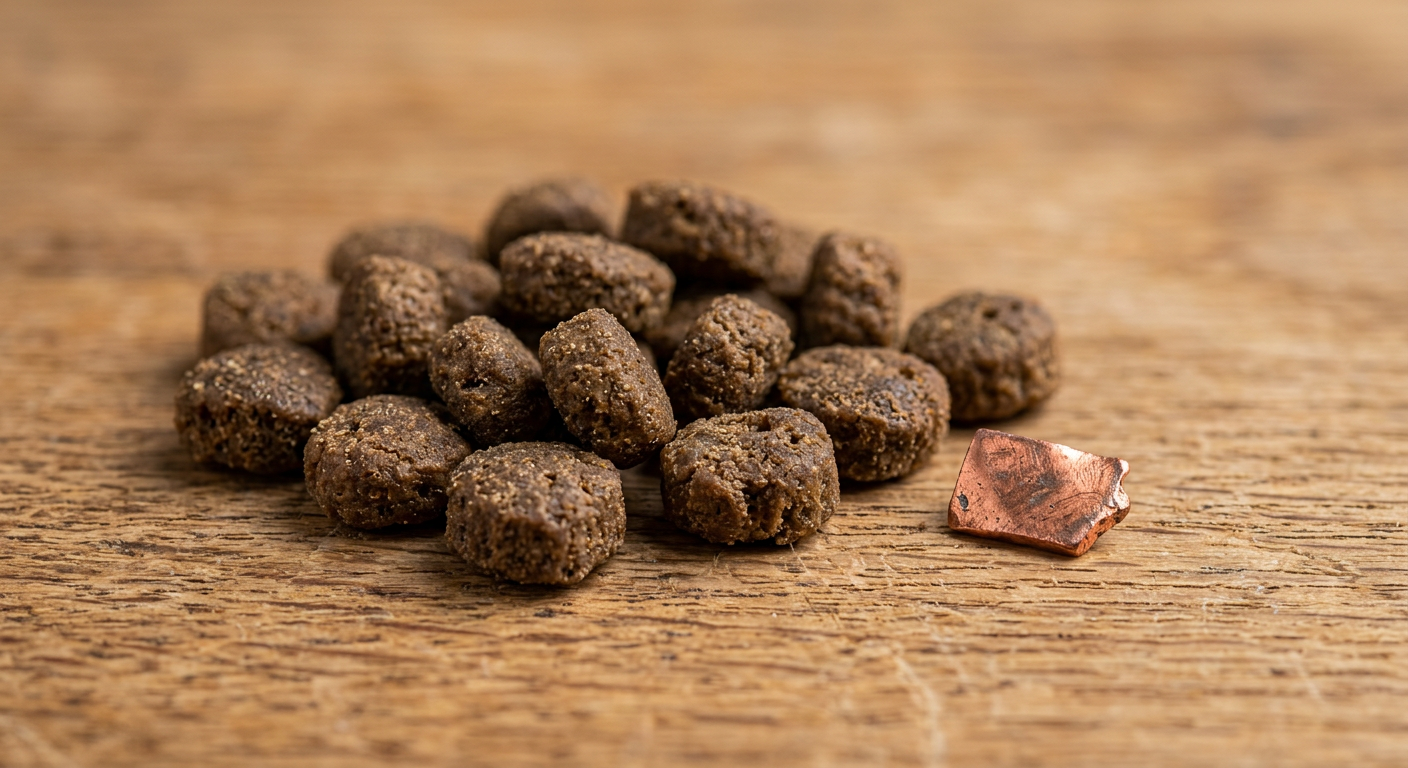 Most modern kibbles use highly bioavailable copper sources — great for absorption, but easy to over-deliver over years of feeding.
Why Copper Crept Up in the First Place
In 1997, the AAFCO (Association of American Feed Control Officials) recommended switching to more bioavailable copper sources such as copper sulfate, copper proteinate, and copper amino-acid chelates, replacing harder-to-absorb copper oxide. The intent was good: prevent deficiency. The unintended consequence, Dr. Center argues, is that dogs now absorb far more copper than the older formulas delivered — and there is currently no upper safety limit in AAFCO guidelines for adult dog food.
How Copper Damages the Liver
The liver is the body's main copper-storage organ. In healthy dogs, excess copper is bound to proteins and excreted in bile. When intake exceeds excretion year after year, copper accumulates inside liver cells, generates free radicals, and causes oxidative damage. Over time this can progress to chronic hepatitis, fibrosis, and cirrhosis.
Because dogs are stoic, the disease is usually silent until 60–80% of liver function is gone. Early warning signs to watch for include:
- Mildly elevated ALT on a routine wellness panel
- Subtle weight loss or pickiness despite a normal appetite history
- Increased thirst and urination
- Intermittent vomiting or soft stools
- Yellowing of the gums or eye whites (late stage — emergency)
If your dog has had a creeping ALT for more than a few months, ask your vet whether bile acids testing or a liver biopsy is warranted. A biopsy with quantitative copper analysis remains the gold standard.
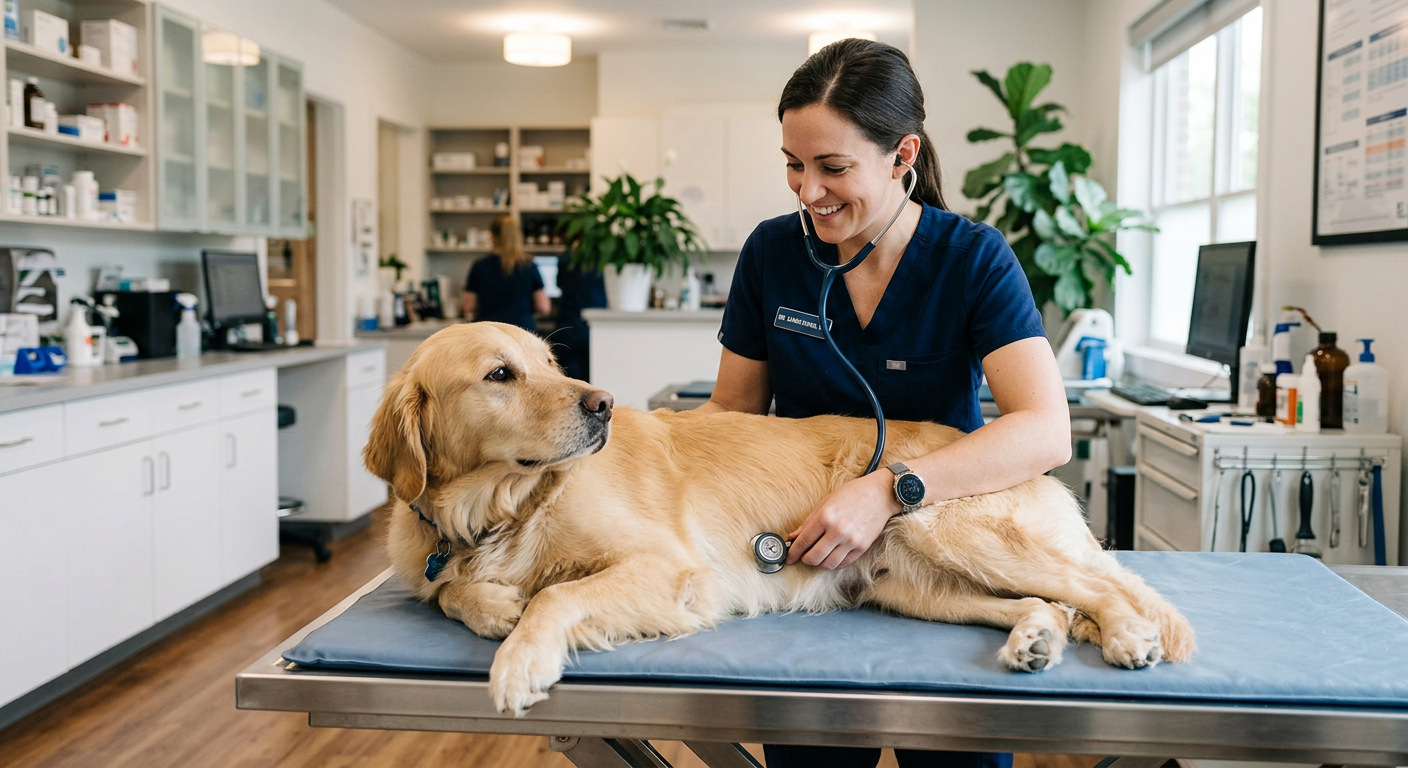 Annual bloodwork is the cheapest, easiest way to catch silent liver changes early.
Which Dogs Are Most at Risk in 2026?
Genetic predisposition
Some breeds carry mutations that impair copper excretion:
- Bedlington Terriers — classic COMMD1 mutation
- Labrador Retrievers — ATP7B and ATP7A variants
- Dobermans, Dalmatians, West Highland Whites, Skye Terriers
- Cocker Spaniels — increasingly reported
Lifestyle and diet patterns
- Dogs eating the same single kibble for years with no rotation
- Dogs fed liver-heavy treats or organ-meat diets on top of complete kibble
- Dogs on copper-supplemented multivitamins they do not need
- Older dogs (8+) on the same lifelong diet
Small dogs are not exempt — see our companion guide on small dog health risks owners overlook for breed-specific tips.
What You Can Do This Week — A Practical 5-Step Plan
- Pull out your bag of food. Look at the guaranteed analysis or the manufacturer's website. If copper is listed, anything well above the AAFCO minimum of 7.3 mg/kg dry matter for adult dogs is worth a conversation with your vet.
- Stop stacking copper sources. If your dog eats a complete-and-balanced kibble, you almost certainly do not need a separate multivitamin or liver-flavored chews on top. Choose one or the other.
- Rotate proteins and brands every 2–3 bags. Variation reduces the chance of any one nutrient being chronically over- or under-fed.
- Get a baseline ALT at your dog's next wellness visit, especially if they are over 5 years old or in a predisposed breed. Repeat yearly.
- Skip raw liver as a daily treat. A small piece once a week is fine; a daily liver chew habit is not, particularly for medium and large breeds.
Should you switch to a "low-copper" prescription diet?
Only if your veterinarian recommends it based on bloodwork or biopsy results. Prescription hepatic diets (such as Hill's l/d or Royal Canin Hepatic) are formulated for dogs with diagnosed liver disease, not as a preventive measure for healthy dogs. Self-prescribing them can create other nutritional gaps.
What About Puppies?
Growing puppies have different copper needs than adults and are generally not the population at greatest risk — accumulation takes years. That said, the same principles apply: stick to one complete-and-balanced food, avoid stacking supplements, and follow your breeder's or vet's transition schedule. For more on starting puppies right, see our guide on reward-based puppy training in 2026 and the broader puppy training resources.
Healthy Aging, Liver Function, and Movement
Liver health does not exist in a vacuum. Dogs with healthier overall lifestyles — regular exercise, lean body weight, mental stimulation — tolerate background nutritional stressors better. Recent research on exercise and canine cognitive decline reinforces what hepatologists already see: an active dog at a healthy weight is a more resilient dog at every organ system.
The Regulatory Outlook
Dr. Center and colleagues are pushing AAFCO and the FDA's Center for Veterinary Medicine to introduce a clear upper safe limit for copper in adult dog food and to require manufacturers to disclose copper levels on the label. Pet-food trade groups have pushed back, citing concerns about deficiency and questioning the size of the affected population. Owners do not need to wait for the regulatory dust to settle — the diet and bloodwork steps above are useful regardless.
Bottom Line
The 2026 JAVMA studies do not say that commercial dog food is dangerous, and they do not call for panic. They do say that the copper conversation is overdue, that millions of dogs may be silently accumulating the metal, and that a few simple owner habits — checking labels, rotating diets, and getting yearly bloodwork — go a long way. Five minutes of reading today could save your dog years of liver trouble down the road.
Frequently Asked Questions
Is commercial dog food unsafe in 2026?+
No. The studies argue current copper levels are higher than they need to be, not that mainstream foods are acutely dangerous. Routine bloodwork and sensible diet rotation are the right response — not panic.
How do I know how much copper is in my dog's food?+
Most brands publish a full nutrient profile on their website or will email it on request. Compare the value to the AAFCO adult minimum (7.3 mg/kg dry matter) and discuss anything substantially higher with your vet.
Are grain-free or boutique foods worse?+
Copper levels vary by formulation, not by 'grain-free' status. Some boutique diets are higher, some are lower. Always check the actual numbers.
Should I give my dog a copper-binding supplement like zinc?+
Only under veterinary guidance. Zinc can interfere with copper absorption but can also cause its own problems if dosed incorrectly.
My dog is a healthy 3-year-old Lab. Should I worry?+
Worry, no. Plan, yes. Get a baseline ALT at the next wellness visit, avoid stacking supplements, and rotate proteins. That's enough at this stage.
Sources
Related Reading
Share this story
Pin this to your Healthy Happy Dogs board
Vet-vetted wellness, symptom guides, and senior dog care pins.
Liked this story?
Share it with someone who should read it.
More from Dog Health & Wellness

Doggy Dementia Breakthrough: New At-Home Test Catches CCD Early!

H5N1 Bird Flu: What Dog Owners *Must* Know Now
