Puppy Separation Anxiety: What the 2026 RVC Generation Pup Study Reveals
Nearly half of puppies develop separation anxiety by six months. The RVC's 2026 Generation Pup study reveals the early-life choices that prevent it.

Nearly half of all puppies show signs of separation-related distress by six months of age, according to the latest analysis from the Royal Veterinary College's Generation Pup longitudinal study. The findings — published in Animal Welfare in 2026 — pinpoint specific early-life choices that either protect puppies or set them up for lifelong anxiety.
Quick Summary
- RVC's Generation Pup study tracked 145+ puppies and identified key risk factors for separation-related behaviours (SRBs).
- Puppies left alone for too long, too early are at the highest risk.
- Crate confinement without gradual conditioning is a major risk factor — open playpens fared better.
- Owner reactions on leaving and returning shape the puppy's emotional baseline.
- The 4–16 week socialisation window is also the critical window for alone-time training.
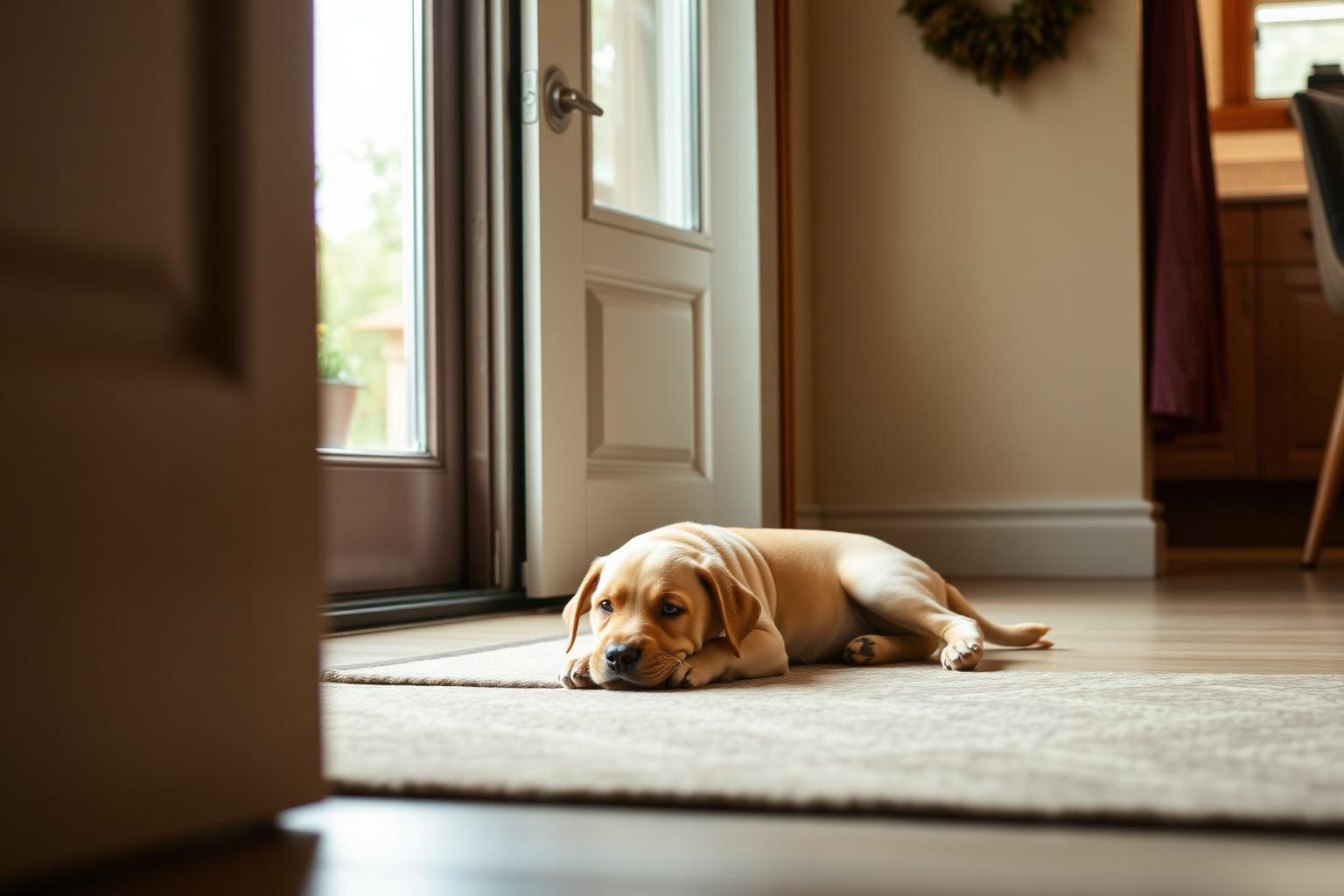 By six months of age, an estimated 40–50% of puppies already show separation-related behaviours.
Why This Study Matters
Separation-related behaviours (SRBs) — barking, howling, destructive chewing, house-soiling, pacing, or self-injury when left alone — are among the most common reasons dogs are surrendered to shelters. Until now, most prevention advice was anecdotal. The Generation Pup project is the first large-scale longitudinal study following thousands of puppies from birth, allowing researchers to tease apart cause and correlation.
The 2026 publication focuses on risk factors visible by six months of age — the same critical period covered in our 3–16 week socialisation guide.
The Six Biggest Risk Factors Identified
1. Being Left Alone Before 8 Weeks of Adjustment
Puppies who were routinely left alone for >1 hour within the first two weeks at home were significantly more likely to develop SRBs. The nervous system needs a "secure base" period before independence training begins.
2. Crate Confinement Without Conditioning
Puppies left in closed crates as the default management tool — rather than introduced gradually with positive associations — showed elevated SRB risk. Open playpens or puppy-proofed rooms produced calmer outcomes.
3. Owner Distress at Departures
Long, emotional goodbyes signalled to the puppy that something was wrong. Calm, brief departures reduced risk.
4. Punishment-Based Training
Households using aversive methods saw markedly more SRBs — consistent with our deep dive on reward-based vs aversive training in 2026.
5. Lack of Independent Play
Puppies who never played alone with chews or food puzzles while the owner was in the room couldn't generalise calm behaviour to true alone time.
6. Inconsistent Routines
Highly variable schedules (different wake times, irregular meals) raised baseline arousal and made alone time more stressful.
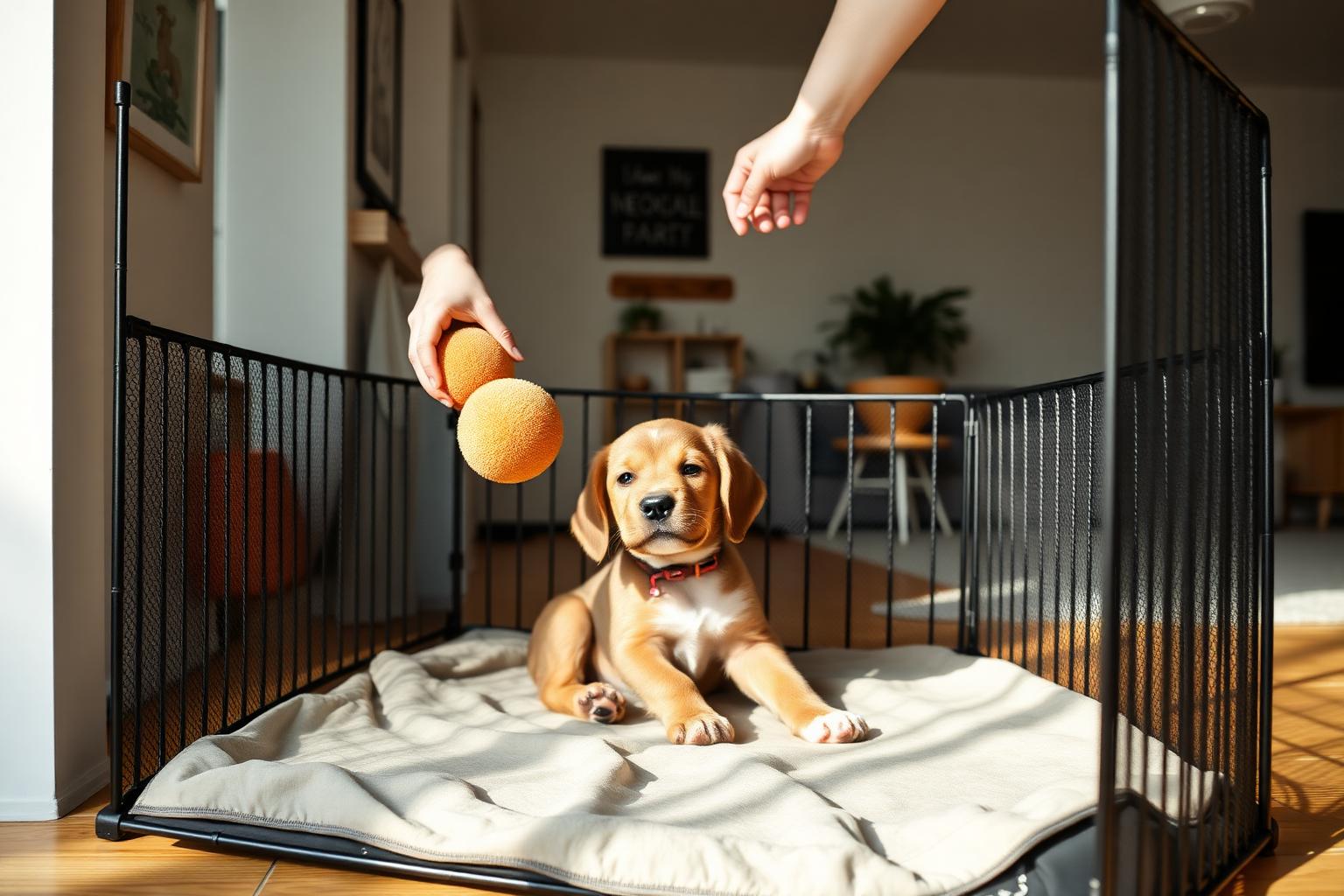 Open playpens with enrichment toys produced calmer alone-time behaviour than closed-crate confinement.
The 4-Week Alone-Time Training Plan
Building on the RVC findings, here is a vet-aligned protocol for puppies 8–16 weeks old:
Week 1 — Presence Without Attention
- Sit in the same room reading or working while the puppy chews a stuffed Kong.
- No eye contact, no praise. Goal: puppy learns to settle while you exist nearby but uninvolved.
Week 2 — Micro-Departures
- Step into another room for 10–60 seconds. Return calmly before the puppy notices.
- Repeat 8–10 times daily. End every rep before distress begins.
Week 3 — The Front-Door Drill
- Pick up keys, open the door, step outside, close it, return after 30 seconds.
- Build to 5 minutes by week's end. Always pair with a long-lasting chew.
Week 4 — Real-World Generalisation
- Short errands (15–30 min). Use a puppy camera to monitor for early stress signs.
- Cap absences at 2 hours for puppies under 4 months.
This pairs well with the broader developmental framework in our socialisation window guide.
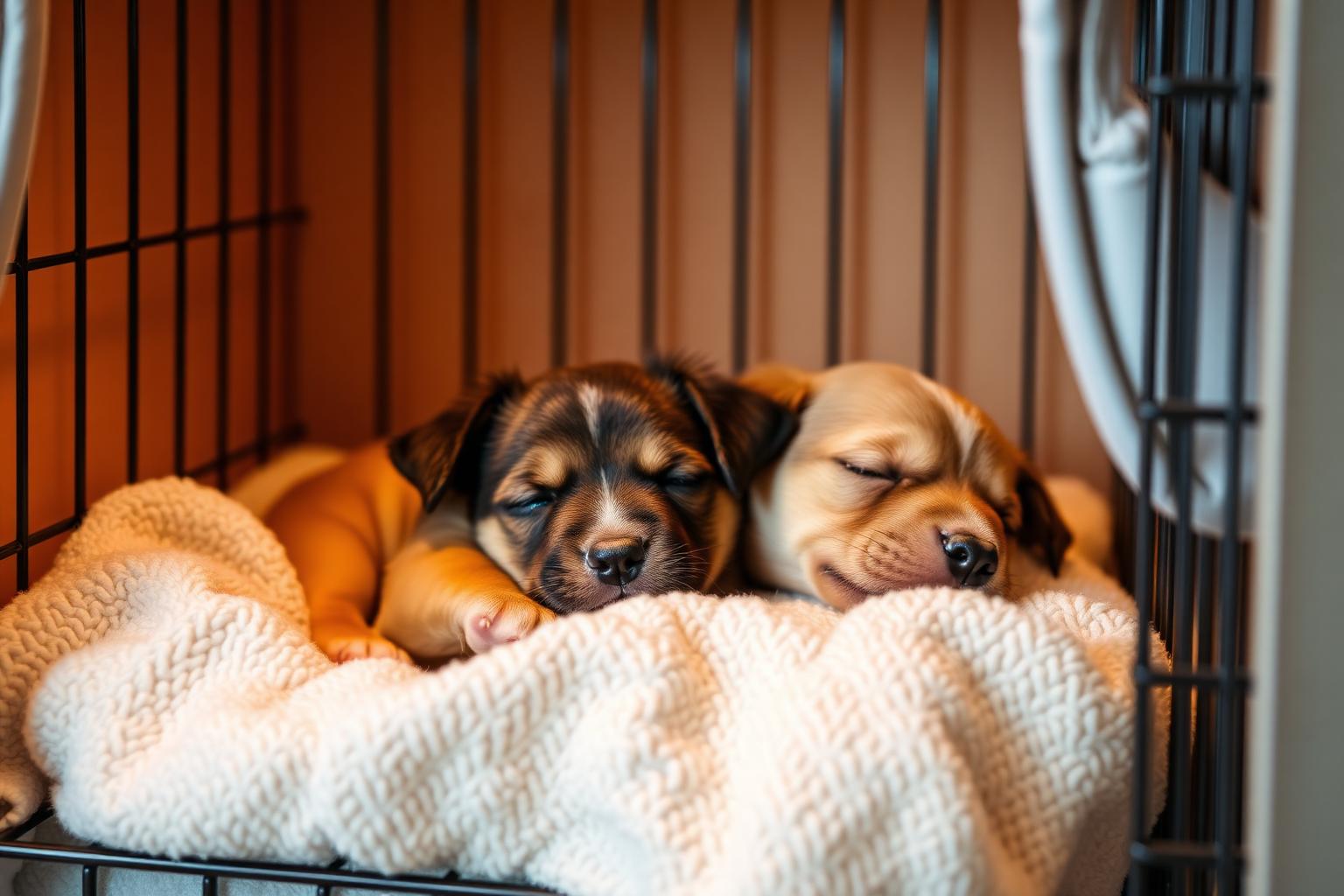 The crate should be a chosen retreat — not a default containment tool.
Early Warning Signs You Shouldn't Ignore
- Whining or pacing the moment you pick up keys or shoes
- Following you room-to-room with visible tension
- Refusing food or treats when alone
- Destructive chewing focused on doors, windows, or your scent items
- Excessive panting or drooling on return
If you spot these patterns, intervene early. Adolescent and adult dogs are far harder to rehabilitate than puppies. Small breeds in particular can mask anxiety as "clinginess" — see our Chihuahua health profile and small-breed health roundup.
Veterinary & Behaviour Disclaimer
This article summarises peer-reviewed research and is for educational purposes only. Established separation anxiety should be treated under guidance from a veterinary behaviourist, not through self-directed training alone.
Frequently Asked Questions
How long can an 8-week-old puppy be left alone?
No more than 1 hour, and ideally less. Bladder capacity, social needs, and emotional regulation are all immature.
Are crates bad for puppies?
Crates are fine when introduced gradually with positive associations and never used as long-term confinement. The RVC data flags the way crates are used, not crates themselves.
Should I get a second dog to help?
No. Studies — including this one — show co-housed dogs do not reliably prevent SRBs and can even spread anxiety.
Does leaving the TV or radio on help?
Mildly, for some puppies. It's a comfort layer, not a substitute for desensitisation training.
When should I see a behaviourist?
If your puppy panics within minutes of being alone, self-injures, or fails to improve after 4 weeks of structured training, book a certified veterinary behaviourist.
Key Takeaways
The Generation Pup study is the clearest evidence yet that separation anxiety is largely preventable — and that prevention starts the moment a puppy enters a new home. Pair this protocol with the developmental windows in our socialisation guide, the methodology in our reward-based training breakdown, and the broader wellness lens of our lifelong-exercise post. Small choices in the first weeks compound into a calm, confident adult dog.
Frequently Asked Questions
How long can an 8-week-old puppy be left alone?+
No more than 1 hour, and ideally less, due to immature bladder and emotional regulation.
Are crates bad for puppies?+
No — but they must be introduced gradually with positive associations, not used as default confinement.
Should I get a second dog to help?+
No. Co-housed dogs do not reliably prevent SRBs and can spread anxiety.
Does leaving TV or radio on help?+
Mildly, but it's a comfort layer, not a replacement for desensitisation.
When should I see a behaviourist?+
If panic occurs within minutes, self-injury appears, or no progress after 4 structured weeks.
Sources
Related Reading
Share this story
Pin this to your Puppy Training 101 board
Force-free training, socialisation, and house-training cheat sheets.
Liked this story?
Share it with someone who should read it.
More from Puppy Training & Behavior

Senior Dog Suddenly Tilting Head? Understanding Canine Vestibular Disease

The 2026 Puppy Revolution: Why Consent Training Changes Everything for Bernese Mountain Dogs
