Doggy Dementia: The 2026 Adelaide Study That Says a 5-Week Class Can Fix Your Senior Dog's Sleep
A 2026 University of Adelaide trial tested 5-week scent and physical training classes on senior dogs with canine cognitive dysfunction. The cognitive scores didn't move — but sleep and caregiver burden did. Here's what to do at home.

If your senior dog has started pacing at night, getting "stuck" in corners, or sleeping through the day and waking through the dark, you're watching one of the most heartbreaking conditions in veterinary medicine: Canine Cognitive Dysfunction (CCD), often called doggy dementia. A new clinical trial published on 13 May 2026 in GeroScience by Taylor and colleagues at the University of Adelaide just tested something most owners have never been offered — not a drug, not a supplement, but a five-week group training class — and the results say a lot about what aging dogs (and their exhausted humans) actually need.
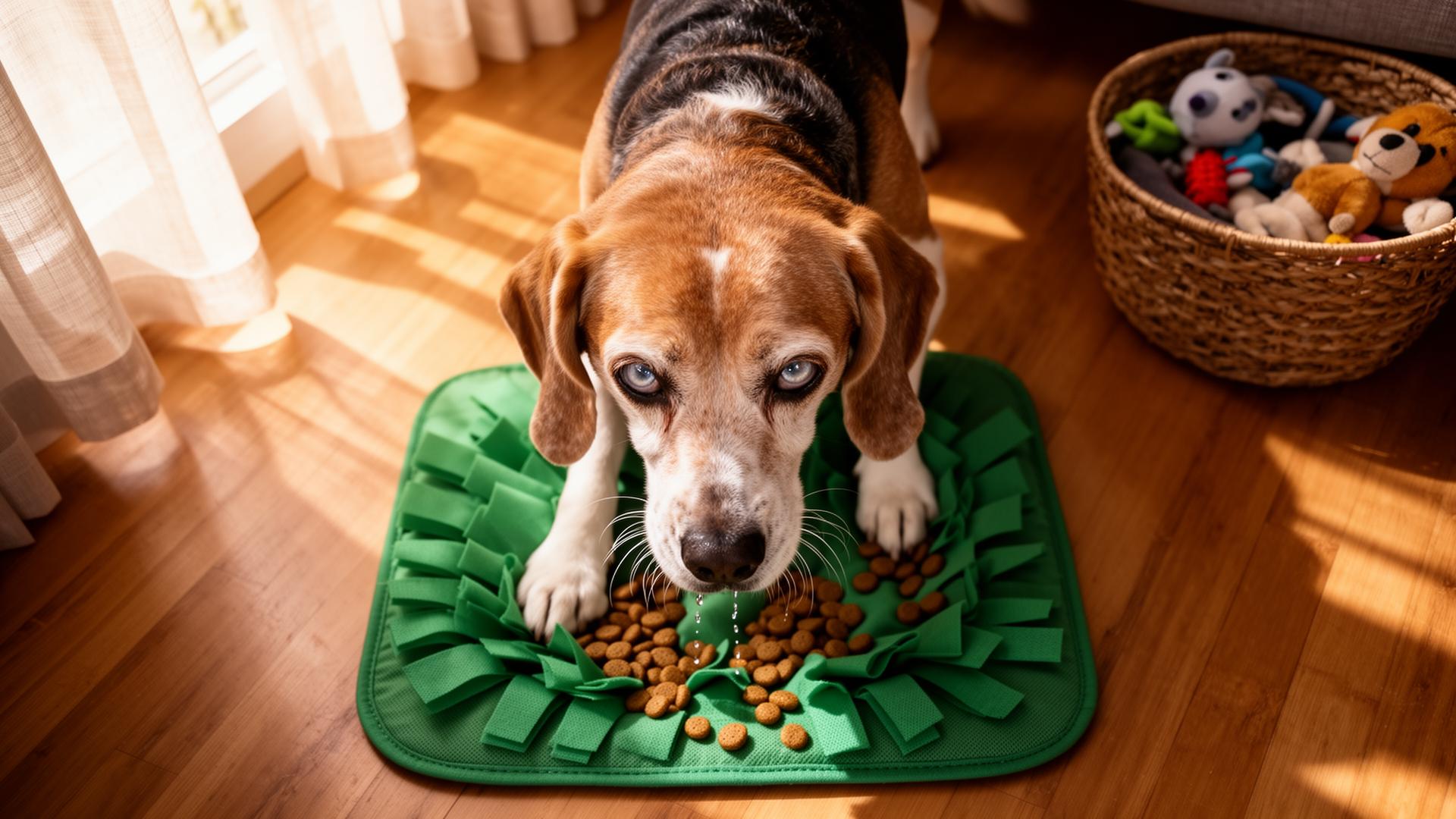 Scent-based enrichment — like a snuffle mat — was one of two training styles tested in the 2026 Adelaide trial on senior dogs with cognitive decline.
What the researchers did
The team enrolled 42 dogs aged 8 years or older, all showing mild-to-moderate signs of CCD as measured by the validated Canine Dementia Scale (CADES). Each dog was randomly assigned to one of two five-week programs:
- Scent-based training (S): 21 dogs working nose-work games, scent boxes, and odor discrimination.
- Physical structured training (PST): 21 dogs doing low-impact body-awareness work — balance pods, slow obstacle navigation, controlled stretching.
Dogs wore FitBark accelerometers the whole time to log sleep and daily activity objectively, while caregivers filled in validated burden questionnaires at three points: baseline, mid-treatment, and post-treatment.
The headline finding: sleep, not cognition
After five weeks, CADES scores didn't budge. The training didn't reverse — or even measurably slow — the cognitive scoring of CCD itself. But something else moved, and it matters a lot to anyone living with a senior dog:
- 🌙 Sleep improved in the physical-training group. FitBark sleep scores climbed week over week for PST dogs.
- 📉 Scent-training dogs got calmer. Their morning and evening activity peaks flattened, consistent with reduced restlessness — a hallmark CCD problem.
- 💚 Caregiver burden dropped significantly in both groups, with owners reporting more confidence and a strong sense of peer support.
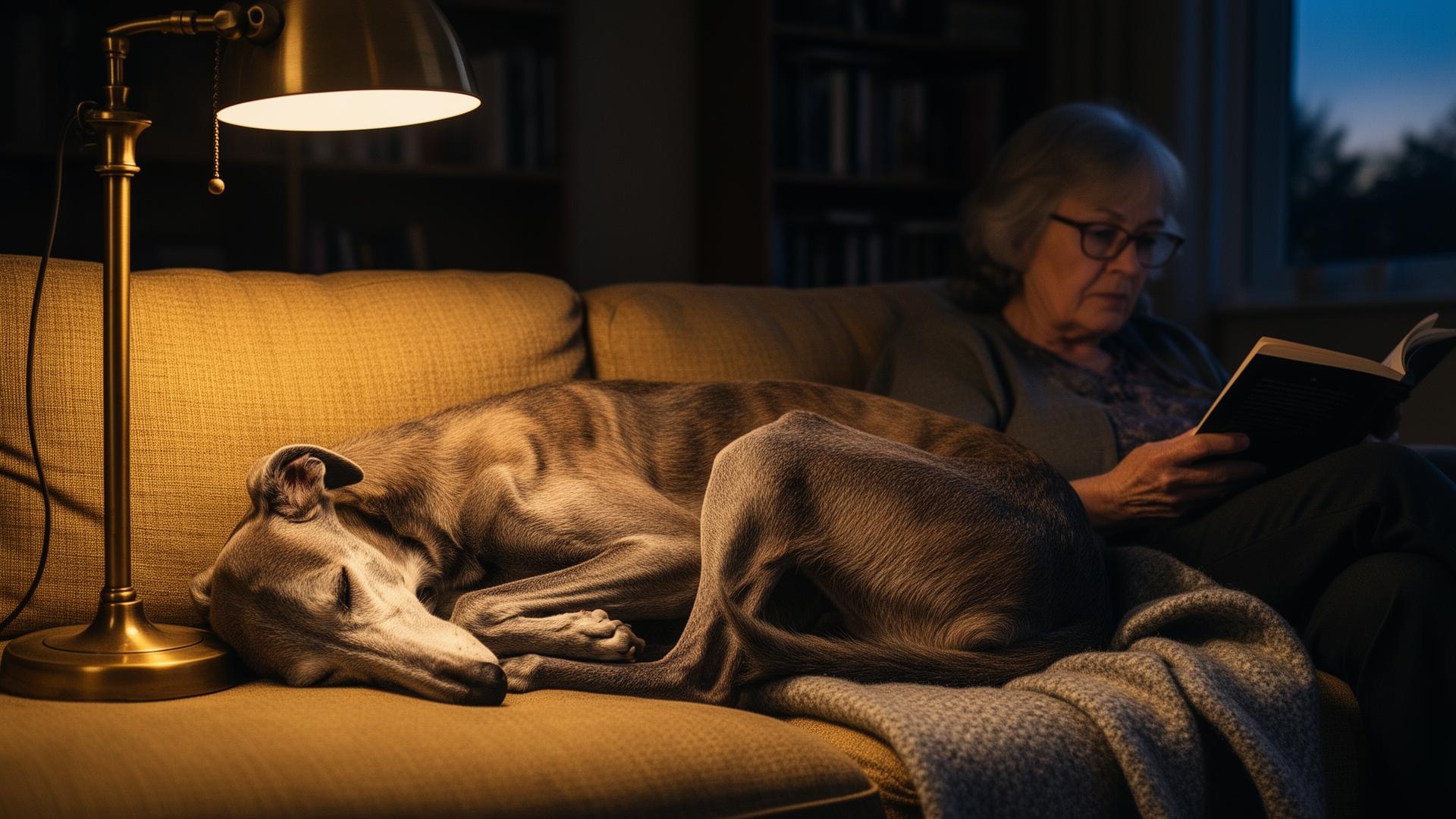 The biggest win wasn't on cognition tests — it was sleep. Senior dogs in physical training slept measurably better, easing one of CCD's most exhausting symptoms for caregivers.
Why sleep is the right thing to measure
Sleep-wake disruption is one of the most disabling features of canine dementia. Night-time vocalizing, pacing, and disorientation don't just wear out the dog — they collapse the household. Previous work has shown that a lifetime of sport and structured activity builds cognitive resilience in dogs, and this new study suggests that even starting at 8+, moderate physical engagement can still nudge the sleep architecture in a healthier direction.
This echoes findings in human dementia care, where moderate exercise consistently improves total sleep time and sleep efficiency, and where group activities reduce caregiver stress. It also dovetails with the broader picture from the Dog Aging Project's 2026 metabolite work: the dog is becoming one of the most useful models we have for aging interventions in both species.
Scent vs. physical: which should you pick?
The honest answer from the trial is both have value, but they do different jobs:
- If your dog's biggest issue is restless pacing and over-arousal, lean into scent work. Snuffle mats, hidden-treat searches, and simple "find it" games settled the activity curve.
- If your dog's biggest issue is broken sleep and night-waking, lean into structured physical work — short, controlled sessions, not long walks. Think balance, body awareness, and proprioception.
- If your biggest issue is your own burnout, either class type — done in a group — moved the needle. The social piece wasn't decorative; it was therapeutic.
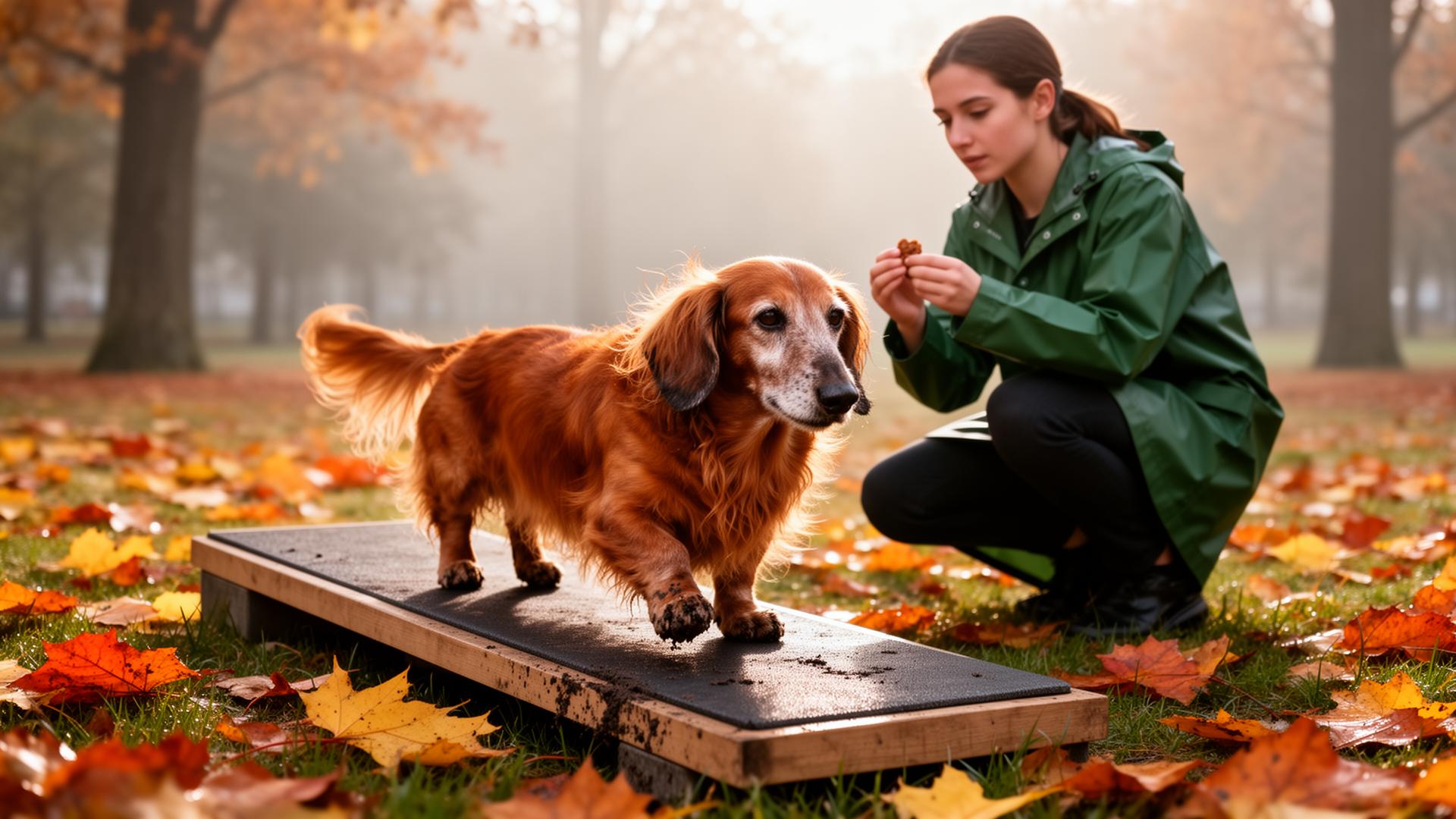 Low-impact body-awareness work — even something as simple as crossing a padded ramp — is the kind of physical training that moved sleep scores in the 2026 trial.
What this means for your senior dog at home
You don't need a research-grade lab to copy the protocol. The classes were chosen specifically because every element could be recreated at home by an average owner. A practical weekly rhythm might look like:
- 5–10 minutes of scent work, twice a day. A snuffle mat at breakfast, a "find the treat" game in three boxes before dinner.
- 10–15 minutes of slow body work, three times a week. Step-overs across a broomstick on the floor, slow figure-eights around two chairs, balance on a thick folded towel.
- One social outing a week. A senior-friendly class, a quiet meet with a friend's dog, or even a calm coffee-shop sit. The peer support is real medicine for you.
- Track sleep with a simple wearable (FitBark, Whistle, even a cheap pet camera). Trends matter more than any single night.
And keep an eye on how everyday walks and play affect cognitive trajectory — the cumulative effect across years is where the bigger wins live.
What the study can't tell us (yet)
The trial was small (n=42), short (5 weeks), and didn't include a no-training control group, so we can't yet claim training prevents cognitive decline. The CADES score didn't move, which is honest reporting — and a reminder that "feels better at home" and "scores better on a clinical scale" are not the same thing. Larger, longer trials with control arms are the obvious next step.
But for the millions of households living with a senior dog right now — roughly half of UK pet dogs and 68 million US households own a dog — "improves sleep and reduces caregiver burden in five weeks, with no side effects, using equipment you already own" is a remarkably useful headline.
Frequently Asked Questions
Can dog dementia be reversed?+
No current evidence shows CCD can be reversed. The 2026 Adelaide trial found cognitive scores stayed stable over 5 weeks of training — but quality of life markers (sleep, calmness, caregiver burden) improved meaningfully.
What's the best exercise for a dog with cognitive decline?+
Low-impact, structured physical work — balance, body-awareness, slow obstacle navigation — outperformed long walks in this trial and was specifically linked to better sleep.
How does scent work help senior dogs?+
In the 2026 study, scent-based training (snuffle mats, scent boxes, find-it games) reduced morning and evening activity peaks, consistent with less restless pacing — a common CCD symptom.
At what age should I worry about doggy dementia?+
Roughly 25% of dogs aged 8–12 show some signs of CCD, rising to about 70% past age 15. Early signs include disorientation, altered sleep cycles, house soiling, and changes in social interaction.
Do I need a special class or can I do this at home?+
The classes were designed to be reproducible at home. Group attendance had its own benefit — peer support reduced caregiver burden — but the exercises themselves use ordinary equipment.
Sources
Related Reading
Share this story
Pin this to your Healthy Happy Dogs board
Vet-vetted wellness, symptom guides, and senior dog care pins.
Liked this story?
Share it with someone who should read it.
More from Dog Health & Wellness

Cavalier MVD Breakthrough: 3 Tools That Add Years to Their Lives

IVDD Breakthrough: New Protocol Slashes Dachshund Risk by 63%!
