Hard-Working Dogs Stay Young Longer: The 2026 ELTE Study on Sport, Bond, and Canine Dementia
A new 2026 study of 858 senior dogs from ELTE Eötvös Loránd University finds that a lifetime of sports and shared activity with the owner is the single strongest protective factor against canine cognitive decline — and toy and mixed breeds benefit most.

If you have ever wondered whether your dog's daily walk, weekend hike, or backyard fetch session actually matters in the long run, a new 2026 study from ELTE Eötvös Loránd University in Budapest has a very direct answer: yes — and it may be the single most important thing protecting your dog's brain as they age.
Published on 27 April 2026 in Frontiers in Veterinary Science, the paper "Hard-working or hardly working dogs stay young longer?" tracked 858 senior dogs (older than 7) across an international questionnaire and asked a deceptively simple question: which lifestyle factors actually slow down Canine Cognitive Dysfunction (CCD) — the dog version of Alzheimer's disease?
 An aging Vizsla mid-stride with its owner — the kind of lifetime sport pattern the ELTE team found most protective against canine dementia.
Why this study matters
Companion dogs now routinely live past 7–8 years — the age at which CCD typically begins to appear. By 15, more than half of dogs show measurable cognitive impairment: disorientation, disrupted sleep, "forgetting" housetraining, and the aimless nighttime wandering that breaks so many owners' hearts.
Until now, most of what we knew about preventing CCD came from correlative data in the Dog Aging Project, or from short 3-month exercise interventions. The ELTE team — Lugosi, Dobos and Pongrácz — went a step further. They split breeds by function (cooperative working breeds, independent working breeds, toy breeds and mixed breeds), measured lifetime sports engagement rather than just current activity, and looked at how the owner's relationship with the dog shaped the trajectory.
The four findings owners need to know
1. Lifetime sport beat almost everything else
A lifetime sports career showed the strongest negative association with CCD scores (p < 0.001). Dogs that had been "sports companions" their whole lives — agility, canicross, dock diving, herding trials, scent work, IGP — scored dramatically better on the Canine Cognitive Dysfunction Rating Scale than dogs kept as "domestic" or "breeding" animals.
2. Joint activity with the owner mattered independently
Even without formal sport, doing things together — long walks, training sessions, trick work, scent games at home — was independently protective (p = 0.037). The dog didn't need a competition title. They needed a partner.
3. Toy and mixed breeds benefited the most
This is the headline most owners miss. The breeds least often signed up for sport — Yorkies, Maltese, Chihuahuas, mixed-breed couch companions — gained the largest protective effect from joint activity. Cooperative and independent working breeds were partially shielded even when only sporadically active, but toy and mixed breeds only aged well if their owners actively engaged them.
 Cooperative working breeds like the Border Collie showed lower CCD scores even with only sporadic exercise — but they still aged best with consistent work.
4. Why you chose your dog predicts how they age
Owners who prioritized health and sound behavior (p = 0.042) or high breeding quality (p = 0.004) when acquiring their puppy ended up with significantly lower CCD scores years later. Owners who chose a breed because it was fashionable or rare? No protective effect at all (p = 0.830).
What "lifetime sports activity" actually looks like
You don't need a podium finish at a national trial. The ELTE team's definition of meaningful activity is wide:
- Structured dog sport — agility, flyball, dock diving, herding, IPO/IGP, canicross, rally obedience.
- Working tasks — search and rescue, scent detection, service work, hunting trials.
- Joint owner activities — daily off-leash hikes, swim sessions, structured training, trick training, nosework classes, even consistent fetch.
The common thread is regular, physically demanding, mentally engaging activity done together — not solo backyard time. That second part matters: the social and cognitive load of working with a human appears to be doing real protective work in the brain. It is the same pattern we covered in the 2026 Science study on gifted word-learner dogs, where the dogs that thrive cognitively are the ones living in linguistically and socially rich households.
Small dogs: the hidden risk group
 Toy breeds live the longest — and have the longest exposure window for dementia. The ELTE data says they need joint activity the most, not the least.
Because toy breeds routinely reach 15–17, they spend the most years inside the CCD risk window. And because owners often treat them as "purse dogs" rather than athletes, they accumulate the least lifetime activity. That combination — long life, low engagement — is exactly why this study is so consequential for small-dog homes.
If you live with a Yorkie, Maltese, Pomeranian, Bichon, or any mixed-breed companion, treat them like a real dog: structured walks, basic obedience refreshers into old age, nosework, and short training sessions every day. For more breed-specific guidance, our small dog breeds library goes deeper on activity needs by breed.
What to actually change this week
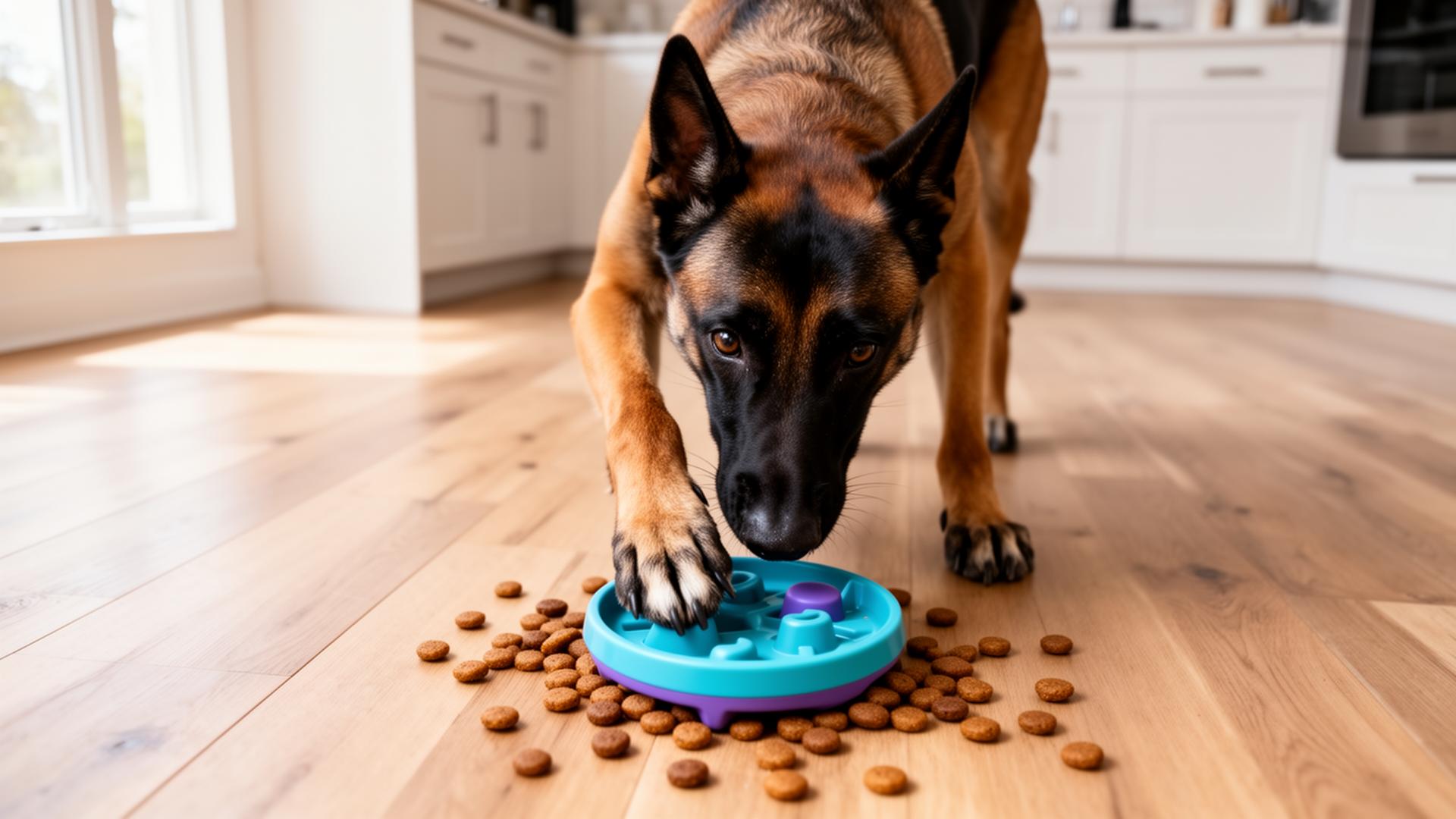 Puzzle feeders, scent games and short training drills count as joint cognitive activity — especially valuable for dogs already past 7.
- Add one structured session per day. Ten minutes of training, scent work, or trick rehearsal counts.
- Replace one passive meal with a puzzle feeder or scatter feed. Brain-engaging eating is the easiest cognitive load to add.
- Keep walking off-leash terrain (where safe) into old age. Uneven ground recruits more cognitive and proprioceptive processing than sidewalks.
- Don't retire your senior. Lower the intensity, not the engagement. Swap a sprint hike for a sniffari; swap full agility for a low-jump foundations class.
- Audit your routine like a coach. If your dog has had a "low" decade activity-wise, the study suggests it is not too late — but the ramp-up needs to be paired with a vet check, especially for breeds prone to joint disease. See our companion piece on the 2026 RVC study on doodle behavior for why "easy" companion dogs still need structure.
A note on what this study can and cannot prove
This is a large, well-powered questionnaire study — not a randomized intervention. Owners who choose sporty lives may also feed better, vet earlier, and intervene faster on subtle behavior changes. The ELTE authors are careful about this. But the size of the effect (the strongest single predictor), the dose–response pattern, and the convergence with the Dog Aging Project's 10,000-dog dataset make the practical takeaway very hard to argue with:
An active life, shared with you, is the closest thing dogs have to a dementia drug — and it is free.
For more on how lifestyle and biology intersect in canine brain aging, our deep dive on the 2026 Helsinki gut–brain study is a natural next read.
Frequently Asked Questions
At what age should I start worrying about canine cognitive decline?+
Most dogs enter the CCD risk window around 7–8 years, with prevalence climbing sharply after 11. The ELTE study suggests prevention starts well before symptoms — ideally with an active lifestyle from puppyhood.
My dog is already 10 and has been mostly sedentary. Is it too late?+
No. The data show even sporadic activity benefits working-type breeds, and joint owner engagement helps toy and mixed breeds at any age. Ramp up gradually and with a vet check, especially if joint disease is a concern.
Does a daily walk count as 'lifetime sports activity'?+
A passive leashed walk is better than nothing but is weaker than the structured, jointly engaged activity the study measured. Add scent work, training, off-leash hiking, or a dog sport class to get into the protective range.
Are small dogs really at higher risk for dementia?+
They live the longest, which gives them the longest exposure to age-related brain changes. The ELTE results show they benefit the most from joint owner activity — making engagement, not size, the deciding factor.
What are the early warning signs of CCD I should watch for?+
Disorientation in familiar places, disrupted sleep–wake cycles, reduced interest in family interactions, loss of previously learned housetraining, and aimless wandering — especially at night. Score these on the CCDRS and consult your vet.
Sources
Related Reading
Share this story
Pin this to your Healthy Happy Dogs board
Vet-vetted wellness, symptom guides, and senior dog care pins.
Liked this story?
Share it with someone who should read it.
More from Dog Health & Wellness

Cavalier MVD Breakthrough: 3 Tools That Add Years to Their Lives

IVDD Breakthrough: New Protocol Slashes Dachshund Risk by 63%!
