Your Dog May Be Eavesdropping: The 2026 Science Study on Gifted Word-Learner Dogs
A 2026 study in Science found that a small group of "gifted" dogs can learn new toy names purely by eavesdropping on human conversation, performing on par with 18-month-old children.

Most dog owners suspect their pup understands more than they let on. A new study published in Science in January 2026 by Shany Dror and colleagues at Eötvös Loránd University in Hungary takes that hunch much further: a small group of so-called "gifted word learner" dogs can pick up the names of new toys simply by overhearing their humans talk about them — no training, no rewards, no eye contact required.
In other words, your dog might be eavesdropping on you. And for the rare canine prodigies in this study, the result is roughly equivalent to the language-learning skills of an 18-month-old toddler.
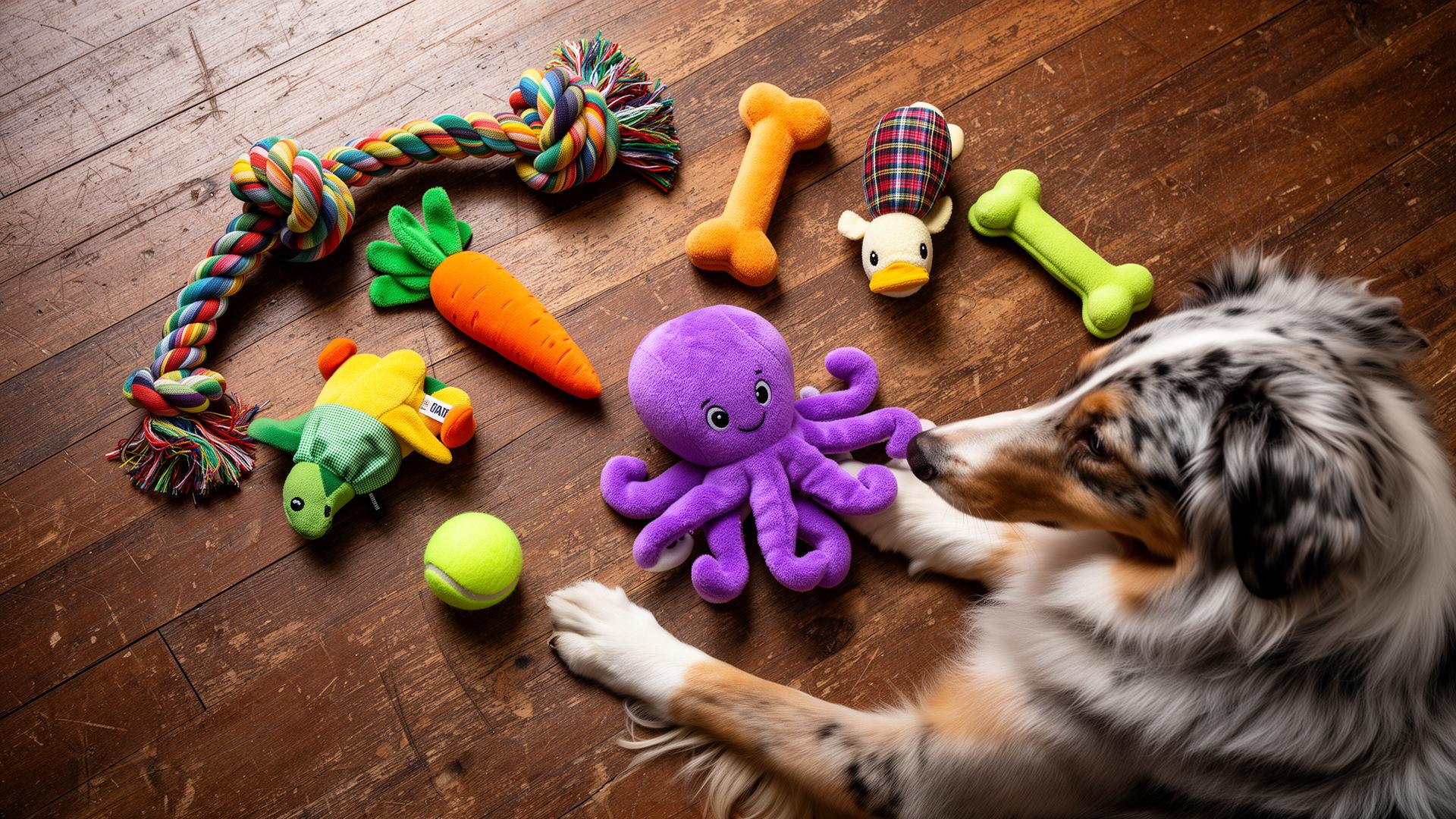 The study used novel toys hidden among familiar ones — and the gifted dogs picked the new toy out by name alone.
How the eavesdropping experiment worked
The researchers recruited a handful of confirmed "gifted word learner" dogs — animals previously documented to know the names of dozens or even hundreds of objects. Border Collies dominate this category, but the trait shows up unpredictably across breeds and countries.
Each owner sat in their living room with another household member and held a casual conversation that name-dropped two new toys. Crucially, they never addressed the dog, never pointed at the toys, and never made eye contact with the dog while saying the names.
Afterward, the new toys were placed in a separate room mixed with familiar items. The owner then asked the dog to fetch one of the novel toys by name. The dogs performed about as well as if they had been formally introduced to the toys and told to find them.
Why this is a big deal
Toddlers do this constantly. A 1.5-year-old picks up enormous chunks of vocabulary not from direct instruction but by overhearing parents and siblings. Until now, the ability to learn words from third-party speech — sometimes called "overhearing learning" — had been mostly documented in great apes and African Grey parrots. Showing it in a domestic dog implies the cognitive machinery is more widely shared than researchers assumed.
It also forces a rethink of what counts as "attention" in dogs. Even when a dog appears to be ignoring you, the right dog with the right person can be parsing your sentences, isolating a label, and binding it to a specific object in the room.
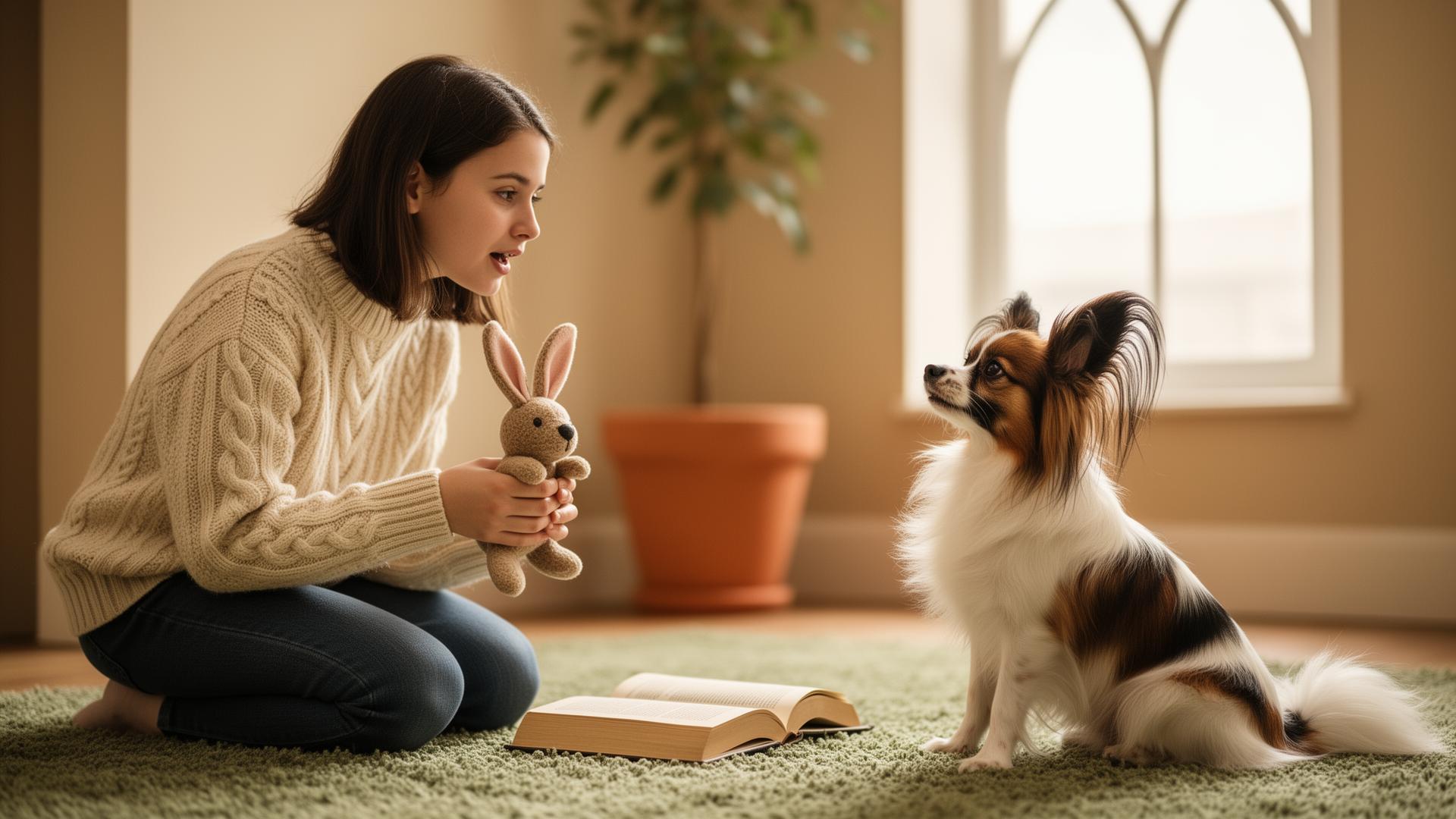 For most dogs, learning a toy name still depends on direct, warm one-on-one interaction.
Is your dog "gifted"? Probably not — and that's fine
The researchers are clear that the dogs in this study are statistical outliers. Across years of recruitment they've identified only a few dozen worldwide. Most family dogs land somewhere closer to comprehending command words and routines — still impressive, but a different skill set entirely.
If you want to find out where your dog sits, a simple at-home test: teach two new toys by name in short, playful sessions for a week, then mix them with three familiar toys and ask for each by name. A non-gifted dog will guess; a gifted one will be right almost every time, even with new objects.
For context on how breed background shapes that learning style, see our deep dive on why some dog breeds learn faster with practice and the broader genetics of working-dog behavior.
What it means for everyday life with your dog
Even if your dog isn't a word prodigy, the takeaway is practical: they're paying attention to your speech more than you realize. A few habits that align with the study's findings:
- Name objects consistently. Pick one word per item ("ball," not "ball / toy / thing") and use it the same way every time.
- Talk around your dog, not just to them. Casual household chatter is real input.
- Tone matters as much as the word. Dogs decode emotion from voice — see our piece on how dogs hear emotion in human voices.
- Watch for stress, not just smarts. A dog that tunes in closely also tunes in to anxiety cues. If your dog seems on edge, our guide to the gut–brain link in canine anxiety is a useful starting point.
 Pricked ears, soft eyes, a slight head tilt — classic markers of a dog actively parsing speech.
The bigger picture
This research adds to a remarkable run of canine cognition findings in 2026, from the genetics of odor-detection dogs to medical-grade scent detection of human disease. The thread connecting them all is the same: dogs are processing more about us — our smells, our voices, our words — than we've historically given them credit for.
The next time you're chatting with a partner on the sofa and your dog quietly stares from across the room, assume they're not just watching. They might be listening.
Frequently Asked Questions
What is a gifted word learner dog?+
A dog that can rapidly learn and remember the names of dozens or hundreds of objects, often after only a few exposures. Researchers have documented only a few dozen such dogs worldwide, with Border Collies most heavily represented.
How can I test if my dog is a gifted word learner?+
Introduce two brand-new toys by name in short, playful sessions for about a week. Then place them in a room with three familiar toys and ask your dog to fetch each by name. Gifted dogs choose correctly far above chance, even with novel items.
Did the dogs in the study get any training reward?+
No. The novelty of the experiment is that owners only chatted with another person and mentioned the toy names — they did not address the dog, point, or use treats. The dogs still picked the correct toy when later asked.
Does this mean all dogs understand my conversations?+
Not in this rich, word-by-word sense. Most dogs reliably pick up command words and contextual cues but do not generalize new noun labels from overheard speech. The gifted dogs are statistical outliers.
What is the practical takeaway for regular dog owners?+
Be consistent with object names, use a calm warm tone, and assume your dog is paying more attention to household speech than you realize — including its emotional tone.
Sources
Related Reading
Share this story
Pin this to your Puppy Training 101 board
Force-free training, socialisation, and house-training cheat sheets.
Liked this story?
Share it with someone who should read it.
More from Puppy Training & Behavior

Is Your Border Collie Secretly Stressed? The 2026 Study That Explains Why

Senior Dog Suddenly Tilting Head? Understanding Canine Vestibular Disease
