Dogs Can Smell Parkinson's With 98% Accuracy: Inside the 2026 Manchester Sebum Study
Trained Labradors and Spaniels correctly flagged Parkinson's skin-odor samples with up to 98% specificity in a new double-blind 2026 trial — and chemists are racing to bottle what the dogs smell.

For years, owners of people later diagnosed with Parkinson''s disease have described the same eerie detail: long before tremors began, their loved one started to smell different. A new 2026 double-blind trial from the University of Manchester and the charity Medical Detection Dogs shows that pet-friendly working dogs can pick up that smell on a simple cotton swab — with up to 98% specificity and 80% sensitivity.
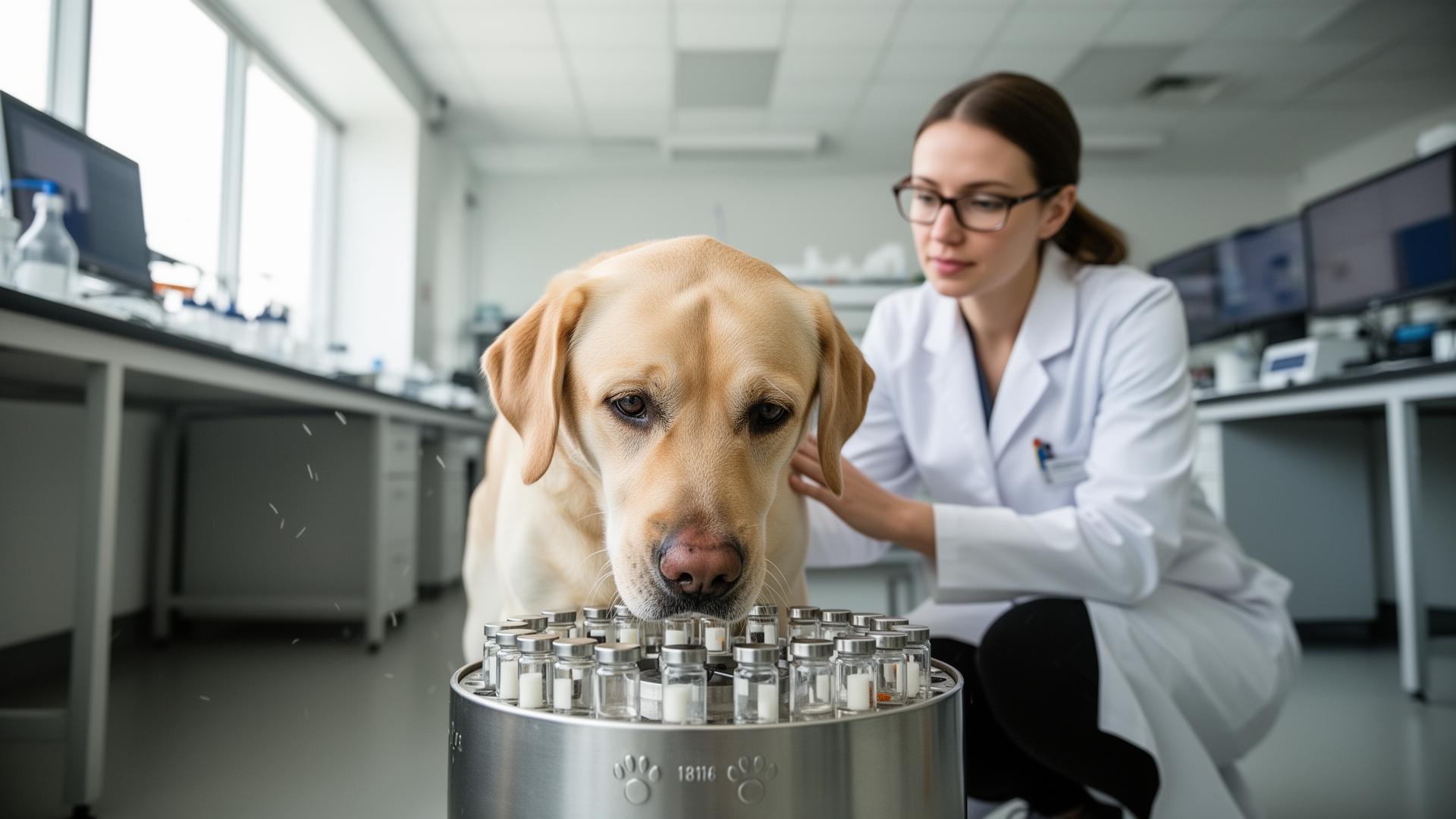 A trained Labrador screens sebum swabs at a Medical Detection Dogs research session. Photo: editorial reconstruction.
What the 2026 study actually did
Researchers swabbed the upper back — a sebum-rich area — of 205 volunteers: people with confirmed Parkinson''s disease (PD), people with other neurological conditions, and healthy controls. Swabs were sealed in identical glass vials and presented to two dogs (Bumper, a Golden Retriever, and Peanut, a Black Labrador) on a stainless-steel scent carousel under double-blind conditions — neither the handler nor the on-site scientist knew which vial held the PD sample.
Across more than 1,800 individual trials, the dogs correctly rejected non-PD samples 98.3% of the time and correctly identified PD samples 80.4% of the time, including in early-stage patients not yet on medication.
Why sebum?
Parkinson''s alters the composition of sebum, the waxy substance our skin glands produce. Mass-spectrometry work by the same Manchester group has already linked PD to changes in eicosane, hippuric acid, octadecanal and other volatile organic compounds. Dogs, with roughly 220 million olfactory receptors versus our 5 million, can apparently detect that signature long before clinical symptoms appear.
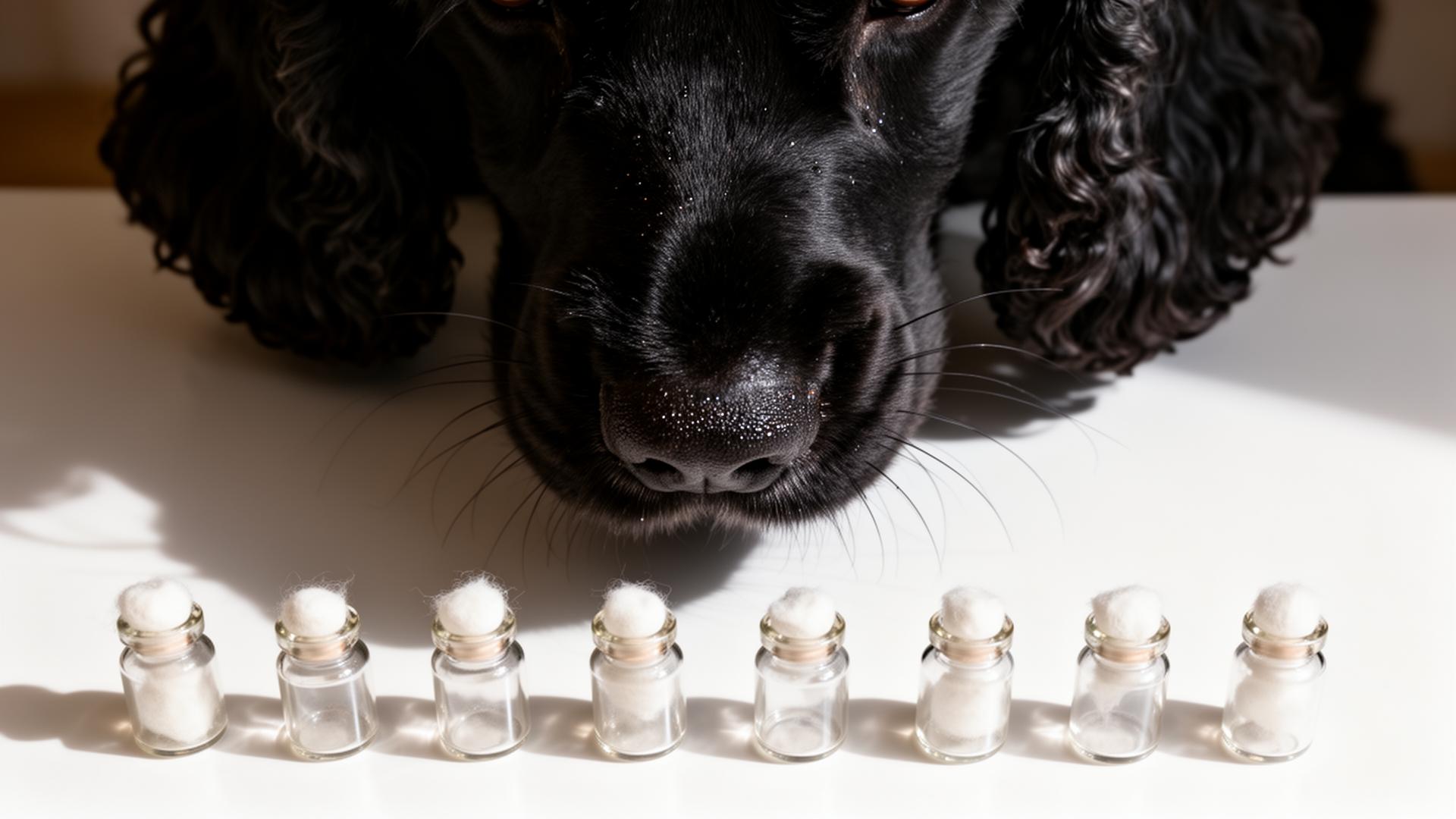 Sebum samples are sealed in identical vials so the dog can only rely on odor — not visual or human cues.
Why this matters for early diagnosis
Parkinson''s is currently diagnosed clinically, often years after the brain has already lost a significant share of its dopamine-producing neurons. A non-invasive skin-swab screen would be transformative — and the dogs are essentially a living biosensor that proves the smell is real and consistent enough to measure.
The Manchester team is now working with Medical Detection Dogs and electronic-nose engineers to translate the dogs'' performance into a benchtop sensor that any neurology clinic could use.
What it means for your dog
Pet dogs are not trained to alert on disease — but the study is yet another reminder of how much information a dog''s nose pulls from the people they live with. Anecdotal reports of dogs sniffing tumors, hypoglycemia, and seizures fit the same pattern: subtle metabolic changes alter our body chemistry, and dogs notice. If you''ve always thought your dog acts differently when you''re unwell, you''re probably not imagining it.
For working-dog enthusiasts, the project also highlights how scent-detection training uses the same drives we shape in everyday training — focused engagement, impulse control, and stamina. See our deep dive on the genetics behind elite working-dog scent ability and how those same traits appear, diluted, in pet Labradors and Spaniels.
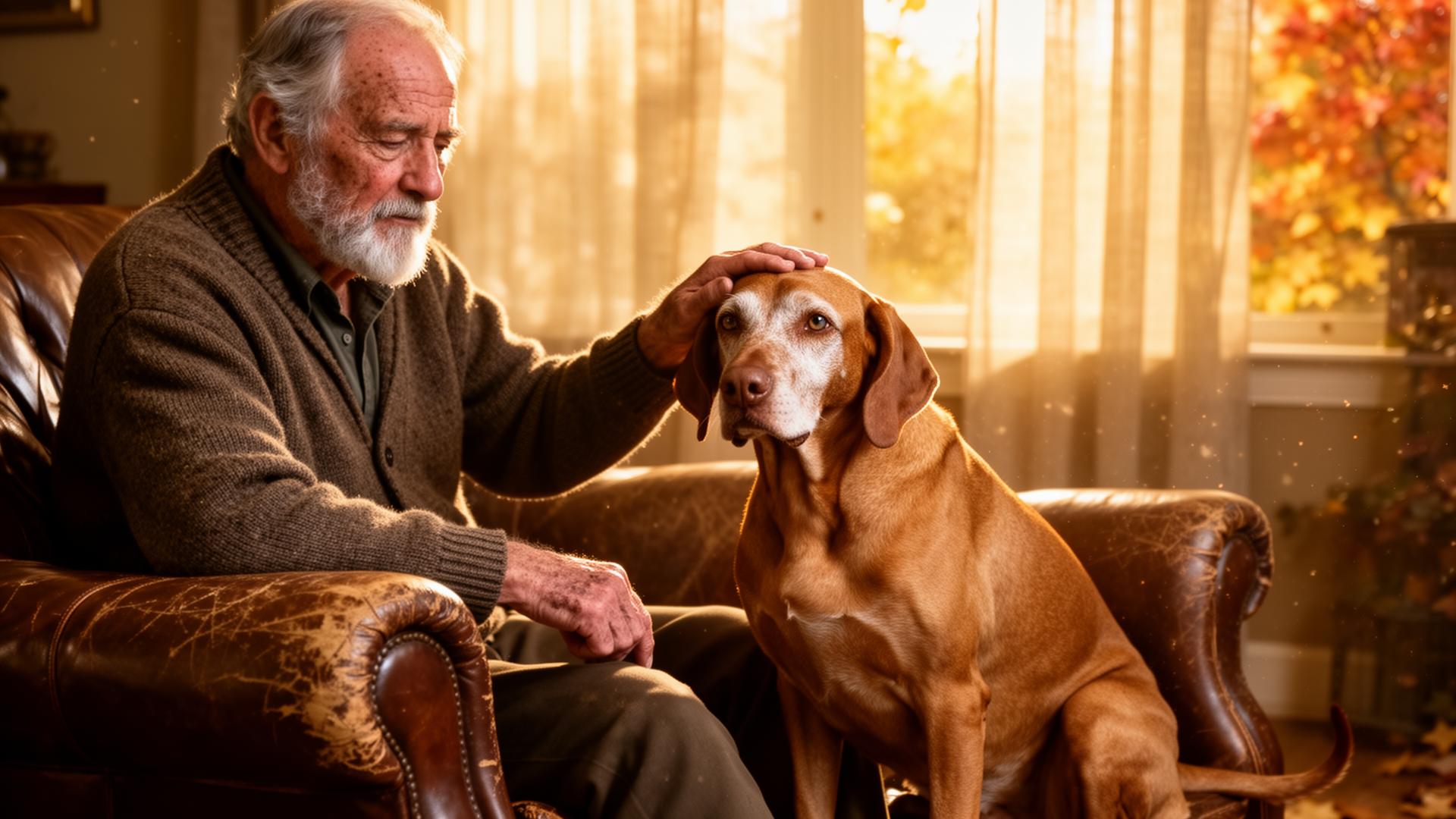 Older dogs often pick up on subtle changes in their owner long before family members do.
Limits & caveats
- Two dogs only. The current trial used two highly experienced animals. Larger cohorts are needed before this becomes a clinical pathway.
- Sensitivity (80%) is lower than specificity (98%). Dogs miss some PD samples, especially when medication alters sebum chemistry.
- Not a home test. Your pet Cockapoo is not a Parkinson''s screener. The dogs in the study trained for over a year on confirmed samples.
Related reading on PawPulse
Frequently Asked Questions
Can my pet dog detect Parkinson's?+
Untrained pet dogs may notice you smell different, but they cannot reliably diagnose disease. The study dogs trained for over a year on confirmed samples under controlled conditions.
What breeds were used in the study?+
A Golden Retriever (Bumper) and a Black Labrador (Peanut), both from Medical Detection Dogs. Labradors and Spaniels are the most common scent-detection breeds.
How does the test work?+
Sebum is swabbed from the upper back and sealed in glass vials. Dogs sniff a carousel of vials and sit or paw at the one they identify as PD.
Could this replace a neurologist?+
No. The aim is an early-warning screen that flags people for clinical assessment years before tremors appear.
Is there an at-home version coming?+
Researchers are working on an electronic nose based on the volatile compounds the dogs detect. A home test is still years away.
Sources
Related Reading
Share this story
Pin this to your Healthy Happy Dogs board
Vet-vetted wellness, symptom guides, and senior dog care pins.
Liked this story?
Share it with someone who should read it.
More from Dog Health & Wellness

Ozempic for Dogs? New Drug Trial Shows Promise for Canine Weight Loss

Is Your Senior Dog Showing These Subtle Signs? New Study Reveals How to Fight Dog Dementia!
