No Amputation Needed? The 2026 Histotripsy Breakthrough for Dogs With Bone Cancer
For the first time, veterinarians have ablated large canine osteosarcoma tumors using non-invasive focused ultrasound — without amputation or surgical resection. Dogs walked better and felt less pain.

A diagnosis of osteosarcoma in a dog has, for decades, come with a brutal default plan: amputate the affected limb, then chase the metastasis with chemotherapy. A new 2026 study published in Scientific Reports just demonstrated, for the first time, that a non-invasive sound-wave technology called histotripsy can destroy large bone tumors in dogs — leaving the leg intact.
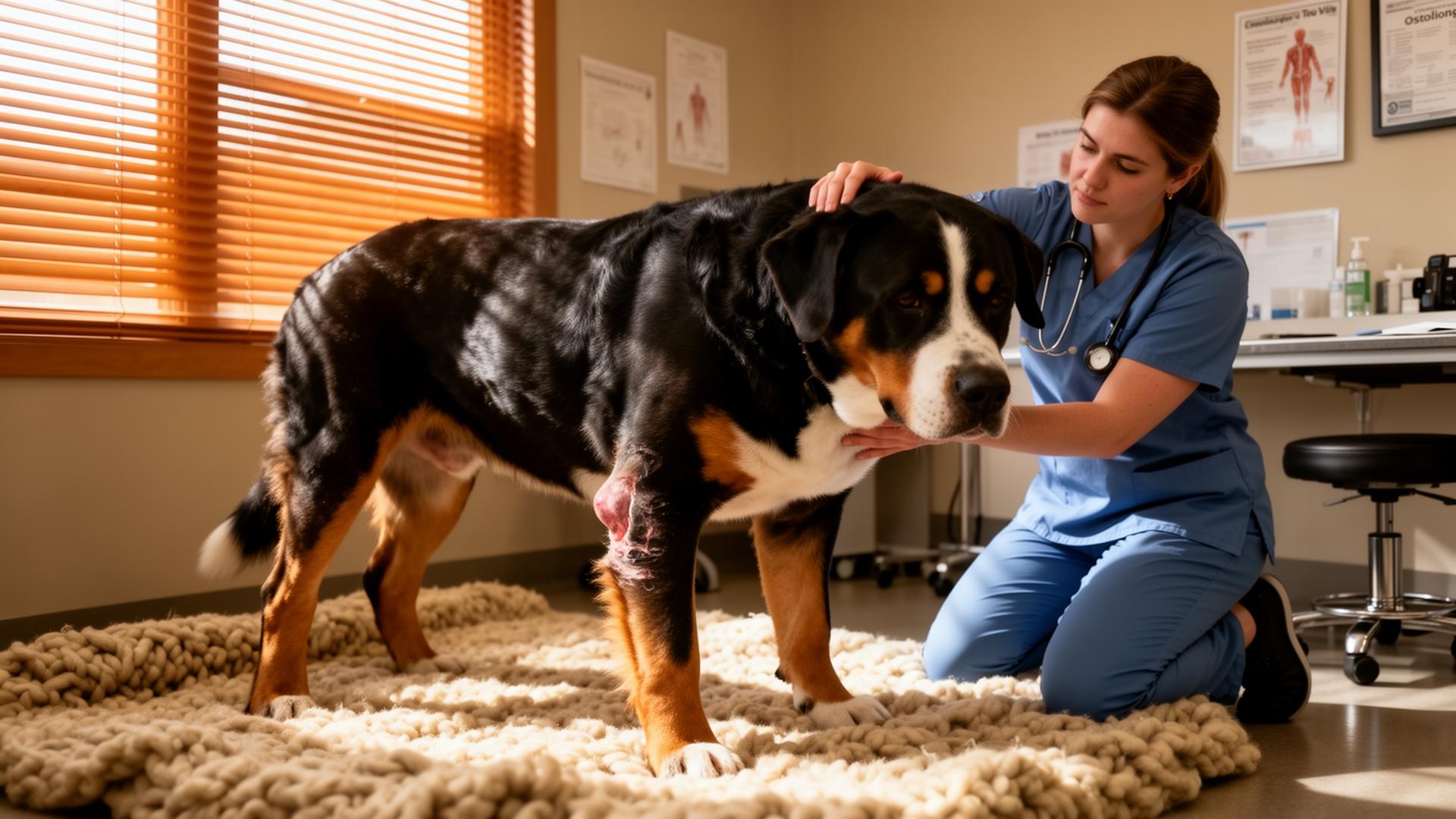 Limb-sparing options are changing the conversation between vets and families facing a bone cancer diagnosis.
Why osteosarcoma has been so hard to treat
Osteosarcoma is the most common primary bone tumor in dogs, occurring 10 to 50 times more often than in humans. About 90% of dogs die of metastatic disease within two years of diagnosis. Standard care has long meant amputating the affected limb (or attempting a complex salvage surgery) plus chemotherapy. Both approaches carry heavy costs: deep infection, implant failure, recurrence, impaired mobility, and a difficult emotional decision for owners — especially with giant breeds like Great Danes, Rottweilers, and Irish Wolfhounds where amputation can be physically punishing.
Owners of large and giant breeds already face a long list of cancer-adjacent worries, from oral tumor risk factors to immunotherapy options for oral melanoma. Until now, bone cancer has stayed firmly in the “surgery or nothing” column.
What histotripsy actually does
Histotripsy is FDA-approved for liver tumors in humans and is in active trials for kidney and pancreatic cancers. Unlike traditional ultrasound or radiation, it does not use heat or radiation at all. Instead, focused ultrasound pulses create a microscopic “bubble cloud” inside the targeted tissue. The bubbles expand and collapse violently, mechanically tearing tumor cells apart while sparing nearby nerves, blood vessels, and healthy bone.
That tissue selectivity matters. Heat-based ablation can burn skin, damage nerves, and lose energy to nearby blood vessels (the “heat sink” effect). Histotripsy doesn’t.
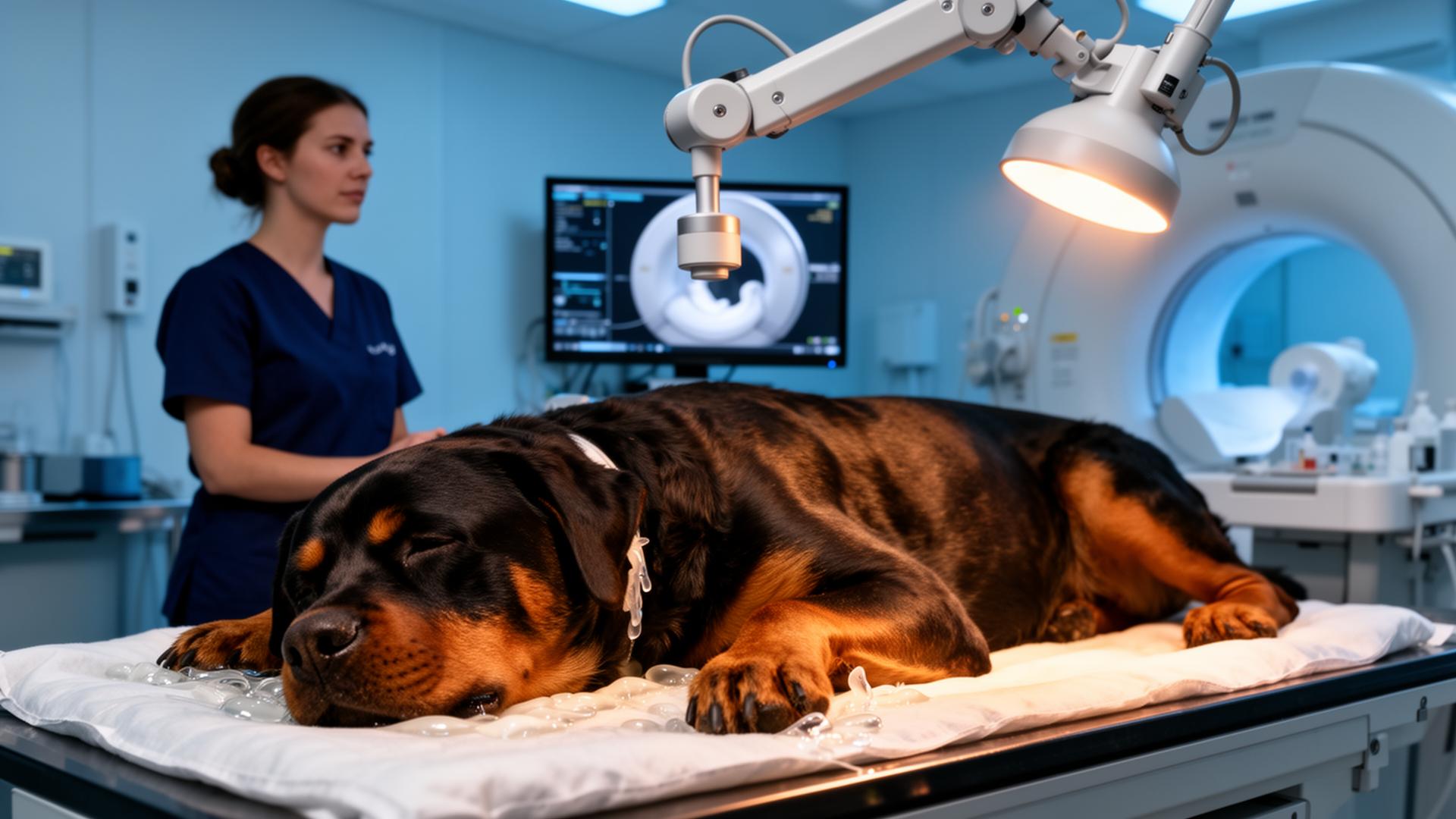 A focused ultrasound transducer is positioned over the tumor while MRI guides treatment planning.
The 2026 trial in plain English
Researchers enrolled 9 dogs with suspected osteosarcoma and treated their tumors with 1 to 5 histotripsy sessions, spread over 3 to 17 days. Crucially, no follow-up amputation or surgical resection was performed — this was the first study to treat large tumor volumes and leave the limb in place.
Key results:
- All dogs tolerated the fractionated treatments well.
- MRI confirmed an ablation zone exactly where it was targeted, visible as a non-enhancing region.
- Tumor contrast enhancement dropped significantly after treatment and stayed reduced at the end of follow-up.
- Pressure-plate gait analysis showed dogs were putting more weight on the tumor-bearing limb than before treatment — meaning less pain.
- 4 of 6 dogs with follow-up data had a clinically significant reduction in pain.
Why this matters for owners right now
Histotripsy is not yet a standard offering at most veterinary oncology practices, and this was a small feasibility study — not a survival trial. But three things make it genuinely important:
- It preserves the limb. For large and giant breeds, keeping all four legs is often the difference between a tolerable recovery and a heartbreaking decline.
- It’s non-invasive. No incision, no implant, no risk of deep bone infection from surgery.
- The dog’s own pain told us it worked. Force-plate data is objective — it’s not an owner’s wishful interpretation. Dogs were measurably more comfortable on the treated leg.
 Pain reduction on force-plate analysis translates into real-world mobility for giant breeds.
What this doesn’t solve — yet
Histotripsy targets the primary tumor in the leg. Osteosarcoma kills dogs through micrometastases that have usually already spread to the lungs by the time of diagnosis. That’s why chemotherapy remains part of any serious treatment plan, and why ongoing research into immunotherapies matters so much. Histotripsy may also stimulate an immune response by leaving tumor antigens behind in the body — a mechanism researchers are actively studying.
It’s also worth keeping pain control in perspective. If your dog has bone cancer, your oncologist will still talk to you about opioids, bisphosphonates, and modern arthritis medications. For comparative reading on objective pain measurement in dogs, see our breakdown of the bedinvetmab vs grapiprant force-plate trial.
Questions to ask your veterinary oncologist
- Does any nearby veterinary teaching hospital offer histotripsy clinical trials?
- How does my dog’s tumor location and size affect candidacy for focused ultrasound?
- What is the realistic role of chemotherapy alongside histotripsy?
- How will pain be tracked objectively — gait analysis, accelerometers, owner questionnaires?
For broader senior-dog wellbeing while navigating cancer care, our guide on keeping older dogs mentally sharp may be a comforting companion read.
The bottom line
For the first time, veterinary researchers have shown that large canine bone tumors can be destroyed inside the body — with sound waves, no incision, and no amputation — and that dogs feel measurably better afterward. It’s a 9-dog feasibility study, not a cure. But it’s the most hopeful structural change in canine osteosarcoma care in a generation, and the kind of comparative oncology work that will likely benefit human patients too.
Frequently Asked Questions
Is histotripsy available at my regular vet?+
Not yet. It is currently offered at a small number of veterinary teaching hospitals and research centers participating in clinical trials. Ask your oncologist for a referral.
Does this mean my dog can avoid amputation entirely?+
Possibly, for the primary tumor. But osteosarcoma also spreads microscopically to the lungs in most dogs at diagnosis, so chemotherapy is usually still recommended.
Is histotripsy painful for the dog?+
Dogs are placed under general anesthesia for each session. After treatment, the study found objective pain decreased — dogs put more weight on the treated leg than before.
How many sessions are needed?+
In this trial, dogs received between 1 and 5 sessions over 3 to 17 days, depending on tumor size.
Could this technology eventually help humans with bone cancer?+
Yes — comparative oncology is one of the main reasons this research is being done. Histotripsy is already FDA-approved for liver tumors in humans and is in trials for other cancers.
Sources
Related Reading
Share this story
Pin this to your Healthy Happy Dogs board
Vet-vetted wellness, symptom guides, and senior dog care pins.
Liked this story?
Share it with someone who should read it.
More from Dog Health & Wellness

Ozempic for Dogs? New Drug Trial Shows Promise for Canine Weight Loss

Is Your Senior Dog Showing These Subtle Signs? New Study Reveals How to Fight Dog Dementia!
