Your Dog's Gut May Be Driving Their Anxiety: The 2026 Helsinki Microbiome Study
A new University of Helsinki study of more than 600 pet dogs has found that fearful and noise-sensitive dogs share a distinct gut bacterial signature — a finding that could reshape how we treat canine anxiety.

If your dog trembles during thunderstorms, hides from strangers, or panics at the sound of fireworks, the answer may not lie only in their brain. A 2026 University of Helsinki study published in Animal Microbiome has found that anxious and noise-sensitive pet dogs share a distinct gut bacterial fingerprint compared with their calmer housemates — adding to a fast-growing body of evidence that the gut-brain axis is just as real in dogs as it is in people.
 Researchers are increasingly looking at diet and gut bacteria as modifiable levers for canine anxiety.
What the Helsinki team actually did
The research group, led by Professor Hannes Lohi at the University of Helsinki's canine genetics lab, recruited 622 pet dogs from 27 breeds. Owners completed validated behavioral questionnaires covering fearfulness, noise sensitivity, separation-related behavior and aggression. Fresh fecal samples were then collected at home and shotgun-sequenced to map both bacterial species and the metabolic pathways they encode.
Rather than asking "do anxious dogs have more or fewer bacteria?", the team asked a sharper question: which specific microbes and which microbial metabolites track with which behaviors?
The bacterial signature of an anxious dog
Dogs scored as highly fearful or noise-sensitive showed:
- Lower abundance of short-chain fatty acid producers, especially Faecalibacterium and Blautia
- Higher levels of Lactobacillus species previously linked to stress in rodent models
- Reduced microbial diversity overall — a pattern also seen in human anxiety and depression cohorts
- Lower predicted output of GABA precursors and tryptophan-pathway metabolites, both of which the brain uses to regulate fear
Crucially, the signal held up even after controlling for breed, age, diet type and whether the dog lived in a city or rural environment.
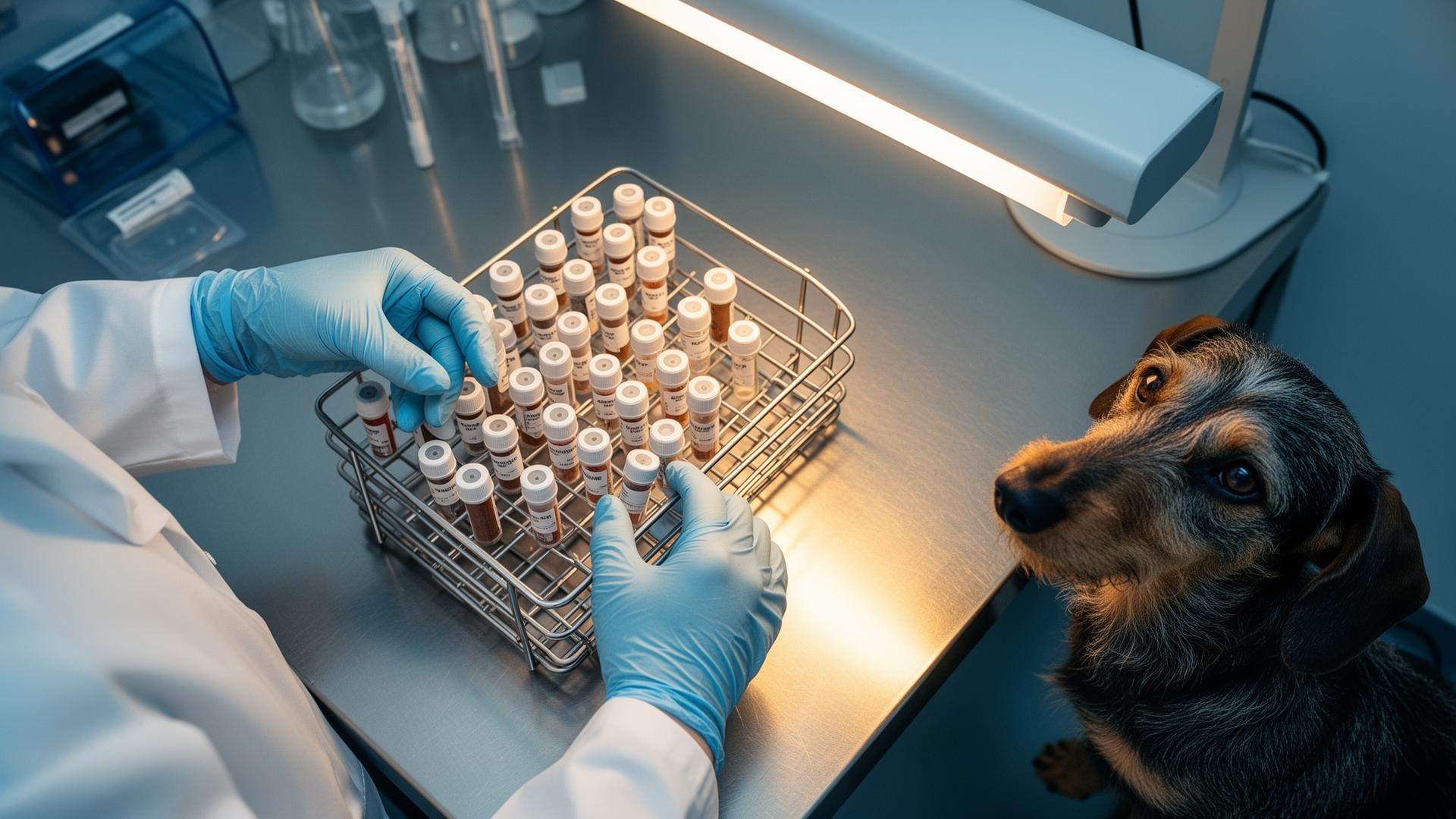 Each dog's fecal sample was shotgun-sequenced to map species and metabolic pathways.
Why the gut talks to the brain
The gut-brain axis is a two-way conversation. Bacteria ferment fiber into short-chain fatty acids (SCFAs) like butyrate, which calm gut inflammation and signal to the vagus nerve. Some microbes synthesize neurotransmitter precursors directly. Others modulate cortisol. When that ecosystem shifts — through stress, antibiotics, ultra-processed food, or simply bad luck during weaning — the brain feels it.
This is the same mechanism increasingly implicated in canine cognitive decline in senior dogs, where chronic low-grade inflammation accelerates brain aging.
Does this mean probiotics will fix fear?
Not on their own — and the authors are careful to say so. Association is not causation, and a single fecal snapshot can't prove the bacteria caused the anxiety rather than the other way around (stressed dogs eat less, sleep worse, and shed gut diversity as a result).
That said, two small interventional trials cited by the authors have already shown that targeted probiotic strains, particularly Bifidobacterium longum, can measurably reduce noise reactivity in dogs over 6 weeks. The Helsinki group is now running a randomized SCFA-boosting fiber trial in 80 noise-phobic dogs, with results expected in 2027.
 Noise sensitivity affects roughly a third of pet dogs and is one of the behaviors most strongly associated with the gut signature.
What this means for your dog today
The study doesn't hand owners a pill, but it does sharpen a few practical levers worth taking seriously now:
- Feed for diversity. Rotating protein sources and adding cooked, dog-safe vegetables (pumpkin, green beans, carrot) gives bacteria more substrates to work with.
- Be cautious with antibiotics. Every course wipes out beneficial species for weeks. Use them when needed, but don't request them "just in case."
- Move daily. Exercise independently boosts SCFA-producing bacteria — the same group that's depleted in fearful dogs.
- Don't ignore early signs. Just as puppy separation anxiety has measurable early predictors, noise sensitivity tends to escalate when left untreated.
- Talk to your vet about a probiotic trial. A targeted veterinary probiotic for 6–8 weeks is low-risk and increasingly evidence-backed.
The bigger picture
Canine behavior research has spent the last decade demolishing the idea that temperament is purely genetic or purely trained. We now know that breed clade shapes learning style, that dogs decode human emotion from voice alone, and now that the trillions of microbes in their colon may be quietly setting the volume on their fear response. The 2026 Helsinki study is one more reminder that what we put in the bowl can echo all the way up to the brain.
Frequently Asked Questions
Can probiotics really calm an anxious dog?+
Small randomized trials suggest specific strains like Bifidobacterium longum can measurably reduce noise reactivity over 4–8 weeks, but results vary by dog and strain. Use a veterinary-grade product, not human probiotics.
Should I switch my dog's food because of this study?+
Not abruptly. Sudden diet changes themselves disrupt the microbiome. Talk to your vet about gradually adding fiber diversity (pumpkin, cooked vegetables) and rotating proteins over weeks.
My dog had antibiotics recently — should I worry?+
A single course is rarely catastrophic, but the microbiome takes 4–8 weeks to recover. A vet-recommended probiotic during and after antibiotic treatment is a reasonable precaution.
Is this only relevant to certain breeds?+
No. The Helsinki sample covered 27 breeds and the signature held after controlling for breed. It appears to be a general dog phenomenon.
How quickly might I see a behavior change from gut-focused interventions?+
Expect 4–8 weeks for measurable change. The microbiome is slow to shift, and behavior change lags microbial change.
Sources
Related Reading
Share this story
Pin this to your Healthy Happy Dogs board
Vet-vetted wellness, symptom guides, and senior dog care pins.
Liked this story?
Share it with someone who should read it.
More from Dog Health & Wellness

Cavalier MVD Breakthrough: 3 Tools That Add Years to Their Lives

IVDD Breakthrough: New Protocol Slashes Dachshund Risk by 63%!
