Cockapoos, Cavapoos & Labradoodles: The 2026 RVC Study That Shatters the “Doodle Is Easier” Myth
The largest behavioural study of designer Poodle crosses to date — 9,402 UK dogs — finds Cockapoos and Cavapoos consistently score worse on the C-BARQ than their purebred parents.

Cockapoos, Cavapoos and Labradoodles are everywhere — and a brand-new 2026 PLOS One study from the Royal Veterinary College just delivered the largest behavioural reality check the "doodle" world has ever seen. Across 9,402 dogs, designer Poodle crosses showed more undesirable behaviours than at least one of their purebred parents in nearly half of all comparisons — and Cockapoos came out worst.
The study at a glance
Researchers Bryson, O'Neill, Belshaw, Brand and Packer surveyed UK owners of dogs acquired as puppies between 2019 and 2023 using the C-BARQ — the validated Canine Behavioural Assessment and Research Questionnaire that scores 12 behavioural sub-scales (aggression, fear, separation, excitability, trainability, attachment, and more). They then compared the three most popular Poodle crosses in the UK to their two purebred parent breeds.
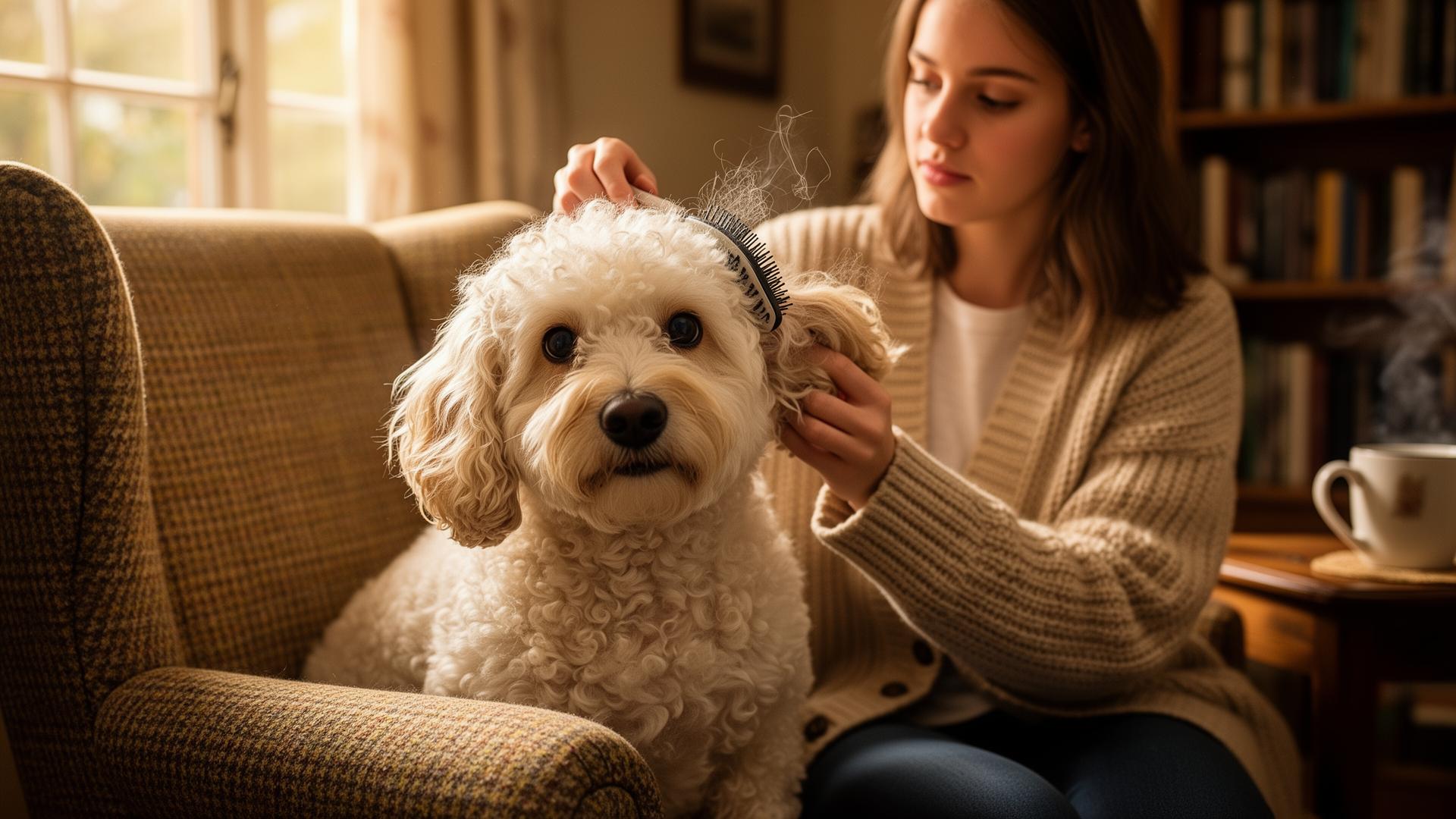 Cavapoos were significantly worse than their parent breeds on 11 of 24 behaviour comparisons.
The headline finding: doodles are not behaviourally "better"
Across 72 head-to-head behavioural comparisons (3 crossbreeds × 2 parents × 12 C-BARQ scales):
- 44.4% showed the doodle behaving worse than a parent breed
- 9.7% showed the doodle behaving better
- 45.8% showed no significant difference
This directly contradicts the popular "hybrid vigour" assumption that crossing two breeds magically produces a calmer, easier dog. It also undercuts the marketing claim that doodles are uniquely suited to families with children — a belief that, the authors warn, can elevate paediatric bite risk when expectations collide with reality.
Breed-by-breed breakdown
Cockapoo — the most challenging of the three
The Cockapoo (Cocker Spaniel × Poodle) differed from its parents in 16 of 24 comparisons, and scored worse on every single one. Owners reported more stranger-directed fear, more separation-related behaviour, and lower trainability than purebred Cocker Spaniels or Poodles. If you're researching this breed, our breakdown of what the 2026 RVC Generation Pup study reveals about puppy separation anxiety is essential reading before bringing one home.
Cavapoo — close behind
Cavapoos (Cavalier King Charles Spaniel × Poodle) differed in 12 of 24 comparisons and scored worse in 11 of them. Aggression, fear and attachment problems were the strongest signals.
Labradoodle — the only mixed picture
Labradoodles (Labrador Retriever × Poodle) differed in 11 of 24 comparisons, but the split was almost even: worse on 5, better on 6. This is the only doodle in the study where any meaningful behavioural "advantage" actually appeared.
 Labradoodles were the only doodle to outperform parent breeds in any C-BARQ sub-scale.
Why "regression to the mean" failed
Classical behavioural genetics predicts that a crossbreed should sit roughly between its two parent breeds. The data didn't cooperate. Two of three doodles (Cockapoo and Cavapoo) exceeded both parents on the negative end. The authors propose three explanations:
- Selection pressure on parents. Many doodle litters are bred from individuals never selected for stable behaviour — often from puppy farms or first-time breeders chasing demand.
- Owner profile differences. Doodle owners are more likely to be first-time owners and to live with children, which can amplify under-socialisation and under-training.
- Greater behavioural diversity. Crossing two breeds increases behavioural variance, so outcomes are less predictable than in well-established purebreds.
This matches what working-dog research keeps showing — see our coverage of what TSA odor-detection dog genetics reveal about pet temperament for the genetic side of the story.
What this means if you're thinking about a doodle
- Don't assume "easier." Plan for the training and socialisation budget you'd give to either parent breed — and possibly more.
- Vet the breeder, ruthlessly. Ask to meet both parents and to see C-BARQ-style behavioural histories where possible.
- Households with young children should think twice. The "good with kids" reputation is not supported by this evidence base.
- Start early. Structured socialisation in the first 16 weeks matters even more for crossbreeds — see how two weeks of structured training transformed shelter dogs in the 2026 MDPI welfare study.
- Watch for breed-specific learning style. Our piece on why some dog breeds learn faster with practice explains why "one-size-fits-all" training rarely works for Poodle crosses.
What this does not mean
This is a UK questionnaire study with self-selected respondents, so absolute prevalence numbers should be read with care. It also doesn't prove that every individual doodle will be more difficult — it shows population-level patterns. Plenty of Cockapoos are wonderful family dogs. The point is that the marketing claim of universal suitability is not backed by the data.
The bottom line
For the first time, owners of the three most popular UK doodles have a large, validated evidence base instead of breeder folklore. The findings are clear: designer Poodle crosses are not behaviourally "upgraded" versions of their parents. Cockapoos in particular need owners who go in with eyes open, a training plan ready, and realistic expectations. Choose with the data, not the Instagram aesthetic.
Frequently Asked Questions
Are Cockapoos really harder than purebred Cocker Spaniels or Poodles?+
According to the 2026 RVC PLOS One C-BARQ study of 9,402 UK dogs, yes. Cockapoos scored worse than both parent breeds on 16 out of 24 behavioural comparisons — including stranger-directed fear, separation behaviour and trainability — and never better.
Are designer doodles good with children?+
The 'good with children' reputation is a marketing claim, not a scientific finding. The 2026 RVC study explicitly warns that this misbelief can elevate paediatric bite risk when expectations don't match the dog's actual behaviour.
Which doodle did best in the study?+
The Labradoodle. It was the only doodle that outperformed its parent breeds in any C-BARQ sub-scale, with a roughly even split (worse on 5 traits, better on 6).
Does 'hybrid vigour' apply to doodle behaviour?+
No. The classical 'regression to the mean' prediction failed for Cockapoos and Cavapoos, who exceeded both parents on the undesirable end. Crossing two breeds doesn't average out their behaviour — it can amplify variance.
Should I still get a doodle?+
Plenty of doodles are excellent companions, but the study shows the average designer Poodle cross is not behaviourally easier than its parents. Vet the breeder, plan a strong socialisation and training program, and be realistic — especially if you have young children.
Sources
Related Reading
Share this story
Pin this to your Puppy Training 101 board
Force-free training, socialisation, and house-training cheat sheets.
Liked this story?
Share it with someone who should read it.
More from Puppy Training & Behavior

Senior Dog Suddenly Tilting Head? Understanding Canine Vestibular Disease

The 2026 Puppy Revolution: Why Consent Training Changes Everything for Bernese Mountain Dogs
