Two Weeks Can Change a Shelter Dog: What the 2026 MDPI Welfare Study Found
A new 2026 Animals (MDPI) study shows that just 14 days of structured socialization and basic training measurably improved welfare in kennel-raised dogs — lower stress, calmer behavior, and better adoptability.

For dogs living in shelter kennels, time is welfare. The longer a dog stays behind a chain-link gate, the more stress accumulates — and the harder it becomes to show the relaxed, friendly behavior that adopters are looking for. A new 2026 study published in Animals (MDPI) puts a hard number on something rescue volunteers have suspected for years: even a two-week structured socialization and training program measurably improves kennel-raised dog welfare.
 A few minutes of consistent, gentle handling each day is enough to shift a kennel dog's stress baseline. Photo: editorial illustration.
What the study actually did
Researchers enrolled adult dogs living in long-term kennel housing and ran them through a short, repeatable program: daily out-of-kennel sessions combining gentle human interaction, basic obedience cues (sit, name response, loose-leash walking), and brief enrichment. The control dogs received standard care only. After 14 days, the team scored welfare using validated behavioral measures — posture, tail carriage, latency to approach a stranger, and stereotypic behaviors like pacing or repetitive barking.
The intervention dogs scored significantly better across the board. They approached unfamiliar people faster, paced less, and showed more relaxed body language during in-kennel observations. Importantly, the gains were visible inside the kennel — not just during the training sessions themselves — which is the part that actually matters for adopters walking through the aisle.
Why two weeks is the magic window
Most shelters can't commit to long behavior-modification protocols. Staff turnover, intake spikes, and limited volunteer hours mean anything longer than a couple of weeks tends to collapse. The 2026 program was deliberately designed to be lightweight: roughly 15–20 minutes per dog per day, deliverable by a trained volunteer rather than a behaviorist.
This mirrors what we've seen in other recent welfare research. The 2026 RVC Generation Pup study on separation anxiety found that early, low-intensity intervention beats late, intensive intervention. And the UBC reversal-learning study showed that even adult dogs adapt their behavior quickly when training is consistent and short.
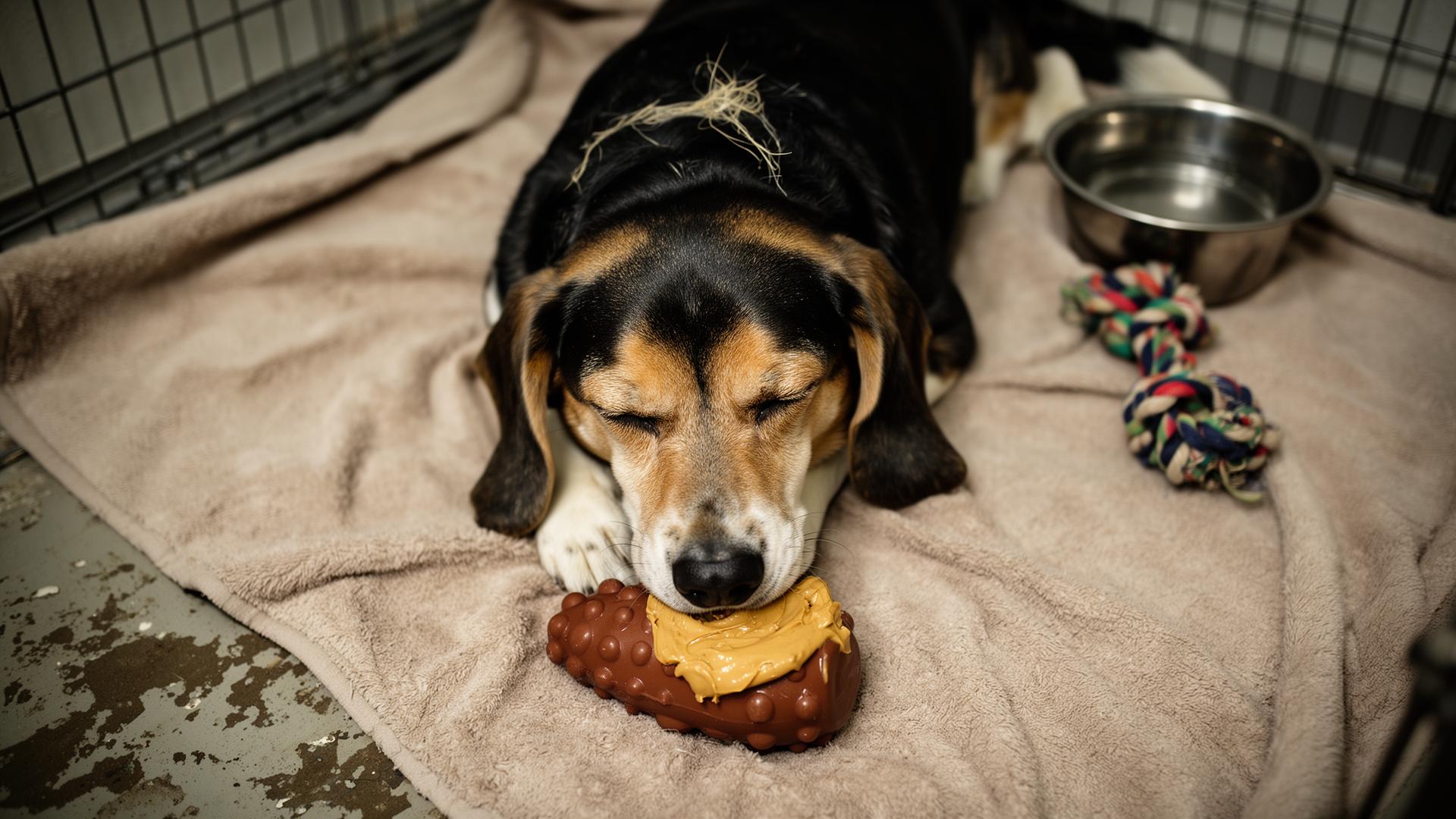 Enrichment between training sessions matters as much as the sessions themselves.
What "improved welfare" looked like in practice
- Lower in-kennel arousal. Dogs barked less when a stranger approached the run.
- Faster approach latency. Median time to come to the gate dropped roughly in half.
- Reduced stereotypies. Pacing and spinning declined in the intervention group.
- Better posture scores. More neutral tails, fewer tucked bodies, more soft eyes.
None of these alone is a miracle, but together they form the exact "good first impression" profile that adopters use — often unconsciously — to choose a dog.
What this means for owners adopting from a shelter
If you're meeting a shelter dog, ask whether the facility runs a structured socialization program. Dogs from programs like the one in this study tend to settle faster in the home — but they also benefit from continued, predictable routines once they arrive. The first two weeks at home are essentially a continuation of the kennel intervention: short daily training, calm handling, and clear enrichment.
Owners of shy or reactive adoptees should pair this with breed-aware expectations. Senior or sensitive dogs in particular respond to the same principles documented in our coverage of the 2026 ELTE study on senior dogs and lifetime activity. And if you've adopted a flat-faced breed, layer in the airway-aware exercise advice from the Cambridge BOAS study.
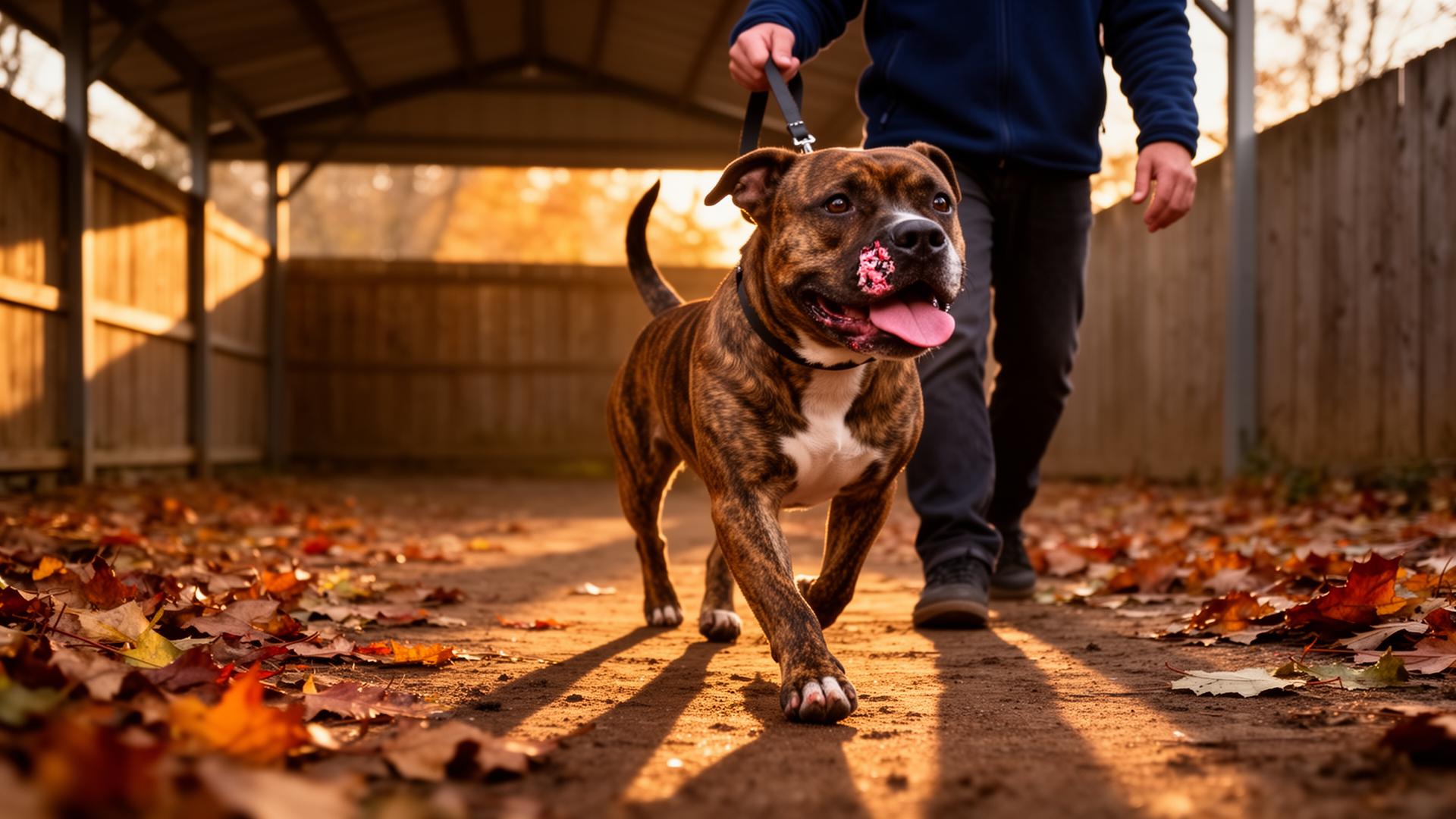 Loose-leash walking was one of the simplest, highest-impact components of the 2026 program.
What this means for shelters and rescues
The practical takeaway is that you don't need a behaviorist on payroll to move the needle on welfare scores. You need:
- A written 14-day protocol every volunteer can follow.
- A consistent daily slot (mornings work best — cortisol is highest after overnight isolation).
- A simple log so the next volunteer picks up where the last one left off.
- Enrichment items (Kongs, snuffle mats, chew toys) for the 23+ hours the dog isn't being handled.
For small breeds in particular, where stress can present as snapping or hiding rather than pacing, our small dog breeds guides are a useful companion.
The bottom line
Two weeks of low-cost, structured handling is enough to measurably improve the welfare of dogs living in kennels — and to make them more likely to leave with a family. For shelters, that's a high-leverage protocol. For adopters, it's a reason to ask the right questions before bringing a dog home.
Frequently Asked Questions
How long was the training program in the 2026 study?+
Just 14 days, with roughly 15–20 minutes of structured handling per dog per day.
Did the dogs need a professional trainer?+
No. The protocol was specifically designed to be delivered by trained volunteers, not behaviorists.
What welfare measures improved?+
Approach latency to strangers, in-kennel barking and pacing, body posture, and tail carriage all improved versus controls.
Does this apply to puppies too?+
The study focused on adult kennel-raised dogs, but the principles overlap with early-socialization research in puppies.
What can adopters do at home?+
Continue short daily training, predictable routines, and enrichment for the first two weeks — it mirrors and reinforces the shelter intervention.
Sources
Related Reading
Share this story
Pin this to your Puppy Training 101 board
Force-free training, socialisation, and house-training cheat sheets.
Liked this story?
Share it with someone who should read it.
More from Puppy Training & Behavior

Senior Dog Suddenly Tilting Head? Understanding Canine Vestibular Disease

The 2026 Puppy Revolution: Why Consent Training Changes Everything for Bernese Mountain Dogs
