Golden Retriever Genes Mirror Human Anxiety and IQ: The 2026 Cambridge GWAS Study
Researchers at Cambridge phenotyped more than 1,300 golden retrievers and discovered that the genes shaping your dog's fearfulness, trainability, and energy overlap with the genes shaping human anxiety, intelligence, and ADHD.

If your golden retriever is the calm, patient one at the park while your friend''s golden bounces off the walls, you''re not imagining it — and it isn''t just how they were raised. A new study published in PNAS in 2026 by the University of Cambridge mapped the DNA of more than 1,300 pet golden retrievers and found that the same genetic variants linked to fear, trainability, and aggression in dogs are also implicated in human anxiety, ADHD, intelligence, and several psychiatric conditions.
 The 2026 Cambridge study phenotyped over 1,300 pet golden retrievers and cross-referenced their DNA against human behavioural genetics databases.
What the Cambridge team actually did
The researchers, led by groups at the University of Cambridge Department of Veterinary Medicine, asked owners of 1,300+ pedigree golden retrievers to fill out the standard C-BARQ behavioural questionnaire — the same instrument used in our coverage of cockapoos, cavapoos and labradoodles. They then ran a genome-wide association study (GWAS) against each dog''s DNA, looking for spots in the genome where one DNA letter consistently predicted higher fearfulness, better trainability, more aggression toward strangers, more energy, or stronger attachment to the owner.
They identified 12 genome-wide significant loci and 9 additional suggestive loci across these traits. Crucially, when they looked up the human versions of those same genes, they kept hitting genes previously tied to human temperament and mental health.
The dog-to-human overlap
This is the headline finding. The Cambridge group reports overlap with human genes associated with:
- Anxiety and neuroticism — variants near fear and noise-sensitivity loci in dogs.
- ADHD and impulsivity — variants near the dog "energy / excitability" loci.
- Cognitive performance and educational attainment — variants near the dog "trainability" loci.
- Schizophrenia and bipolar disorder — variants near fear-of-strangers and reactivity loci.
In other words, evolution appears to have re-used the same toolkit of genes to dial mood, attention, and learning in both species. A nervous golden is, at the molecular level, doing something genuinely related to what an anxious human is doing.
 The closely related Labrador retriever is the next breed Cambridge plans to phenotype to confirm whether the same loci predict behaviour across retriever breeds.
Why goldens are a near-perfect model
Pure breeds carry long, predictable stretches of shared DNA. That means a behavioural GWAS that would need 100,000+ humans to find a signal can find one in a few hundred dogs. Goldens add three perks:
- Their behaviour is unusually variable for one breed — Cambridge specifically chose them because owners report everything from "bombproof therapy dog" to "noise phobic and reactive".
- They live in human homes, exposed to the same stressors (fireworks, deliveries, school runs) that shape human anxiety.
- The owner-completed C-BARQ has been validated against direct behavioural testing, so the phenotypes aren''t just vibes.
What this changes for your dog
The practical upshots are bigger than they sound:
- Anxiety is partly inherited, not just a training failure. If your golden is afraid of thunder, that fear has a real genetic substrate — similar in kind to the substrate that connects related work on the gut microbiome and canine anxiety.
- Trainability has a ceiling, and it''s genetic. The fact that some dogs hold reversal-learning rules longer is consistent with the 2026 UBC work on breed clades and reversal learning, but Cambridge now shows the variation exists within a single breed too.
- Breeders can select on real data, not folklore. Twelve significant loci is enough to start building a polygenic score for "easier-to-live-with" goldens.
- Drugs that work for human anxiety are more likely to translate. If the underlying gene is shared, the pathway is shared, and behavioural medications already used in human psychiatry have a stronger rationale in veterinary behaviour.
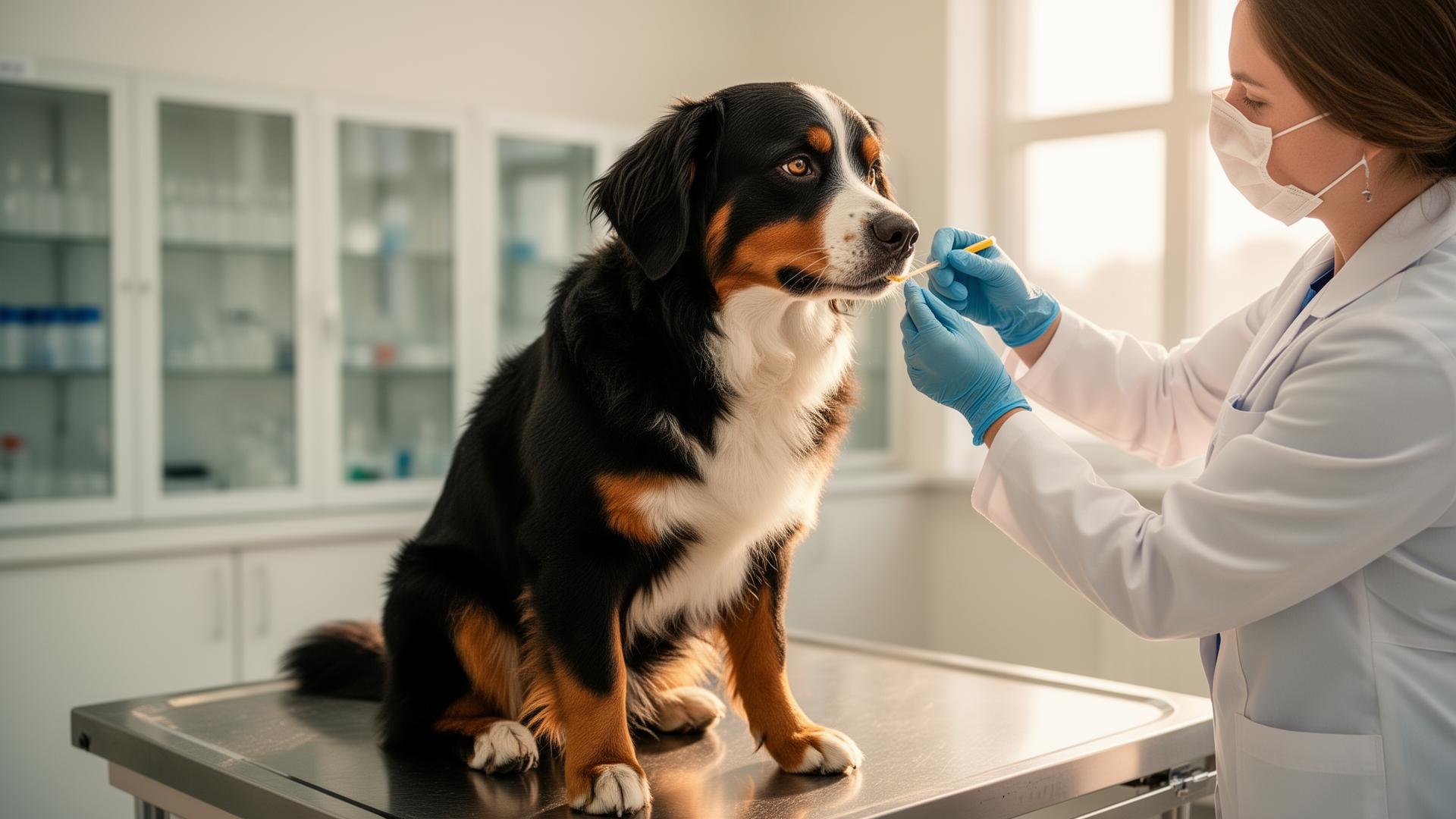 Behavioural-genetics studies in dogs only need a cheek swab — no blood draw, no anaesthesia.
What it doesn''t mean
A genetic finding is not destiny. The same study makes clear that environment, socialisation, and individual experience still account for most of the variance in any individual dog. A golden with a "high-fear" genotype raised by a calm, patient owner who reads canine body language (the same skills we cover in how dogs decode human emotion from voice) will be a very different adult than the same puppy in a chaotic household.
It also doesn''t mean your dog has "the autism gene" or "the ADHD gene". The overlap is at the level of pathways and small effect sizes — many genes, each contributing a little.
The bigger picture: dogs as a psychiatric model
The Cambridge group argues that the pet dog is now the most powerful non-human model we have for the genetics of human mental health. Mice are cheap but their behavioural repertoire is narrow. Non-human primates are expensive and ethically constrained. Dogs share our homes, our diets, our noise, our schedules — and now, demonstrably, much of our behavioural genetic architecture.
Expect a wave of follow-up GWAS in Labradors, border collies, and German shepherds over the next two years. Cambridge has already opened recruitment for a Labrador cohort.
 Even high-energy dogs benefit from genetically informed handling: structured outlets beat trying to "train out" a hard-wired drive.
How to use this today
You don''t need a DNA test to act on this study. Three immediate moves:
- Stop blaming yourself for inherited traits. If your dog is fearful or hyper-vigilant, treat it as you would a medical condition — with a plan, not guilt.
- Pick breeders who behaviour-test parents, not just hip-score them. Within-breed variation is real.
- If anxiety is severe, ask your vet about behavioural medication. The Cambridge findings strengthen the case that the same SSRIs and serotonergic drugs that help humans have biological rationale in dogs.
Frequently Asked Questions
Does this mean my golden's anxiety is my fault or genetic?+
Mostly genetic predisposition shaped by environment. The Cambridge study confirms a real heritable component, so severe fear isn't a training failure — but consistent, calm handling still meaningfully shifts the outcome.
Can I get my dog tested for these variants?+
Not yet as a commercial product. The 12 loci are research-grade. Expect direct-to-consumer behavioural panels within 2–3 years as labs replicate the findings in other breeds.
Are other breeds the same?+
Likely yes for closely related retrievers, but each breed has its own quirks. Cambridge is now phenotyping Labradors to test cross-breed transfer.
Should breeders use this?+
Eventually, yes — selecting for calmer, more trainable lines using polygenic scores is a realistic 5-year horizon.
Does this help human mental-health research?+
Yes. Dogs are a faster, cheaper, ethically simpler model for the genetics of fear, attention, and learning than primates.
Sources
Related Reading
Share this story
Pin this to your Healthy Happy Dogs board
Vet-vetted wellness, symptom guides, and senior dog care pins.
Liked this story?
Share it with someone who should read it.
More from Dog Health & Wellness

Cavalier MVD Breakthrough: 3 Tools That Add Years to Their Lives

IVDD Breakthrough: New Protocol Slashes Dachshund Risk by 63%!
