Fresh vs Kibble: New 2026 Study Shows Real Gut & Metabolic Wins
A new 2026 University of Sydney crossover study put 24 pet dogs on extruded kibble and a fresh, gently-cooked diet — and tracked their blood sugar, gut hormones, microbiome and poop. The fresh diet won on almost every measure. Here's what owners should actually take from it.

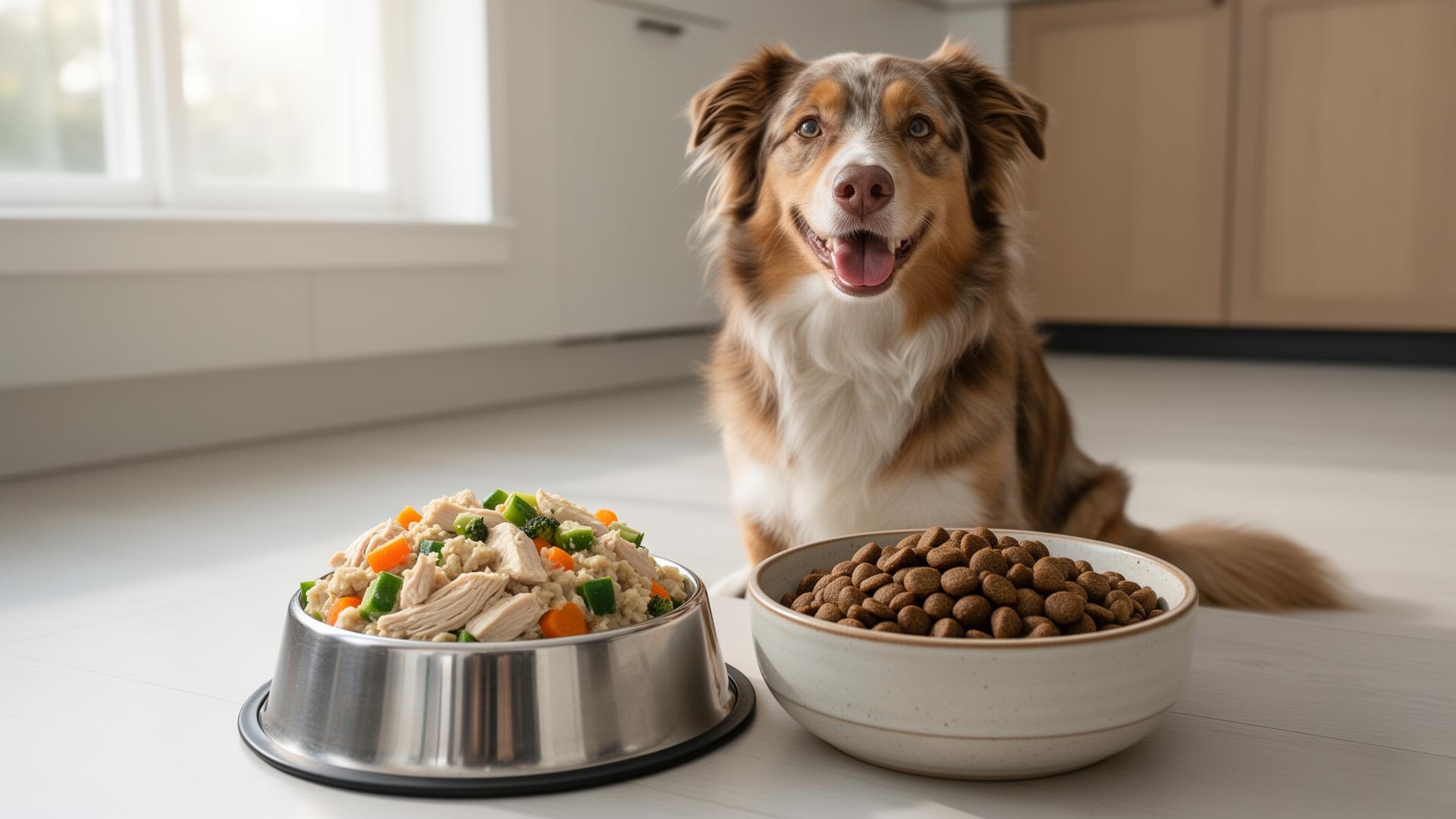
For years, the "fresh vs kibble" debate has lived mostly in marketing copy and Reddit threads. In April 2026, the journal Frontiers in Veterinary Science published a peer-reviewed crossover study from the University of Sydney's Charles Perkins Centre that finally puts real numbers on the question — and the headline is hard to ignore: when 23 healthy pet dogs ate a minimally processed, gently-cooked diet for two weeks, their blood sugar response, gut hormones, stool quality and microbiome all shifted in a measurably healthier direction compared to the extruded kibble they were also fed.
This isn't a brand-funded blog post or a single-dog anecdote. It's a randomised, within-dog comparison — every dog acted as their own control — published in a journal with a 2.9 impact factor. And it's already trending hard with veterinary nutritionists on LinkedIn and in pet-food trade press, because it's one of the cleanest direct comparisons we've ever had between a "complete and balanced" kibble and a "complete and balanced" fresh diet in real pet dogs eating at home.
If you've been quietly wondering whether the fresh-food hype is worth the price, this article is for you.
Quick Summary
- A 2026 University of Sydney crossover study fed 23 pet dogs a fresh, gently-cooked diet (MPD) and an extruded kibble diet (EKD) for two weeks each.
- The fresh diet produced softer, better-formed stools (FCS 2.24 vs higher on kibble, p = 0.005).
- Dogs on the fresh diet had a lower post-meal blood sugar spike (p = 0.009) and lower gut hormones GIP and PYY, both linked to metabolic regulation.
- Microbiome diversity was higher on the fresh diet, and diet was a stronger predictor of gut bacteria changes than any individual dog's baseline.
- One dog dropped out due to intolerance — fresh food is not automatically gentler for every dog, especially after a sudden switch.
Why this 2026 study matters
For most of the last 30 years, comparing kibble and fresh food in a scientifically rigorous way has been almost impossible. The diets differ in dozens of dimensions at once — moisture, protein source, fibre, processing temperature, preservatives, even how the dog chews. Most "kibble vs fresh" claims have been based on human ultra-processed food research extrapolated to dogs, plus small in-house studies funded by fresh-food brands.
The Sydney team, led by Associate Professor Andrew Holmes and PhD candidate Louise Campbell, did something different. They took 24 privately-owned pet dogs (one was later removed for clinical reasons), kept them in their normal home environment, and ran a randomised crossover design: every dog ate both diets for two weeks, in a randomised order, with a one-week wash-in on their normal food. That design is the gold standard for nutrition trials because each dog's response is compared to itself, not to a different group of dogs.
The two diets were both commercially available and both formulated to be nutritionally complete:
- EKD (extruded kibble): Hill's Science Diet Healthy Mobility (Adult) — a mainstream, vet-recommended dry kibble.
- MPD (minimally processed diet): Lyka Chicken Bowl — a gently-cooked, refrigerated/frozen fresh food cooked at a maximum of 90 °C in steam-jacketed kettles.
So this is not "raw vs kibble" or "boutique vs prescription." It's two legitimate complete diets, separated mainly by how much processing the ingredients went through. That's the variable the researchers wanted to isolate, mirroring the ultra-processed food (UPF) debate now dominating human nutrition science.

What actually changed in the dogs
The team measured four big buckets of outcomes: stool quality, blood glucose, gut and appetite hormones, and the faecal microbiome. Here's the plain-English version of what they found.
1. Better, firmer poops
Owners scored stools using the Nestlé Purina Faecal Consistency Score (FCS), a 1–7 scale where 2 is "firm but moist, segmented" and 5+ is increasingly soggy. On the fresh diet, the average FCS was 2.24 ± 0.67 — right in the ideal range. On kibble, scores were significantly higher (looser), with a p-value of 0.005.
For owners, this is the most immediately visible change. Better stool consistency isn't just cosmetic — it reflects more efficient water absorption, healthier gut motility, and a microbiome that's producing the right balance of short-chain fatty acids. It's also a real-world quality-of-life win if you've been picking up after a dog with chronically loose poops.
2. Lower blood-sugar spike after meals
Using an AlphaTrak2 glucometer, the team tracked blood glucose every 15–30 minutes for four hours after each test meal. The post-prandial area under the curve (AUC) — the total glucose load over time — was significantly lower on the fresh diet (p = 0.009).
That fits what we'd expect chemically. The kibble in the study derived roughly 48% of its calories from carbohydrate, versus about 12% for the fresh diet, which leaned heavily on protein and fat. Lower carbohydrate load plus a less processed food matrix (whole pieces of meat and vegetables rather than extruded starch) generally produces gentler glucose curves — exactly what we want in dogs at risk of obesity or insulin resistance.
3. Lower GIP and PYY — what that means
Two gut hormones were significantly suppressed on the fresh diet: gastric inhibitory polypeptide (GIP) and peptide YY (PYY).
- GIP is released by the small intestine in response to glucose and fat. Chronically elevated GIP in humans is linked to fat storage and is a target of the new GLP-1/GIP weight-loss drugs.
- PYY signals satiety and slows gastric emptying. It rises sharply after large or highly processed meals.
Lower fasting and post-meal GIP on the fresh diet (p < 0.001) is a notable metabolic signal — it suggests the body isn't being pushed into a "store fat" hormonal state as aggressively after meals.
4. A more diverse, more responsive microbiome
Each dog gave 12 faecal samples across the study so the team could track gut bacteria over time, not just at one snapshot. The fresh diet was associated with higher alpha diversity (more different species of bacteria) and greater within-dog community turnover — meaning the microbiome actively responded and remodelled when the dog switched diets.
Crucially, diet was the strongest predictor of microbiome change, beating individual differences between dogs. That's a meaningful finding, because microbiome studies often fail to detect diet effects against the noise of personal variability. Here, two weeks of a different food was enough to shift the gut community in a consistent direction.
What this study is not
Before anyone throws out the kibble bin, the authors are explicit about the limits of the work — and so should we be.
- Two weeks is short. The microbiome and metabolic markers shifted fast, but we don't yet know whether they translate into fewer chronic diseases, longer life, or lower vet bills over years.
- It's 23 dogs. That's normal for a controlled crossover nutrition trial, but it's not an epidemiological cohort. Bigger, longer studies are now needed.
- It compared two specific products. Lyka Chicken Bowl vs Hill's Science Diet Healthy Mobility (Adult). Not every kibble will behave like the test kibble; not every fresh brand will behave like Lyka. The category signal is more interesting than the brand match-up.
- One dog was withdrawn because they didn't tolerate the fresh diet. That matters. Fresh food is not automatically safer or gentler for every dog, particularly dogs with sensitive stomachs, IBD, or pancreatitis history.
- Macronutrient differences are big. The fresh diet was much higher in protein and fat and much lower in carbs. Some of the metabolic benefits are likely as much about macronutrient balance as about processing level. The study can't fully separate the two.
The authors call this a feasibility and proof-of-concept study, not the final word. What they have shown — and shown well — is that switching diet types produces fast, measurable changes in pet dogs in their normal home setting, which sets up the bigger long-term studies the field needs.
The bigger picture: dogs and the ultra-processed food debate
The Sydney work explicitly frames its hypothesis around ultra-processed foods (UPFs) — the same category now linked in humans to higher rates of obesity, type 2 diabetes, cardiovascular disease and inflammatory conditions. Extruded kibble shares many defining features with human UPFs: it's high-temperature processed, shelf-stable for months, formulated with palatants and preservatives, and dominates the dog-food market the way packaged snacks dominate human grocery aisles.
That comparison alone makes a lot of vets uncomfortable, and rightly so. Kibble has also fed billions of healthy dogs, is affordable, convenient, and dentally beneficial in some forms. We shouldn't moralise it. But it's reasonable, in 2026, to ask the same question of dog diets we now ask of our own: is the level of processing itself biologically relevant?
This study is one of the first solid pieces of evidence in dogs that the answer is "yes, at least short-term, and the effects are measurable." Expect a flood of follow-up trials.
For more on chronic-disease prevention in dogs, see our explainer on the 2026 UK approval of Lenivia for canine osteoarthritis and our deep-dive into early kidney detection with the UACR test.
What this means for your dog at home
If you're not a vet nutritionist, what should you actually do with this information? Here's a sensible 2026 read.
If you currently feed kibble exclusively
You don't need to panic-switch. Many dogs live long, healthy lives on a good extruded diet. But the evidence is increasingly that adding fresh whole-food elements — gently cooked chicken, plain pumpkin, a spoonful of a complete fresh food on top — is a low-risk, often-beneficial move. Aim to keep additions under about 10% of daily calories unless you've worked out a fully balanced topper plan with a veterinary nutritionist.
If you're considering a full switch to fresh
Look for diets that are:
- Formulated by a board-certified veterinary nutritionist (ACVN or ECVCN diplomate).
- Meeting AAFCO or FEDIAF nutrient profiles for your dog's life stage.
- Subjected to feeding trials or at least a credible nutritional adequacy statement.
Transition gradually. The Sydney protocol used a 7-day stepped transition (25% → 50% → 75% → 100%). That matters — sudden switches are how you end up with the one dog in 24 who developed an intolerance.
If your dog has a medical condition
Talk to your vet before changing diet. Dogs with kidney disease, pancreatitis, diabetes, IBD, copper-associated hepatopathy, or known food allergies need targeted nutrition plans. A trending news article — including this one — is not a substitute for that conversation.
If price is the blocker
Fresh, refrigerated diets can cost 3–5× more than premium kibble. If full fresh feeding isn't realistic, focus on the moves with the biggest evidence base for the smallest cost: weight management (lean body condition is still the single most powerful longevity lever), regular dental care, and adding a small amount of fresh produce-safe whole foods to existing meals.

What we'll be watching next
A few specific follow-ups are likely to land in the next 12–24 months:
- Long-term feeding trials (6–12 months) measuring body composition, dental health and inflammatory markers.
- Larger cohorts with breed and life-stage stratification (puppies, working dogs and seniors will likely respond differently).
- Microbiome–disease links — does the higher diversity on fresh diets translate to fewer GI flare-ups, allergies or behavioural issues over time?
- More commercial brand comparisons, ideally independent of brand funding, with full disclosure of macronutrient and fibre composition.
- Costed lifetime modelling — does the upfront premium for fresh feeding offset later vet costs, or not?
We'll cover each of these as they're published.
Bottom line
The 2026 Sydney crossover study is the most rigorous public comparison of fresh, gently-cooked dog food vs extruded kibble we've seen to date. In just two weeks, the fresh diet produced better stool quality, a lower blood-sugar response, lower fat-storage hormones, and a more diverse, more responsive gut microbiome in real pet dogs living in their normal homes.
That doesn't mean kibble is dangerous, and it doesn't mean every dog should switch tomorrow. It does mean the long-standing assumption that "complete and balanced" is the only thing that matters in a dog food is no longer holding up well. How food is processed — not just what's in it — is starting to look biologically real in dogs, just as it does in humans.
If you've been on the fence about adding fresh food to your dog's bowl, 2026 is a reasonable year to take that step thoughtfully: pick a properly formulated product, transition slowly, watch your dog's stools and energy, and loop in your vet — especially if your dog has any chronic condition.
This article is for general information and does not replace personalised veterinary advice. Always consult your veterinarian before making significant dietary changes, particularly for puppies, senior dogs, or dogs with diagnosed health conditions.
Frequently Asked Questions
Is fresh dog food actually proven to be healthier than kibble?+
The April 2026 University of Sydney crossover study showed that 23 healthy pet dogs had better stool consistency, lower post-meal blood sugar, lower fat-storage hormones (GIP, PYY) and a more diverse gut microbiome after two weeks on a gently-cooked fresh diet versus an extruded kibble diet. The short-term metabolic and gut signals are clearly in favour of fresh, but long-term health outcomes still need to be confirmed in larger, longer studies.
Is gently cooked or 'minimally processed' the same as raw?+
No. The diet used in the Sydney study (Lyka Chicken Bowl) is cooked at a maximum of 90 °C in steam-jacketed kettles, then frozen. Raw diets are not cooked at all and carry different food-safety considerations, including a higher risk of bacterial contamination such as Salmonella and Listeria. Gently cooked fresh food is generally considered the safer middle ground.
Can I just add a topper of fresh food instead of switching completely?+
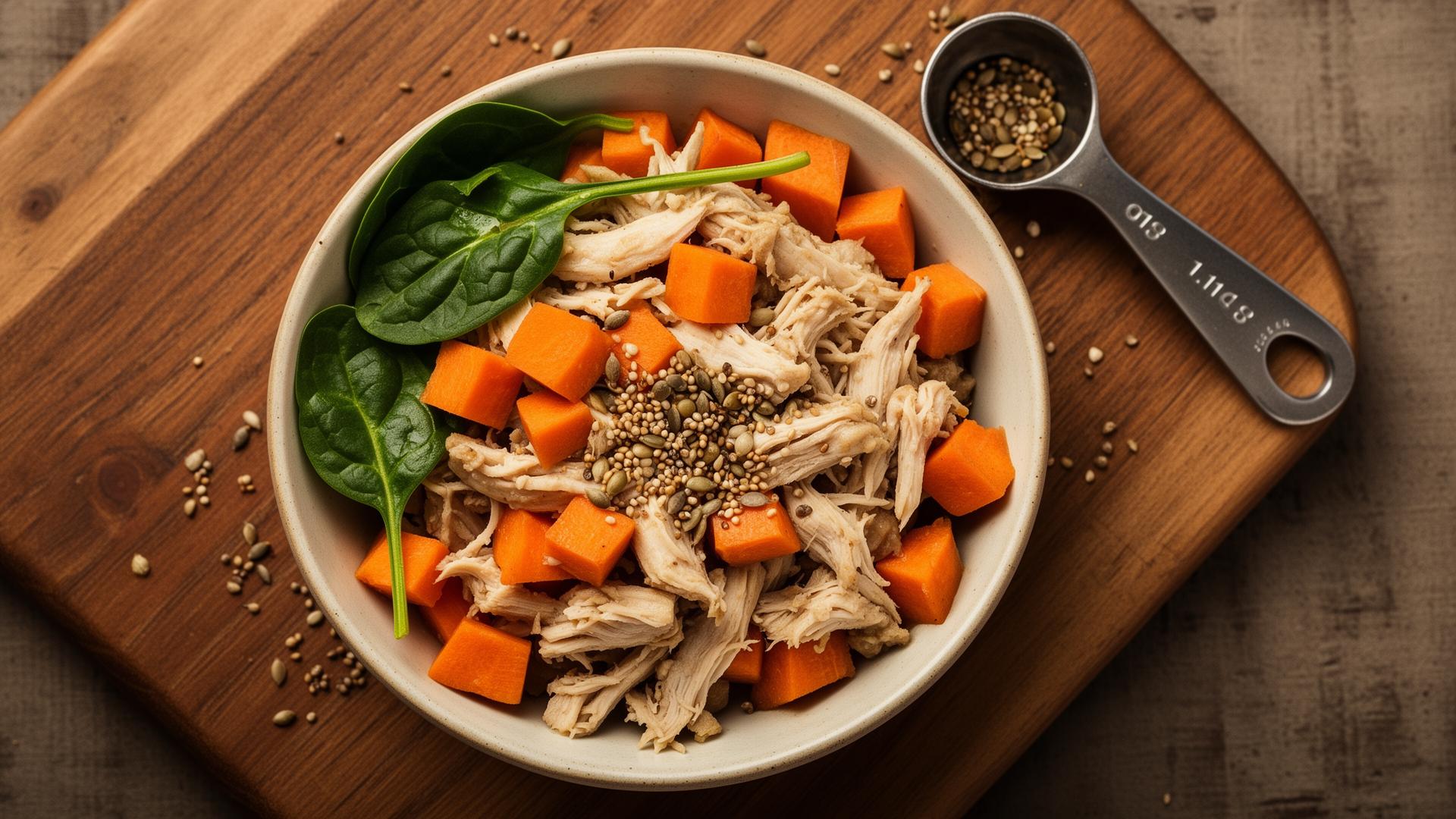
Yes, and for many owners this is the most realistic option. Veterinary nutritionists generally recommend keeping non-complete toppers below about 10% of daily calories so they don't unbalance your dog's diet. Use plain, dog-safe whole foods (cooked chicken, pumpkin, sweet potato) or a properly formulated complete fresh food on top of kibble.
Will switching diets upset my dog's stomach?+
It can if you switch too fast. The Sydney study used a 7-day stepped transition: 25% new food for 3 days, 50/50 for 2 days, 75% new food for 2 days, then 100%. One dog in the study still didn't tolerate the fresh diet and had to be withdrawn, so go slowly and watch for vomiting, diarrhoea or refusal to eat — especially in dogs with a sensitive stomach or a history of GI issues.
Is fresh dog food worth the extra cost?+
It depends on your dog, your budget and your goals. The 2026 evidence supports real short-term metabolic and gut benefits from fresh diets, but kibble is significantly cheaper and many dogs do very well on a good kibble for life. If full fresh feeding isn't affordable, prioritise lean body condition, dental care and a small fresh topper before stretching for a 100% fresh diet.
Sources
Related Reading
Share this story
The PawPulse Newsroom is a small editorial team of dog owners, trainers, and pet-industry writers reporting on dog health, training, nutrition, and breed trends.
Medically reviewed by PawPulse Veterinary Review Board.
Pin this to your Healthy Happy Dogs board
Vet-vetted wellness, symptom guides, and senior dog care pins.
Liked this story?
Share it with someone who should read it.
More from Dog Health & Wellness

IVDD Revolution: How We Slashed Dachshund Back Pain by 74%!

Cavalier MVD Breakthrough: 3 Tools That Add Years to Their Lives
