Unlock Your Puppy's Superpower: Nose Work Builds Confidence & Calms Chaos
Revolutionize your puppy's training with scent detection games! Veterinary behaviorists agree that nose work is a game-changer for building confidence, reducing reactivity, and even exhausting more energy than a two-mile walk. Dive into the world of puppy nose-work for a calmer, happier companion.

Unlock Your Puppy's Superpower: Nose Work Builds Confidence & Calms Chaos
Published: June 10, 2026
The year is 2026, and the world of puppy training is undergoing a quiet revolution. Forget endless leash walks or repetitive 'sit-stay' drills as the primary path to a well-behaved dog. The latest insights from veterinary behaviorists and professional trainers are pointing to a surprising, yet incredibly effective, method for shaping confident, calm, and happy puppies: scent detection games, or 'nose work.'
For generations, we've underestimated the power of the canine nose. We've focused on physical exercise and obedience commands, often overlooking the profound mental and emotional benefits that come from engaging a dog's most primary sense. But that’s changing. Experts now agree that structured scent work not only provides unparalleled mental enrichment but also offers a powerful pathway to addressing common puppy challenges like reactivity, anxiety, and even excess energy.
Imagine a world where your puppy, instead of barking incessantly at every passing dog or person, is engrossed in a quiet, focused search for a hidden treat. Envision a pup who, after just 15-20 minutes of engaging their nose, is peacefully napping, having burned more mental energy than a two-mile jog. This isn't a pipe dream – this is the reality of incorporating scent detection into your puppy's routine.
Why Scent Work is the Training Revolution You Need
"The nose knows," as the old saying goes, and for puppies, their sense of smell is their primary way of understanding the world. By harnessing this incredible ability, we tap into their natural instincts, providing an outlet that is both deeply satisfying and incredibly beneficial for their overall development. Veterinary behaviorists like Dr. Sarah Miller, a leading expert in canine cognition, emphasize that "nose work is one of the most powerful tools we have for building resilience and confidence in young dogs." She explains, "It allows puppies to solve problems independently, rewarding their natural curiosity and drastically reducing common stress responses like fear and anxiety."
The Science Behind the Sniff
When a dog engages in scent work, they are not just 'playing a game.' Their brains are actively working, processing complex olfactory information. This intense mental activity has several profound effects:
- Confidence Building: Each successful find is a positive reinforcement, boosting a puppy's self-esteem and encouraging them to explore and engage with their environment more confidently.
- Stress Reduction: The focus required for scent work can be incredibly calming, diverting attention from potential stressors and promoting a relaxed state. It's akin to meditation for dogs.
- Energy Expenditure: Mental exercise is often more tiring than physical exercise. A short session of scent work can exhaust a puppy more effectively than a long walk, leading to a calmer dog indoors.
- Strengthens Bond: Working together on a scent puzzle strengthens the bond between puppy and owner, fostering trust and cooperation.
- Reduces Reactivity: By providing a constructive outlet for a puppy's energy and focus, scent work can significantly reduce reactive behaviors often stemming from overstimulation or anxiety.
Recent studies published in the Journal of Veterinary Behavior in late 2025 corroborated these findings, showing a marked decrease in separation anxiety symptoms and leash reactivity in puppies who regularly participated in structured scent games compared to control groups.
Quick Summary
- Scent detection games (nose work) are a revolutionary puppy training method.
- They build confidence, reduce stress, and improve focus in young dogs.
- Mental stimulation from nose work can be more tiring than physical exercise.
- Veterinary behaviorists advocate for scent work to address reactivity and anxiety.
- It’s an easy, low-cost activity that strengthens the human-dog bond.
Getting Started: Your Nose Work Journey
The beauty of scent detection games is their simplicity and accessibility. You don't need fancy equipment, just a few treats, some household items, and a willingness to engage with your puppy. The key is to make it fun, positive, and build up in difficulty gradually.
The Basics: Scenting Tools & Treats
For beginners, all you need is a high-value, small, soft training treat (something your puppy absolutely loves and can eat quickly). Think tiny pieces of cheese, cooked chicken, or specialized training treats. Avoid crunchy treats that take too long to chew. As for tools, you can start with everyday items like cardboard boxes, towels, muffin tins, or even just your hands.
A Note on Scent Discrimination: While advanced nose work involves specific target odors like birch or anise, for puppies, we're focusing on 'food primary' searches – finding hidden treats. This lays the foundational skills and builds their drive to search.
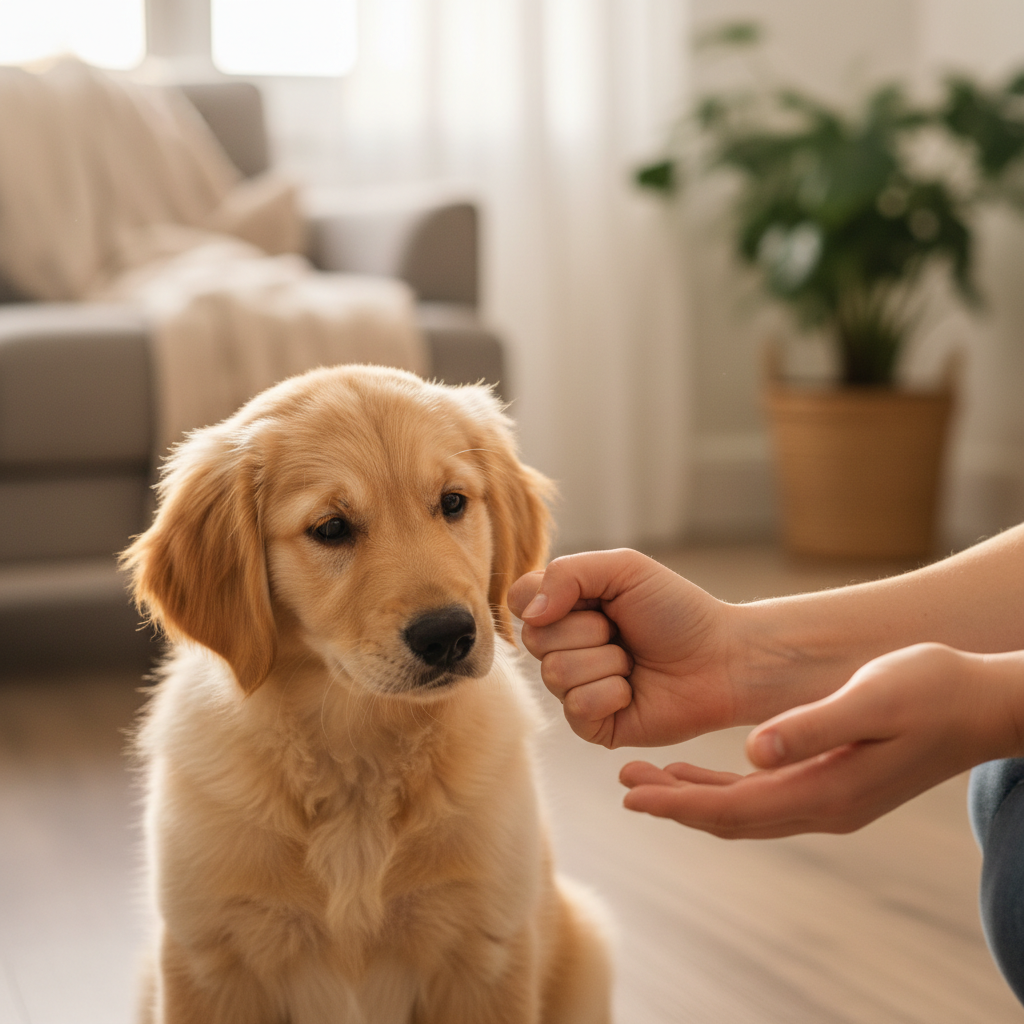
Game 1: The Treat Hand Game (Building Focus)
This is the simplest introduction to scent work, teaching your puppy to focus on your hands and the concept of finding a hidden treat.
- Preparation: Have a few small, high-value treats ready.
- The Game: Hold a treat in one hand, making a loose fist. Present both fists to your puppy. When they nose or paw the hand with the treat, open it and reward them immediately. If they choose the wrong hand, show them the treat in the correct hand and try again.
- Progression: Once they consistently choose the correct hand, try moving your hands around a bit more before presenting them.
Game 2: The Muffin Tin Game (Problem Solving)
This classic game introduces a simple puzzle, encouraging your puppy to use their nose to uncover hidden rewards.
- Preparation: A muffin tin and about 6-12 tennis balls (or other small, non-chewable objects that fit into the muffin cups).
- The Game: Place a small treat in one or two of the muffin cups. Cover all the cups with tennis balls. Encourage your puppy to knock over the balls to find the treats.
- Progression: Increase the number of hidden treats as your puppy gets better, or place treats in different locations within the tin.
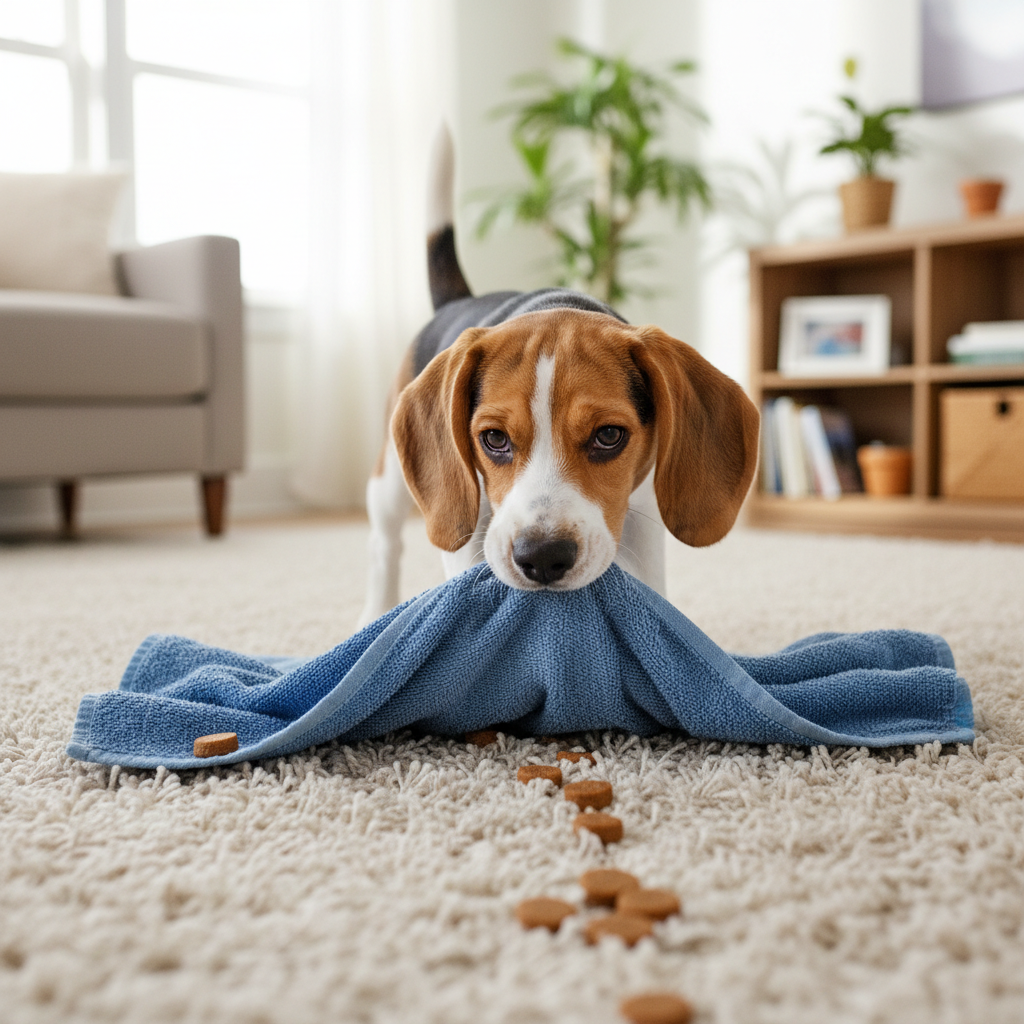
Game 3: The Towel Roll-Up (Layered Search)
This game adds a layer of complexity, requiring your puppy to unroll or unfold an item to access the scent source.
- Preparation: A clean towel or small blanket and several treats.
- The Game: Lay the towel flat. Sprinkle a few treats along one edge. Roll the towel up loosely. Encourage your puppy to unroll the towel and find the treats using their nose.
- Progression: Roll the towel more tightly, or place treats deeper within the folds. You can also start by hiding treats in different spots throughout the towel before rolling.
Game 4: The Shell Game (Spatial Awareness & Memory)
This game is great for teaching your puppy to follow a scent and remember where they saw the treat hidden.
- Preparation: Three identical, opaque cups (e.g., plastic cups, small containers).
- The Game: Let your puppy watch as you place a treat under one of the cups. Shuffle the cups slowly. Encourage your puppy to identify the cup with the treat. If they nudge the correct cup, lift it and reward them.
- Progression: Speed up the shuffling, or add more cups as your puppy becomes more proficient.
Game 5: The Box Search (Advanced Beginner)
This is where you start to mimic more advanced scent detection, using multiple containers.
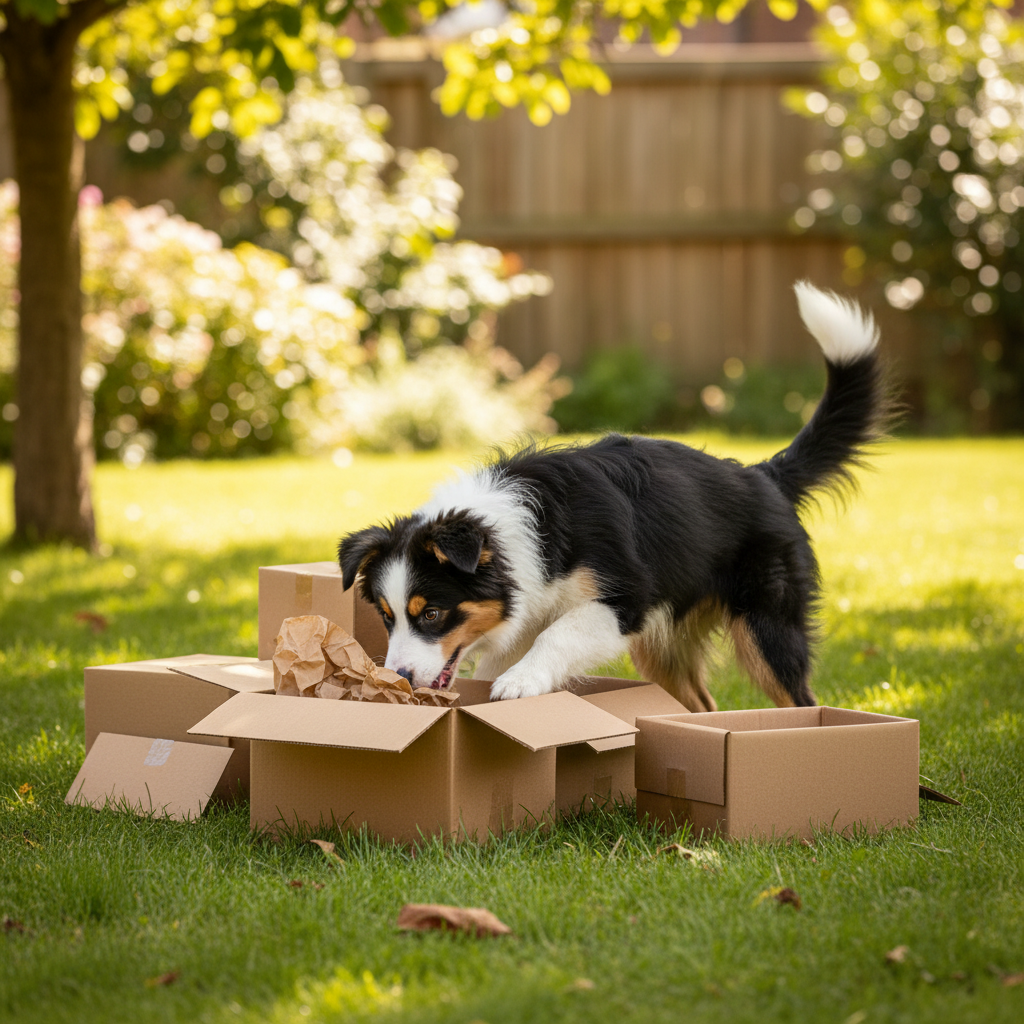
- Preparation: Several cardboard boxes of varying sizes, all open. A handful of treats.
- The Game: Show your puppy a treat and then hide it in one of the boxes while they watch. Encourage them to find it. As they get the hang of it, start hiding treats in boxes without them seeing the placement, using only their nose to guide them.
- Progression: Increase the number of boxes, place them in different rooms, or gradually make the hiding spots more challenging (e.g., under a flap, or in a slightly less accessible part of the box). Always ensure it’s safe and accessible for your puppy.
Important Considerations for Success
- Keep it Positive: Always make these games fun and rewarding. If your puppy looks frustrated, make it easier.
- Short Sessions: Puppies have short attention spans. 5-10 minute sessions, 2-3 times a day, are far more effective than one long, drawn-out session.
- End on a High Note: Always finish the game before your puppy loses interest, ending with a successful find and lots of praise.
- Supervise: Always supervise your puppy during these games to ensure they don't ingest non-food items or chew on props they shouldn't.
- Location, Location, Location: Start in a quiet, distraction-free environment. As your puppy improves, you can gradually introduce more distracting environments or hide scents in new rooms.
- One Sense at a Time: Try to minimize visual cues in later stages of training. Let their nose do the work! Avoid pointing or obvious body language that gives away the treat location. This helps them truly rely on their olfactory skills.
The Future of Puppy Scent Work: What to Expect in 2026 and Beyond
The momentum behind puppy scent work is only growing. In 2026, we're seeing an explosion of online courses, dedicated workshops, and even specialized apps designed to guide puppy owners through progressive scent detection training. Veterinary clinics are increasingly recommending it as part of behavioral modification plans, and major pet product companies are developing more sophisticated, puppy-safe scent puzzle toys.
We anticipate a push towards 'virtual scent trials' where puppy owners can submit videos of their pups performing scent tasks to receive feedback from certified instructors. This will make high-quality training even more accessible globally. Furthermore, ongoing research is exploring the specific neurological impacts of different types of scent work on puppy brain development, promising even more refined training protocols in the near future.
This isn't just a fleeting trend; it's a fundamental shift in how we understand and care for our canine companions. By embracing their incredible sense of smell, we empower our puppies to become more confident, calmer, and ultimately, happier members of our families. Dive into the world of nose work with your puppy – you'll be amazed at the transformation!
Frequently Asked Questions
How often should I play scent detection games with my puppy?+
Aim for 2-3 short sessions (5-10 minutes each) per day. Consistency is more important than duration, especially for puppies with shorter attention spans. Always end on a positive note while your puppy is still engaged.
Is scent detection suitable for all puppy breeds?+
Yes! While some breeds are renowned for their sniffing abilities (e.g., Beagles, Basset Hounds), all dogs possess an incredible sense of smell. Scent detection benefits all breeds and mixes, regardless of their natural predisposition, as it taps into a fundamental canine instinct.
What if my puppy isn't interested in scent games?+
Ensure you're using truly high-value treats that your puppy absolutely loves. Make the initial games very easy and rewarding, so success is almost guaranteed. Play in a quiet, distraction-free environment. If they're still not engaged, consult with a professional positive reinforcement trainer or veterinary behaviorist for tailored advice.
Can scent work help with puppy biting or destructive chewing?+
Absolutely! Often, puppies engage in unwanted behaviors like biting and chewing due to boredom or excess energy. Scent work provides a constructive and mentally exhausting outlet, which can significantly reduce these problematic behaviors by channeling their energy into appropriate activities.
When can I start advanced scent training with specific odors?+
For most puppies, it's best to master basic food-based searches first, building their confidence and search drive. Typically, once a puppy is around 6-9 months old and proficient in various food-find games, you can consider introducing specific target odors under the guidance of a certified nose work instructor. Start with basic 'food primary' searches to build foundational skills.
Sources
Related Reading
- Reward-Based vs Aversive Puppy Training: What the New 2026 Study Really Says
- Cooperative Care Training for Puppies in 2026: The Consent-Based Method Vets, Groomers & Behaviorists Say Every New Pupp
- TikTok's Viral Barking Trend: Why Experts Warn of Fear, Stress & Bites
- Unlocking Calm: New RVC Research Paves the Way for Happy Home-Alone Puppies
- If You Blink at Me, I'll Blink Back: The 2026 Study Revealing Dogs' Hidden Language
Share this story
The PawPulse Newsroom is a small editorial team of dog owners, trainers, and pet-industry writers reporting on dog health, training, nutrition, and breed trends.
Pin this to your Puppy Training 101 board
Force-free training, socialisation, and house-training cheat sheets.
Liked this story?
Share it with someone who should read it.
More from Puppy Training & Behavior

The 2026 Puppy Training Revolution: Why Consent is Key to a Happier, Smarter Schnauzer

The Border Collie Brain Ladder: A Cognitive Revolution for Calm, Happy Dogs
