Where Your Dog Really Came From: The 2026 Nature Study on Ancient European Dogs
A new Nature study sequenced dozens of ancient European dog genomes and revealed that dogs were already spread across Europe and Anatolia by 14,000 years ago — long before farming. Here is what it changes about your dog's ancestry.

The earliest morphologically identifiable dogs walked Europe at least 14,000 years ago. But until this spring, scientists had almost no genome-wide data to explain how dogs ended up living with hunter-gatherers from Britain to Anatolia — or what happened to those early lineages when farming arrived.
That changed in March 2026, when a team led by Lachie Scarsbrook and Greger Larson at the University of Oxford, with the Francis Crick Institute, published "Genomic history of early dogs in Europe" in Nature. They sequenced ancient dog remains from Upper Paleolithic and Neolithic sites and built the first continent-scale picture of where Europe''s earliest dogs came from — and how much of that DNA still echoes inside modern breeds.
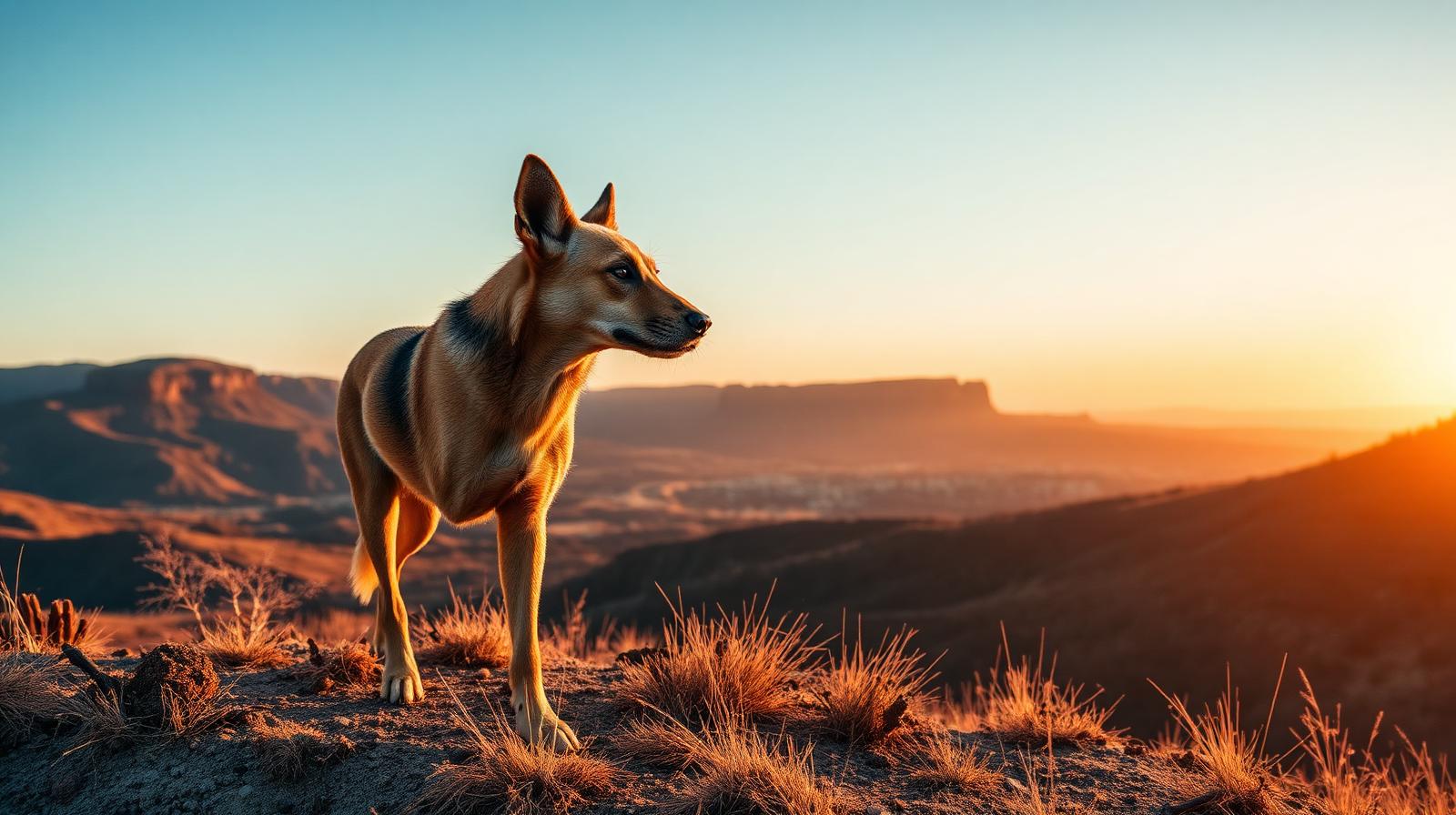 Anatolia sits at the crossroads of the 2026 Nature findings — early European dogs and Anatolian dogs share a deeper genetic story than anyone expected.
What the 2026 Nature study actually did
The team recovered DNA from dog remains at Upper Paleolithic sites — including Pınarbaşı in central Anatolia — and compared those genomes with later Neolithic and modern dogs. The result is the first genome-wide map of early European dog ancestry.
Three headline findings stand out:
- Dogs were everywhere, early. By ~14,000 years ago, genetically distinct dog populations were already living alongside hunter-gatherers across Europe and Anatolia.
- Farming reshuffled the deck. When Neolithic farmers expanded out of Anatolia, they brought their own dog lineages with them — partly replacing, partly blending with the dogs the hunter-gatherers already kept.
- Echoes survive in living dogs. Some of that ancient hunter-gatherer dog ancestry is still detectable in modern European breeds, even after thousands of years of crossings.
Why this matters for the dog on your couch
Your dog is not a wolf with a haircut. The 2026 Nature paper makes that even clearer: modern dogs are a layered mosaic — Ice-Age hunter-gatherer dogs, Neolithic farming dogs, Bronze Age herding dogs, and centuries of deliberate breeding stacked on top.
That layered ancestry helps explain why breeds differ so dramatically not just in shape, but in behavior. Recent work in canine cognition keeps finding that breed clade — the deep ancestral group a breed belongs to — predicts how a dog learns. We covered one striking example in our explainer on the 2026 UBC reversal learning study, which showed certain ancient breed clades adapt faster when the rules of a task suddenly change.
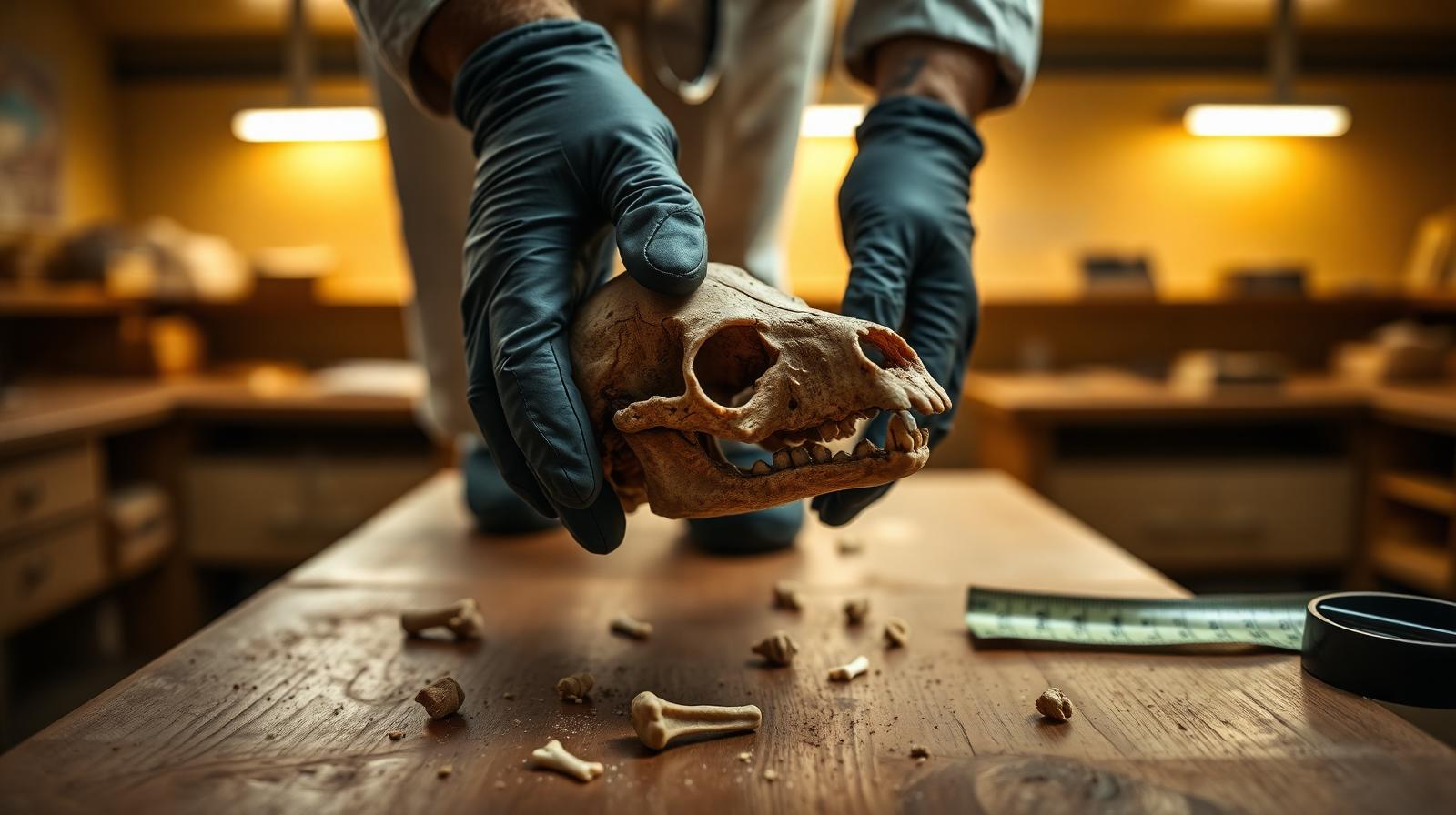 Ancient DNA work begins here — with bones from Paleolithic and Neolithic sites being cleaned, measured, and sampled for genome sequencing.
Hunter-gatherer dogs vs. Neolithic dogs
One of the most interesting threads in the paper is the relationship between two distinct ancestries:
- Pre-farming European dogs — descendants of the earliest domesticated populations that fanned out across Europe with mobile hunter-gatherer groups.
- Neolithic/Anatolian dogs — dogs that arrived with farmers as agriculture spread west and north out of Anatolia roughly 8,000–9,000 years ago.
The Neolithic wave did not erase what came before. Instead, the genomes show partial admixture: in many regions, farming-era dogs are a blend of incoming Anatolian ancestry and the pre-existing hunter-gatherer dog populations. It is the dog version of the same story human ancient-DNA studies keep telling about Europe''s people.
What this connects to in modern canine science
Deep ancestry is not just a museum story. It quietly shapes the dogs you meet today.
- Behavior and breed groups. Working-line breeds inherit not only physical traits but behavioral tendencies that map onto their ancestral cluster. The TSA odor-detection genetics work we broke down in our piece on the 2026 TSA dog PheWAS study is a perfect modern complement to the Nature ancestry paper.
- Cognition and listening skills. Some lineages produce dogs that are unusually good at picking up human language cues — see our explainer on the 2026 Science "gifted word-learner" study.
- Health risks. Ancient lineage influences which inherited diseases concentrate in a breed today, from retinal degeneration to behavior-linked anxiety. Our deep-dive on the 2026 Cambridge Golden Retriever GWAS shows how tightly breed history and modern health are intertwined.
- Aging. Even how gracefully dogs age can track with the lifestyle their ancestral type was built for — a theme we explored in the 2026 ELTE study on lifetime sport and canine dementia.
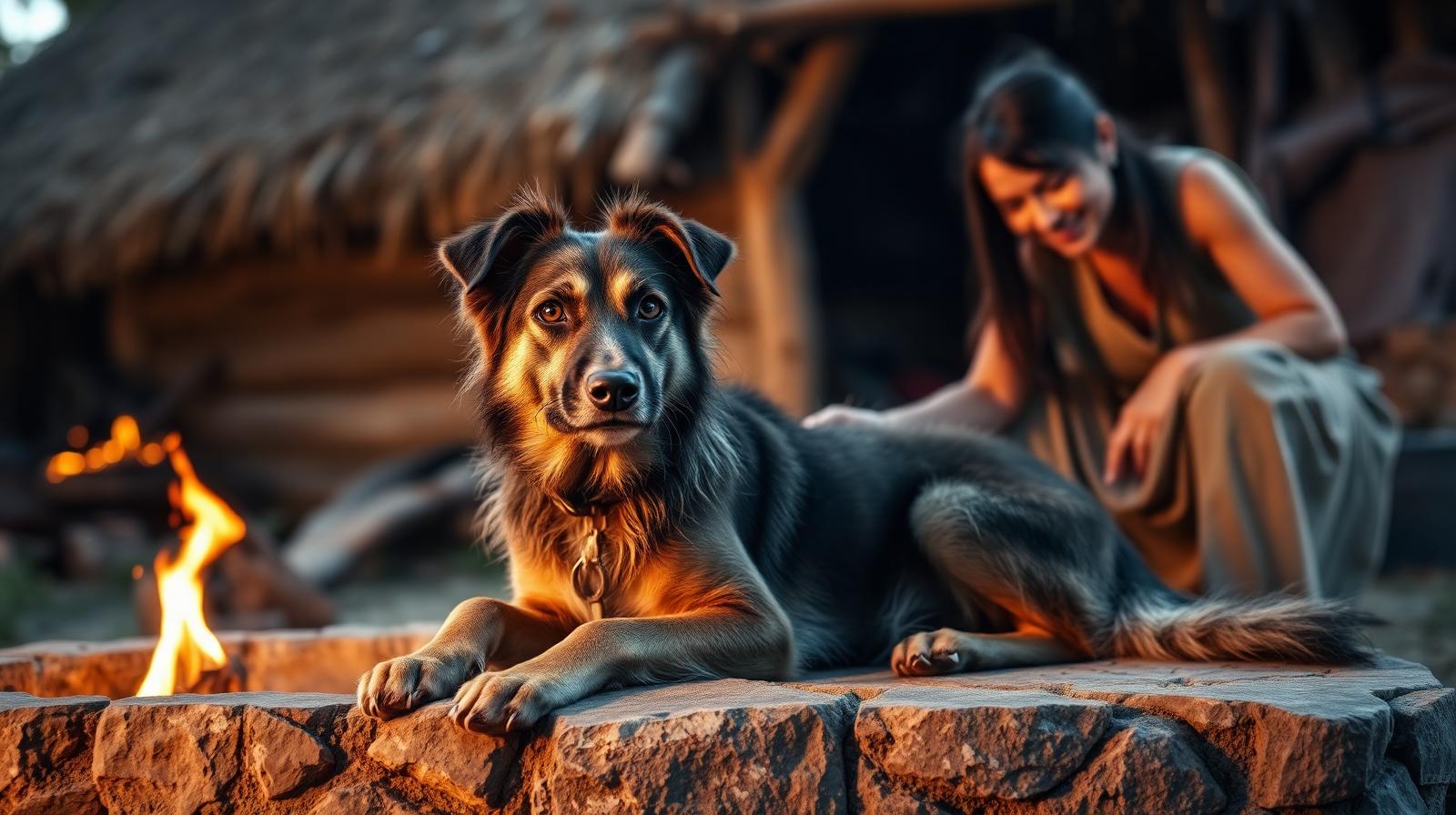 The first dogs of Neolithic Europe lived exactly here — at the edge of human hearths, doing the same job your dog still does: staying close.
Practical takeaways for dog owners
You do not need an archaeology degree to use this. Three real-world implications:
- Stop thinking of breed as just looks. Breed signals an ancestral toolkit — energy needs, sensory bias, sociability. Match training and lifestyle to the toolkit, not to Instagram aesthetics.
- Mixed-breed dogs are not a downgrade. Ancient European dogs themselves were a constantly remixing population. Genetic diversity is a feature, not a bug — it is part of why village-type and mixed dogs are often so robust.
- Be skeptical of "wolf diet" marketing. Your dog''s genome has been diverging from wolves for at least 14,000 years and absorbing farming-era food adaptations along the way. Feed the dog you actually have, not a romanticized ancestor.
The bottom line
The 2026 Nature study does not just push the dog-in-Europe timeline back. It reframes what "your dog" even means: a long, layered conversation between Ice-Age hunter-gatherer dogs, Neolithic farming dogs, and every breeder who came after. The dog asleep on your couch is, in a very literal sense, 14,000 years of partnership compressed into one warm body.
Frequently Asked Questions
How old is the oldest known dog in Europe?+
Morphologically identifiable dog remains in Europe date to at least 14,000 years ago, and the 2026 Nature study confirms that genetically distinct dog populations were already established by then.
Were dogs domesticated in Europe?+
Not exclusively. Early dog remains appear in multiple regions, and the 2026 study shows Europe was home to diverse early lineages plus later Anatolian arrivals — not a single domestication event.
Did farming change dogs?+
Yes. When Neolithic farmers expanded out of Anatolia, they brought their own dog lineages that partly mixed with, partly replaced the dogs hunter-gatherers already kept.
Does this mean my dog is part wolf?+
All dogs share a common ancestor with wolves, but modern dogs have been diverging for at least 14,000 years. Your dog is a dog, not a wolf — and definitely not a tame wolf.
Why does ancient ancestry matter for a pet dog today?+
Because deep lineage still shapes modern breeds — their behavior, learning style, and inherited disease risks all reflect that layered history.
Sources
Related Reading
Share this story
Pin this to your Puppy Training 101 board
Force-free training, socialisation, and house-training cheat sheets.
Liked this story?
Share it with someone who should read it.
More from Puppy Training & Behavior

Is Your Border Collie Secretly Stressed? The 2026 Study That Explains Why

Senior Dog Suddenly Tilting Head? Understanding Canine Vestibular Disease
