Old Dogs, New Tricks: The 2026 GeroScience Trial Showing How Group Training Eases Canine Dementia
A new GeroScience trial of 42 senior dogs with cognitive dysfunction shows structured scent and physical training classes improve sleep, smooth activity peaks, and meaningfully reduce caregiver burden — even when cognitive scores hold steady.


A landmark study published in GeroScience on May 13, 2026 is changing how veterinarians think about canine dementia care. Forty-two senior dogs with mild-to-moderate Canine Cognitive Dysfunction (CCD) were enrolled in either scent-based or physical structured-training group classes — and while the disease itself did not reverse, what happened to the dogs' sleep, their daily activity rhythms, and especially their owners' stress levels is reshaping how we manage canine Alzheimer's-like decline at home.
If you live with a dog over the age of eight, this is one of the most practical pieces of research to come out of 2026.
What is Canine Cognitive Dysfunction?
CCD is a progressive neurodegenerative disease that shares pathological features with human Alzheimer's: amyloid-beta plaques, brain atrophy, hyperphosphorylated tau, oxidative stress, and chronic neuroinflammation. Roughly 25% of dogs aged 8–12 show signs of CCD, climbing to about 70% in dogs older than 15.
The classic signs follow the "DISHAA" framework: Disorientation, altered Interactions, disrupted Sleep–wake cycles, House soiling, changes in Activity, and Anxiety. Night-time pacing and vocalization are often the hardest symptoms for families to live with — and they're exactly what this new trial set out to address.
For a related early-warning angle, see our coverage of the 2026 UACR urine marker for kidney decline, another biomarker emerging from senior-dog research this year.
Inside the 2026 GeroScience trial
Researchers at the University of Adelaide and collaborators recruited 42 pet dogs aged 8 years and older with CADES-confirmed mild-to-moderate CCD. Dogs were randomized into two five-week programs:
- Scent-based training (S) — 21 dogs working structured nosework and olfactory enrichment tasks
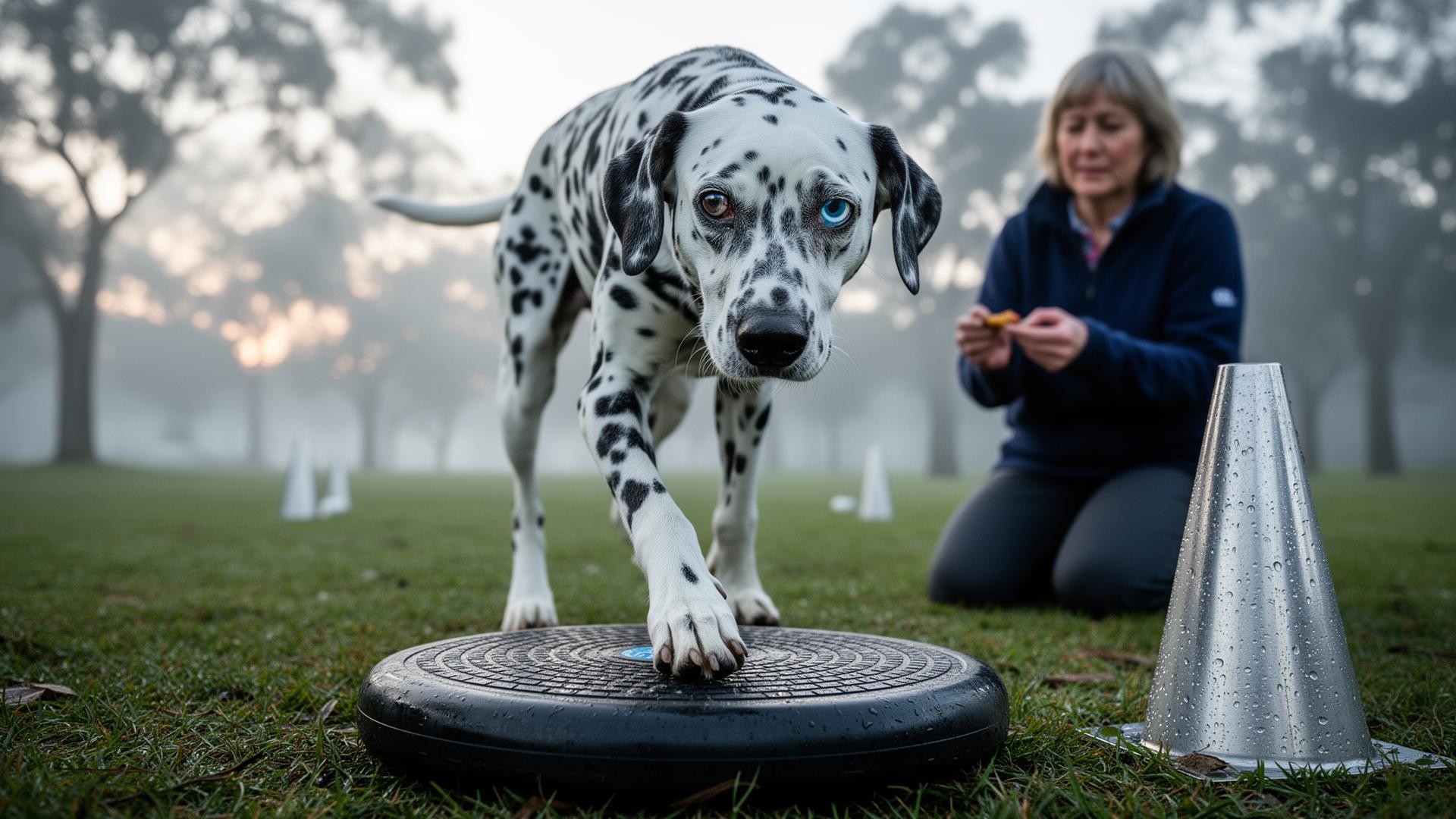
- Physical structured training (PST) — 21 dogs working low-impact balance, body-awareness, and obedience drills
Outcomes were measured objectively — not just by owner questionnaire — using:
- The Canine Dementia Scale (CADES) for cognitive severity
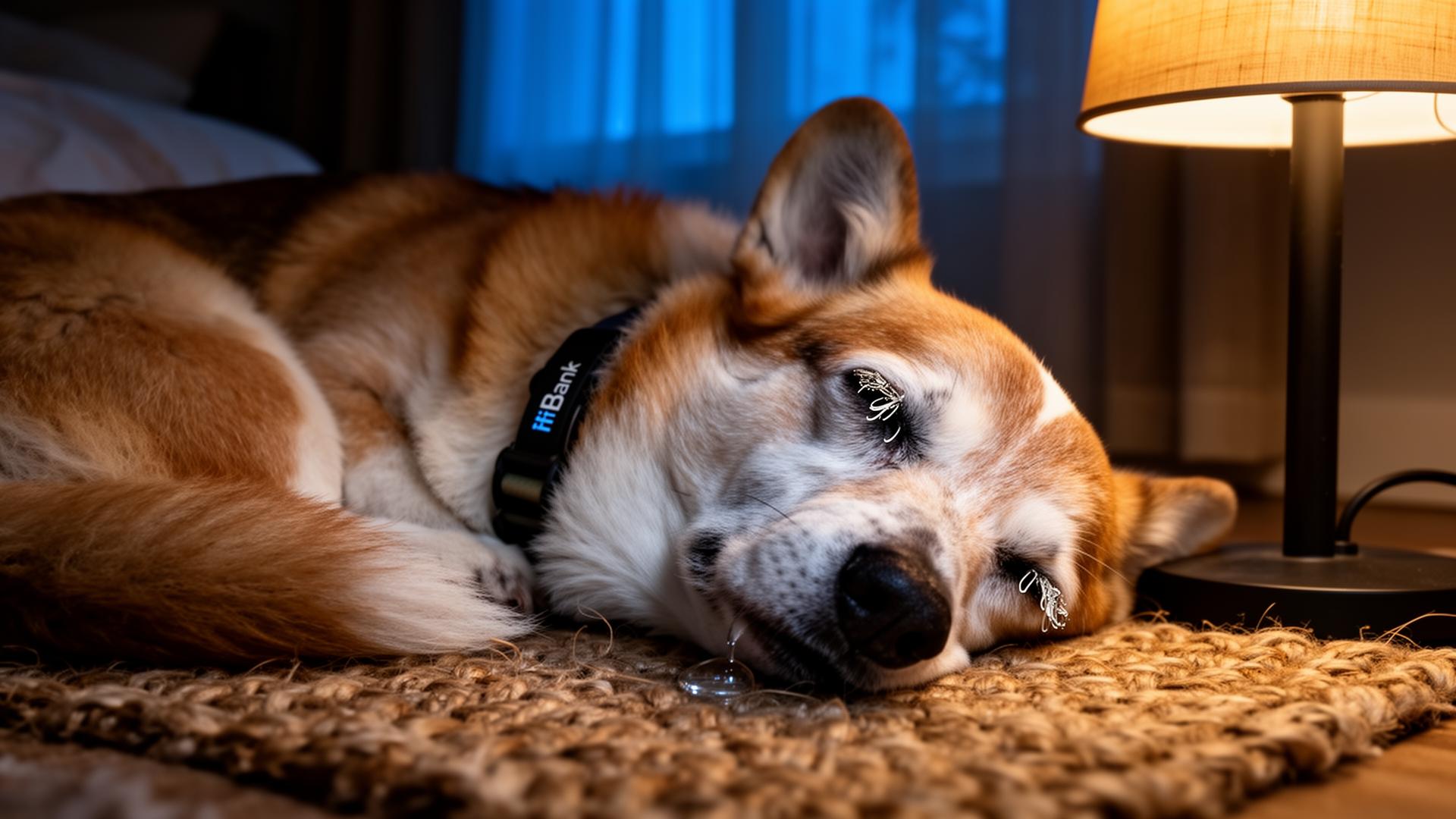
- FitBark accelerometers for activity and sleep
- Validated caregiver burden scales for the humans
Measurements were taken at baseline, during the five-week intervention, and again post-treatment.
What the data actually showed
The headline finding is more nuanced — and more useful — than "training cures dementia."
1. CCD severity did not change
CADES scores stayed flat across all phases in both groups. Five weeks of class is not enough to reverse amyloid pathology, and the authors are explicit about that. Don't read this as failure — read it as a stable plateau in a disease that, untreated, tends to progress.
2. Physical training improved sleep
Dogs in the PST group showed a significant improvement in FitBark sleep scores over time. Dogs in the scent-only group, by contrast, declined on the same sleep metric. For families dealing with the 3 a.m. wandering and whining that defines late-stage CCD, this is the headline.
3. Scent work flattened the activity peaks
Scent-trained dogs showed reduced morning and evening activity peaks — the bimodal "zoomies" pattern that often spikes anxiety behavior. The dogs weren't sedated; they were calmer.
4. Caregiver burden dropped in BOTH groups
This may be the most important finding for practical adoption. Owners in both classes reported significantly lower caregiver burden and high satisfaction — citing peer support, confidence, and a sense they were "doing something" as the major drivers.
Why this matters for your senior dog
Until now, mainstream CCD intervention has revolved around dietary supplements (antioxidants, MCT oil, omega-3s) and selegiline (Anipryl). The 2026 trial offers something owners can actually do with their dog, in community, for five weeks — and the evidence base now supports it.
If you suspect early CCD, the clinical workflow looks like this:
- Rule out other causes — many CCD signs overlap with pain, vision/hearing loss, endocrine disease, and untreated infection. Bloodwork, blood pressure, and a urinalysis come first.
- Score with CADES — your vet can score severity in under 10 minutes.
- Layer interventions — supplement + structured group class + environmental enrichment, not one or the other.
- Track objectively — a FitBark or similar accelerometer turns "I think he's sleeping worse" into data you can act on.
For a deeper look at how training style shapes both behavior and the human-dog relationship, our piece on the 2026 Copenhagen study on training ethics pairs well with this research — it explains why how you train matters as much as whether you train.
Building a five-week program at home
The Adelaide protocol is modular and re-creatable. A reasonable home version:
Physical Structured Training (for better sleep)
- 2× weekly sessions, 30–40 minutes
- Slow figure-8 walking around cones
- Step-ups onto a low rubber disc or folded blanket
- "Sit to stand" repetitions (5–10, with rest)
- Cavaletti walking over broomsticks at hock height
- Always pain-screen first — arthritis is nearly universal at this age
Scent-Based Training (for calmer days)
- 2–3× weekly, 15–20 minutes
- Hide three treats in a cardboard box maze
- "Find it" cup games (three inverted cups, one treat)
- Scatter feeding on a snuffle mat instead of bowl meals
- Introduce a novel scent (lavender, vanilla) on a cloth weekly
The point is structure and consistency, not intensity. Five-minute sessions that happen are infinitely better than 30-minute sessions that don't.
The caregiver story is the real headline
Caring for a dog with CCD is consistently rated as more burdensome than caring for a healthy age-matched dog — disrupted sleep, vocalization, and toileting accidents all stack onto the human. The 2026 trial showed that simply showing up in a room with other people going through the same thing dropped burden scores meaningfully.
This mirrors decades of human dementia-caregiver research: peer support and shared activity outperform almost every other psychosocial intervention. If your vet doesn't know of a senior-dog or "golden years" class locally, ask about starting one — even four owners and a trainer in a quiet hall is enough.
What this study does NOT prove
Good science is honest about limits. The authors flag several:
- Small sample size (n=42) and no untreated control group — improvements in caregiver burden could partly reflect attention and routine, not the class itself.
- Short duration — five weeks may simply be too brief to detect CADES-level change.
- Self-selected owners — families willing to enroll a senior dog in a class are not a random sample.
- Single geography — Australian climate, urban park access, and culture may not generalize everywhere.
A larger multi-site trial is the obvious next step. In the meantime, the risk-benefit math for trying a structured group class is strongly positive: low cost, low harm, measurable sleep and burden gains.
When to call the vet
If your senior dog is showing any of these, book a CCD-focused appointment — don't wait for the "next routine visit":
- Standing facing a wall or corner for minutes at a time
- No longer greeting you at the door
- Pacing or vocalizing between 1–4 a.m.
- House-soiling in a previously reliable dog
- Getting "stuck" on the wrong side of doors
For dogs already on a senior-care plan, this trial slots neatly alongside the kind of facility-based programs we covered in White Coats, Wagging Tails: full-time facility dogs in 2026 and the broader LA dog daycare leptospirosis lessons on choosing safe group settings.
The bottom line
The 2026 GeroScience trial doesn't promise to reverse canine dementia — and it shouldn't. What it offers is something more honest and more useful: a low-cost, welfare-focused, community-based intervention that improves sleep, smooths activity peaks, and meaningfully reduces the human suffering around CCD.
For the millions of families living with an aging dog, that is the news of the month.
Sources: Taylor TL et al., "Group training classes for dogs with canine cognitive dysfunction: effects on sleep, activity, and caregiver burden," GeroScience, 13 May 2026; CADES (Madari et al., 2015); Dog Aging Project cognitive function publications, 2022–2026.
Frequently Asked Questions
Can group training classes cure canine dementia?+
No. The 2026 GeroScience study explicitly found that 5 weeks of structured training did NOT change CADES cognitive severity scores. What it did improve was sleep quality (in the physical-training group), activity-peak regulation (in the scent group), and caregiver burden in both groups.
Which type of training is better for a dog with CCD — scent work or physical exercise?+
They target different problems. Physical Structured Training (PST) improved objective sleep scores most. Scent-based training reduced the early-morning and evening activity peaks that often correlate with anxiety. Many families do both on alternating days.
At what age should I start screening for canine cognitive dysfunction?+
Begin annual CADES (Canine Dementia Scale) scoring at age 8 for small breeds and age 7 for large breeds. Earlier if you notice disorientation, sleep changes, house-soiling in a previously reliable dog, or loss of greeting behavior.
Is the FitBark or similar accelerometer worth buying for a senior dog?+
For a dog with suspected or confirmed CCD, yes. The 2026 trial used FitBark sleep scores as an objective endpoint precisely because owner perception of sleep is unreliable. It turns vague concerns into trendable data your vet can act on.
How do I find a senior-dog training class near me?+
Ask your veterinary clinic, local force-free trainers, and breed-club seniors networks. If none exist, the 2026 paper's protocol is modular enough to run with four owners and a quiet hall — five weeks, two short sessions a week, focused on low-impact balance work or structured nosework.
Sources
Related Reading
Share this story
The PawPulse Newsroom is a small editorial team of dog owners, trainers, and pet-industry writers reporting on dog health, training, nutrition, and breed trends.
Medically reviewed by PawPulse Veterinary Review Board.
Pin this to your Healthy Happy Dogs board
Vet-vetted wellness, symptom guides, and senior dog care pins.
Liked this story?
Share it with someone who should read it.
More from Dog Health & Wellness

IVDD Revolution: How We Slashed Dachshund Back Pain by 74%!

Cavalier MVD Breakthrough: 3 Tools That Add Years to Their Lives
