White Coats, Wagging Tails: Why Children's Hospitals Are Hiring Full-Time Facility Dogs in 2026
A 5-year-old who hadn't left his room in a month stepped outside to meet his canine friend Hadley. Stories like his are why more children's hospitals are putting Goldendoodles, Labradors, and even retired racing Greyhounds on the official payroll.

When 5-year-old Calvin Owens stepped outside for the first time in over a month, he wasn't met by a doctor or a nurse — he was met by Hadley, a cream Goldendoodle in a blue vest. Calvin's first walk on a hospital patio in weeks was powered by a dog whose entire job is to be there when a child needs her.
That scene, reported by the Associated Press on May 23, 2026, is becoming the new normal. From Cincinnati Children's to Seattle Children's, U.S. pediatric hospitals are putting full-time facility dogs on the payroll alongside nurses, child-life specialists, and surgeons. And the research finally explains why hospital administrators are signing off on it.
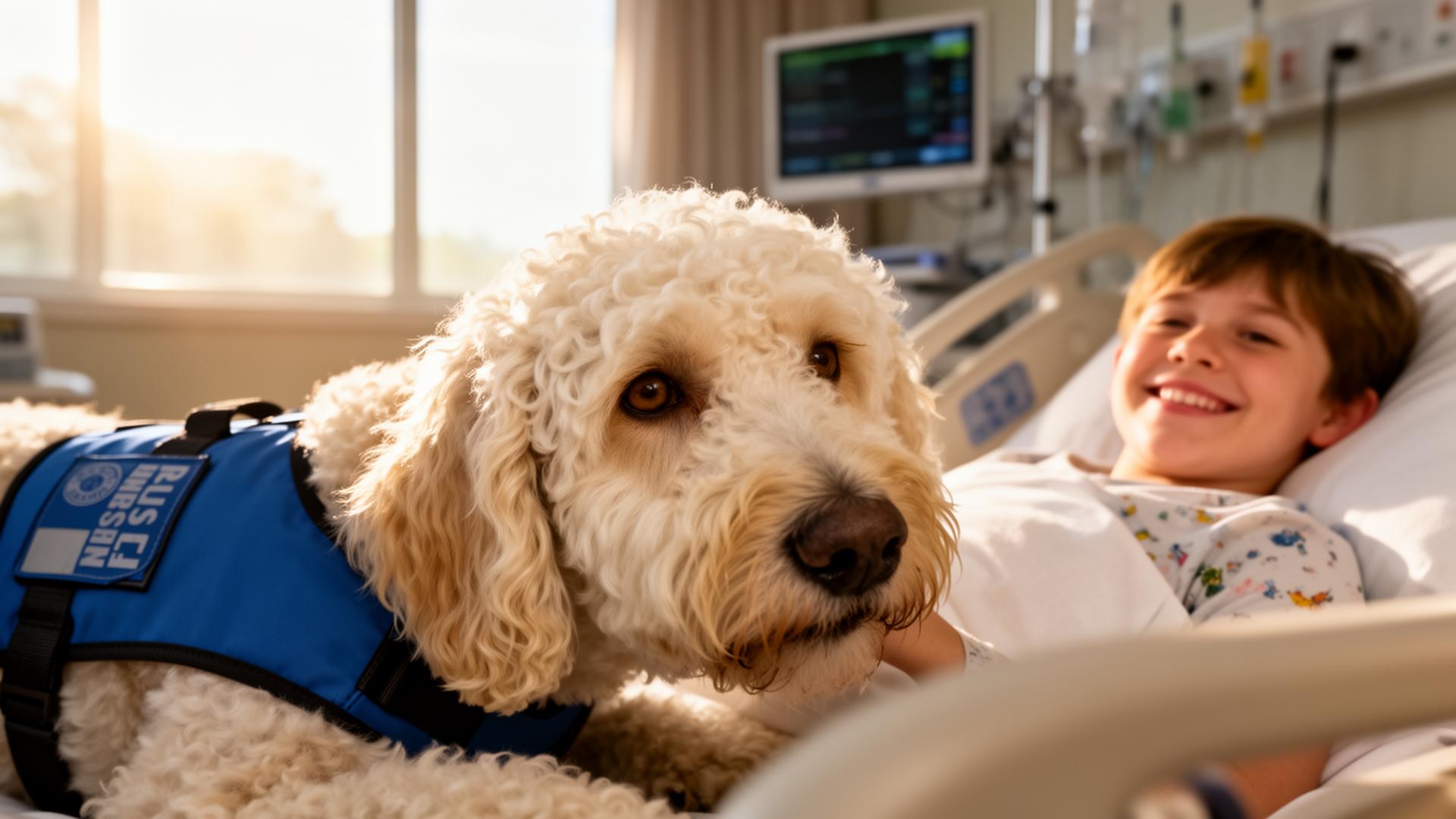
What Exactly Is a "Facility Dog"?
A facility dog is not a pet therapy volunteer who visits once a month. They are highly trained service dogs — usually from programs like Canine Companions or Assistance Dogs International — paired with a single professional handler (often a child-life specialist or nurse) who brings the dog to work every day. They live with that handler and treat the hospital as their primary workplace.
Compare them to the casual "therapy dog" model:
- Therapy dog: Volunteer-owned pet, certified for short visits, comes weekly.
- Facility dog: Professionally trained (2+ years), assigned to one institution, works 30+ hours per week.
The distinction matters. Because facility dogs are credentialed staff, they can be invited into spaces that volunteer dogs cannot — pre-op rooms, MRI suites, even rehab gyms.
Why Hospitals Are Adopting Them Right Now
Three forces converged in 2025 and 2026:
1. The anxiety research finally caught up
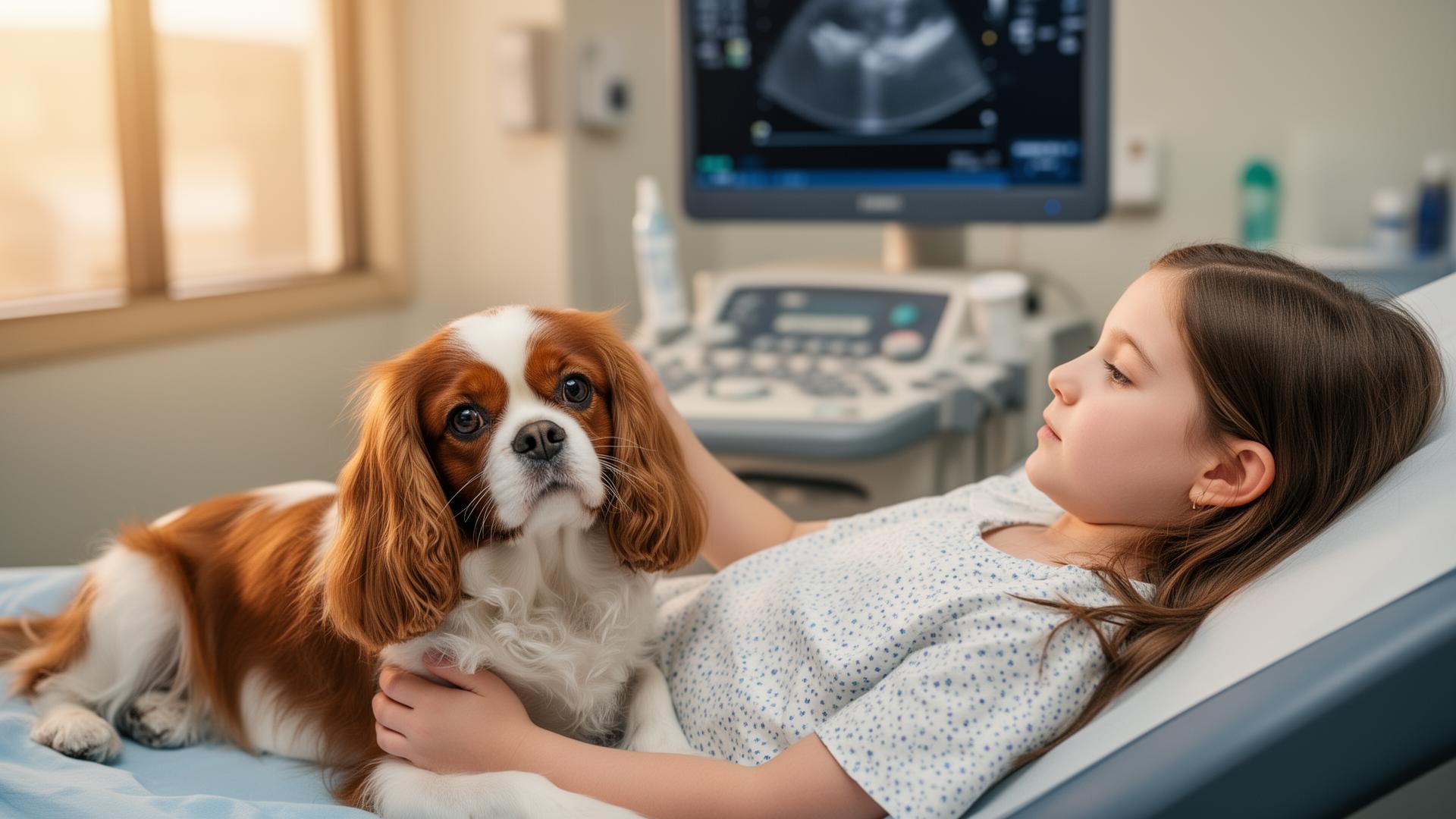
A 2025 study in Cardiology in the Young (Cambridge University Press) measured anxiety in young children undergoing outpatient echocardiograms with and without a facility dog. Kids in the dog group had significantly lower heart rates and self-reported fear scores — and the sonographers got cleaner images because the patients held still.
2. Burnout data on the staff side
A 2021 PLOS One paper followed nurse handlers and found facility dogs reduced secondary traumatic stress and improved job satisfaction across an entire pediatric unit — not just for the handler. When everyone on the floor can drop in for a 90-second visit with the dog between codes, the whole shift recalibrates.
3. Parents are asking by name
Hospitals report families are choosing facility-dog programs in their decisions about where to be treated for chronic conditions. Hadley, Cincinnati's Goldendoodle, has her own Instagram with more followers than the hospital's official account.
The Breeds Hospitals Actually Hire
You'll see a recurring shortlist. Each pick is about temperament and physiology, not aesthetics:
- Labrador Retriever & Golden Retriever — the historical default. Predictable, biddable, sturdy enough for a child to hug.
- Goldendoodles & Bernedoodles — increasingly common because the curly coat sheds less, which infection-control departments love. Hadley is one.
- Cavalier King Charles Spaniel — small enough to lie on an exam bed beside a child during cardiac imaging.
- Standard Poodle — same low-shed argument, plus the size and stamina for a long ICU shift.
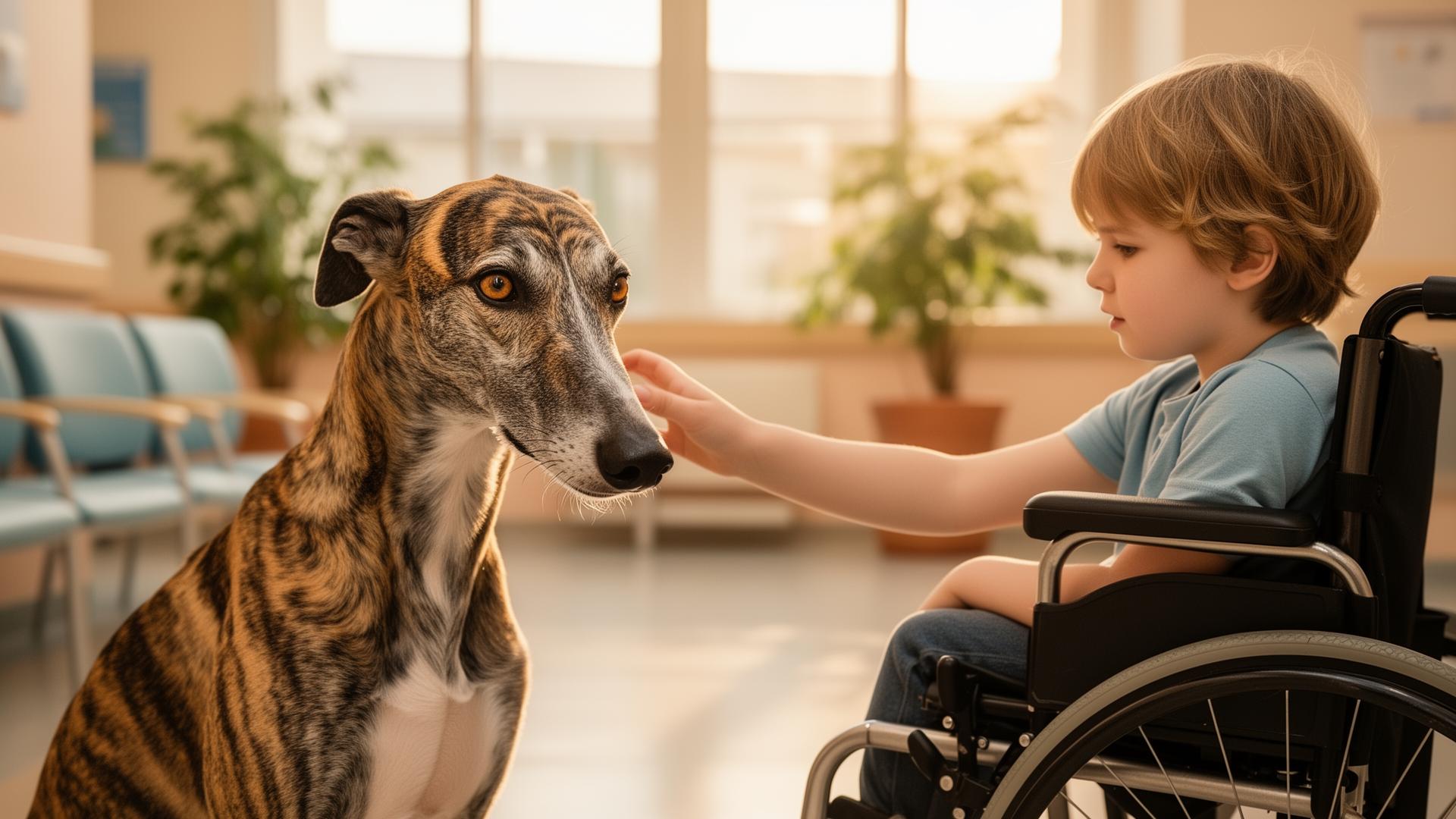
- Retired racing Greyhound — the surprise dark horse. Quiet, low-energy off-track, and gentle enough for kids in wheelchairs to safely interact with.
For more on why coat and breed wiring matter when matching a dog to a job, see our deep dive on the SORCS1 gene and why some dogs are born to be guide dogs.
What the Dog's Day Actually Looks Like
A typical facility dog shift is not "wandering around being cute." It's structured:
- Morning rounds. Handler reviews the patient list with the care team. The dog has a written schedule.
- Procedural support. Dog rests on the bed during blood draws, IV placement, or imaging to give the child a focal point.
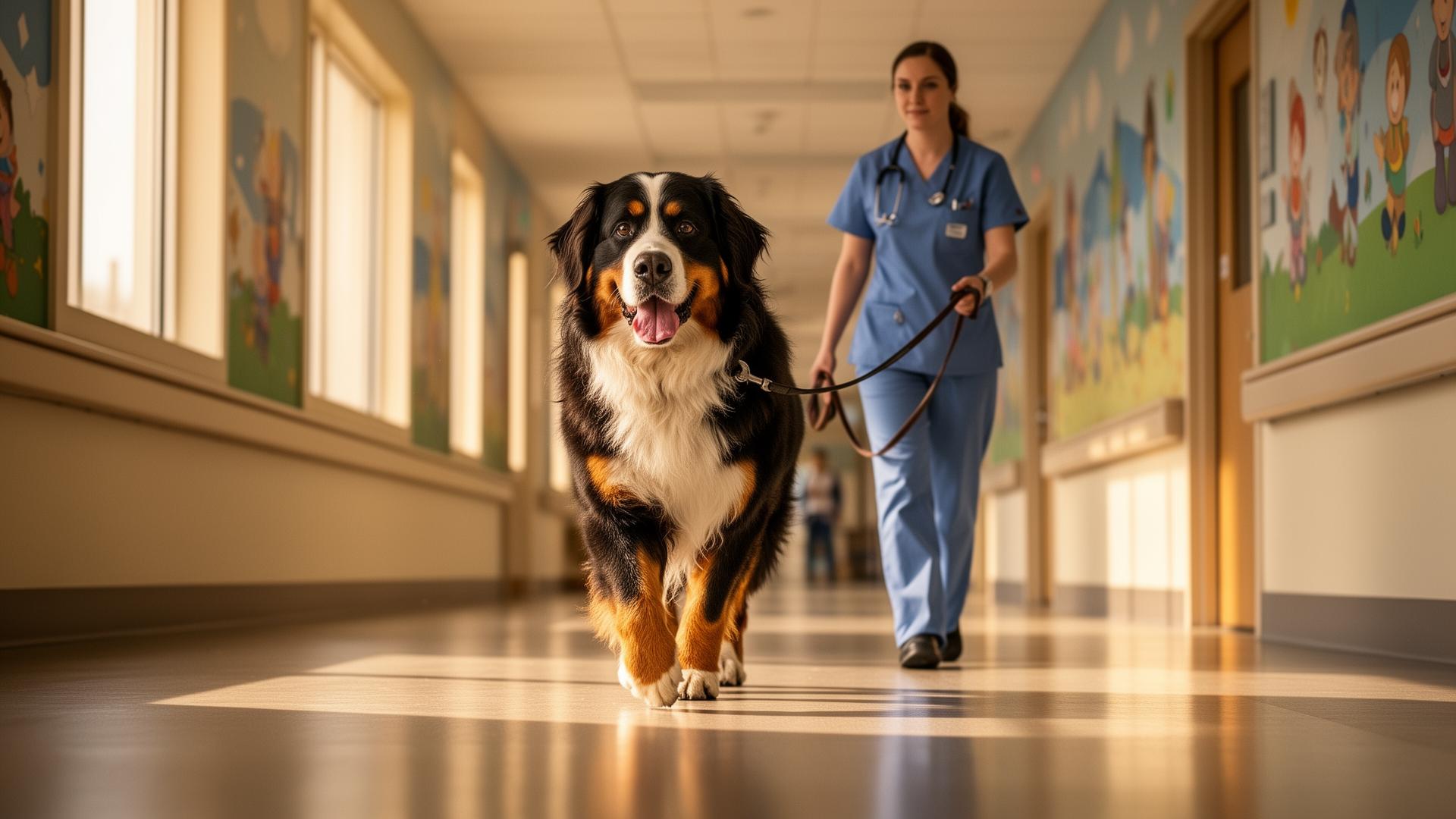
- Mobility work. Walking the dog motivates post-op kids to take their first steps after surgery.
- End-of-life support. Many programs reserve the dog for families saying goodbye — a quiet warm body in the room when nothing else helps.
- Decompression breaks. Mandatory. A working dog still needs naps, off-leash time, and a quiet kennel.
This is grueling work, which is why most programs cap a dog's career at 6–8 years before retirement to the handler's home.
Infection Control: The Question Every Parent Asks
Pediatric hospitals don't let any dog in. Facility dogs must show:
- Current rabies, distemper, and Bordetella vaccinations
- Monthly broad-spectrum parasite prevention (flea, tick, heartworm)
- Quarterly fecal screening
- A bath within 24 hours of every shift
- No raw-food diet (the FDA's recent warnings — see our Raaw Energy listeria recall coverage — are part of why)
Reviews in The Journal of Hospital Infection have repeatedly found no documented zoonotic outbreaks tied to properly screened facility-dog programs.
What This Means for the Average Dog Owner
Even if your dog will never wear a vest, the facility-dog playbook is full of lessons for everyday life with your pup:
- Reward-based training is the foundation. Every facility dog is trained on positive reinforcement — the same approach a recent University of Copenhagen study argues reveals an owner's ethical stance. Read our breakdown of the 2026 Copenhagen training-ethics study.
- Cognitive engagement keeps senior dogs sharp. The same enrichment principles facility-dog programs use to keep dogs working into their later years mirror those in the Adelaide CCD group-class study on senior dog cognition.
- A dog's gut and overall wellness predict their working career. Diet is part of the credential — see the metabolite findings from the 2026 Dog Aging Project study.
How to Get a Facility Dog at Your Local Hospital
If your hospital doesn't have one yet, parent advocates have been the deciding factor in most programs that launched in 2025–2026. The two highest-leverage steps:
- Ask the child-life department whether they have applied to Canine Companions' facility-dog program (the waitlist is long but the dogs are donated).
- Connect with the hospital's foundation — most facility-dog salaries (handler training, vet care, food) are funded by named donors, not the operating budget.
The Bottom Line
Children's hospitals aren't hiring dogs because dogs are cute. They're hiring them because credentialed canine staff measurably reduce patient anxiety, improve procedural compliance, lower staff burnout, and — in the words of Calvin Owens' mother — get kids out of bed when nothing else will. In 2026 that case has gotten strong enough that the dog in the blue vest in the hallway is no longer a mascot. She's a colleague.
Frequently Asked Questions
Are facility dogs the same as emotional support animals?+
No. Facility dogs are professionally trained service dogs (often 2+ years of training through Canine Companions or similar programs) assigned to an institution and a single handler. Emotional support animals require no formal training.
Do facility dogs spread infections in hospitals?+
Peer-reviewed reviews in The Journal of Hospital Infection have found no documented zoonotic outbreaks in properly screened facility-dog programs that follow vaccination, parasite-prevention, and bathing protocols.
What breeds make the best facility dogs?+
Labradors, Golden Retrievers, Goldendoodles, Bernedoodles, Standard Poodles, Cavalier King Charles Spaniels, and retired racing Greyhounds — chosen for stable temperament, predictable size, and (for the doodles and poodles) lower shedding.
How long does a facility dog work before retiring?+
Most programs retire dogs after 6 to 8 years of service. Retired facility dogs almost always live out their lives with their handler.
How can my local hospital start a facility-dog program?+
Contact the child-life department about applying to Canine Companions' facility-dog program, then work with the hospital foundation to identify a named donor to cover handler training, food, and vet care.
Sources
Related Reading
Share this story
Pin this to your Healthy Happy Dogs board
Vet-vetted wellness, symptom guides, and senior dog care pins.
Liked this story?
Share it with someone who should read it.
More from Dog Health & Wellness

Cavalier MVD Breakthrough: 3 Tools That Add Years to Their Lives

IVDD Breakthrough: New Protocol Slashes Dachshund Risk by 63%!
