The 2026 Pomeranian Boom: Why Tiny Spitz Dogs Are Suddenly Everywhere
From TikTok feeds to apartment lobbies, Pomeranians are stealing the small-dog spotlight in 2026. Here's the science, the trend data, and the care plan behind the boom.

Quick Summary: Pomeranians are the breakout small dog of 2026. They're climbing search trends, dominating short-form video feeds, and quietly outliving most of the breeds they share the apartment-dog category with. But the same traits that make them viral — fluffy coats, big personalities, tiny bodies — also create care needs most first-time owners don't see coming. Here's the trend, the science, and a realistic week-one plan.
If you've scrolled any pet feed in the last six months, you've noticed it: the algorithm has picked a new favorite. Pomeranians — those 3 kg balls of orange, cream, or sable fluff — are everywhere. A recent News18 ranking of the most viral dog breeds on Instagram put Pomeranians firmly in the top tier of 2026's "internet-famous" small dogs, alongside the now-controversial flat-faced breeds.
The boom isn't only aesthetic. After years of headlines about brachycephalic breathing problems in Frenchies and Pugs, a quiet rotation is happening — owners are looking for a small dog that fits a city apartment without an inhaler-and-surgery medical bill attached. Pomeranians, with their long muzzles and surprisingly robust airway anatomy, are benefitting.

Why Pomeranians Are Trending in 2026
Three forces are stacking on top of each other:
- The post-brachycephalic shift. Public awareness of breathing problems in flat-faced breeds is at an all-time high. The 2026 PLOS One analysis of 14 brachycephalic breeds and BOAS risk made it impossible to ignore that Pugs, French Bulldogs, and Bulldogs sit at the top of the risk list. We covered the numbers in detail in our breakdown of which flat-faced breeds have the worst breathing problems. Pomeranians — long-muzzled, spitz-type, agile — are the obvious aesthetic alternative.
- Apartment-scale design. Hybrid work made tiny dogs the default urban pet again. A 3 kg dog fits a 35 m² studio in a way a 12 kg Frenchie never quite does.
- The longevity advantage. Years of canine aging research keep landing on the same headline: smaller dogs live longer. Pomeranians regularly clear 14–16 years, and a meaningful share reach 18. That fits perfectly with the rising owner preference for "one dog for a decade-plus" instead of churning through breeds.
What the Science Actually Says About Small-Dog Longevity
The longevity advantage isn't a guess. A landmark GeroScience paper on size, genetic diversity, and lifespan across purebred dog breeds showed that smaller breeds (under roughly 10 kg) live, on average, several years longer than giant breeds — and Pomeranians sit comfortably in the favored end of that curve.
More recent work from the Dog Aging Project (see the 2026 preprint on blood biomarkers and breed genetics of aging) reinforced something we already wrote about in our piece on how tiny molecules in your dog's blood predict lifespan: breed-specific aging signatures are real, and toy spitz-type dogs tend to age more slowly than their popularity-chart neighbors.
The catch: longevity is only a gift if you actually protect the years. The biggest threats to a Pomeranian aren't dramatic — they're the small, slow, preventable conditions that compound over a 15-year lifespan.
The Three Care Areas Every New Pomeranian Owner Underestimates
1. The Coat Is a Daily Decision, Not a Monthly One
The double coat that makes a Pomeranian Instagram-perfect is also its single biggest care burden. Skipping brushing for two weeks turns a $40 home groom into a $180 shave-down at the salon — and shaved Poms can develop post-clipping alopecia, where the coat grows back patchy or never fully returns.
A realistic baseline:
- 3–4 line-brushings a week with a pin brush and a medium-fine slicker
- A stainless-steel comb through the chest ruff and behind the ears (the #1 mat zones)
- Bath every 4–6 weeks, fully blow-dried — air-drying a double coat is how mats are born
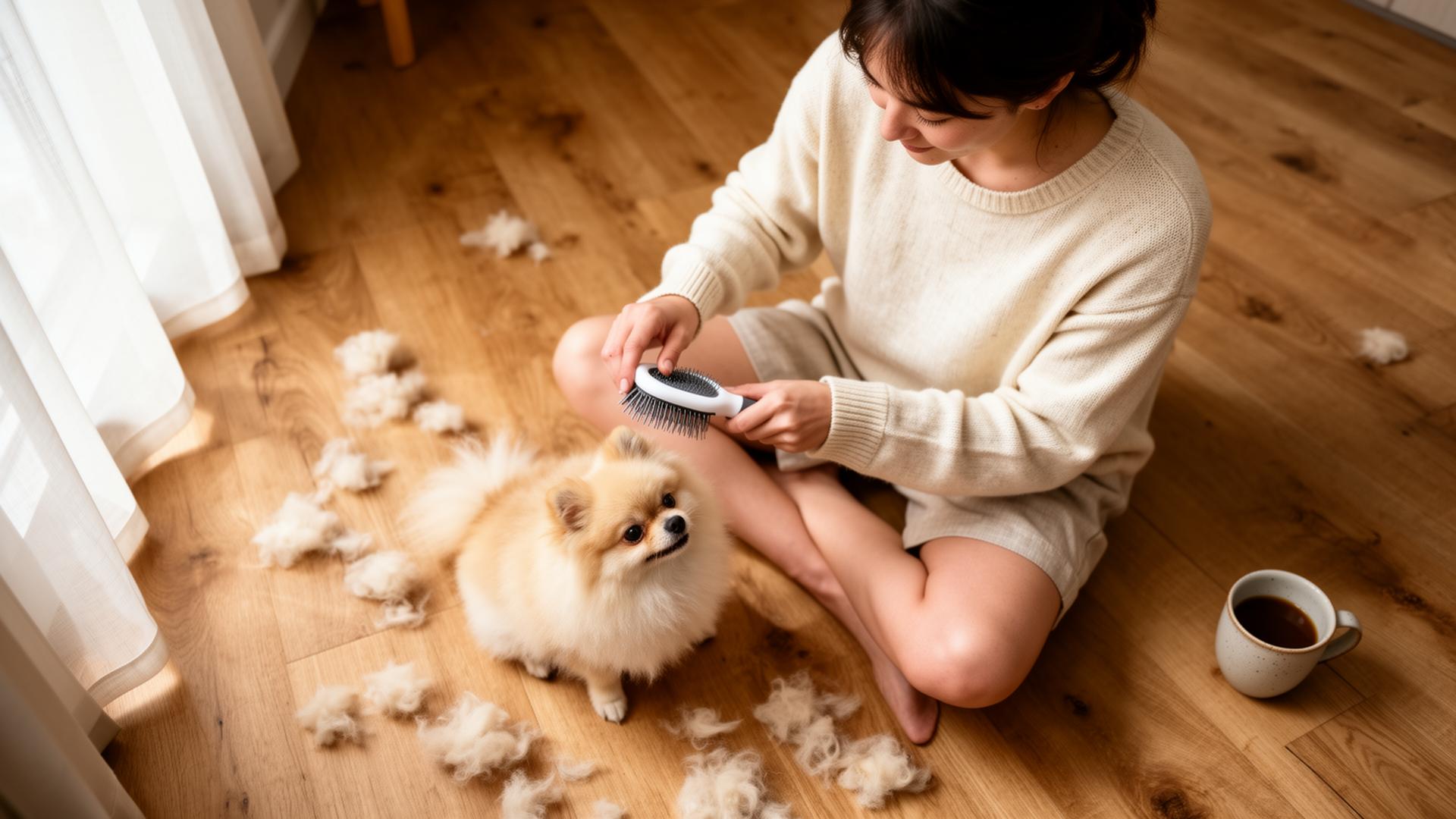
If you can't commit 10 minutes most days, get a smooth-coated breed instead. This is the single most common Pomeranian re-homing reason.
2. The Trachea, the Knees, and the Heart
Pomeranians share a health profile with several other toy breeds — including the issues we documented in our 2026 RVC Chihuahua health study breakdown. The shortlist for Poms specifically:
- Tracheal collapse. Use a Y-front harness, never a neck collar, for walks. A coughing "goose honk" after pulling is a vet visit, not a wait-and-see.
- Patellar luxation. Slipping kneecaps are common. Couch jumps and slick floors are the worst offenders — the same biomechanics we covered in why small dogs shouldn't jump off the couch apply directly here.
- Mitral valve disease. Annual heart auscultation from age 6 is the standard of care; any new murmur warrants an echocardiogram.

3. The Mouth Is the Long Game
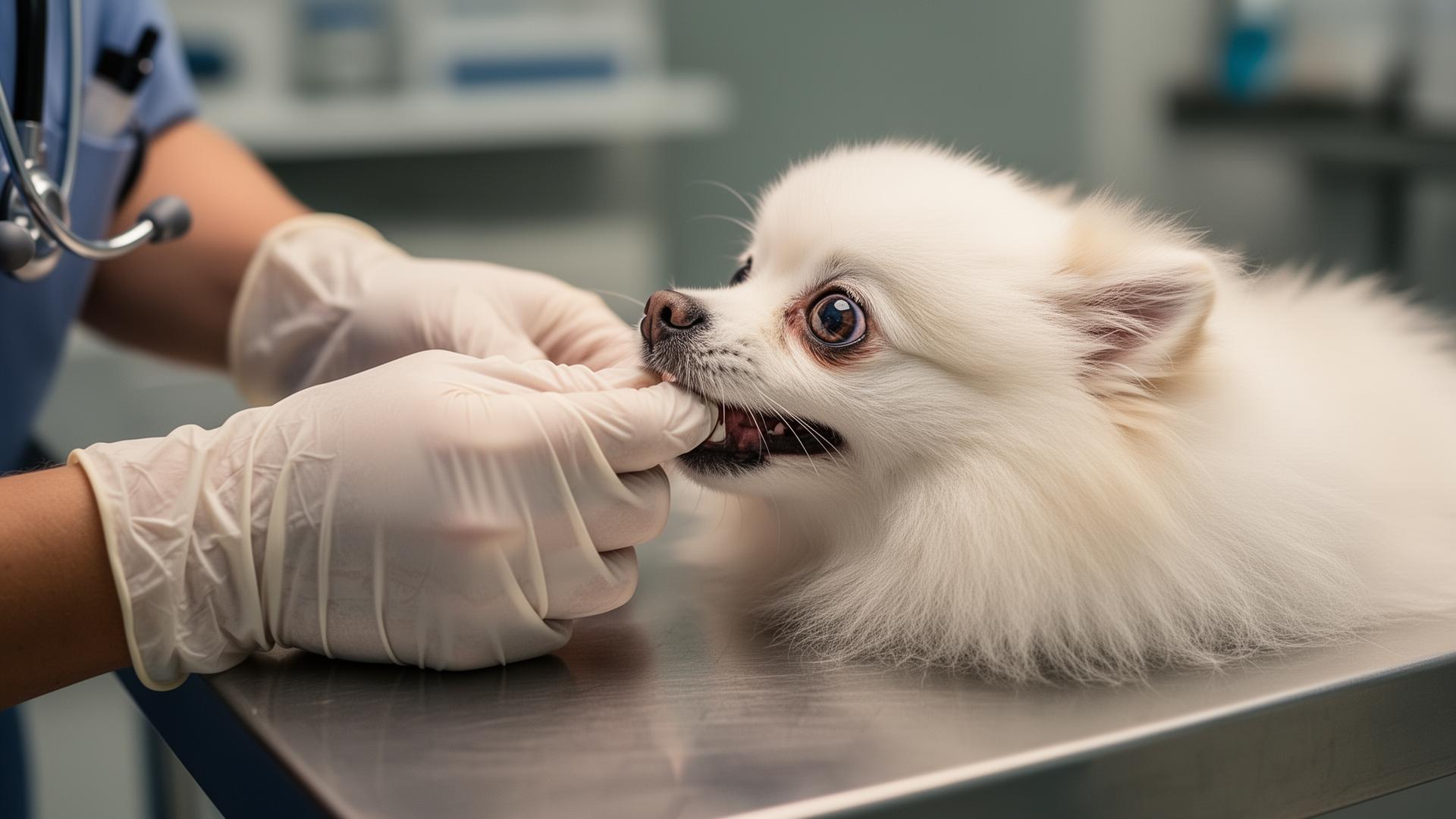
Toy breeds develop periodontal disease earlier and more aggressively than larger dogs — a pattern documented across multiple 2026 brachycephalic and small-breed studies and reinforced by every toy-breed dental survey of the last decade. Pomeranians are no exception.
Practical plan:
- Brush 4–7 times a week from puppy day one with a dog-specific enzymatic toothpaste
- Annual dental exam from age 1, professional scale-and-polish under anesthesia roughly every 12–24 months
- Watch for retained baby teeth — extract any deciduous tooth still in place at 6–7 months, ideally combined with the spay/neuter
The "Teacup Pomeranian" Warning
The trend has a dark edge. "Teacup" Pomeranians — under 1.4 kg adult weight — are a marketing term, not a recognized standard. The Smithsonian's coverage of popular breeds at risk from conformation-driven health problems made the broader point: aesthetic shrinkage and exaggeration consistently correlate with fragility. Sub-1.4 kg Poms are over-represented in cases of hypoglycemia, fontanelle (skull) defects, and severe dental crowding.
If a breeder uses "teacup", "micro", or "pocket" as a selling point, walk away.
A Realistic First-Week Plan
- Day 1: Y-front harness fitted; food transition started over 7 days; safe sleep zone (no high beds, ramps installed).
- Day 2–3: First vet visit; baseline weight on a kitchen scale; patella grade documented.
- Day 4–5: Begin daily 2-minute tooth brushing as a routine, not a battle.
- Day 6–7: First full grooming session — pin brush, slicker, comb, paw-pad check.
The Bottom Line
The 2026 Pomeranian boom is real, and unlike some recent breed trends, the underlying biology mostly cooperates: a long muzzle, a small frame inside a healthy size range, and the longevity edge that comes with weighing under 5 kg. The trend turns sour only when owners treat a Pomeranian like a low-maintenance accessory. Brush the coat, protect the knees, watch the trachea, and commit to the mouth — and you're realistically looking at 14–16 vibrant years.
Browse more in our Small Dog Breeds hub, or if you're weighing the puppy decision against socialization and early training, start with Puppy Training.
Frequently Asked Questions
How long do Pomeranians live in 2026?+
A healthy, well-cared-for Pomeranian typically lives 14–16 years, with a meaningful share reaching 17–18. Their long lifespan is supported by recent canine aging research showing toy breeds age more slowly than larger dogs.
Are Pomeranians good apartment dogs?+
Yes — they are small (around 1.8–3.5 kg), adaptable, and content with moderate daily exercise. Two 20-minute walks plus indoor play covers most adult Poms. The main caveat is barking: early training is essential in shared buildings.
What is the difference between a Pomeranian and a 'teacup' Pomeranian?+
There is no recognized 'teacup' standard. The term refers to under-1.4 kg adult Poms marketed at a premium and is associated with higher rates of hypoglycemia, fontanelle defects, and fragile bones. Stick with breed-standard Pomeranians from health-tested parents.
How often should I brush my Pomeranian?+
Three to four line-brushings per week with a pin brush, slicker, and stainless-steel comb is the realistic minimum. Daily is better. Skipping more than a week routinely leads to mats severe enough to require a shave-down.
Do Pomeranians have breathing problems like Frenchies?+
No. Pomeranians have a normal-length muzzle and are not classified as brachycephalic. Their main upper-airway concern is tracheal collapse, which is why a Y-front harness — never a neck collar — is the standard recommendation.
Sources
Related Reading
Share this story
Pin this to your Dog Lifestyle & Breeds board
Breed profiles, gear roundups, and dog-friendly travel inspo.
Liked this story?
Share it with someone who should read it.
More from Dog Breeds & Lifestyle

Night Barking Solved! Why Your LGD Isn't Misbehaving After Dark

Dutch Shepherd Dogs: The Unsung Heroes Taking Over K9 Units & Your Heart?
