Sadie's Dogploma: How a German Shepherd at Texas Tech Made Service Dogs Go Viral in 2026
When graduate Makaela Muse crossed the Texas Tech stage on May 17, 2026, her German Shepherd Sadie was handed a bone-shaped "dogploma" by the university president — and the internet melted. Here is what the viral clip actually shows about service dog work, ADA rights on campus, and the 18 months of training behind a 19-second video.

On Saturday, May 17, 2026, in the United Supermarkets Arena in Lubbock, Texas, a German Shepherd in a tiny red graduation cap stole an entire commencement. Her name is Sadie. Her handler — and the only reason any of this works — is Makaela Muse, who had just become Texas Tech University's newest graduate.
When Muse stopped center stage, university president Lawrence Schovanec reached into a potted plant beside the podium, pulled out a bone-shaped honorary "dogploma," and handed it to Sadie. The crowd lost it. The 19-second clip, posted to Texas Tech's Instagram that night, has since been shared across every major U.S. morning show.
It is the most charming dog moment of 2026 so far. It is also — quietly — the most useful one, because it gives us a chance to talk about what a real service dog actually is, what the law says, and what those eighteen months between "cute puppy" and "honorary alumna" look like.
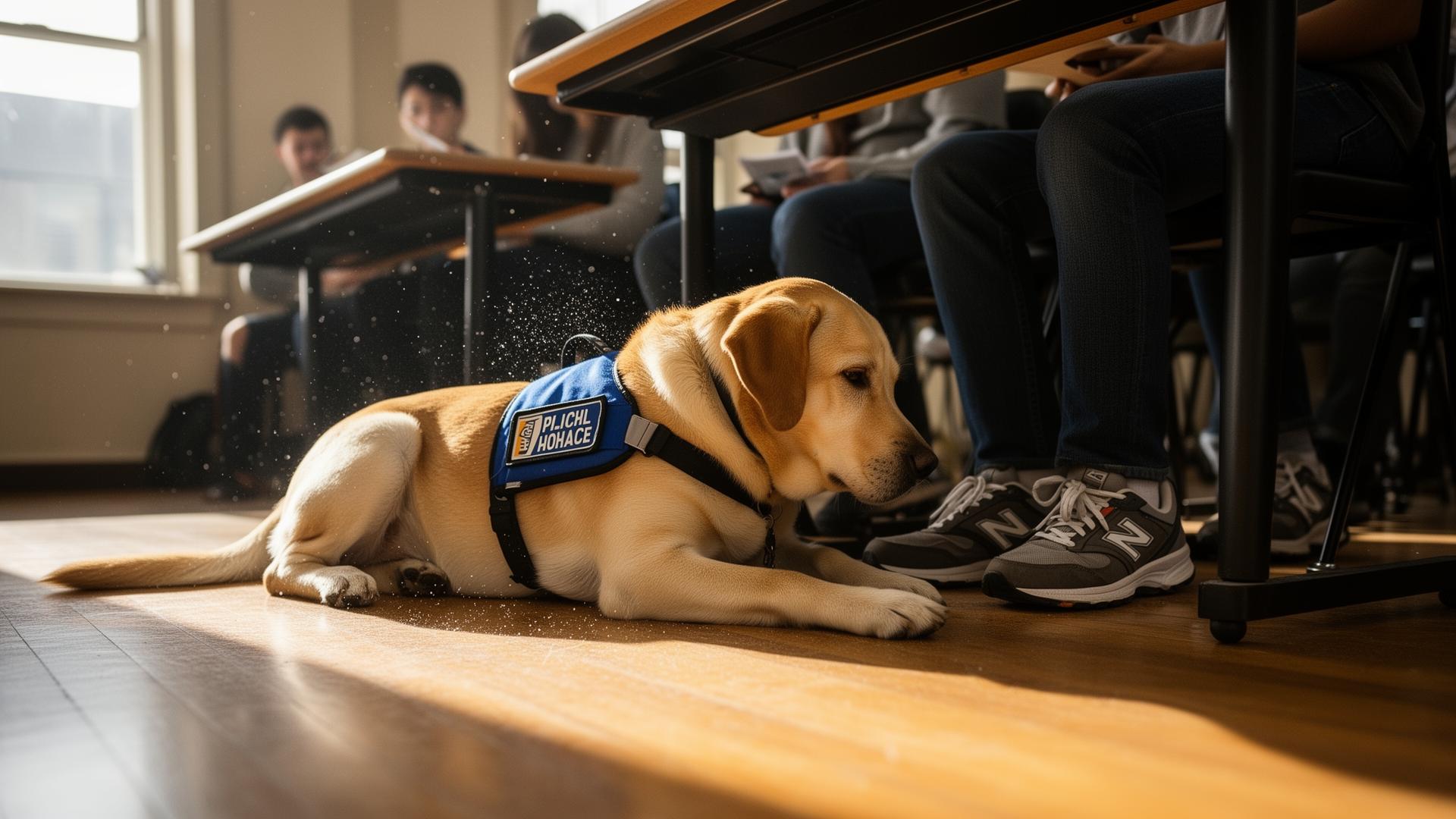
What Sadie actually does between classes
Muse has spoken publicly about living with a rare connective-tissue condition that affects mobility and triggers sudden medical episodes. Sadie is not a comfort dog and not an emotional-support animal. She is a task-trained service dog doing two jobs at once: mobility support (bracing, item retrieval, opening doors) and medical alert (signaling Muse before an episode escalates).
None of that is visible in the viral clip. That is the entire point. A well-trained service dog is supposed to be invisible — the dog under the lecture-hall desk that you never noticed for three semesters. If you want a longer look at how this same kind of partnership plays out in pediatric wards, our piece on why children's hospitals are hiring full-time facility dogs in 2026 is the closest cousin to Sadie's story.
The ADA in two questions
Every time a service dog goes viral, the comments fill up with "but is that legal?" Yes — and the rules are simpler than people think.
Under Title II and Title III of the Americans with Disabilities Act, a service dog is "individually trained to do work or perform tasks for a person with a disability." That dog may go anywhere the public is allowed: classrooms, restaurants, hotels, grocery stores, and — yes — the graduation stage.
Staff are legally allowed to ask exactly two questions:
- Is the dog required because of a disability?
- What work or task has the dog been trained to perform?
That's it. No certificate. No vest. No registry. The DOJ has been explicit that no U.S. service dog registry is legitimate — every "certification" website you've ever seen selling a $79 ID card is selling a souvenir. The dog's training is the credential.
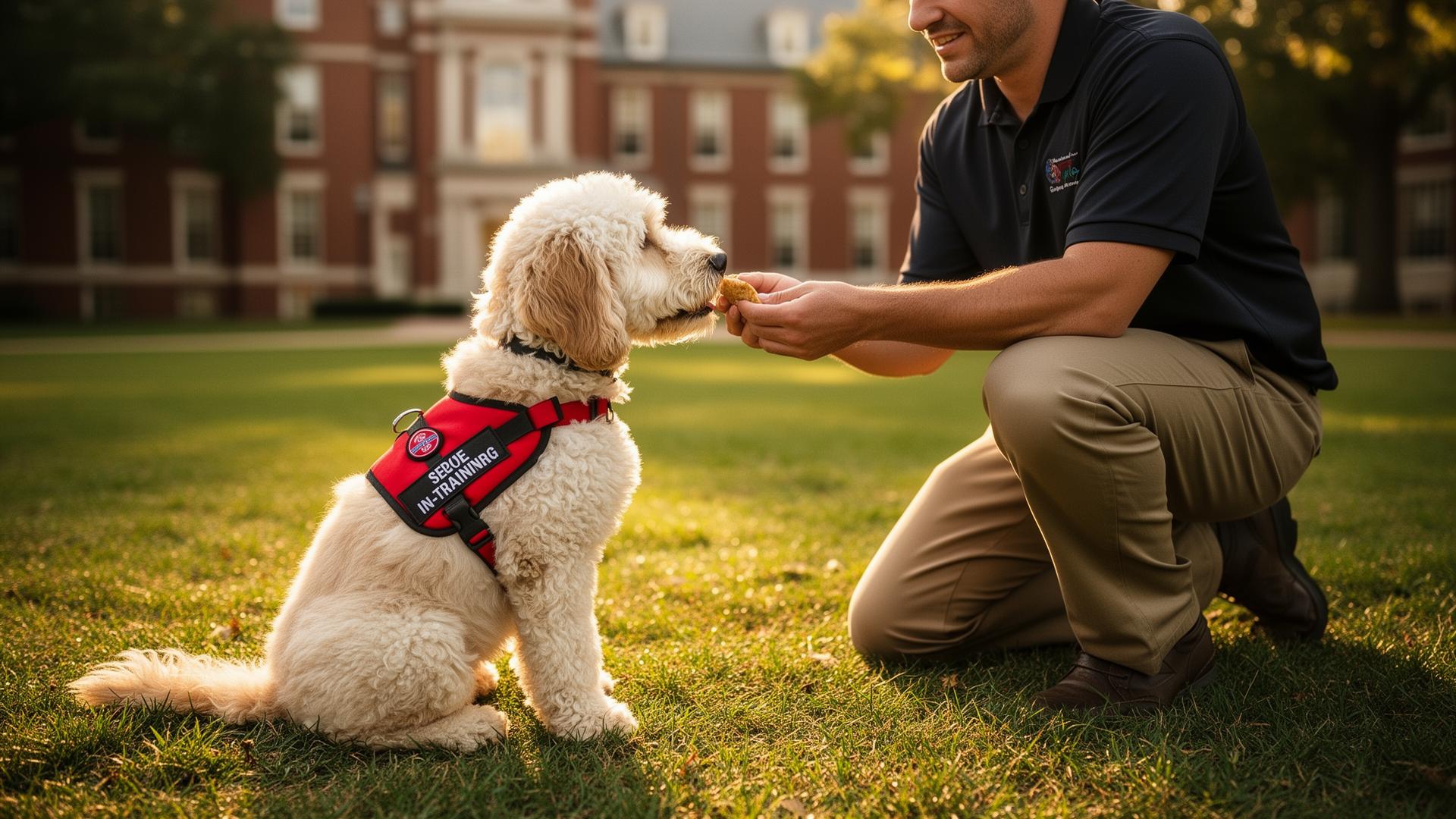
Eighteen months you don't see on Instagram
The reason a dog like Sadie can lie still through a four-hour ceremony — fireworks of cap-tossing, screaming families, brass band, all of it — is that someone spent the better part of two years building that calm.
A typical accredited service-dog pipeline looks roughly like this:
- 0–8 weeks — breeding selection (temperament, health, often DNA-screened for traits like the ones we covered in our piece on the SORCS1 gene and guide-dog success)
- 8 weeks – 14 months — "puppy raiser" home, basic manners, public-access exposure
- 14–22 months — advanced task training at the program facility
- 22–24 months — handler matching and two-week team training
- Every 6 months after — recertification, vet checks, public-access reviews
Costs at an Assistance Dogs International (ADI)–accredited program typically run $25,000–$50,000 per dog, mostly absorbed by nonprofits and waitlists. Owner-trainers (which is the path many handlers like Muse take when waitlists exceed three years) shoulder the time cost themselves — and the same time-budget reality is why purely positive-reinforcement methods dominate modern service-dog work, a debate we unpacked in the 2026 Copenhagen study on training ethics.
"Are German Shepherds even allowed to be service dogs?"
Almost every viral comment thread about Sadie includes this question, usually with a confident "I thought it had to be a Lab." It doesn't.
The ADA places no breed restriction on service dogs, and the DOJ has specifically blocked state and local breed bans from applying. Labradors, Goldens, and Standard Poodles dominate ADI programs for one boring reason: temperament consistency across litters. A well-bred Lab is almost guaranteed to be biddable, friendly, and unflappable. A well-bred German Shepherd can be all of those things — Sadie clearly is — but the variance within the breed is wider, so programs are pickier.
Where German Shepherds shine: mobility work (they have the size and structure to brace safely for an adult handler), psychiatric service work, and dual-purpose tasks that benefit from a dog the public reads as serious. Sadie's job is exactly that combination.
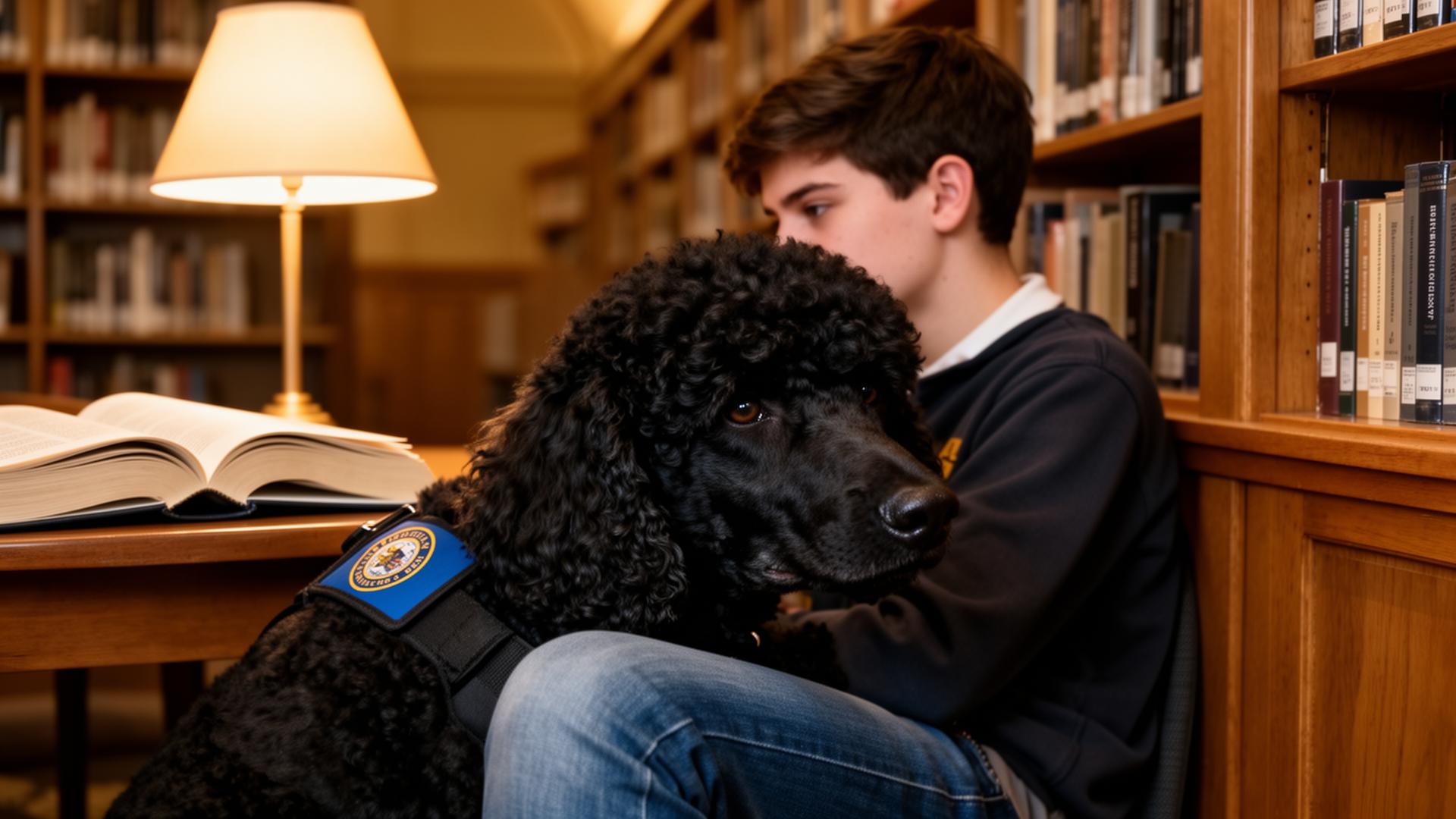
The line everyone is suddenly walking
In the same week Sadie went viral, the U.S. Department of Housing and Urban Development confirmed it will no longer treat unverified "emotional support" pit bulls as automatically protected under the Fair Housing Act — a story we'll cover separately, but it matters here because the two conversations are colliding in the public timeline.
A service dog (task-trained, ADA-protected) and an emotional support animal (a doctor-letter pet with no public-access rights under the ADA) are not the same thing. Sadie is the first. The vast majority of "service dog" vests sold on Amazon are slapped on the second. The reason advocates are using Sadie's moment so aggressively is that the clearer the public is on that distinction, the easier real handlers' lives get — including not having to defend their working dog from a strange retriever lunging in a Walgreens aisle.
If you want to think more concretely about everyday risk management for working dogs (recall, retrieval, off-leash safety in unfamiliar venues), our 2026 GPS tracker showdown for Life360, Fi, and AirTag is the practical companion piece — many service-dog teams now layer LTE tracking on top of standard ID.
What Sadie's "dogploma" is really worth
It is a piece of laser-cut wood shaped like a bone. It will not get her a job. It will not get her into grad school. But it is, in the most literal sense possible, a public acknowledgment that a dog showed up to work for somebody, every single day, for four years.
If you watched the clip and thought "I want a dog like that," good — but the dog isn't the part you want. You want the team: a handler who knew what she needed, a program (or trainer) that built the skills, a campus that understood the law, and a university president who knew enough to put the joke in a potted plant instead of skipping it.
That's the real "dogtorate." Sadie is just the one wearing the cap.
For senior dogs at the other end of the career arc — the ones quietly retiring from service work and from family life — the Adelaide group-training study on canine cognitive dysfunction is the most hopeful 2026 paper we've read.
Reporting based on Texas Tech University's official commencement coverage and interviews with Makaela Muse via Good Morning America, KCBD, and Yahoo Lifestyle, May 17–22, 2026. ADA service-animal rules per U.S. Department of Justice guidance, 28 CFR Parts 35 and 36.
Frequently Asked Questions
Who is Sadie and why did she get a diploma?+
Sadie is a black-and-tan German Shepherd service dog who worked beside Texas Tech graduate Makaela Muse throughout her degree. At the May 17, 2026 commencement, university president Lawrence Schovanec surprised the pair by pulling a bone-shaped honorary 'dogploma' from a potted plant on stage and handing it to Sadie.
What does Sadie actually do for her handler?+
Makaela Muse lives with a rare connective-tissue condition, and Sadie is trained for mobility support and medical alert — bracing for balance, retrieving dropped items, and signaling oncoming health episodes. None of that work shows up in a 19-second video, which is precisely why advocates use moments like this to explain what service dogs really do.
Is a service dog allowed at any U.S. college graduation?+
Yes. Under Title II and Title III of the Americans with Disabilities Act, a task-trained service dog can accompany its handler anywhere the public is allowed — including a graduation stage. Staff may only ask (1) is the dog required because of a disability and (2) what work or task it has been trained to perform.
Can I get my own dog 'certified' as a service dog like Sadie?+
No — there is no federal service dog certification or registry in the United States, and any website selling one is selling a souvenir. A legitimate service dog is defined by its task training, typically 18–24 months of work through an Assistance Dogs International–accredited program or a qualified owner-trainer.
Are German Shepherds good service dogs?+
They can be excellent, especially for mobility and psychiatric work, thanks to their size, focus, and trainability. Labradors, Golden Retrievers, and Standard Poodles are still more common in accredited programs because of consistent temperament across litters, but a stable, health-tested German Shepherd like Sadie is a textbook fit.
Sources
Related Reading
Share this story
Pin this to your Healthy Happy Dogs board
Vet-vetted wellness, symptom guides, and senior dog care pins.
Liked this story?
Share it with someone who should read it.
More from Dog Health & Wellness

Cavalier MVD Breakthrough: 3 Tools That Add Years to Their Lives

IVDD Breakthrough: New Protocol Slashes Dachshund Risk by 63%!
