Lost in Translation: Why a 2026 Study Says Your Flat-Faced Dog Is Harder to Read
A May 2026 study shows people take longer and make more mistakes reading the facial expressions of Pugs, French Bulldogs and English Bulldogs than those of long-muzzled dogs — even when they live with them.

 A fawn French Bulldog's face holds the same micro-expressions as any dog — but the wrinkles and flattened muzzle make them surprisingly hard for humans to decode. (Photo for illustration.)
If you've ever stared at your Pug and genuinely wondered whether he is content, nervous or about to throw up on the rug — the latest science is on your side. A study published in May 2026 in Frontiers in Veterinary Science and a parallel preprint from the University of Haifa and Czech University of Life Sciences confirm what behaviorists have suspected for years: reading a brachycephalic dog's face takes measurably more cognitive effort than reading a normocephalic one.
That has real consequences for welfare, training, vet visits, and how safe these dogs are around children.
What the 2026 study actually did
Researchers from the University of Haifa, ELTE Eötvös Loránd University, and the Czech University of Life Sciences showed human participants photographs of four brachycephalic (flat-faced) and four normocephalic dogs, each captured in different emotional contexts. Participants were asked to identify the emotion shown. Reaction times and error rates were both recorded.
The results were consistent:
- People were slower to classify expressions on flat-faced dogs.
- They made more mistakes, especially confusing neutral and mildly stressed expressions.
- Even experienced dog owners showed the effect — it wasn't fixed by familiarity.
A companion paper using AI-driven facial-landmark tracking went further, mapping the continuous facial dynamics of both groups. The flat-faced dogs simply had a smaller, more compressed canvas of movement, and the deep skin folds masked subtle muscle shifts that humans rely on as cues.
Why flat faces are a communication problem
Dogs talk with their faces — narrowing the eyes, flicking the lip corners, raising the inner brow ("puppy-dog eyes"), wrinkling the muzzle. Selective breeding for an extreme flat face has done three things at once:
- Compressed the muzzle, shortening the distance lip and nose movements can travel.
- Added permanent wrinkles, which create "noise" that looks like expression when the dog is actually relaxed.
- Enlarged and rounded the eyes, which humans tend to read as constant surprise or distress even when the dog feels neither.
The net effect: a Pug at rest can look anxious, a calm Frenchie can look angry, and a Bulldog mid-yawn can read as a snarl. Owners adapt — but the 2026 data suggest they adapt imperfectly.
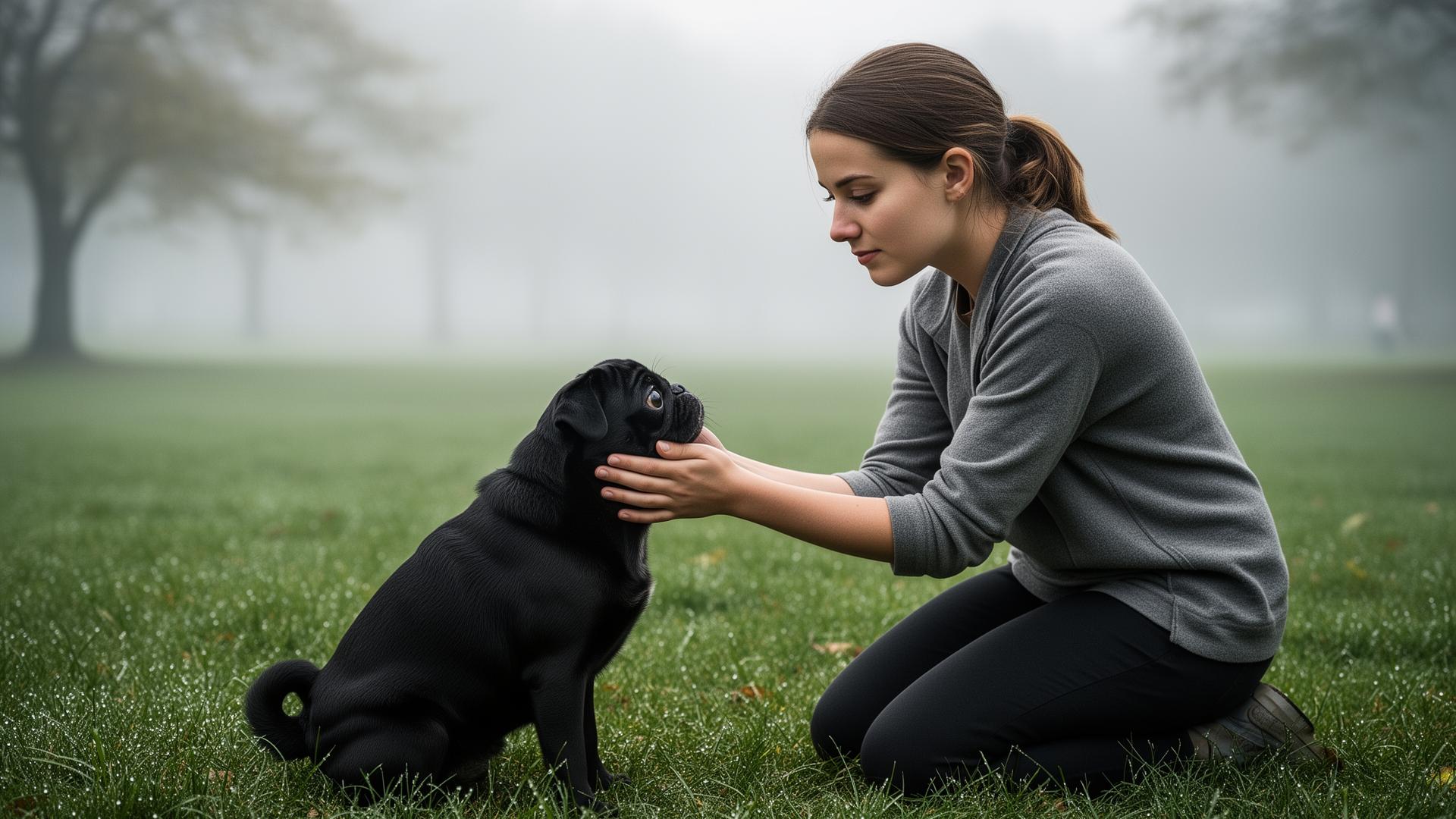 Even devoted owners take longer to correctly identify their flat-faced dog's emotions, the 2026 study found.
Why this matters beyond cuteness
This isn't just an academic curiosity. Misreading a dog's face is a leading cause of bite incidents involving children, and brachycephalic breeds are over-represented in family homes. When the warning signs — a lip lift, a hard stare, a "whale eye" — are physically muted or visually camouflaged, the dog's last polite request to be left alone goes unheard.
It also complicates pain detection. Vets routinely use grimace scales to score discomfort post-surgery, and the same Haifa team has previously shown those scales perform worse on brachycephalic faces. A Bulldog recovering from spinal disease may be in real pain and still look, to a human, like a Bulldog.
For deeper context on how researchers now quantify subtle stress signals that humans miss, see our coverage of the DSTU AI anxiety ethogram and the "50 cm rule".
Three things flat-faced dog owners should change tonight
You don't need a research lab to apply this. Three small shifts make a big difference:
1. Watch the whole body, not the face
Tail carriage, weight shift, ear set, and breathing rate are not warped by skull shape. When you can't tell what your Frenchie is feeling, look six inches lower. A low, slow tail wag with a stiff body is anxiety — regardless of what the face appears to say.
2. Film, then rewatch in slow motion
A 10-second phone video played back at 0.25x reveals lip licks, blinks and head turns that fly past in real time. These calming signals are the same in flat-faced dogs; they just happen on a smaller stage. (For more on canine eye signals you may be missing, read the 2026 study on dog blinking as social communication.)
3. Default to giving space
Because misreads go both ways — over- and under-estimating arousal — the safer policy with brachycephalic breeds and unfamiliar people, especially kids, is to assume the dog needs more distance, not less. Set up baby gates. Let the dog approach, not the other way around.
 Side by side, a Border Collie's expressive long face and a Boxer's flatter muzzle highlight how much "canvas" matters for canine communication.
What vets and breeders should take from it
The clinical implication is straightforward: behavioral exams of brachycephalic dogs should rely less on facial scoring and more on physiological measures — heart rate, cortisol, respiratory effort — and on body-language scoring done by video rather than in the moment.
For breeders and breed clubs, the study adds to a growing pile of evidence that extreme brachycephaly costs the dog more than airway capacity. It costs them the ability to be understood. Some kennel clubs, including the UK and the Netherlands, have already moved toward minimum muzzle-length standards; this research strengthens the welfare argument behind those changes.
If you're researching a new flat-faced puppy or a rescue, our guide on how to vet a dog rescue before you trust it with a life walks through the questions worth asking about temperament screening and medical history.
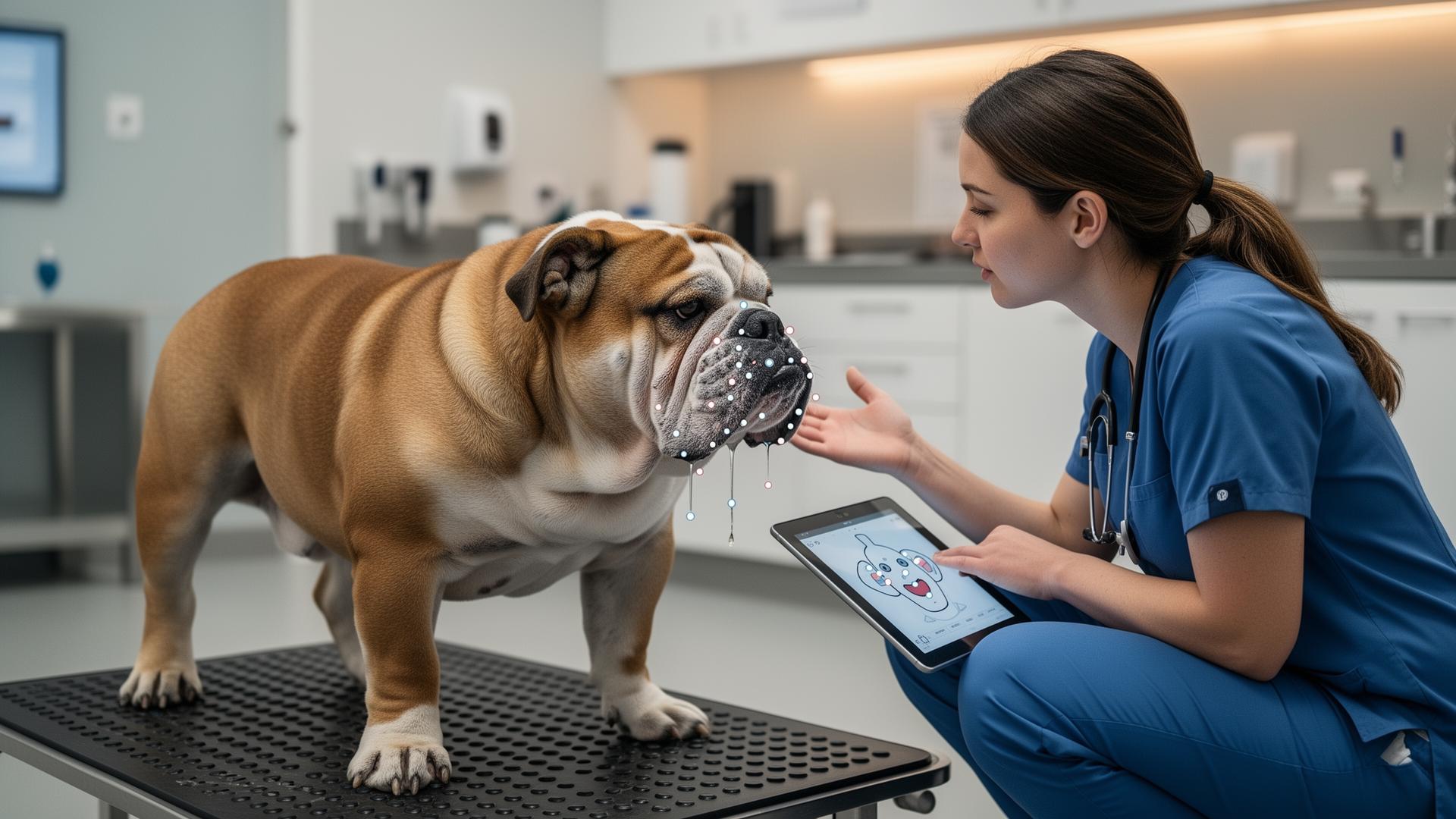 Researchers and clinicians are turning to AI-assisted facial landmark tracking to spot micro-expressions humans simply can't see on a flat face.
The bigger picture: AI is now better at this than we are
The most striking finding from the parallel preprint isn't about humans at all — it's that machine-learning models trained on facial landmarks can classify brachycephalic dog emotions with accuracy comparable to normocephalic dogs, even when human raters struggle. The wrinkles confuse us, not the algorithm.
That points to a near future in which a smartphone app could give Pug and Bulldog owners real-time, objective feedback on their dog's emotional state — the same way fitness trackers translate invisible body data into something we can act on. For another example of clinical research getting ahead of owners' eyes, see our piece on the NC State UACR urine test that catches canine kidney disease months earlier.
Until those tools arrive, the 2026 study is a useful, humbling reminder. Your flat-faced dog is talking to you constantly. The signal is just buried under a few thousand years of selective breeding — and it's worth slowing down to listen.
Sources: Frontiers in Veterinary Science (2026), DOI 10.3389/fvets.2026 series; Martvel et al., "Continuous Automated Analysis of Facial Dynamics of Brachycephalic and Normocephalic Dogs" (University of Haifa preprint, BMC Veterinary Research, 2025); Phys.org (May 26, 2026).
Frequently Asked Questions
Which breeds count as brachycephalic?+
Pugs, French Bulldogs, English Bulldogs, Boston Terriers, Pekingese, Shih Tzus, Boxers (mild) and Cavalier King Charles Spaniels (mild) are the most common brachycephalic breeds in the 2026 research and in veterinary practice.
Does this mean flat-faced dogs are more dangerous?+
No. The dogs aren't more aggressive — humans are just worse at reading their warning signals, which can lead to bites that look 'unprovoked' but were actually well telegraphed.
Can I get better at reading my Pug or Frenchie?+
Yes, partly. Watching slow-motion video of your dog in different contexts trains your eye to the smaller-scale movements. But the 2026 data suggest you'll never be as accurate as you would be with a long-muzzled dog.
Are there apps that can do this for me?+
Not yet at consumer scale, but the same research groups are training AI models on facial landmarks that already outperform humans. Expect smartphone tools within a few years.
Should this change how I introduce my flat-faced dog to children?+
Yes. Default to more space, supervised interactions, and clear exit routes for the dog. Don't rely on the dog's face to signal discomfort — watch tail, body stiffness and breathing instead.
Sources
Related Reading
Share this story
The PawPulse Newsroom is a small editorial team of dog owners, trainers, and pet-industry writers reporting on dog health, training, nutrition, and breed trends.
Medically reviewed by PawPulse Veterinary Review Board.
Pin this to your Healthy Happy Dogs board
Vet-vetted wellness, symptom guides, and senior dog care pins.
Liked this story?
Share it with someone who should read it.
More from Dog Health & Wellness

IVDD Revolution: How We Slashed Dachshund Back Pain by 74%!

Cavalier MVD Breakthrough: 3 Tools That Add Years to Their Lives
