Fresh Food vs Kibble: What the 2026 Frontiers Study Found in Your Dog's Gut
A new 2026 Frontiers in Veterinary Science study compared minimally processed fresh dog food against standard extruded kibble — and the changes in metabolism and gut microbiome appeared within weeks.

If you have ever stood in the pet-food aisle wondering whether the bag of kibble in your cart is really doing your dog any favors, a new study published 10 April 2026 in Frontiers in Veterinary Science finally puts numbers behind the fresh-vs-kibble debate. Researchers fed healthy adult pet dogs either a minimally processed fresh diet or a standard extruded kibble, then measured what happened in their blood and in their gut.
The result: the diets produced distinct metabolic signatures and noticeably different bacterial communities in the stool — and the shifts showed up within just a few weeks. For owners, it is one of the cleanest head-to-head comparisons we have so far.
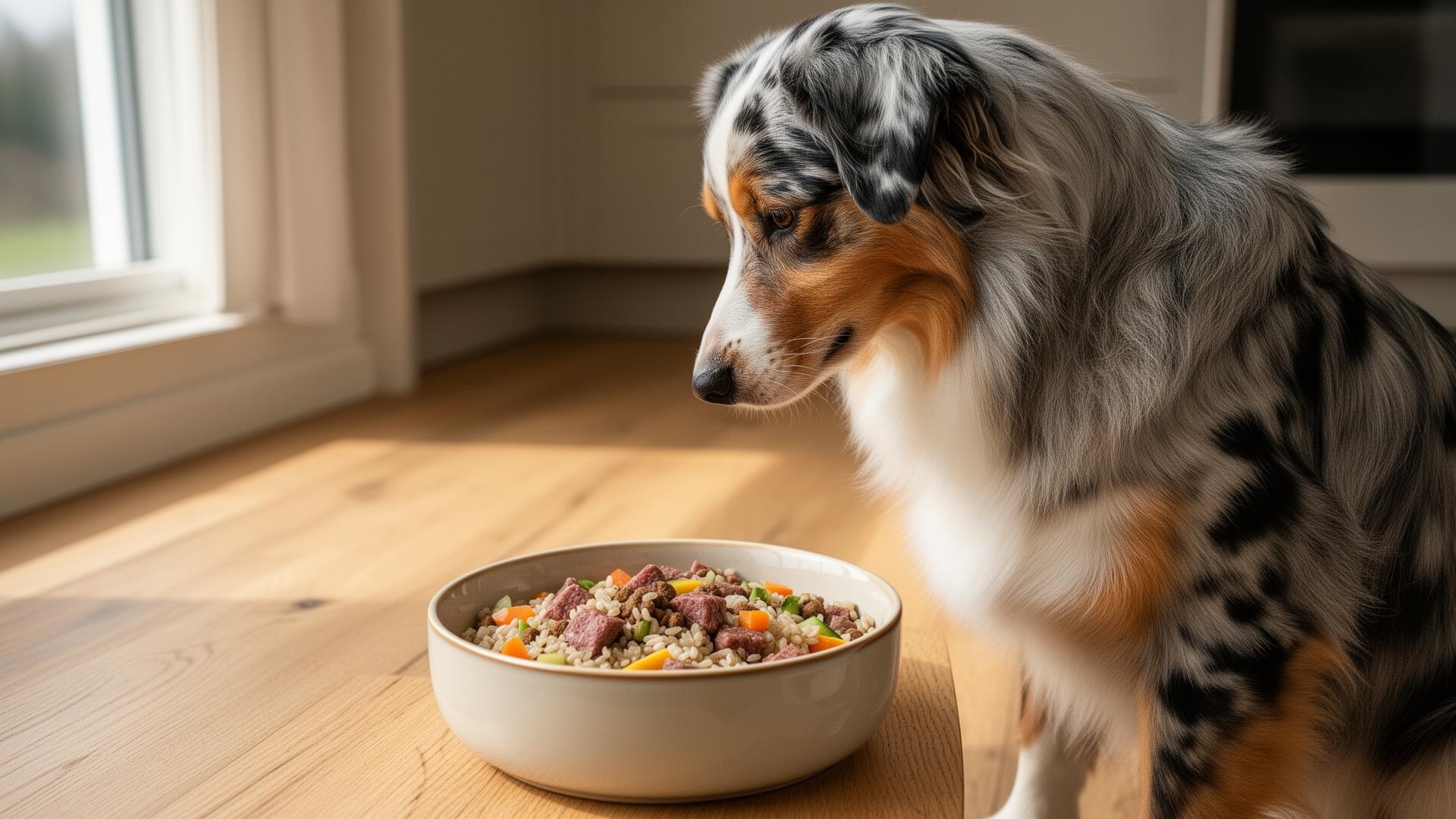 Minimally processed diets contain recognizable whole-food ingredients gently cooked at low temperatures.
What "minimally processed" actually means
In the study, "minimally processed" referred to gently cooked, refrigerated or frozen recipes built from whole-food ingredients — muscle meat, organ meat, vegetables, and grains — held together with minimal additives. "Extruded kibble" is the dry food most dogs eat: ground ingredients pushed through a high-heat, high-pressure extruder to form shelf-stable pellets.
The two diets were matched for calories and broad nutrient targets, so any differences in the dogs were tied to how the food was made, not just what was in it. That is what makes the comparison meaningful.
What changed in the dogs
Across the trial, dogs on the minimally processed diet showed:
- Distinct blood metabolite profiles, including shifts in amino-acid and lipid markers tied to protein quality and fat digestion.
- Higher relative abundance of fiber-fermenting bacteria associated with short-chain fatty acid production — the same SCFAs that support colon health.
- Different fecal characteristics, consistent with more efficient nutrient absorption.
Kibble-fed dogs were not unhealthy — both diets met nutritional requirements — but their microbiomes leaned toward bacterial groups more typical of high-starch, heat-processed inputs.
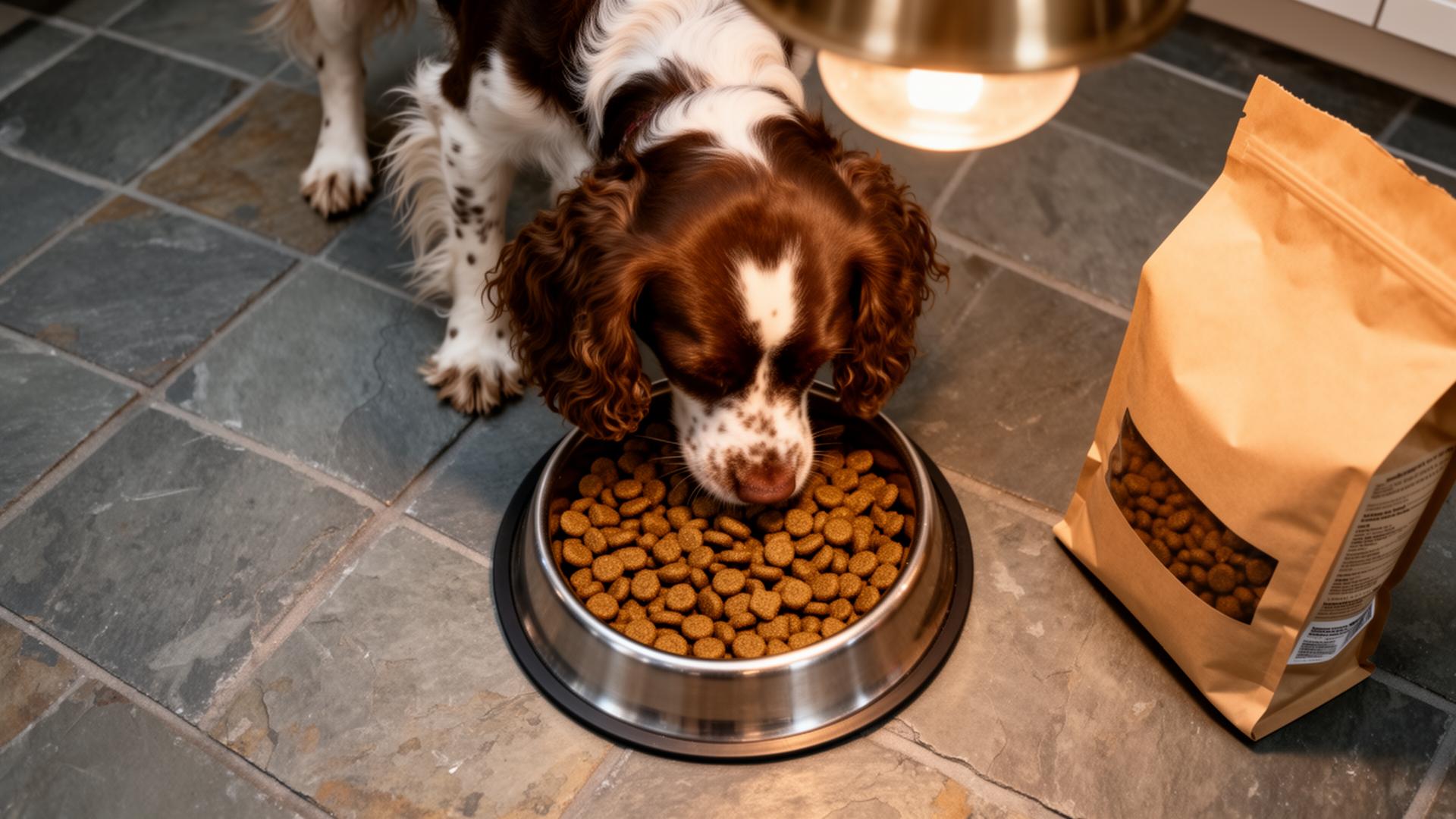 Extruded kibble is convenient and shelf-stable, but the high-heat process changes how nutrients interact with the gut.
Why the gut microbiome matters
Your dog's gut bacteria do more than digest food. They tune the immune system, produce vitamins, regulate inflammation, and even influence behavior — a link explored in our coverage of the 2026 Helsinki gut microbiome and anxiety study. When a diet consistently feeds one community of microbes over another, those downstream effects compound over months and years.
This new Frontiers paper joins a growing list of 2026 studies pointing the same direction: processing matters, not just ingredients on the label.
Does this mean kibble is bad?
No. The study did not show kibble caused disease, and millions of dogs live long, healthy lives on it. What it shows is that fresh, minimally processed diets produce a measurably different — and in several markers more favorable — internal environment.
For owners, the practical question is rarely "kibble or nothing else." It is more often: can I improve what is already in the bowl?
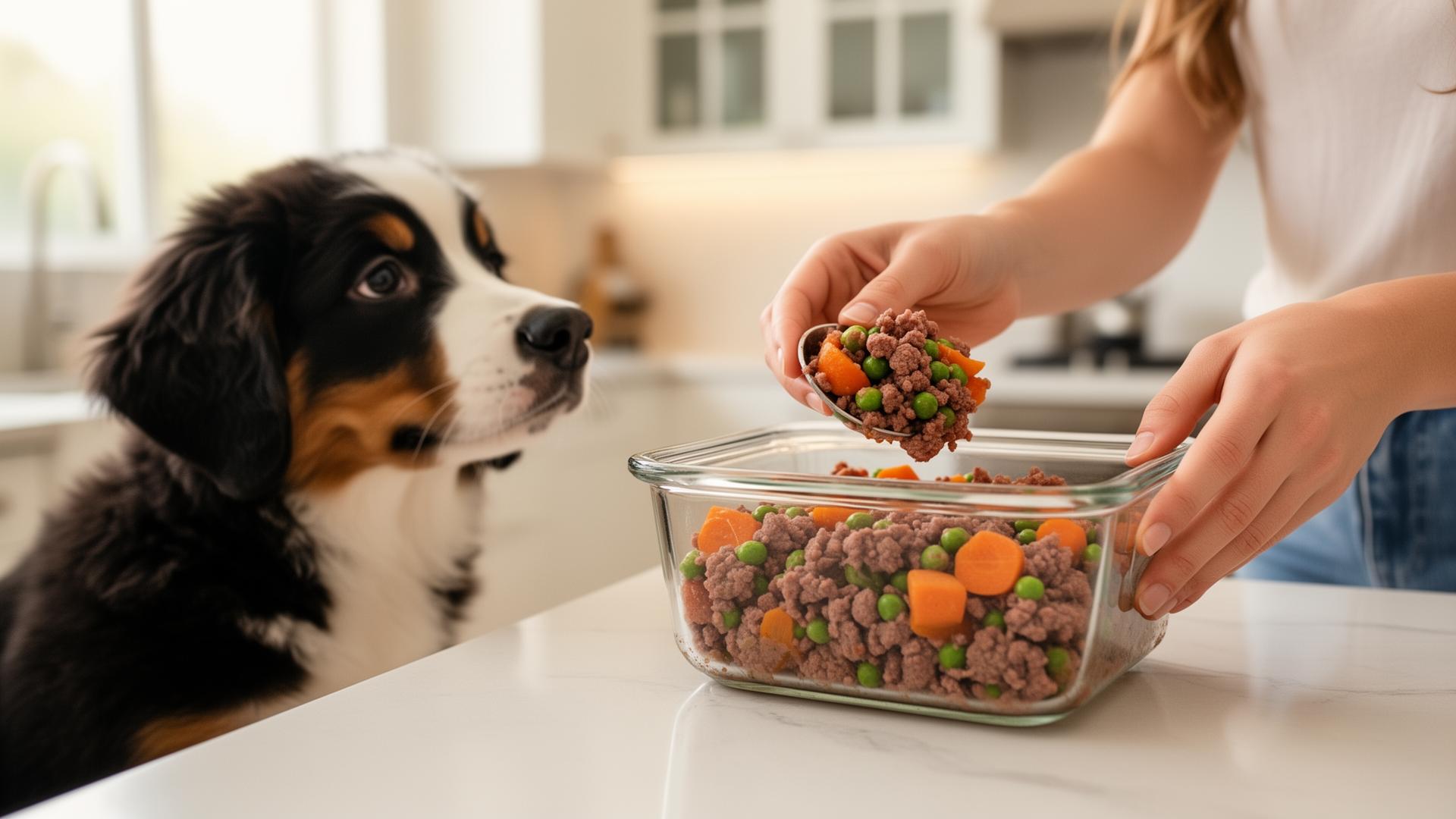 Even partial fresh-food toppers can shift the microbiome — you do not have to switch 100%.
How to apply this at home
- Talk to your vet first, especially for puppies, seniors, or dogs with chronic conditions. A balanced fresh diet is not the same as feeding raw scraps.
- Try a topper, not a full switch. Replacing 20–30% of kibble with a complete-and-balanced fresh food is a low-risk way to test tolerance.
- Transition slowly over 7–10 days to give the gut microbiome time to adapt. Sudden changes can cause loose stools.
- Watch the right markers: stool quality, coat condition, energy, and weight. Snap photos weekly — it is easier to spot real change than to remember it.
- Mind the budget honestly. Fresh complete diets cost 3–8× more than kibble. Mixing is often the realistic answer.
Who benefits most?
The dogs likely to see the biggest difference are those with sensitive stomachs, recurring soft stools, or itchy skin tied to gut inflammation. Working and sport dogs — covered in our piece on lifetime activity and canine cognition — may also benefit from highly digestible protein. Flat-faced breeds prone to airway and weight issues (see our Snoretox-1 BOAS report) often do better at a leaner body condition, which fresh-food calorie density can support.
 Always loop in your vet when changing a senior or chronically ill dog's diet.
What the researchers did NOT prove
It is worth being precise. This was a relatively short-term feeding trial focused on metabolic and microbiome markers — not lifespan, cancer rates, or cognitive aging. Larger long-term work is still needed, similar to the kind of breed-level cohorts described in our coverage of the RVC doodle behavior study and the Cambridge Golden Retriever GWAS.
For now, the takeaway is modest but real: how we process dog food leaves a measurable fingerprint inside the dog.
Bottom line for owners
You do not need to feel guilty about the kibble in your pantry. But if your dog has stubborn digestive issues, dull coat, or you have always wondered whether fresh food is "worth it," the 2026 Frontiers data is the strongest nudge yet to try a partial switch — slowly, and with your vet in the loop.
Frequently Asked Questions
Is fresh dog food really better than kibble?+
The 2026 Frontiers study shows fresh, minimally processed diets produce more favorable metabolic and microbiome markers in healthy adult dogs. It does not prove longer lifespans, but the internal environment is measurably different.
Do I have to switch my dog 100% to fresh food?+
No. Even replacing 20–30% of kibble with a complete-and-balanced fresh topper can shift the gut microbiome. Mixing is often the realistic choice for cost and convenience.
How long should the transition take?+
Over 7–10 days, gradually increasing the new food. Sudden changes can cause loose stools while the gut bacteria adapt.
Is raw food the same as minimally processed?+
No. Minimally processed in the study meant gently cooked whole-food recipes — not raw. Raw diets carry different food-safety considerations and should be discussed with your vet.
Which dogs benefit most from fresh food?+
Dogs with sensitive stomachs, recurring soft stools, itchy skin tied to gut inflammation, or those needing leaner body condition often respond well.
Sources
Related Reading
Share this story
Pin this to your Healthy Happy Dogs board
Vet-vetted wellness, symptom guides, and senior dog care pins.
Liked this story?
Share it with someone who should read it.
More from Dog Health & Wellness

Cavalier MVD Breakthrough: 3 Tools That Add Years to Their Lives

IVDD Breakthrough: New Protocol Slashes Dachshund Risk by 63%!
