OncoCan: The 2026 Liquid Biopsy Blood Test That Could Catch Your Dog's Cancer Early
Researchers have validated a simple blood test that quantifies cell-free DNA in canine plasma — a non-invasive way to flag tumors and track treatment response. Here is what the 2026 OncoCan study means for your dog.

Cancer kills roughly one in four dogs over the age of two, and almost half of all dogs over ten. The hardest part is not the cancer itself — it is finding it early enough to do something about it. A 2026 paper in Frontiers in Veterinary Science introduces OncoCan, a liquid-biopsy assay that pulls a tumor''s genetic fingerprint from a single tube of blood.
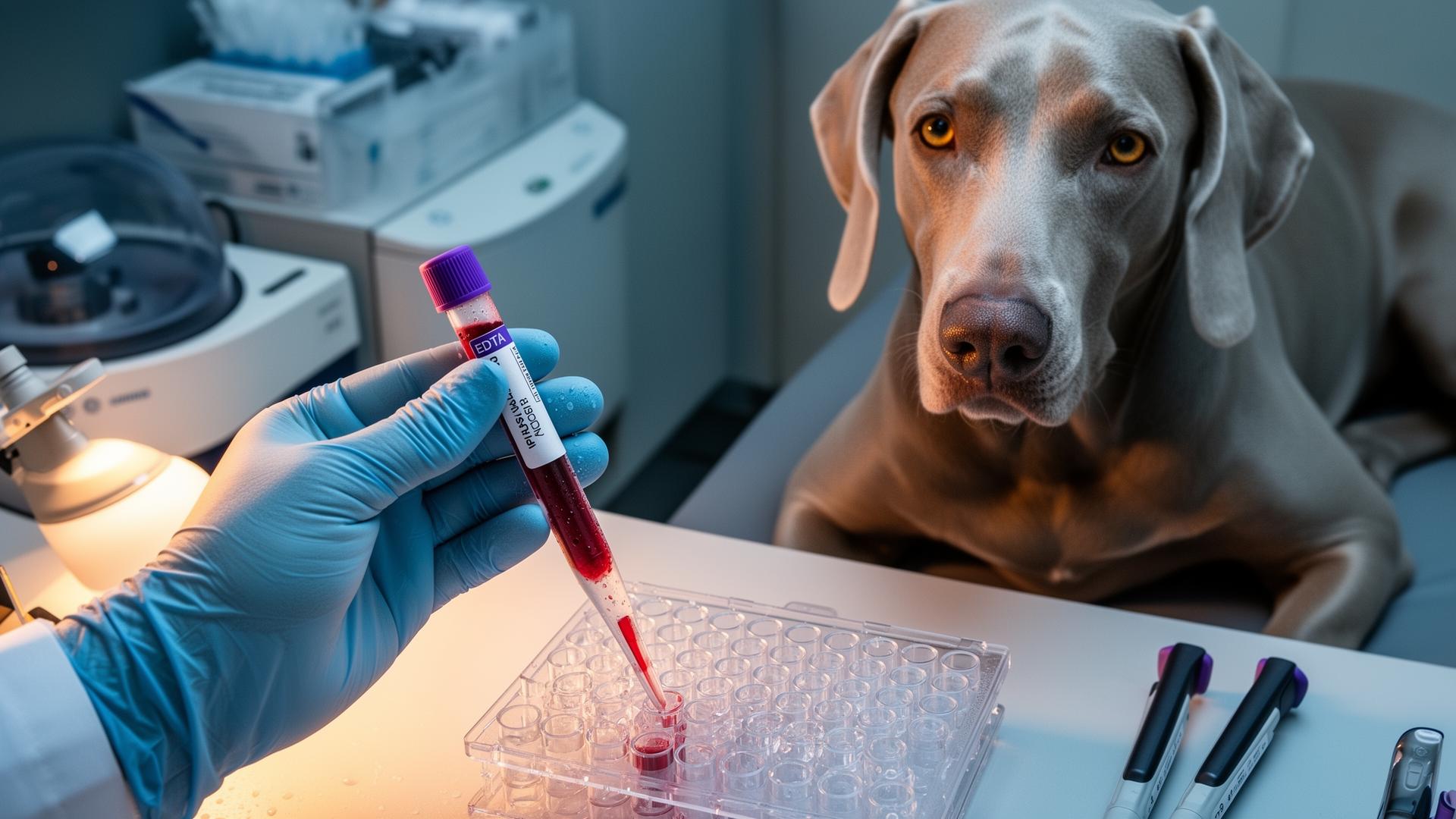 OncoCan quantifies cell-free DNA fragments shed by tumors directly into the bloodstream.
What is a liquid biopsy?
Solid tumors are messy. As they grow, they constantly slough off dying cells, and those cells dump tiny fragments of DNA — called cell-free DNA (cfDNA) — into the bloodstream. A liquid biopsy is a blood draw, not a needle into a mass, that captures and measures that floating DNA. In human medicine the same idea now powers early-detection tests for colon and pancreatic cancer.
OncoCan adapts the method for dogs. The team isolated plasma from healthy dogs and dogs with confirmed neoplasia, then used digital PCR to quantify total cfDNA concentration and a panel of canine-specific tumor markers.
What the 2026 study actually showed
- cfDNA concentration was significantly higher in dogs with malignant tumors than in healthy controls.
- Levels tracked with tumor burden: dogs with metastatic disease had the highest readings.
- cfDNA dropped after successful surgery or chemotherapy and rose again before clinical relapse was visible on imaging.
- The assay required only 2 mL of plasma and returned results in under 24 hours.
This matters because most canine cancers — lymphoma, hemangiosarcoma, osteosarcoma, mast cell tumors — are diagnosed only after a lump appears or the dog crashes. A blood-based early-warning system shifts the timeline.
 For senior dogs, an annual blood panel could one day include a quiet cancer screen.
Why this is different from existing dog cancer tests
Most current veterinary cancer workups still rely on three steps: feel a lump, image it, biopsy it. Each step costs time and stresses the dog. Earlier blood tests for canine lymphoma exist but are disease-specific. OncoCan is pan-cancer in spirit — it flags abnormal cfDNA regardless of which tissue the tumor sits in, then prompts a targeted follow-up scan.
That is the same diagnostic pivot we covered in our piece on odor-based disease detection: catch the signal first, then go hunting for the source.
Breeds that may benefit most
Some breeds carry an outsized cancer risk. Boxers, Bernese Mountain Dogs, Flat-Coated Retrievers, Golden Retrievers, and Rottweilers all have hereditary predispositions to specific malignancies. A cheap recurring blood test would be especially valuable for those owners. We covered the genetic side of breed predisposition in our deep-dive on the Cambridge Golden Retriever GWAS.
 Boxers are a poster breed for hereditary cancer risk and the obvious early adopters for liquid biopsy.
How OncoCan could change a vet visit
Picture the workflow in 2027 or 2028:
- Your dog comes in for a routine annual exam.
- The technician draws a single extra purple-top tube during the standard blood panel.
- The lab returns a cfDNA score and a follow-up recommendation: "normal," "monitor in 3 months," or "image now."
- For dogs already in treatment, the same test acts as a relapse monitor — much like CT scans, but cheaper and gentler.
What it does not do (yet)
OncoCan is a prognostic and monitoring tool, not a diagnosis. An elevated cfDNA score does not say "your dog has lymphoma." It says "something is shedding more DNA than it should — investigate." Inflammation, recent surgery, or even a hard zoomie session can transiently elevate cfDNA. Interpretation still belongs in a vet''s hands.
It also does not replace surgery in cases like osteosarcoma. For those, breakthroughs in non-invasive ablation matter more — see our coverage of histotripsy for canine bone cancer.
How to think about cancer prevention right now
While OncoCan rolls out to specialty hospitals, the everyday prevention story has not changed. Healthy weight, low chronic inflammation, regular vet exams, and a balanced diet are the boring stuff that actually moves the needle. We discussed the inflammation angle in our piece on fresh food vs kibble and the canine gut.
For owners of seniors, the simplest action is the most powerful: do not skip the annual blood panel, and ask your vet whether your clinic is partnered with any of the new commercial liquid biopsy services launching this year.
The takeaway
OncoCan is not a magic bullet. But it is the first peer-reviewed, broadly-applicable blood-based cancer signal for dogs that performs well enough to deploy. Combined with imaging and genetics, it pushes canine oncology where human oncology went a decade ago — toward earlier, gentler, smarter detection.
Frequently Asked Questions
Is OncoCan available at my regular vet?+
Not yet at most general practices. It is rolling out through specialty oncology hospitals and partnered diagnostic labs through 2026. Ask your vet for a referral if your dog is at elevated risk.
How much will it cost?+
Pricing has not been finalized, but comparable veterinary cfDNA tests run roughly USD 250 to 500 per sample — far less than a CT scan.
Can a healthy dog have a slightly elevated cfDNA reading?+
Yes. Recent surgery, intense exercise, infection, or autoimmune flare can transiently raise cfDNA. Vets interpret OncoCan in clinical context, never in isolation.
Which breeds should consider it first?+
High-cancer-risk breeds — Boxers, Bernese Mountain Dogs, Flat-Coated Retrievers, Golden Retrievers, and Rottweilers — are the most obvious early candidates, along with any senior dog over eight.
Does this work for all cancers?+
It performs well for solid tumors that shed DNA into the blood, including carcinomas, sarcomas, and many lymphomas. Some early-stage, very localized tumors may not shed enough cfDNA to detect.
Sources
Related Reading
Share this story
Pin this to your Healthy Happy Dogs board
Vet-vetted wellness, symptom guides, and senior dog care pins.
Liked this story?
Share it with someone who should read it.
More from Dog Health & Wellness

Cavalier MVD Breakthrough: 3 Tools That Add Years to Their Lives

IVDD Breakthrough: New Protocol Slashes Dachshund Risk by 63%!
