When Did Dog Brains Start Shrinking? The 2026 Nature Study on 5,000 Years of Domestication
Domestic dogs have noticeably smaller brains than wolves. A 2026 Nature study finally puts a timeline on when that change took hold — and the answer says a lot about how we shaped the dog at your feet.

If you have ever stared at your dog and wondered how a wolf turned into the snoring lump on your couch, a 2026 Nature study has new answers. A team led by researchers in France has plotted, for the first time with this much precision, when dog brains began to shrink compared to their wolf ancestors — and the timeline is older, and stranger, than most owners imagine.
The basic finding: dogs have smaller brains than wolves
This part is not new. For decades, biologists have known that domestic dogs carry brains roughly 20–30% smaller than wolves of comparable body size. What scientists did not know was when that shrinkage started, or how fast it happened. The new study uses cranial measurements from ancient canid remains across thousands of years to draw an actual timeline.
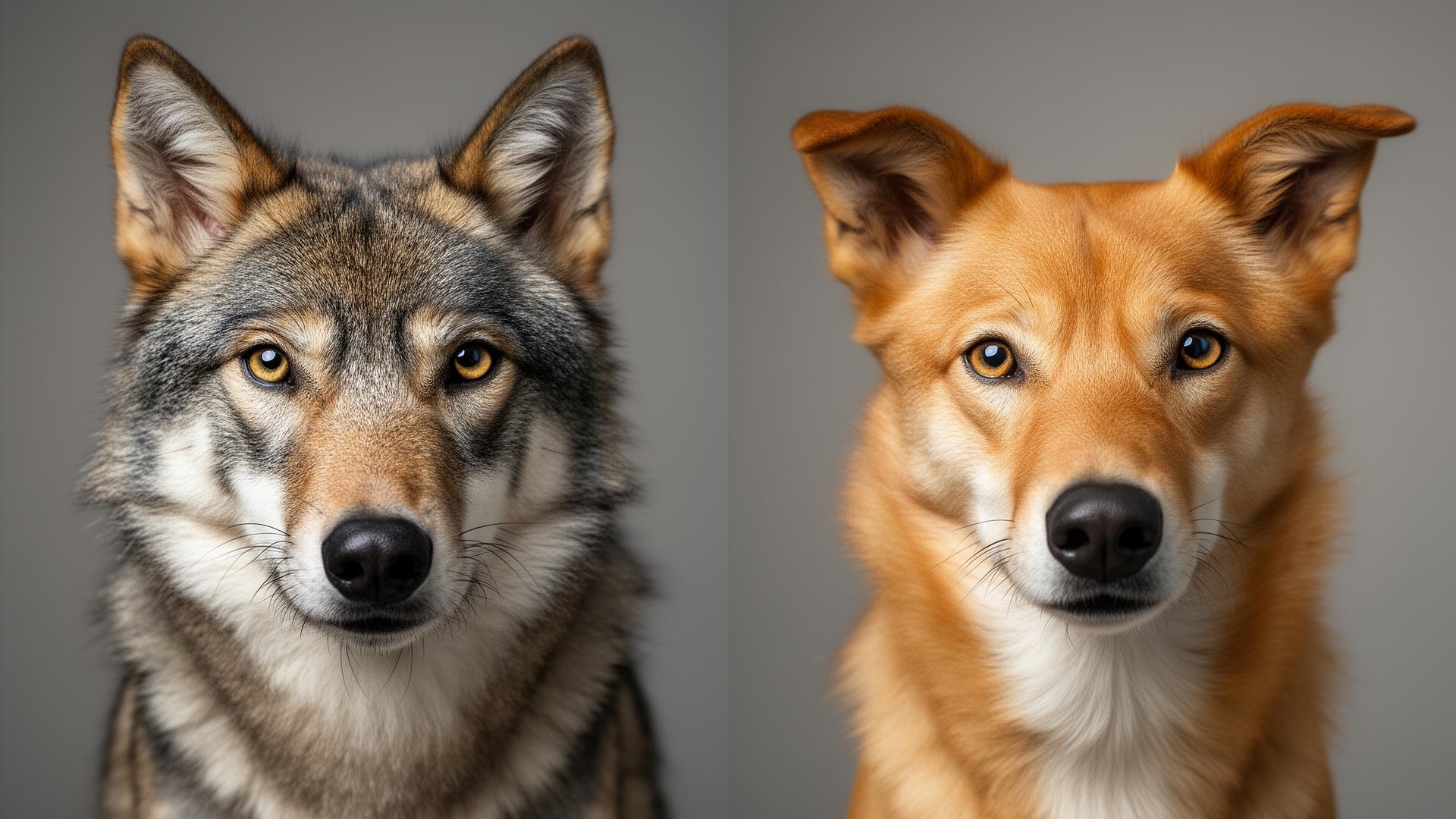 Wolves and modern dogs share an ancestor — but their skulls (and brains) have drifted apart.
The headline number: at least 5,000 years ago
According to the new analysis, brain shrinkage in dogs was already well underway by around 5,000 years ago. That is much later than the first domestication events (which likely began 15,000–30,000 years ago), but still deep in prehistory — long before written records, kennel clubs or designer breeds.
In other words: the dog at your feet is the product of a slow, multi-stage process. First came tolerance and proximity to humans. Then came selection for temperament. Then came the anatomical signature we now read in fossil skulls.
Why would domestication shrink the brain?
The leading hypothesis is simple and a little humbling for us: when humans started providing food, shelter and protection, dogs no longer needed the costly neural hardware that wolves use to hunt large prey, navigate vast territories and constantly assess threats. Brain tissue is metabolically expensive. Evolution does not pay for what it does not need.
But — and this is the part most clickbait headlines miss — dogs did not just lose. They gained. Modern dogs are unusually skilled at reading human gestures, facial expressions and tone of voice, far better than even hand-raised wolves. The brain that shrank also rewired.
 Cranial measurements from ancient canid remains let researchers reconstruct a brain-size timeline.
Does this mean modern dogs are less intelligent?
Not in any way that matters to your daily life. "Brain size" and "intelligence" are not the same thing — in dogs, individual experience, training and breed-specific cognition matter far more than absolute volume. We have covered this in our deep-dive on how dog breeds learn through practice, where the differences between groups (herding dogs, retrievers, terriers) are mostly about style of cognition, not raw horsepower.
Large breeds add another wrinkle. As we explained in why large-breed dog brains age slower than their bodies, the relationship between body, brain and aging in dogs is genuinely weird and not at all linear.
What this means for you and your dog
Evolutionary history is fascinating, but the practical takeaway is about your dog, today:
- Brains are use-it-or-lose-it. A recent study we covered showed that lifelong exercise slows canine cognitive decline. The dog brain may be smaller than a wolf''s, but it stays remarkably plastic.
- Early experience matters most. The first months of life shape lifelong behavior — see our guide to the 3–16 week socialization window.
- Training method shapes the brain too. Modern evidence keeps pointing to reward-based training as the approach that supports both learning and welfare.
 Smaller brain, bigger social skills: the modern dog is built to read us.
The bottom line
The 2026 Nature study does not change what your dog is. It changes the story of how they got here. Somewhere around 5,000 years ago — in the same window humans were inventing cities, writing and agriculture — the canid brain was quietly being rewritten too. Less wolf. More partner.
That partnership is still being negotiated every time you ask for a sit, share a couch, or take a long walk together. Use it well.
Frequently Asked Questions
Are dog brains really smaller than wolf brains?+
Yes. For the same body size, domestic dogs have brains about 20–30% smaller than grey wolves. The 2026 Nature study confirms this gap is real and ancient, not a modern artifact.
When did dog brains start shrinking?+
The new timeline suggests measurable shrinkage was well underway by at least 5,000 years ago, long after the first dog–human contact but still deep in prehistory.
Did humans make dogs less intelligent?+
No. Dogs lost some raw processing they no longer needed (hunting alone, defending territory) and gained specialized social cognition — reading human faces, gestures and voices.
Does brain size predict how smart my dog is?+
Not really. Within dogs, breed, individual experience, training and enrichment matter far more than absolute brain volume.
Can I help keep my dog's brain healthy?+
Yes — lifelong exercise, novel experiences, training games and avoiding obesity are all linked to slower cognitive decline in dogs.
Sources
Related Reading
Share this story
Pin this to your Healthy Happy Dogs board
Vet-vetted wellness, symptom guides, and senior dog care pins.
Liked this story?
Share it with someone who should read it.
More from Dog Health & Wellness

Doggy Dementia Breakthrough: New At-Home Test Catches CCD Early!

H5N1 Bird Flu: What Dog Owners *Must* Know Now
