Second Cancers in Dogs: What the 2026 Italian Registry Study Means for Owners
A 2026 Italian veterinary cancer registry study finds that surviving one tumor doesn’t end the surveillance — dogs can develop a second, unrelated primary cancer years later. Here’s what it means for owners.

Quick Summary
A new 2026 Italian registry-based study published in Frontiers in Veterinary Science finds that a meaningful share of dogs diagnosed with cancer go on to develop a second, unrelated primary tumor later in life — not a metastasis, but an entirely new cancer. The takeaway for owners: surviving one cancer doesn't mean the surveillance ends. Lifelong rechecks, body scans, and breed-aware screening matter more than ever.
What the 2026 Italian Cancer Registry Actually Found
Researchers analyzing a regional Italian veterinary cancer registry tracked dogs diagnosed with a malignant tumor and asked a simple but under-studied question: how often do these dogs develop a second malignant tumor of a different histological type? The answer surprised many clinicians. Multiple malignant primary tumors (MMPTs) were documented in a clinically significant fraction of the cohort — often diagnosed years after the first cancer was successfully treated.
This matters because most owners — and frankly many vets — treat post-cancer follow-up as a "watch for recurrence" exercise. The 2026 data argues that watching only for the original cancer is a blind spot. The second tumor is often biologically unrelated to the first.
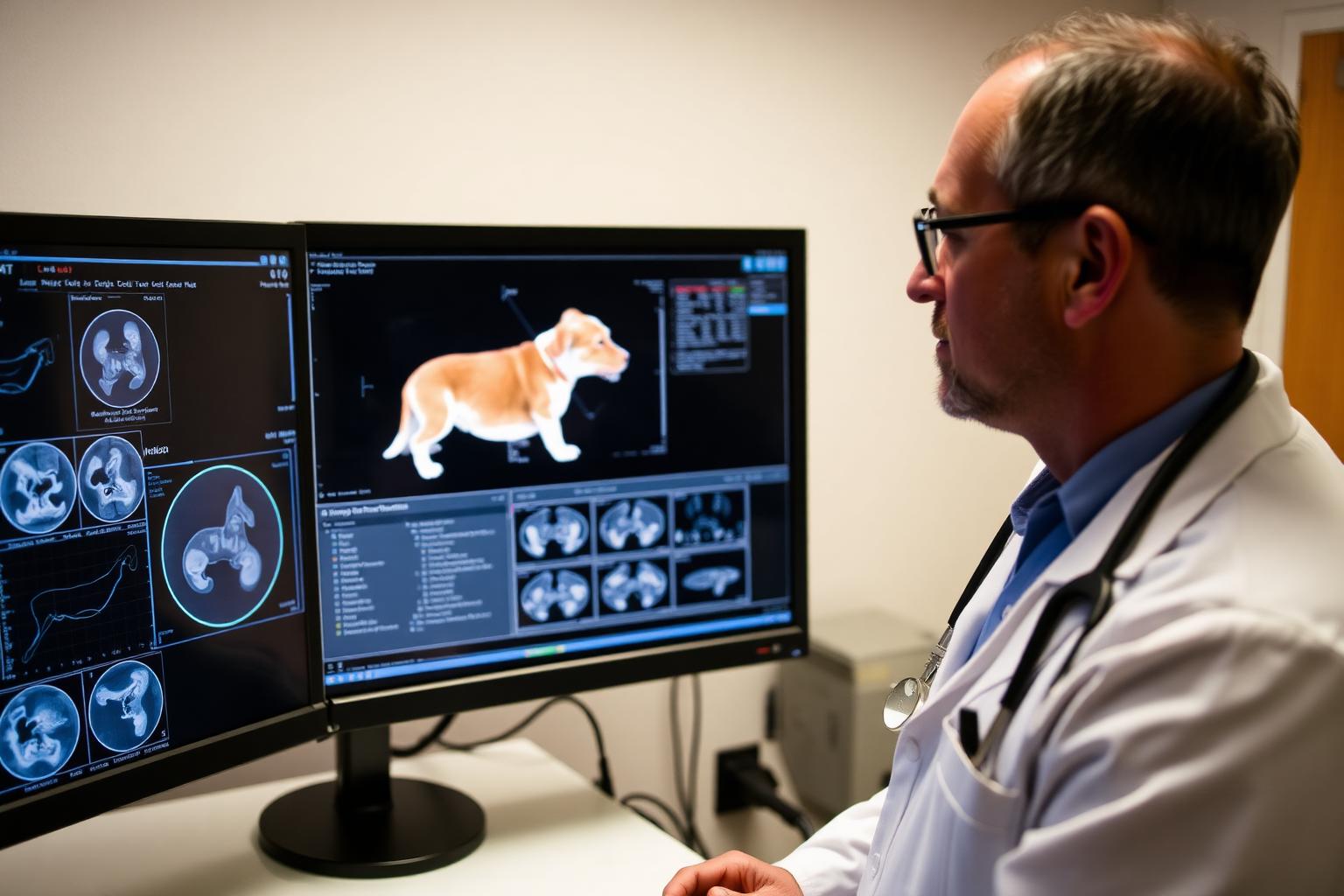 Modern imaging makes it easier to catch a second, unrelated primary tumor before it becomes symptomatic.
Why "second primary" is different from "metastasis"
- Metastasis = the original cancer spread to a new site. Same disease, new location.
- Second primary tumor = a brand-new cancer with a different cell origin. Different disease entirely.
Treatment plans, prognosis conversations, and screening intervals all change depending on which one you're dealing with — which is exactly why the distinction in the 2026 study matters.
Which Dogs Were Most Affected?
The registry data echoes patterns seen in older European and U.S. cohorts: middle-aged to senior dogs, certain predisposed breeds, and dogs whose first tumor type carries known second-cancer risk (mast cell tumors, mammary tumors, and soft tissue sarcomas were repeatedly flagged in the literature the authors cite).
This aligns with what we covered in our deep-dive on how large-breed dogs age physiologically — bigger dogs reach "senior" status earlier, and earlier biological aging plausibly opens a longer window for a second cancer to emerge.
Breed signal vs. owner panic
Before any breed-specific worry sets in, two things to keep in mind:
- Registry studies show associations, not destiny. Most dogs with cancer do not develop a second primary.
- Small-breed and toy-breed dogs were under-represented in this cohort. If you live with a Chihuahua or other toy breed, the broader risk profile we summarized in the 2026 RVC Chihuahua health study is more directly relevant for daily decisions.
What Owners Should Actually Do Differently
The practical implication of the study isn't "panic about a second cancer." It's structured, lifelong oncologic surveillance — and the willingness to investigate new lumps, behavioral shifts, or weight loss as potentially separate events, not just recurrence of the old disease.
1. Don't graduate from cancer follow-up
Many treatment protocols taper rechecks after 12–24 months of remission. Ask your vet whether your dog's first tumor type warrants ongoing imaging or bloodwork beyond that window. The American College of Veterinary Internal Medicine (ACVIM) consensus statements continue to recommend individualized long-term surveillance for higher-risk histologies.
2. Treat every new lump as a new lump
A new mass two years after a mast cell tumor isn't automatically "the cancer came back." It deserves its own fine-needle aspirate or biopsy. The 2026 Italian data is essentially a quantitative reminder of that clinical instinct.
3. Pair screening with daily wellness habits
Owners often ask what they can do between vet visits. The honest answer is: maintain the boring fundamentals that the evidence keeps validating — appropriate exercise, weight control, dental care, and a diet matched to life stage. We summarized the recent diet-and-microbiome evidence in our piece on minimally processed vs. kibble feeding.
 Daily home checks — running hands over the body, watching appetite and energy — are one of the best early-detection tools owners have.
Symptoms That Should Always Trigger a Vet Visit
- A new lump or bump that wasn't there last month — even a small one.
- Unexplained weight loss over 4–8 weeks.
- Persistent lameness that doesn't fit a known injury.
- Changes in appetite, drinking, or urination patterns lasting more than a few days.
- Lethargy or behavioral withdrawal in a dog that's normally engaged — patterns that overlap with the early cognitive signs we discussed in our review of exercise and canine cognitive decline.
What This Study Doesn't Say
The 2026 registry analysis is observational. It does not prove that any specific food, supplement, vaccine, or environmental exposure causes second primary tumors. It also doesn't recommend any particular screening interval — that has to be tailored by your veterinary oncology team to your dog's first tumor type, breed, age, and overall health.
Veterinary Disclaimer
This article is educational, not medical advice. Cancer surveillance and treatment decisions for your dog should always be made with your veterinarian or a board-certified veterinary oncologist (DACVIM-Oncology). If your dog has a history of cancer and you've noticed any new lump, weight change, or persistent symptom, contact your vet — don't wait for the next scheduled recheck.
Bottom Line
The 2026 Italian registry study reframes canine cancer survivorship as a long game. Beating the first tumor is a milestone, not the finish line. With structured rechecks, attentive home monitoring, and a willingness to investigate new findings as new diseases, owners and vets can catch a potential second primary tumor at a stage where treatment options are still wide open.
Frequently Asked Questions
Is a second tumor in my dog the same cancer coming back?+
Not necessarily. The 2026 study highlights that some dogs develop a true second primary tumor — a different cancer of different cell origin. That’s why any new mass should be aspirated or biopsied rather than assumed to be a recurrence.
Which dogs are most at risk for multiple primary tumors?+
Middle-aged and senior dogs, certain breeds, and dogs whose first tumor was a mast cell tumor, mammary tumor, or soft tissue sarcoma showed up most in the registry data. Your veterinary oncologist can stratify your dog’s individual risk.
How often should a cancer-survivor dog be rechecked?+
There is no one-size-fits-all interval. ACVIM consensus statements support tailoring the schedule to the original tumor type, stage, and treatment. Many survivors benefit from imaging and bloodwork beyond the typical 12–24 month follow-up window.
Can diet or supplements prevent a second cancer?+
No diet or supplement has been proven to prevent second primary tumors. The fundamentals — healthy weight, appropriate exercise, life-stage nutrition, and dental care — remain the best evidence-backed levers.
What symptoms should make me call the vet right away?+
A new lump, unexplained weight loss over 4–8 weeks, persistent lameness, changes in drinking or urination, or sudden lethargy in a normally active dog all warrant an early vet visit — don’t wait for the next scheduled recheck.
Sources
Related Reading
Share this story
Pin this to your Healthy Happy Dogs board
Vet-vetted wellness, symptom guides, and senior dog care pins.
Liked this story?
Share it with someone who should read it.
More from Dog Health & Wellness

Doggy Dementia Breakthrough: New At-Home Test Catches CCD Early!

H5N1 Bird Flu: What Dog Owners *Must* Know Now
