Librela vs. Galliprant: What the 2026 Force-Plate Study Says About Dog Arthritis Pain
A new randomized, double-blind trial put Librela and Galliprant head-to-head using objective gait measurements. The verdict: both treatments meaningfully reduced osteoarthritis pain in dogs over 8 weeks—and the monthly injection was non-inferior to the daily NSAID.

If your dog has slowed down on walks, hesitates on stairs, or stiffens after naps, osteoarthritis (OA) is one of the most likely culprits. An estimated 20–37% of dogs over one year of age live with OA, and even 40% of dogs aged 8 months to 4 years already show radiographic signs of joint disease. Until recently, owners and vets really only had one well-evidenced pharmacological choice: traditional non-steroidal anti-inflammatories (NSAIDs). That changed with bedinvetmab (brand name Librela), a once-monthly injectable monoclonal antibody. The big question owners keep asking is simple: does the new injection actually work as well as the daily pill?
A new study published in Scientific Reports in 2026 set out to answer that with hard, objective data—not just owner opinions. Researchers compared bedinvetmab against grapiprant (Galliprant), the newest-generation NSAID for canine OA, using force-plate gait analysis. Here is what they found and what it means for your dog.
 Osteoarthritis affects a huge share of adult dogs—not just seniors.
What the 2026 Study Actually Did
The trial was a randomized, double-blind, non-inferiority study. Thirty-two large dogs (over 20 kg, at least 1 year old) with osteoarthritis confined to the hips and/or stifles were split 1:1 into two groups:
- Bedinvetmab group: monthly subcutaneous Librela injection plus a daily oral placebo.
- Grapiprant group: daily oral Galliprant plus a monthly saline injection.
Neither owners nor evaluators knew which treatment a dog was receiving. The key innovation was the use of force-plate gait analysis (FPGA), which measures how much weight a dog actually puts on each leg as it walks across a sensor. Dogs in pain offload the sore limb. FPGA captures that objectively—no guessing, no placebo halo. Owners also completed validated client-reported outcome measures (CROMs) like the Canine Brief Pain Inventory.
The Headline Result: Non-Inferiority Confirmed
At day 42 (the primary endpoint), the success rate—defined as at least a 3.5% increase in peak vertical force from baseline—was:
- 68.8% for bedinvetmab
- 56.3% for grapiprant
The upper bound of the confidence interval for the difference (18.8%) sat below the pre-specified non-inferiority margin of 21.25%. Translation: the monthly injection was statistically at least as effective as the daily NSAID at restoring weight-bearing in painful limbs. Both groups also showed significant improvements that crossed the clinical-significance threshold at every check-in, and owner-reported pain scores improved on both treatments.
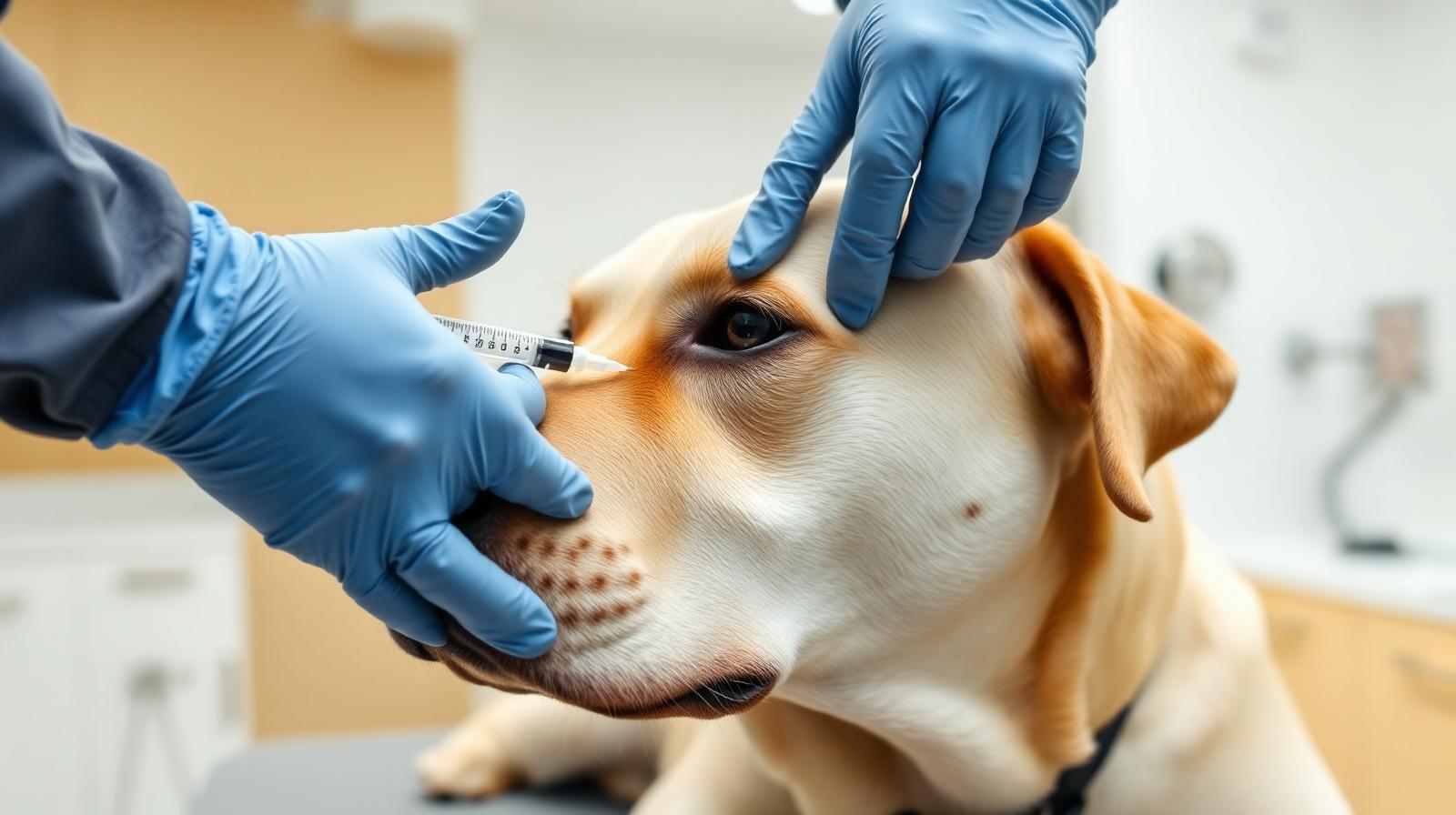 Bedinvetmab is given as a once-monthly subcutaneous injection at the vet clinic.
How the Two Drugs Work—Very Differently
Bedinvetmab and grapiprant treat pain via two completely different mechanisms:
- Bedinvetmab (Librela) is a fully canine monoclonal antibody that binds and neutralizes nerve growth factor (NGF), a key signaling molecule that amplifies arthritis pain. It is given by injection once a month.
- Grapiprant (Galliprant) is a piprant-class NSAID that selectively blocks the EP4 prostaglandin receptor, the main receptor responsible for OA pain and inflammation. It is given as a daily tablet.
This matters because the side-effect profiles differ. Traditional NSAIDs can stress the GI tract, kidneys, and liver. Grapiprant's EP4 selectivity gives it a relatively favorable safety record, but it still requires bloodwork monitoring. Bedinvetmab's adverse events in the trial were in line with label expectations, though long-term real-world reports are still being collected globally.
Why Owners Should Care About Force-Plate Data
Most prior studies of OA drugs in dogs leaned heavily on questionnaires. Owners are wonderful observers, but they are also vulnerable to wishful thinking, especially after starting a new treatment they paid for. FPGA strips that out. When a dog puts measurably more weight on a previously sore leg, the pain has genuinely been reduced. The fact that both drugs cleared that bar is reassuring—it tells us the choice between them can be driven mostly by lifestyle, dosing convenience, and your vet's clinical judgment, not by efficacy alone.
Other Things That Influence the Right Choice
The drug is only one part of an OA management plan. The same study, and broader guidelines from AAHA, WSAVA, and COAST, emphasize a multimodal approach. A few factors worth weighing with your vet:
- Body condition. Even small amounts of excess weight dramatically worsen joint pain. If you are unsure where your dog sits, our guide on raw vs. kibble diets and obesity risk walks through realistic body-condition targets.
- Exercise. Sedentary dogs lose muscle mass that supports painful joints. The 2026 ELTE work on lifetime sports and canine cognitive aging is a useful reminder that movement matters for body and brain.
- Breed and size. Large-breed dogs are at especially high OA risk. See our deep dive on why large-breed bodies age faster.
- Coexisting conditions. Dogs with heart disease, kidney issues, or a history of GI ulcers may be steered toward bedinvetmab. Dogs already stable on grapiprant with good bloodwork rarely need to switch.
 The goal of any OA treatment is the same: more comfortable, willing movement.
Practical Takeaways for Owners
If your dog has been newly diagnosed with osteoarthritis, this 2026 evidence supports a real conversation with your vet rather than defaulting to whichever drug is most familiar. Both options are now first-line. Owners who hate pilling, or whose dogs reliably refuse tablets, may find the monthly injection life-changing. Owners who prefer a daily oral medication they can dose-adjust around side effects may stick with grapiprant. Either way, pairing the medication with weight management, joint-friendly exercise, and—where appropriate—physiotherapy will deliver the best long-term comfort.
Pain in dogs is famously stoic. Subtle changes in behavior and energy, reluctance to jump into the car, or new irritability with other pets can all point to OA. If you suspect it, do not wait—earlier treatment generally means more retained mobility down the line. And if you are still in the puppy phase, our RVC Generation Pup roundup covers other early-life factors that shape lifelong health.
Frequently Asked Questions
Is Librela (bedinvetmab) better than Galliprant (grapiprant) for dog arthritis?+
The 2026 study found bedinvetmab non-inferior to grapiprant on objective gait measures. Both significantly reduced pain. Neither was clearly superior, so the right pick depends on your dog's health history and your dosing preferences.
How quickly does bedinvetmab start working?+
Many dogs show improvement within 7–14 days of the first injection, and effects last about a month, when the next dose is due.
Can bedinvetmab and grapiprant be used together?+
Generally no. They are both first-line OA pain drugs and most current guidance is to use one at a time. Talk to your vet before combining or switching.
Are there side effects to watch for with Librela?+
Reported side effects include injection-site reactions and occasional GI upset. Your vet will discuss current safety information and monitor your dog over time.
Does my dog still need joint supplements or weight loss if they are on these drugs?+
Yes. Multimodal management—weight control, low-impact exercise, omega-3s, and physical therapy where appropriate—amplifies the benefit of any OA medication.
Sources
Related Reading
Share this story
Pin this to your Healthy Happy Dogs board
Vet-vetted wellness, symptom guides, and senior dog care pins.
Liked this story?
Share it with someone who should read it.
More from Dog Health & Wellness

Doggy Dementia Breakthrough: New At-Home Test Catches CCD Early!

H5N1 Bird Flu: What Dog Owners *Must* Know Now
