Same Blood Markers Predict Lifespan in Dogs and Humans: The 2026 GSA Study
A landmark 2026 Dog Aging Project study found a panel of small molecules in dog blood that forecasts mortality risk — and the same markers predict lifespan in humans. Here is what owners should know.

For years, scientists have suspected our dogs are aging mirrors of ourselves — sharing our homes, our food, our pollutants, even our stress. A new 2026 study published in The Journals of Gerontology, Series A by the Dog Aging Project consortium pushes that idea further than ever: a small set of molecules circulating in your dog''s blood can predict their remaining lifespan, and the same molecules predict how long humans will live, too.
 Researchers say a single blood draw may one day reveal how well a senior dog is aging — biologically, not just by years.
What the 2026 study actually found
Researchers analyzed blood metabolites — the tiny chemical byproducts of metabolism — in thousands of pet dogs enrolled in the Dog Aging Project. They identified a compact panel of small molecules that strongly predicted which dogs were likely to die in the following years, independent of breed, size, or age.
The surprise: when the same molecular signatures were measured in human cohorts, they tracked human mortality with comparable accuracy. In other words, the biology of aging — at the metabolite level — looks remarkably similar across the two species.
Why this is a big deal
- One blood test, real predictive power. A panel of routine-style markers can flag accelerated biological aging well before clinical disease appears.
- Dogs are no longer just companions in geroscience — they are translational models. Findings move in both directions: from dog to human and back.
- It opens the door to interventions. If we can measure aging, we can test whether diet, exercise, or drugs actually slow it.
How dogs became the perfect aging study
Dogs live in our homes, drink our water, breathe our air, and increasingly eat foods processed similarly to ours. They also age roughly seven times faster than we do, which means a multi-year canine study can answer questions a human study would need decades to address. That is exactly why the Dog Aging Project has enrolled tens of thousands of pets — and why its findings keep landing in major journals.
We have covered several pieces of this puzzle already: how large-breed dog brains age slower than their bodies, and how lifelong exercise slows canine cognitive decline. The new metabolite work fits neatly alongside both: it gives us a way to measure what those lifestyle factors are doing inside the body.
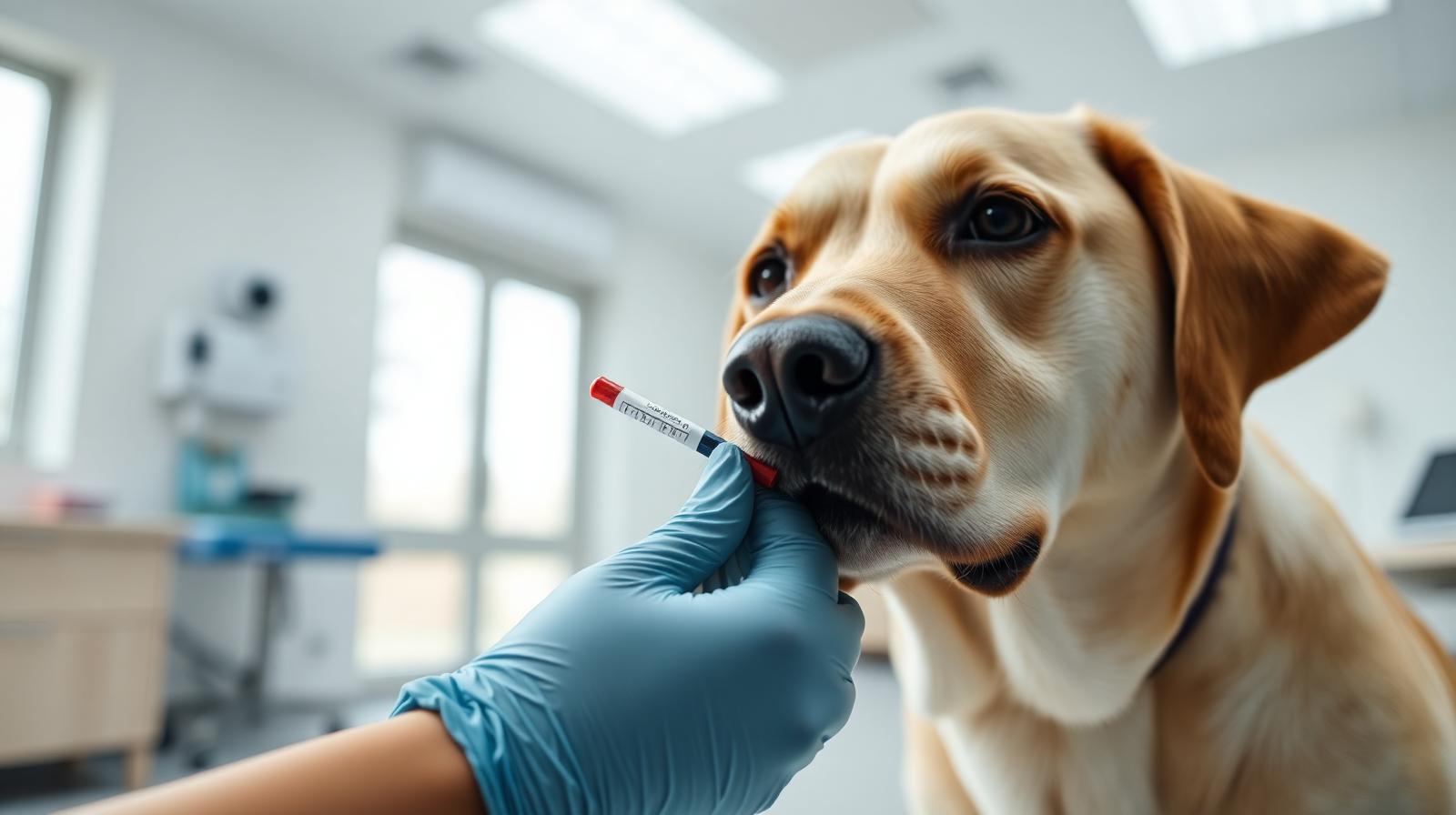 A standard wellness blood draw is the same starting point researchers use to measure biological age.
What the markers actually look like
The panel includes small molecules linked to energy metabolism, lipid handling, and inflammation — the same broad pathways that show up in human aging studies. Dogs whose profiles skewed toward higher inflammation and disrupted lipid metabolism had measurably shorter remaining lifespans, even after adjusting for breed and size.
Importantly, the signal was strong in both young-adult and senior dogs, suggesting that biological aging is detectable long before grey muzzles appear.
What this is NOT
- It is not a commercial test you can order today at most clinics.
- It is not a death-clock — predictions are statistical, not personal verdicts.
- It does not replace breed-specific health screening or routine vet visits.
What dog owners can do right now
You cannot get the research panel run on your dog yet, but the levers it measures are levers you already control. The same study group and adjacent geroscience work consistently point to a short list:
- Keep your dog lean. Excess body fat drives the inflammatory and lipid pathways that show up in aging biomarkers.
- Move together, often. Daily moderate activity is one of the few interventions with a real signal in canine aging data — see our deep-dive on exercise and cognitive decline.
- Mind the diet. Highly processed diets shape the metabolome differently than minimally processed ones, as the 2026 microbiome study showed.
- Avoid known dietary toxins. Issues like excess copper in some dog foods add chronic, low-grade stress to the liver that is unlikely to help any aging trajectory.
- Get annual bloodwork. Even today''s standard wellness panels can flag drift over time — and that drift is exactly what next-generation aging biomarkers will refine.
 The strongest "anti-aging" signal in dog studies remains beautifully old-fashioned: regular movement with the people they love.
The bigger picture: dogs as aging partners
This study is part of a broader shift in how scientists think about pets. We are also learning that dogs share surprising genetic overlaps with humans for behaviour and emotion, and that our long history together has reshaped their brains. The 2026 metabolite study extends that intimacy into biochemistry: the same molecules that wear down our cells appear to wear down theirs.
For dog owners, the practical takeaway is hopeful. The biology of aging is measurable, and many of the inputs are within reach: weight, food quality, daily movement, and a steady relationship with a vet who knows your dog.
Bottom line
The 2026 GSA paper does not promise a longer life for your dog tomorrow. What it does is give researchers — and eventually clinicians — a shared yardstick for biological age that works across species. That yardstick is the missing piece needed to test which interventions actually slow aging in dogs and in us.
Until that lab test reaches your local clinic, the message is the same one good vets have been giving for years: keep them lean, keep them moving, feed them well, and show up for the wellness visits.
Frequently Asked Questions
Can I get this blood biomarker test for my dog now?+
Not yet. The panel is a research tool from the Dog Aging Project. Standard wellness bloodwork at your vet is the best current proxy.
Does this mean my dog's lifespan is fixed?+
No. The markers reflect current biological state, which is influenced by weight, diet, exercise, and environment — all things you can change.
Why use dogs to study human aging?+
Dogs share our homes and exposures and age about seven times faster, so multi-year dog studies can answer questions that would take decades in humans.
Are big dogs and small dogs aging the same way at the molecular level?+
Broadly yes — the markers worked across breeds and sizes, though large breeds still age faster overall, as covered in our IGF-1 article.
What is the single best thing I can do for my dog's healthspan?+
Keep them at a lean body condition. It is the most consistent lifespan-extending intervention across canine studies.
Sources
Related Reading
Share this story
Pin this to your Healthy Happy Dogs board
Vet-vetted wellness, symptom guides, and senior dog care pins.
Liked this story?
Share it with someone who should read it.
More from Dog Health & Wellness

Doggy Dementia Breakthrough: New At-Home Test Catches CCD Early!

H5N1 Bird Flu: What Dog Owners *Must* Know Now
